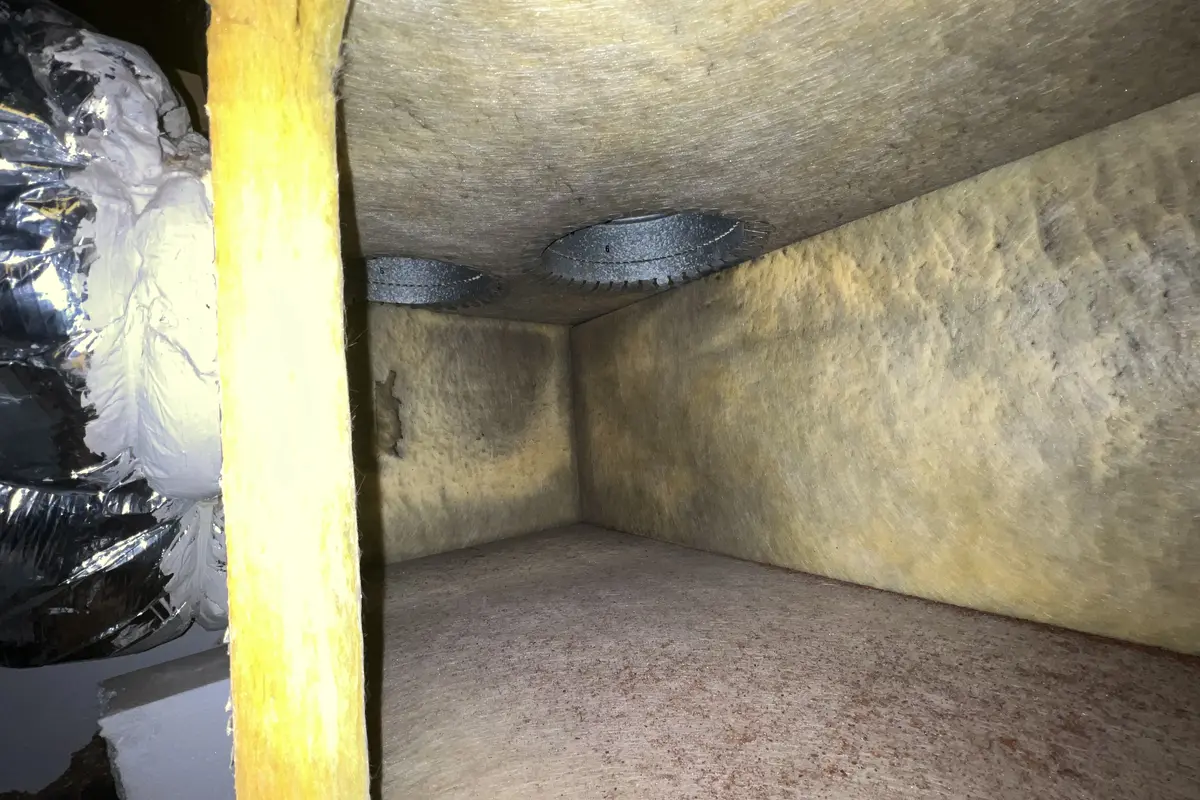
Severely contaminated plenum interior before HVAC mold treatment by Air Central Austin TX

Professional HVAC Mold Treatment in Austin, TX

Air ducts are the primary vehicle through which mold spreads throughout an Austin home. Air Central eliminates active mold colonies at the source - inside your ductwork, evaporator coil, and plenum - through professional NADCA-method cleaning and UV-C light installation that prevents regrowth.
500+ Reviews Licensed & Insured Certified Technicians Same-Day Available

What Is HVAC Mold Treatment?

HVAC mold treatment targets the three zones inside your air conditioning system where mold colonizes and spreads: the air ducts, the evaporator coil, and the plenum box. These areas share one thing - they are dark, damp, and full of organic debris that mold feeds on. Every time your AC runs, air from these contaminated zones circulates through every room in your home. According to Air Central owner Nessi Ziv, who has inspected thousands of Austin duct systems, "The evaporator coil and plenum are where we find the worst mold contamination. Homeowners never see these areas, but when we put the camera in, the before-and-after is dramatic." Austin creates near-perfect mold conditions. The city averages 67% relative humidity year-round - well above the 60% threshold at which mold can establish colonies within 24-48 hours. Your air conditioner runs for nine months of the year, cycling warm humid air across a cold coil surface and depositing moisture throughout the duct system. Cedar and oak pollen loads the ductwork with organic matter that feeds mold growth from December through May. The result: Austin HVAC systems develop mold contamination faster and more severely than in most U.S. cities. The CDC and EPA both identify HVAC ductwork as a primary vector for mold distribution throughout residential buildings. Air Central's HVAC mold treatment is not standalone mold remediation - it is the HVAC component that every Austin mold situation requires. We clean the ducts and coil with commercial HEPA vacuum systems and NADCA-standard methods, physically removing mold colonies and the organic material they feed on, then install UV-C lights that create a permanent kill zone on the coil surface to prevent regrowth. Most Austin homeowners searching for mold remediation near them need both a structural remediation company (for wall or ceiling mold) and an HVAC duct specialist (for the system spreading spores through the air). Air Central handles the HVAC side - the piece that determines whether mold keeps coming back after remediation. HVAC mold treatment through professional duct cleaning typically ranges from $150-$5,000 depending on system size and contamination severity. UV-C light installation adds a permanent prevention layer at $200-$3,500.

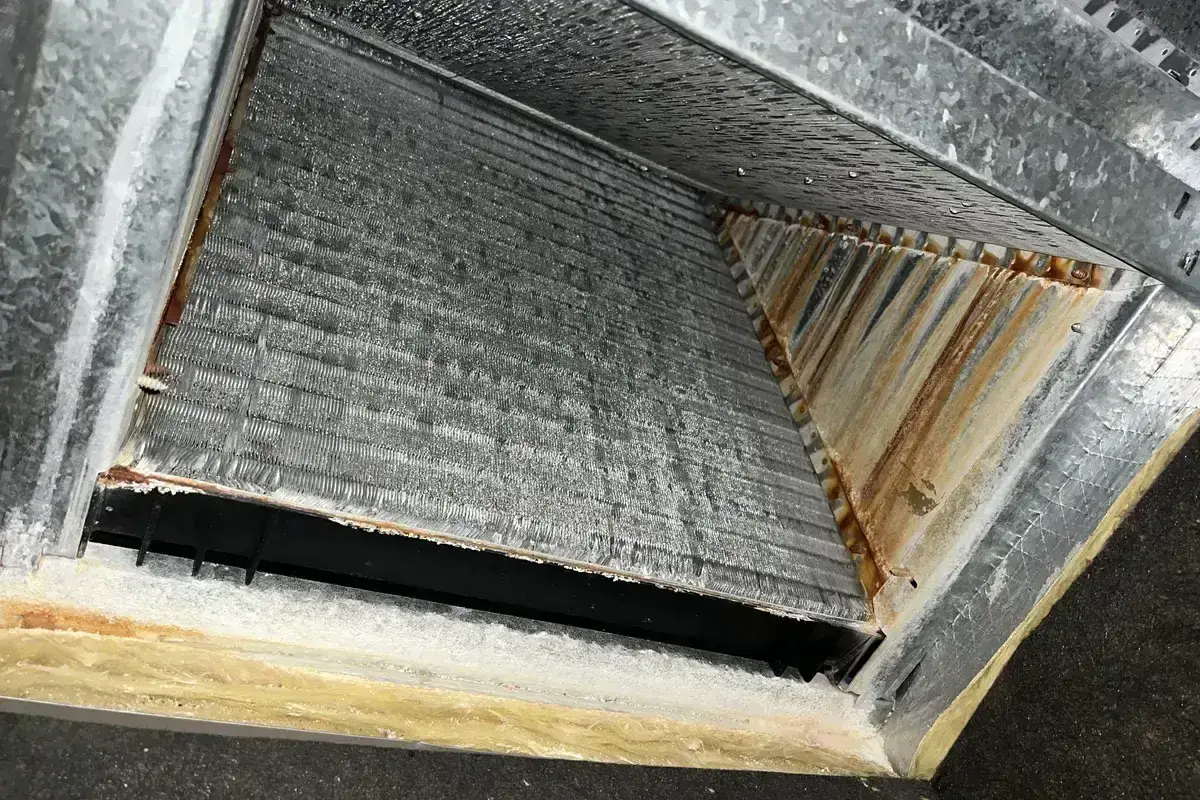
Evaporator coil with mold contamination inside Austin TX HVAC system

Before & After: Real HVAC Mold Treatment Results

These are actual before-and-after photos from Air Central jobs in Austin - the same plenum interior, before and after professional HEPA cleaning.

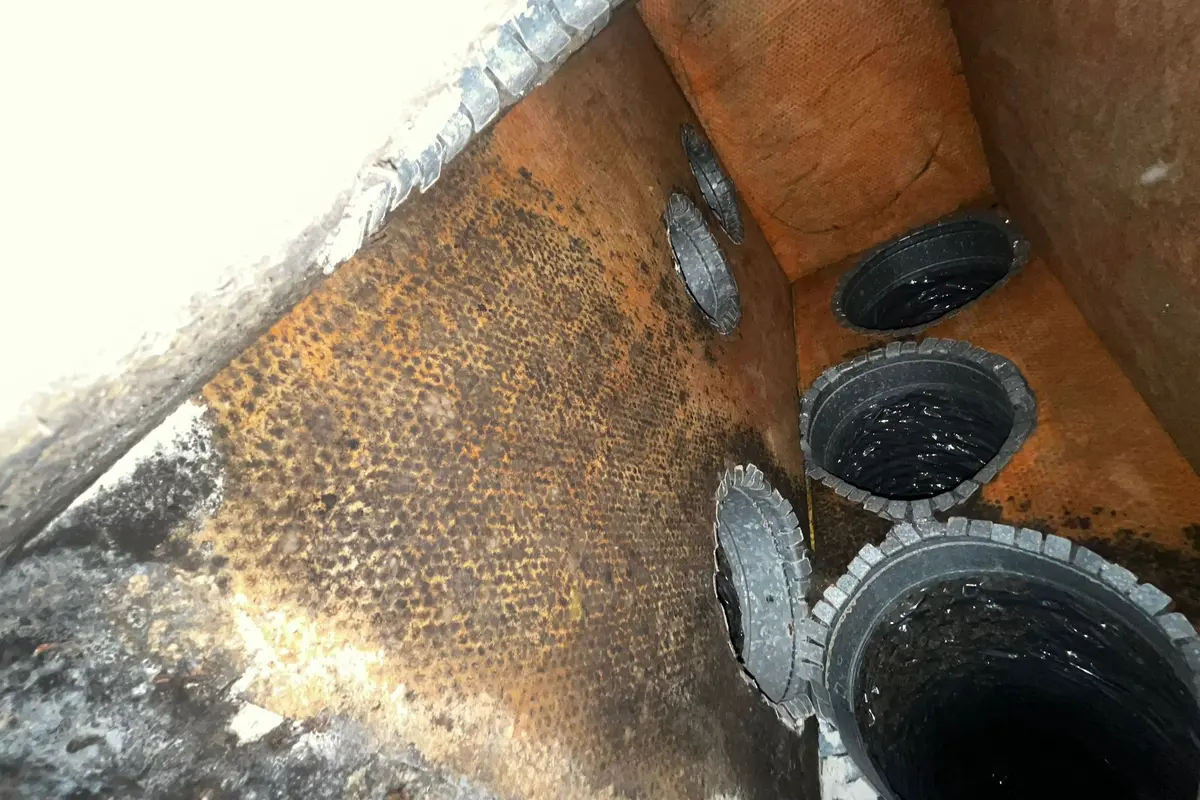
Severely contaminated plenum interior with heavy mold and debris before Air Central treatment

BEFORE - Heavy mold contamination in plenum
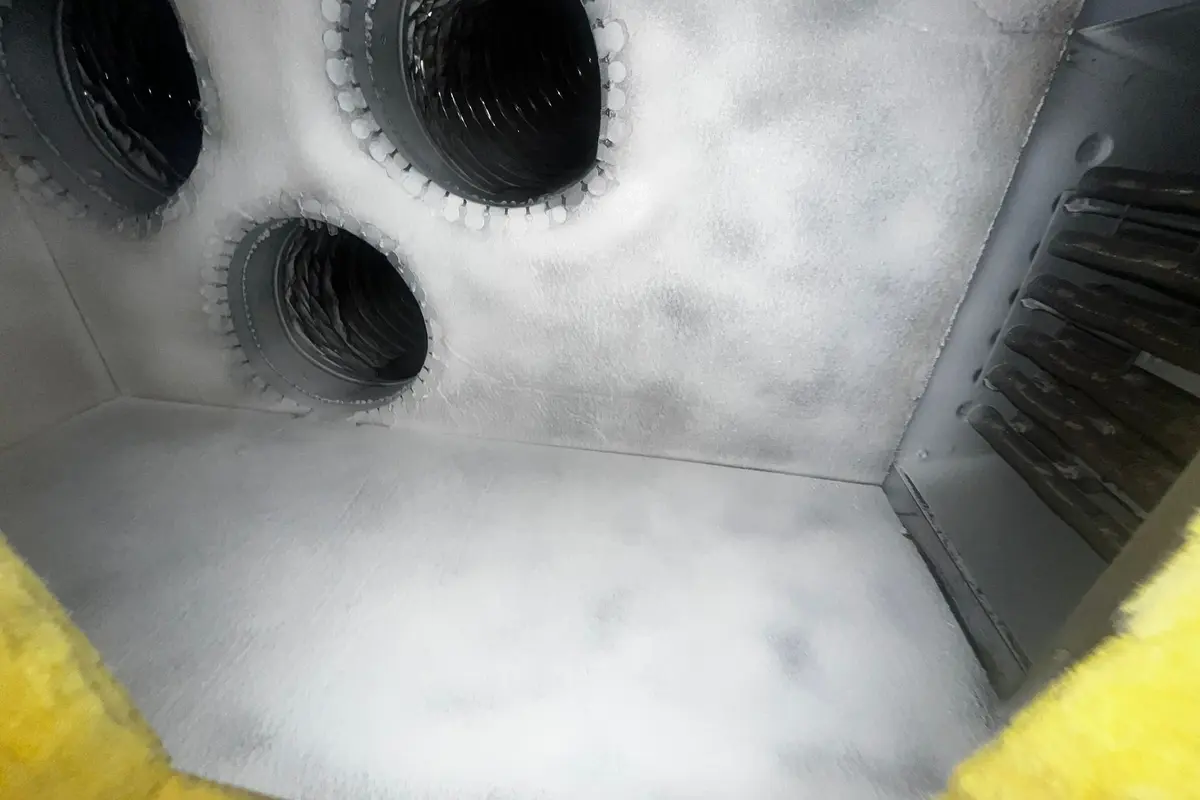
Completely clean plenum interior after Air Central HVAC mold treatment in Austin TX

AFTER - Clean metal, mold eliminated

The 3 HVAC Zones Where Mold Establishes in Austin Homes

Austin's heat and humidity create conditions that allow mold to colonize all three zones simultaneously. Standard air duct cleaning that misses any zone leaves the problem incomplete.
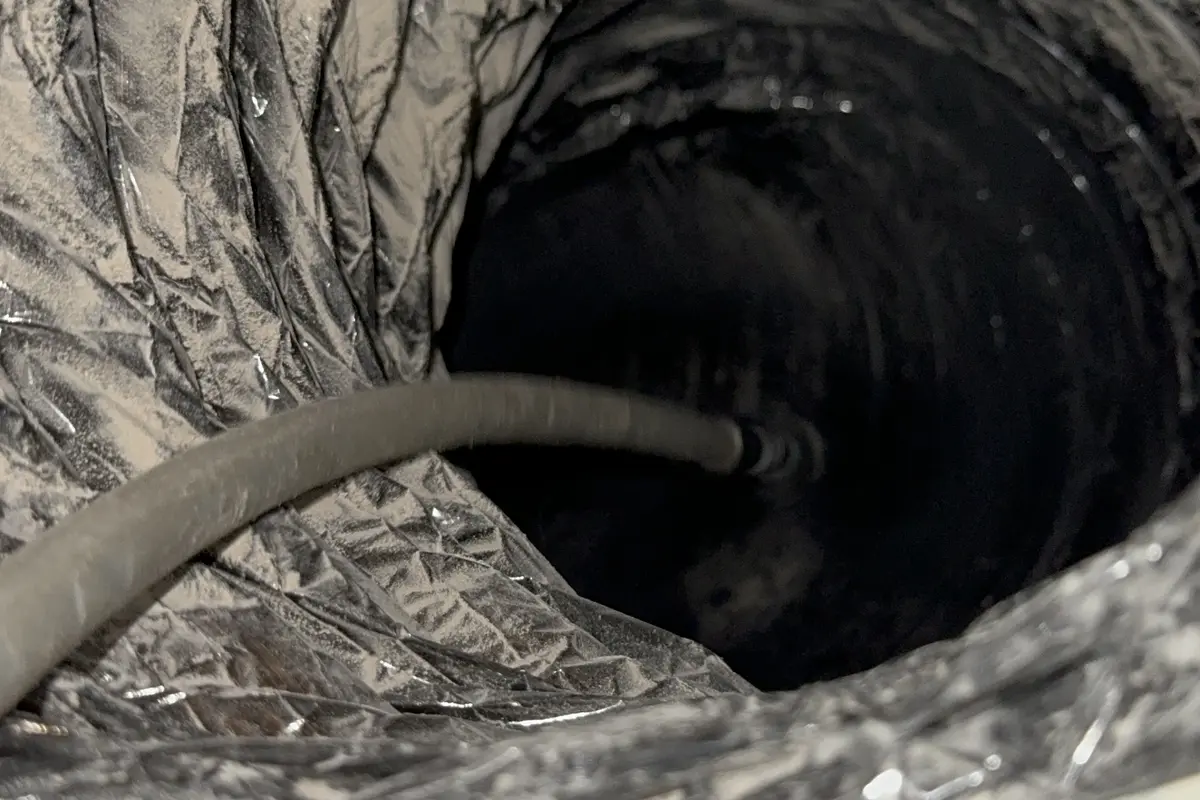
Contaminated air duct interior before cleaning in Austin TX home

Air Ducts

Primary Distribution Network

Supply and return ducts accumulate moisture from condensation and pollen buildup that feeds mold over years. Because ducts run throughout every room, mold here distributes spores to every corner of your home with every AC cycle.

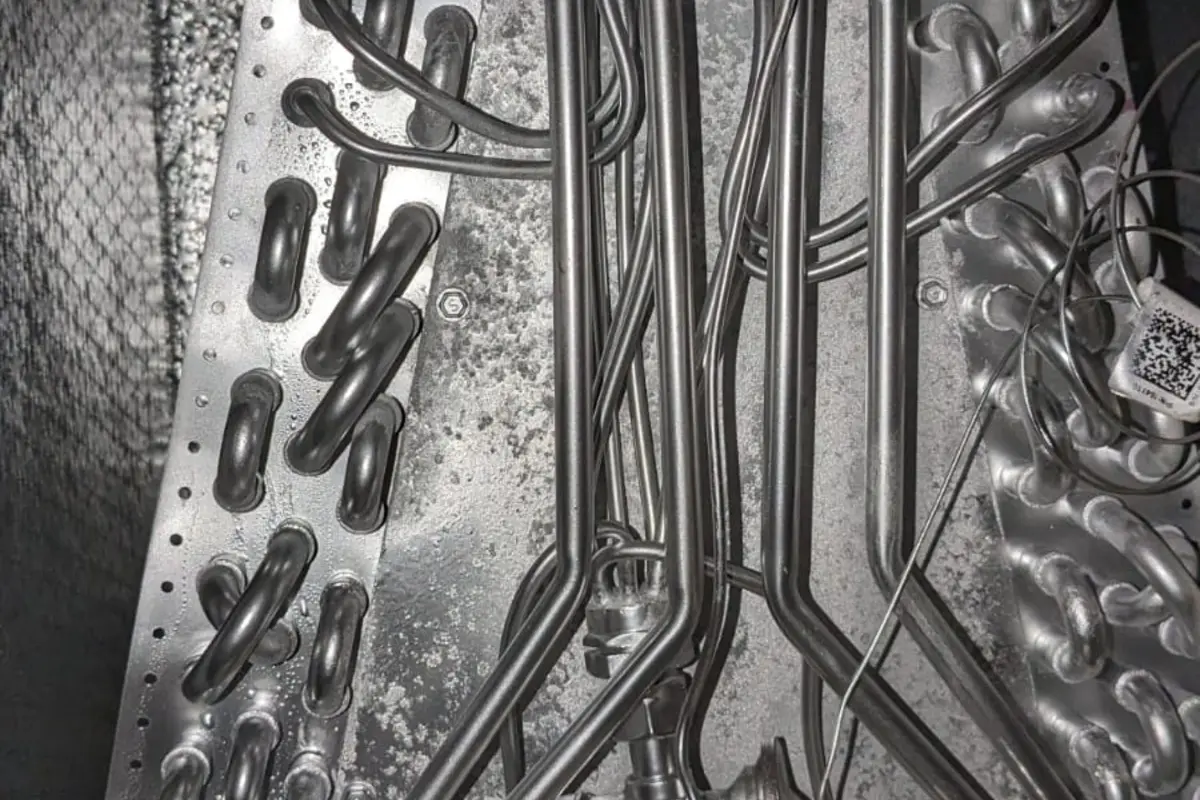
Evaporator coil with contamination buildup inside Austin HVAC system

Evaporator Coil

Highest-Risk Single Component

The evaporator coil is where refrigerant chills the air. Moisture condenses on the cold coil surface constantly - creating a permanent wet environment where mold and biofilm establish rapidly. In Austin, the coil runs for 9 months per year.

Contaminated plenum interior showing heavy buildup in Austin TX HVAC system

Plenum Box

Most Often Contaminated

The plenum is the central distribution chamber that connects your air handler to your duct system. It is the first place air passes through after the coil and the zone where contamination is most concentrated. Most homeowners have never seen inside their plenum.

UV-C light installed inside HVAC system in Austin TX home for mold prevention

Why Air Central HVAC Mold Treatment Works

Eliminates Mold at the Source

Surface sprays kill mold on contact but leave dead spores and roots intact, allowing regrowth within weeks. HEPA vacuum cleaning physically removes mold colonies from duct walls, coil surfaces, and plenum interiors - eliminating both active mold and the organic material it feeds on.

Stops Mold From Spreading Through Your Home

Your HVAC system is a mold distribution network. Every cycle pushes spores from contaminated ducts and coils through every room. Treating the source stops the circulation - which is why cleaning the walls without treating the ducts means mold keeps returning.

UV-C Creates a Permanent Kill Zone

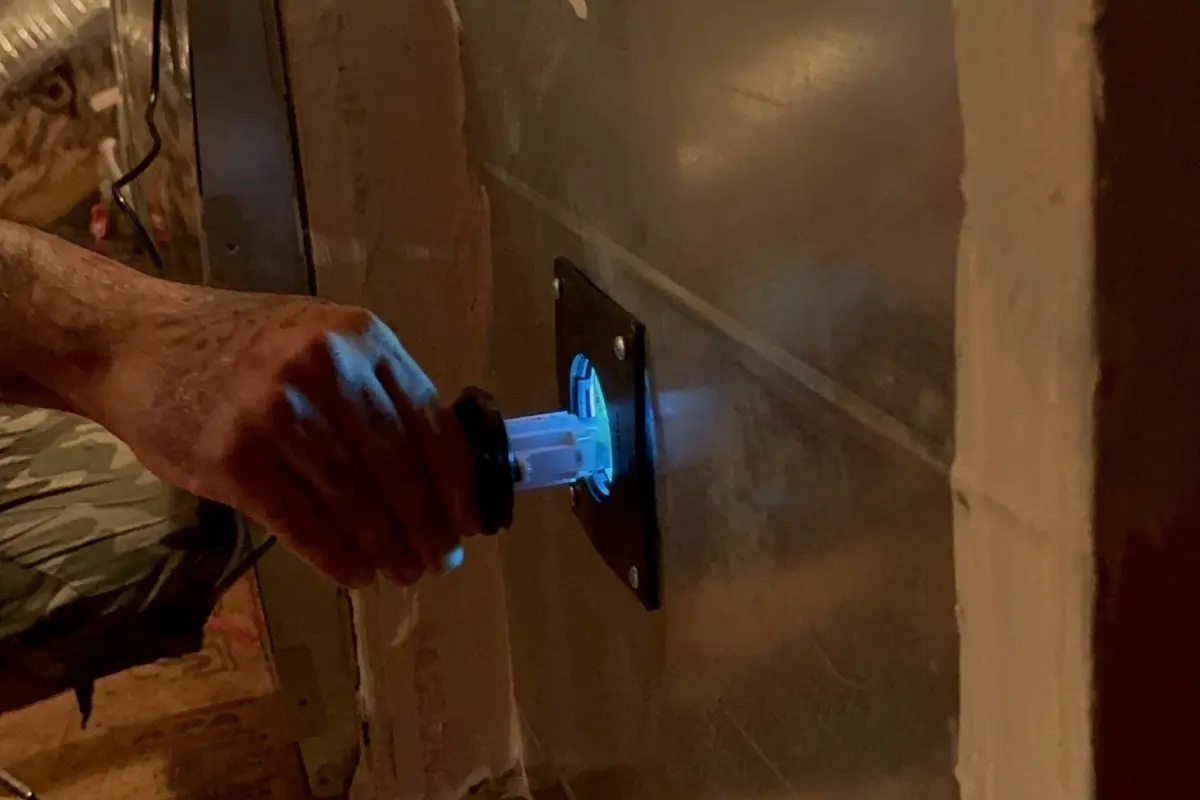
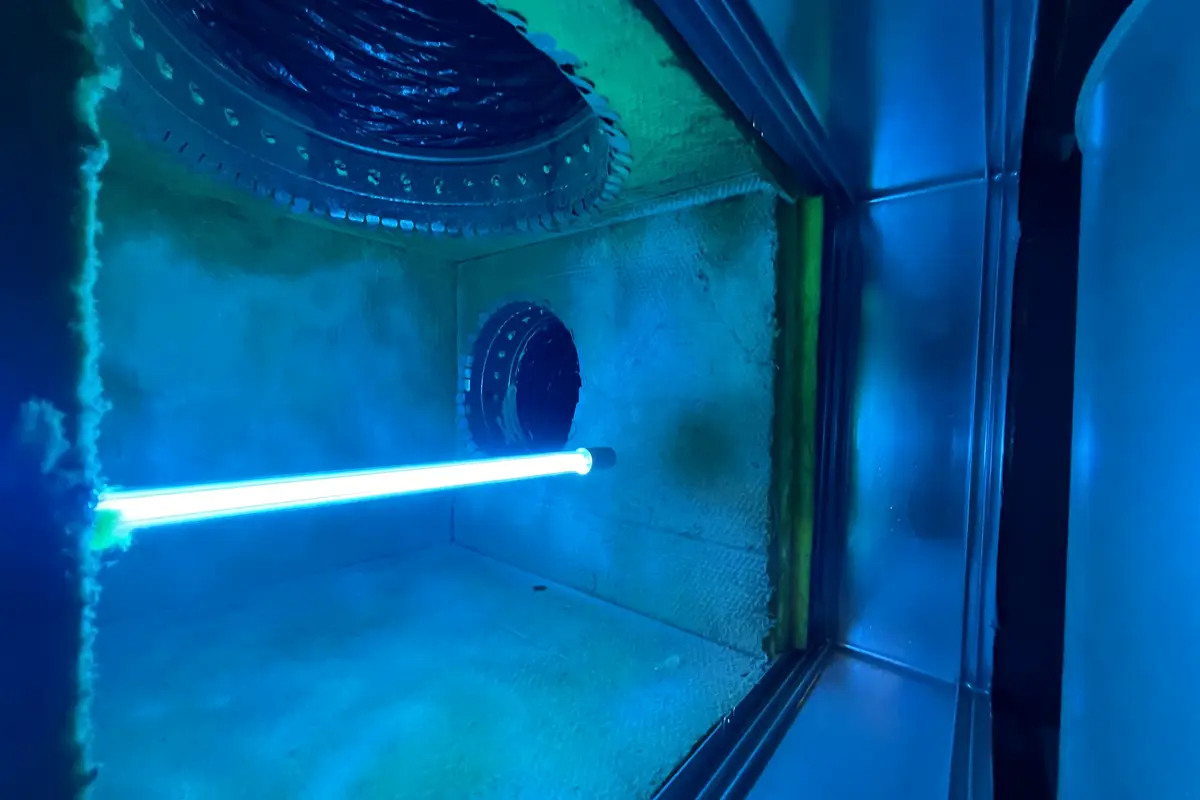
Ultraviolet-C light installed at the evaporator coil destroys mold spores, bacteria, and biofilm that settle on the coil surface. Unlike cleaning alone, UV-C provides continuous protection - it works 24/7, every time the system runs, preventing the coil from re-colonizing.

Improves Indoor Air Quality Immediately

The EPA estimates indoor air can be 2-5 times more polluted than outdoor air. Mold spores circulating through contaminated ductwork contribute significantly to that burden. After treatment, many Austin homeowners report reduced allergy symptoms, fewer headaches, and better sleep within days.

Protects High-Risk Household Members

Children, the elderly, and anyone with asthma or a compromised immune system face elevated health risks from mold exposure. The CDC notes that mold-sensitive individuals can experience respiratory symptoms, nasal congestion, and throat irritation from even low-level airborne spore exposure.

Camera-Verified Before and After

We document contamination with HD camera footage before treatment and again after - showing you the actual plenum and coil surfaces. You see exactly what was removed and confirm the result with your own eyes before we leave.

Austin-Specific Expertise

Austin's combination of extreme heat, 67% average humidity, nine-month cooling season, and cedar pollen creates mold conditions most HVAC technicians never encounter. Air Central technicians are trained specifically on Central Texas mold patterns, seasonal risk periods, and the duct configurations common in Austin-area homes.

Addresses the HVAC Side That Remediators Skip

Most mold remediation companies clean walls and ceilings but lack the duct cleaning equipment and expertise to treat the HVAC system. Without treating the ducts, mold spores continue circulating even after surface remediation. Air Central fills this gap as the HVAC mold treatment specialist.

Why Austin Creates Extreme HVAC Mold Conditions
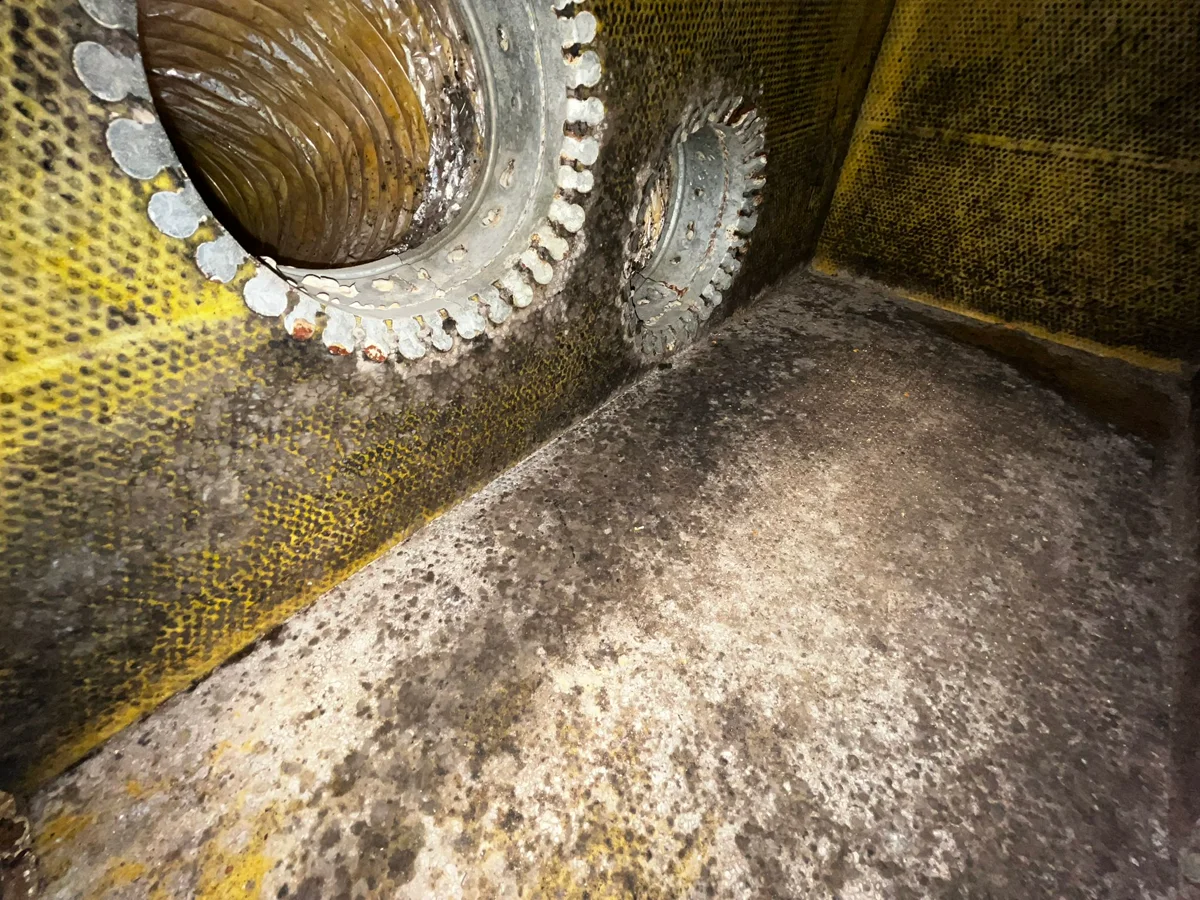
Plenum interior showing contamination buildup from Austin TX humidity and heat
67%

Austin's average relative humidity - above the 60% threshold at which mold can establish within 48 hours

9 months

How long Austin AC systems run per year, generating constant coil condensation and duct moisture

29 days

Days Austin reached 100°F+ recently, driving condensation cycles that accelerate mold growth in ductwork

2-5x

How much more polluted indoor air can be vs outdoor air, per EPA research on poorly maintained HVAC systems

5 months

Duration of Austin's cedar and oak pollen season, loading ductwork with organic matter that feeds mold colonies

Clean plenum after Air Central HVAC mold treatment in Austin TX

How HVAC Mold Treatment Works

HVAC mold treatment takes 3-6 hours depending on system size and contamination severity. UV-C installation adds approximately 1 hour.

1

HD Camera Inspection

Our certified technician inserts an HD camera into your duct system, plenum, and coil access panel. You watch live on a monitor as we document contamination levels, mold locations, and system condition. This baseline inspection guides the treatment plan and gives you proof of what we found.

2

HEPA Negative Pressure Cleaning

Commercial-grade HEPA vacuum systems create powerful negative pressure throughout your duct system, trapping mold spores, debris, and contaminants as they are dislodged. Simultaneously, rotary brush tools physically scrub duct walls clean - removing the mold colonies and organic material that would otherwise fuel regrowth.

3

Plenum and Coil Treatment

The plenum box and evaporator coil are the highest-contamination zones in most Austin HVAC systems. We clean both thoroughly, removing biofilm, mold growth, dust cake, and debris that standard duct cleaning companies often skip. Coil surfaces are treated to remove buildup that insulates the coil and promotes moisture retention.

4

UV-C Light Installation (Recommended)

After cleaning, we install a professional-grade UV-C germicidal light adjacent to the evaporator coil. The UV-C lamp emits continuous short-wavelength ultraviolet radiation that destroys the DNA of mold spores, bacteria, and viruses that settle on the coil surface - preventing re-colonization 24 hours a day.

5

Post-Treatment Verification

The HD camera goes back through your duct system so you can see the after result yourself. We verify improved airflow at every register and confirm the UV-C light is operational. You receive a written summary of findings, treatment performed, and recommendations for ongoing maintenance.
Why Cleaning Alone Is Not Enough

Professional duct cleaning removes existing mold colonies from your system. But Austin's conditions - 67% average humidity, nine months of AC operation, cedar pollen loading - mean mold spores are constantly settling on your evaporator coil.

UV-C germicidal light installed adjacent to the evaporator coil creates a permanent kill zone. The lamp continuously emits short-wavelength ultraviolet radiation that destroys the DNA of mold spores, bacteria, and viruses before they can establish on the coil surface.

The result: the coil stays clean. Austin homeowners who install UV-C after mold treatment consistently see much longer intervals between professional cleanings - and many report the coil remains clear on follow-up camera inspections years later.

Learn About UV-C Installation
UV-C germicidal light installed inside HVAC system in Austin TX for mold prevention

HVAC Mold Treatment Cost in Austin

Service LevelEstimated Price RangeEst. Time
Duct Cleaning + Mold Treatment$150-$2,500 -single-system homes, standard contamination, HEPA cleaning throughout3-6 hr
Full HVAC Mold Treatment$400-$4,000 -includes plenum, coil, all ductwork, and HD camera inspection4-8 hr
Premium Whole-Home Service + UV-C$800-$5,000 -large or multi-zone homes, severe contamination, UV-C installation included5-12 hr

HVAC mold treatment cost depends on system size, contamination severity, number of zones, and whether UV-C installation is included. Call (512) 601-4451 for a personalized estimate. Every home is different. Call (512) 601-4451 for your personalized estimate.

11 Signs Your HVAC Has Mold

Musty or earthy smell when your AC or heat turns on
Dark or fuzzy rings around vent registers - especially in bathrooms, kitchens, or basements
Allergy or asthma symptoms that worsen when you are home and improve when you leave
Persistent sneezing, nasal congestion, or itchy eyes that do not respond to antihistamines
Visible mold on vent registers or supply grilles
Your home has experienced water damage, flooding, or a refrigerant leak in the past 2 years
You have had mold remediated on walls or ceilings but it keeps returning
Your HVAC system is more than 5 years old and has never had a professional duct cleaning
Headaches, fatigue, or brain fog that is more pronounced when you have been inside for hours
Your evaporator coil has not been inspected or cleaned in the past 3 years
You notice black or green staining on ceiling tiles near supply vents

Why Choose Air Central for HVAC Mold Treatment

500+ Verified 5-Star Reviews

Air Central is the most reviewed duct cleaning and HVAC mold treatment company in Austin, with a 5.0-star average across 500+ verified Google reviews. When other Austin homeowners needed mold treated in their HVAC, this is who they called.

NADCA-Method Cleaning - Not Spray-and-Pray

We use commercial-grade HEPA vacuum systems and rotary brush tools that physically remove mold - not chemical foggers that kill surface mold but leave spores behind. NADCA (National Air Duct Cleaners Association) standards are the industry benchmark, and our process meets them.

HD Camera Proof Before and After

You see inside your own ductwork before and after treatment. No guessing, no trusting our word - the camera footage shows exactly what was removed and confirms the result. Most competitors do not offer camera verification.

UV-C Installation by Certified Technicians

Our technicians are trained in professional UV-C germicidal light installation - not the $40 DIY lamps sold online, but commercial-grade systems positioned for maximum coil coverage. Proper placement is everything with UV-C effectiveness.

Based in Austin at 11601 Century Oaks Terrace

We are a local Austin company that understands Central Texas mold patterns, seasonal risk windows, and the specific duct configurations in Austin-area homes. We are not a national franchise sending unfamiliar subcontractors.

Same-Day and Emergency Appointments

We offer same-day HVAC mold treatment appointments throughout the Austin metro area - because mold does not wait. Call (512) 601-4451 for urgent service.

Frequently Asked Questions About HVAC Mold Treatment

Is mold in air ducts dangerous?
Yes. Mold in air ducts is dangerous because your HVAC system actively distributes mold spores throughout your home with every cycle - unlike mold on a wall that stays contained to one area. The CDC confirms that mold exposure can cause nasal stuffiness, throat irritation, coughing, wheezing, eye irritation, and skin irritation. People with allergies, asthma, or compromised immune systems are at greatest risk. In severe cases or with prolonged exposure to heavy contamination, mold can trigger chronic respiratory illness. The particular danger with HVAC mold is that it is invisible - you breathe the spores without ever seeing the source.
What does mold in air ducts look like?
Mold inside air ducts appears as dark or discolored spots, fuzzy or powdery growth, or a dark film on duct walls, plenum interiors, or evaporator coil surfaces. Early-stage mold may look like black or gray dust that does not wipe off cleanly. Established colonies look like dark green, black, or white fuzzy patches on metal duct surfaces. On the evaporator coil, mold and biofilm appear as dark buildup between the coil fins. You typically cannot see duct mold without a camera inspection - the contamination is deep inside the system, not at the vent openings. Dark rings around vent registers are a surface sign that mold may be present deeper in the system.
How is HVAC mold treatment different from mold remediation?
Standard mold remediation companies handle structural mold - mold on drywall, wood framing, ceiling tiles, and other building surfaces. HVAC mold treatment specifically addresses mold inside the air conditioning system: the ductwork, evaporator coil, and plenum box. These require different equipment and expertise. A remediation company may clean walls and ceilings but lacks the commercial HEPA duct vacuum and rotary brush tools needed to treat the HVAC system. If your home has both structural mold and HVAC mold (common after water damage), you need both services. Air Central handles the HVAC side. Most Austin homeowners with recurring mold problems have already had surface remediation done - but the mold keeps returning because the ductwork was never treated.
How much does HVAC mold treatment cost in Austin?
HVAC mold treatment in Austin through professional duct cleaning costs $150-$2,500 for standard single-system homes. Full HVAC treatment including plenum, evaporator coil, all ductwork, and HD camera inspection runs $400-$4,000. Premium whole-home service for large homes, multi-zone systems, or severe contamination costs $800-$5,000 and typically includes UV-C light installation to prevent regrowth. UV-C installation alone adds $200-$3,500 depending on the number of systems and equipment grade. The final cost depends on system size, number of zones, contamination severity, and home size. Call (512) 601-4451 for a personalized estimate based on your home's actual needs.
Will mold in air ducts come back after treatment?
Mold can return after treatment if the underlying moisture conditions are not addressed. Professional duct cleaning removes existing mold colonies and the organic matter they feed on - but if your home maintains 60%+ indoor humidity, your coil continues to collect moisture, or there is a water leak near the ductwork, mold can re-establish within weeks. UV-C light installation is the most effective prevention layer - the lamp continuously destroys mold spores that settle on the coil surface, preventing re-colonization even in Austin's humid conditions. We also recommend regular MERV 13 filter changes, a whole-home dehumidifier if your indoor humidity stays above 55%, and follow-up inspection every 3-5 years.
How long does HVAC mold treatment take?
HVAC mold treatment takes 3-6 hours for most Austin homes, depending on system size, number of zones, and contamination severity. Large homes with multiple air handlers or heavily contaminated systems may require 6-10 hours. UV-C light installation adds approximately 1 hour per system. We provide a time estimate before we start based on our initial camera inspection findings.
Do you do whole-house mold remediation?
No. Air Central specializes in HVAC mold treatment - the air duct, evaporator coil, and plenum components of the mold problem. We do not perform structural mold remediation on walls, ceilings, subfloor, or building materials. If you have both structural mold and HVAC mold, you need a licensed mold remediation contractor for the structural work and Air Central for the HVAC side. We are happy to refer you to reputable Austin remediation contractors and coordinate our work with theirs so the HVAC is treated at the right point in the remediation sequence.
Is there mold in my air ducts if I smell something musty?
A musty smell when your AC or heat runs is one of the strongest indicators of mold or mildew in your HVAC system. The odor is caused by microbial volatile organic compounds (MVOCs) - gases produced by mold as it metabolizes. You typically smell MVOCs before you see any visible mold, which means by the time you notice the smell, a mold colony has already established somewhere in your duct system or on the evaporator coil. Not every musty smell means dangerous mold levels - it could be early-stage mildew or a light contamination - but any persistent HVAC odor warrants a camera inspection to assess what is actually there.
Can I treat mold in air ducts myself?
DIY mold treatment in air ducts is largely ineffective. A household shop vac cannot reach the deep ductwork, main trunk lines, plenum, or evaporator coil where mold colonies establish. Bleach or antimicrobial sprays kill surface mold but leave dead spores behind - which remain allergenic and serve as food for new mold growth. DIY duct cleaning also risks dislodging mold colonies and releasing concentrated spore clouds into your living space without proper HEPA containment. Professional HVAC mold treatment uses commercial HEPA vacuum systems that maintain negative pressure throughout the process, capturing spores before they enter your home. For Austin homeowners, the combination of humidity, heat, and cedar pollen makes professional treatment necessary to achieve lasting results.
How do I know if my HVAC has mold?
The definitive way to determine if your HVAC has mold is an HD camera inspection inside the duct system and a visual check of the evaporator coil and plenum. Warning signs include: musty odors when the system runs, dark rings or discoloration around vent registers, respiratory symptoms that worsen at home, and a system that has not been professionally cleaned in 5+ years - especially in Austin's humidity. If you notice any of these signs, call (512) 601-4451 to schedule a camera inspection. We document what we find before recommending treatment, so you know exactly what you are dealing with before spending money.

Ready to Eliminate HVAC Mold in Austin, TX?

Same-day appointments available. Camera inspection shows you exactly what is in your system before we start. Call or book online.

(512) 601-4451

Book Your Appointment

No spam. Contact within two business hours. Protected by reCAPTCHA - Privacy & Terms.