Mold in an air handler grows on the evaporator coil, drain pan, and blower components where condensation and organic debris collect. In Austin, attic-mounted air handlers face extreme heat-humidity cycles year-round, making mold growth nearly inevitable without active prevention. UV-C light installation eliminates the problem without repeated manual cleaning.
What Is an Air Handler and Where Is Yours?
The air handler is the indoor component of a split air conditioning system. It houses the evaporator coil, blower motor, and the filter housing where return air enters the system. In most Austin homes built since 1990, the air handler is installed in the attic above the main living level - this placement keeps mechanical equipment out of living space and allows attic ductwork to distribute conditioned air to each room. Homes in older Austin neighborhoods like Hyde Park, Travis Heights, or Crestview may have closet-mounted air handlers at ground level, which creates a different but equally real mold environment.
The attic location that is standard in most Cedar Park, Leander, Georgetown, Round Rock, and Pflugerville homes creates a uniquely hostile environment for the air handler. The attic is the hottest space in the home - reaching 150-160 degrees Fahrenheit on summer afternoons according to DOE research. The air handler sits in this extreme heat while its internal coil operates at 40 degrees Fahrenheit. This is not a minor temperature differential. It creates aggressive condensation on every external surface of the coil housing every time the system runs.
Understanding where your air handler is located and what environment it operates in is the first step toward understanding why Austin homes have higher rates of HVAC mold than homes in most other US cities. The combination of extreme heat, high ambient humidity, and continuous condensation on the coil creates conditions that professionals describe as the most favorable mold growth environment they encounter in residential HVAC systems.
Why Austin Air Handlers Are Especially Prone to Mold
The condensation cycle inside an attic-mounted Austin air handler is continuous from April through October. Outdoor air at 95-105 degrees Fahrenheit and 50-70% humidity enters the return side of the system. The evaporator coil drops that air to 55-60 degrees to cool the home. The moisture in the warm incoming air - far more water vapor than in cooler climates - condenses on the coil fins in substantial quantities. In a 2,000-square-foot Austin home on a humid June day, the system may remove 10-15 gallons of water from the air per day.
That water is supposed to drain cleanly into the condensate pan and out through the drain line. But the pan, drain line, and all surrounding surfaces stay wet. Organic debris from the incoming airstream - cedar pollen, oak pollen, dust, skin cells - deposits on these wet surfaces. The CDC's guideline that mold colonization begins within 24-48 hours on organic surfaces at humidity above 70% applies directly here: the coil surface environment inside an Austin air handler during summer exceeds that threshold consistently.
Austin's 9-month air conditioning season means this exposure cycle runs for roughly 270 days per year. There are fewer than 90 days where the attic air handler is not running and condensing moisture. Compare this to a home in a less extreme climate that runs AC for 120 days per year: the Austin homeowner's air handler experiences more than twice as many condensation events annually. Annual professional inspection and active prevention are not optional extras in this climate - they are routine maintenance requirements.
Signs of Mold in Your Air Handler
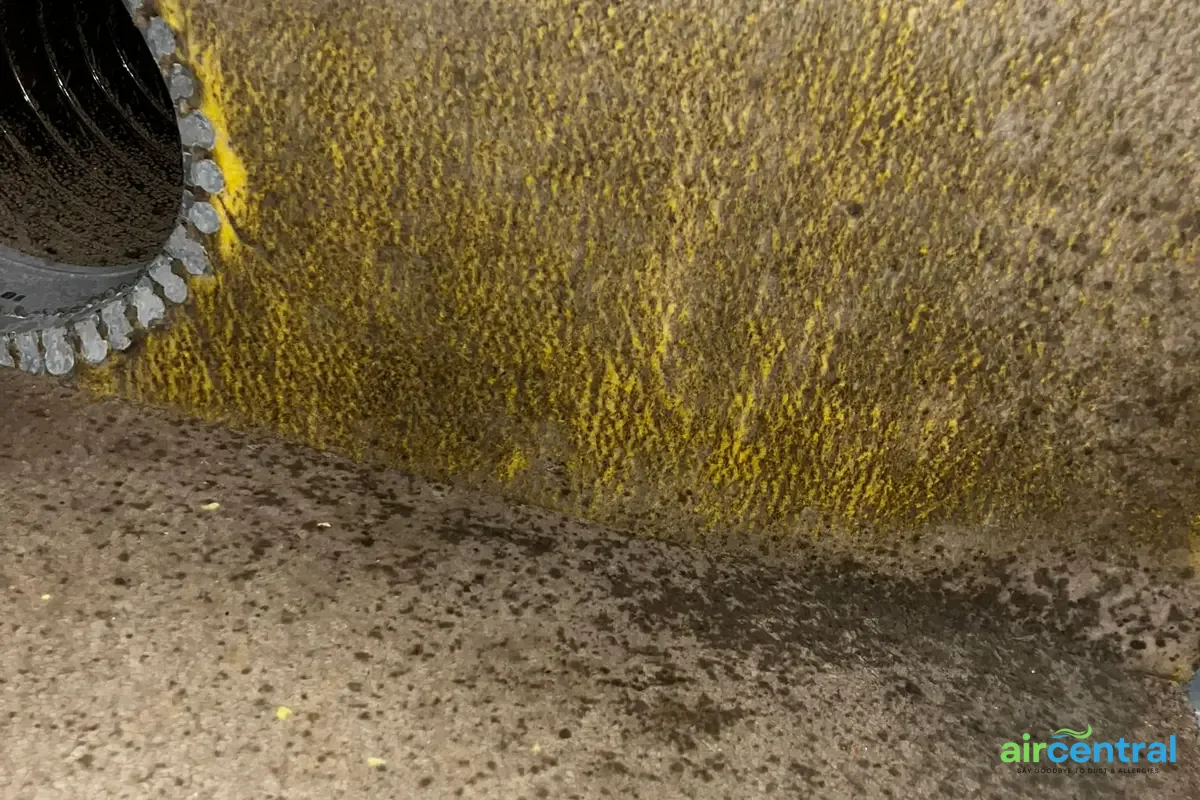
The most reliable early indicator is a musty, earthy smell that appears in the first minute or two after the AC turns on and then fades as the system runs longer. This timing is diagnostic: the smell peaks when initial blower operation disturbs settled mold on the coil and in the near-duct surfaces, then dilutes as the full airflow normalizes. If you smell it seasonally - stronger in spring as the AC first starts for the year after months of limited use - this confirms mold had time to grow during the off-season.
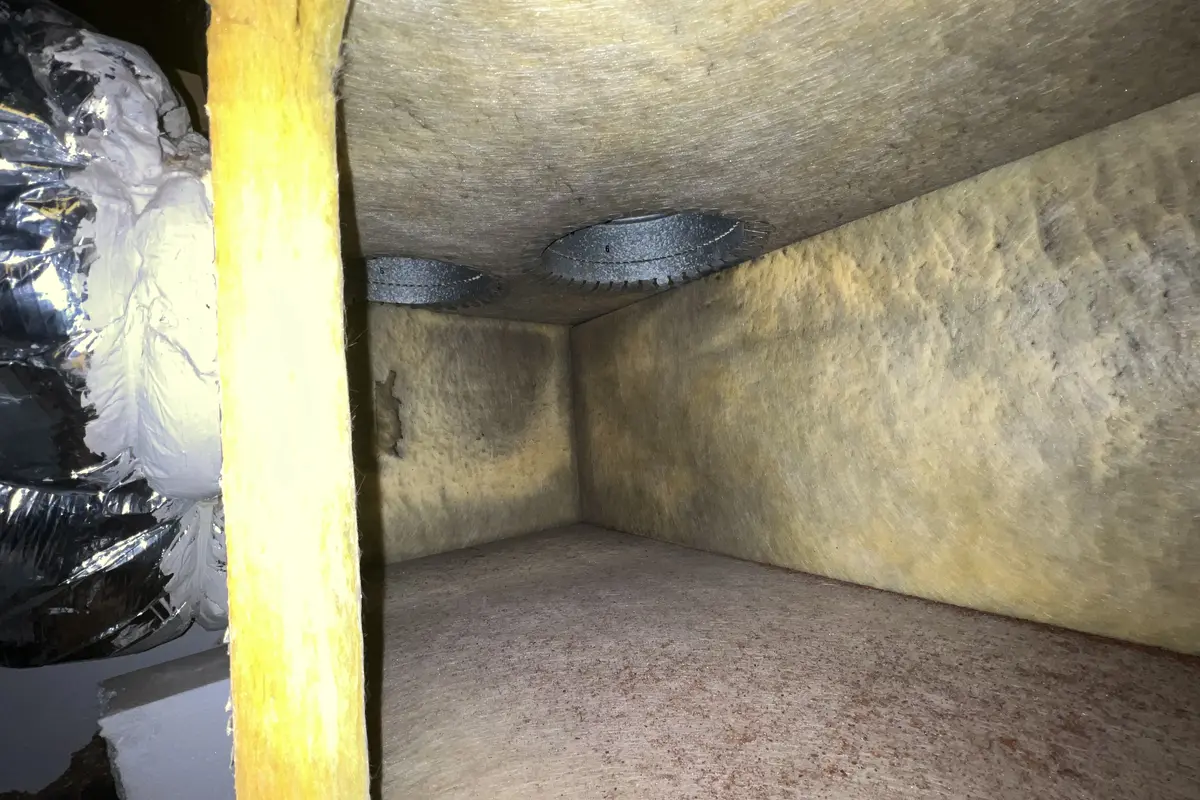
Visual signs visible without removing panels include dark rings or discoloration around supply vent registers (mold particles depositing on the register frame), visible dark coating on the coil fins when you shine a flashlight through the filter slot with the filter removed, and discoloration around the condensate drain pan access port. In advanced cases, visible black or green spots on the drain pan wall are detectable without tools.
Health-pattern signs include respiratory symptoms that worsen when the AC runs and improve when it does not, symptoms that seem worse in rooms with more supply vents (master bedroom with two supply registers vs a half-bath with none), and household members with asthma or allergies experiencing increased frequency of attacks during summer months. Reduced cooling efficiency - the system running longer than usual to reach the thermostat setpoint - can also indicate a fouled coil, though this can have other causes. Any combination of smell plus health symptoms warrants immediate inspection.
The 4 Components Most Affected by Mold
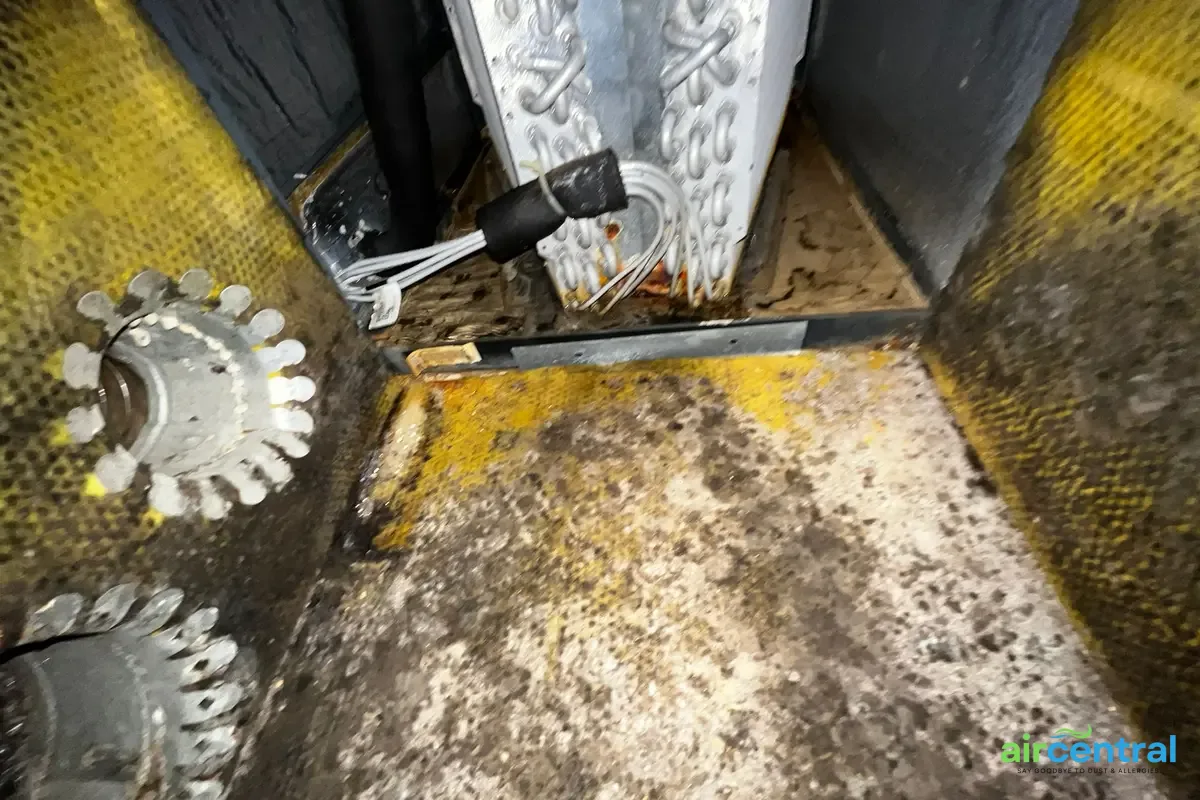
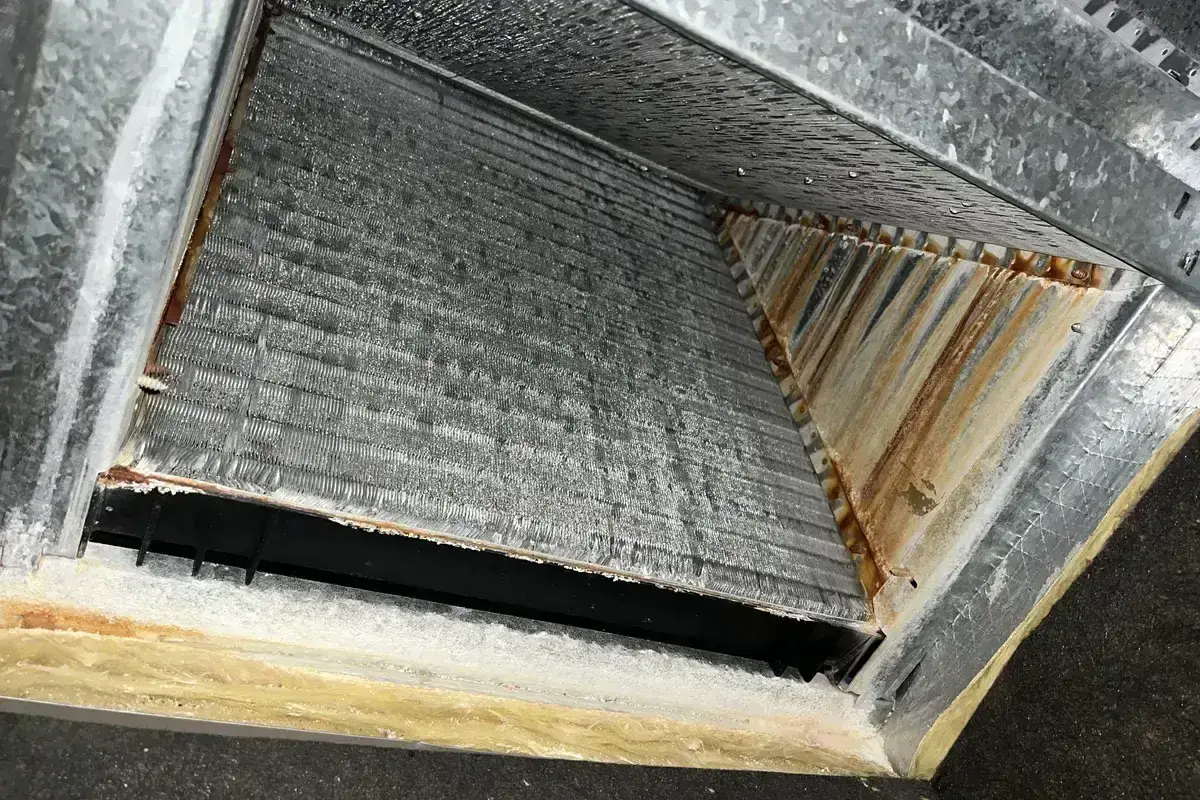
The evaporator coil accounts for the majority of air handler mold cases. Its fin-and-tube construction - rows of thin aluminum fins between which refrigerant tubes pass - creates hundreds of narrow channels that stay continuously wet during operation and dry slowly during off cycles. Mold establishes itself in the fin channels where it is shielded from any air movement that might dislodge it. Cleaning requires specialized coil cleaner and, ideally, UV-C treatment rather than just mechanical removal.
The condensate drain pan sits directly below the coil and collects dripping condensate water. Most Austin air handlers use a primary pan (under the coil) and a secondary overflow pan (above the ceiling, catching any overflow if the primary drain clogs). Both pans develop algae and mold growth when they contain any standing water. A pan with standing water visible during a visual check means the condensate drain line is at least partially blocked - clearing it is urgent because standing water dramatically accelerates mold growth on all surrounding surfaces.
The blower wheel - the squirrel-cage fan that draws return air through the coil and pushes it into the supply plenum - develops mold and debris buildup on its fan blades over years of operation. A fouled blower wheel is less efficient (reduced airflow), noisier, and deposits contaminated particles into the airstream with every revolution. The duct collar seams where flexible duct connects to the air handler plenum are the fourth vulnerability: gaps at these seams allow humid attic air to infiltrate and condense on cooler duct surfaces, providing a mold initiation point outside the air handler itself.
Health Risks of Running a Mold-Contaminated Air Handler
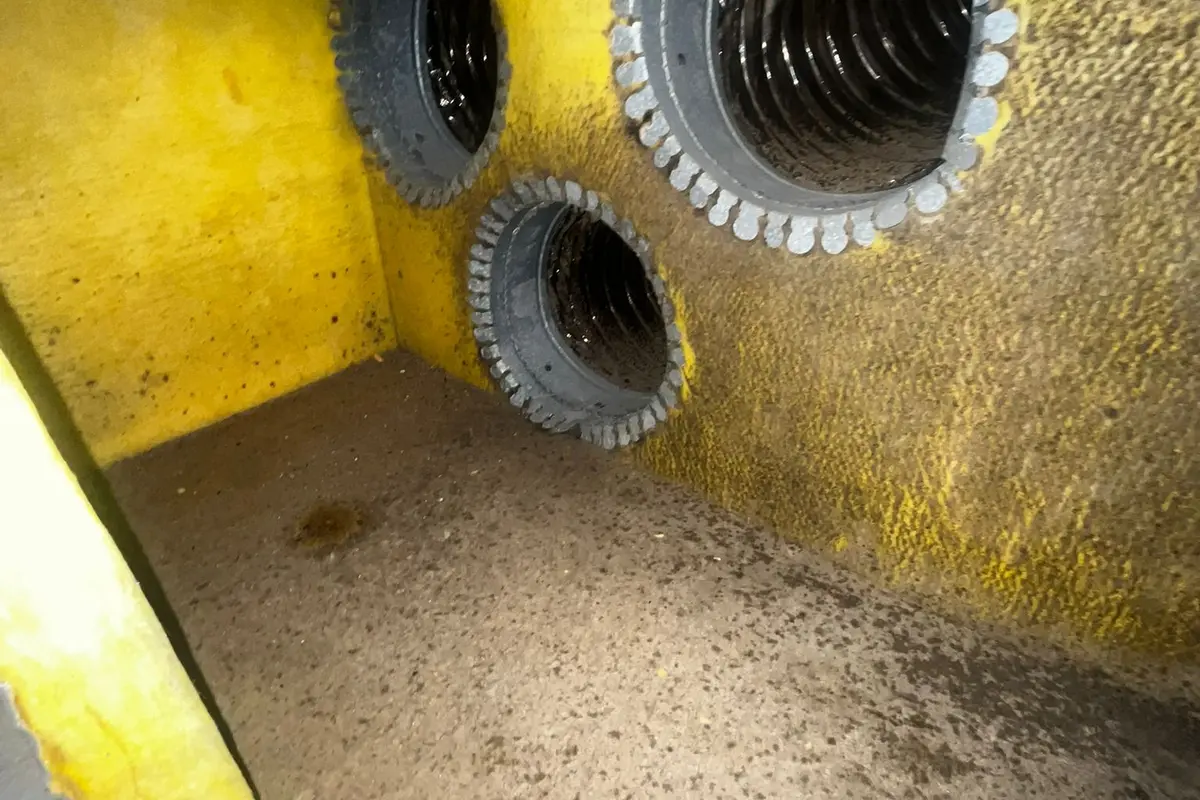
A mold-contaminated air handler distributes spores to every room in the home simultaneously via the duct system. Unlike surface mold in a bathroom or basement that can be contained to one area, HVAC mold is already in the distribution system. Every supply vent becomes a source point. Every time the blower runs - which in Austin is many hours per day from April through October - it redistributes the spore load throughout the home.
The EPA estimates that indoor air can be 2-5 times more polluted than outdoor air, and HVAC systems are a primary mechanism when contaminated. Austin residents face a compounding problem: they rely on closed-window indoor air for roughly 9 months per year due to heat, which means HVAC-distributed contamination has few opportunities to be diluted by outdoor air exchange. An Austin homeowner spending 60-70% of their time indoors in a contaminated home may be exposed to far higher cumulative mold counts than their measured outdoor data would suggest.
Long-term health consequences of ongoing mold exposure include progressive allergy sensitization (lower and lower thresholds triggering symptoms), increased frequency of respiratory infections, worsening of pre-existing asthma, and in immunocompromised individuals, more serious fungal infections. Children are at highest risk from ongoing HVAC mold exposure because they breathe more air relative to body weight and because sensitization established in childhood often persists through adulthood. The investment in HVAC mold treatment is therefore not just a comfort issue - it is a health-protective investment.
Concerned About Your Home's Air?
We provide professional air quality assessments for Austin homes. See what is in your ducts before deciding.
Call (512) 601-4451Rate your home's indoor air quality in 2 minutes
Professional Mold Removal: What the Process Involves
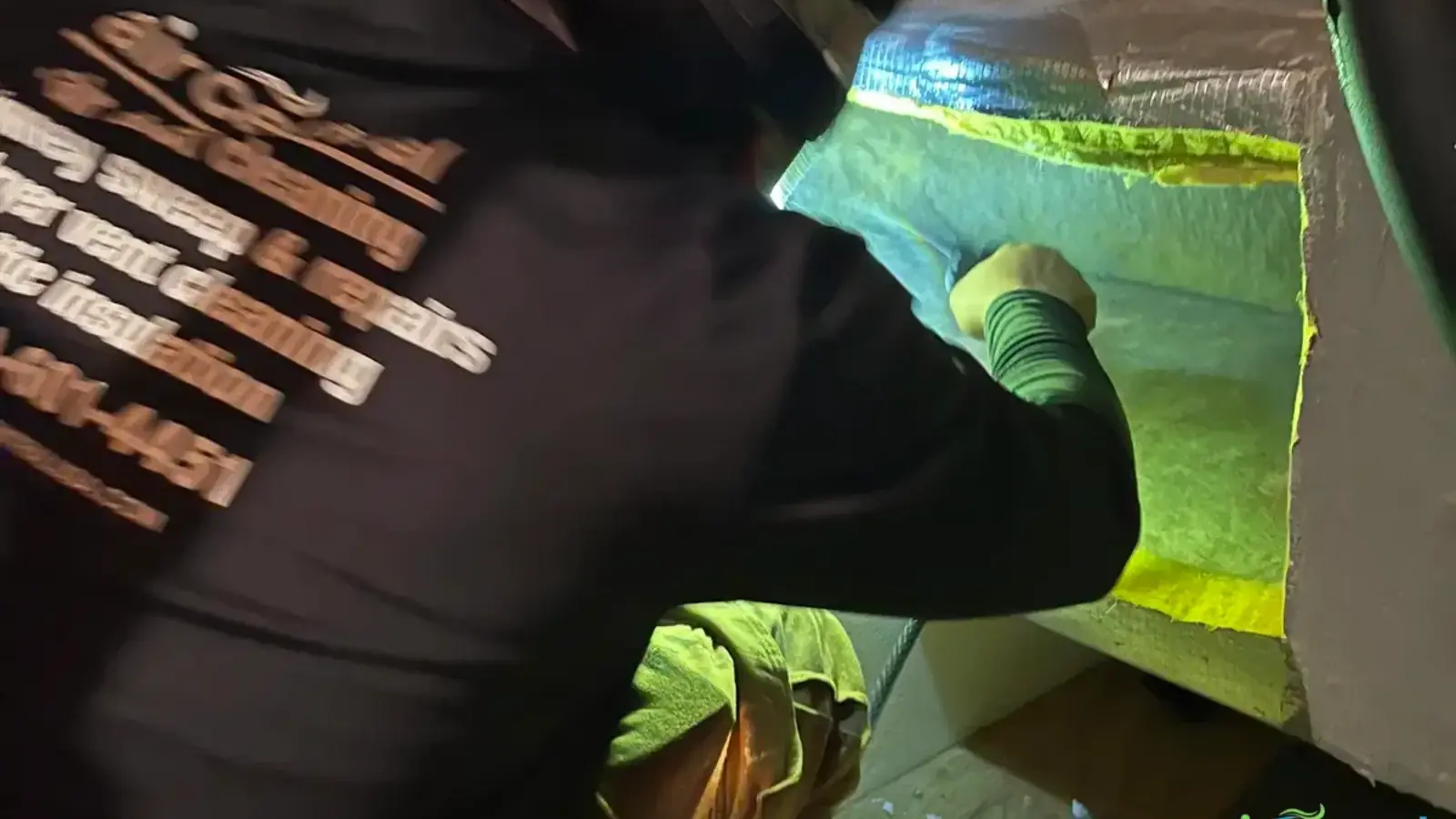
Professional air handler mold treatment begins with system shutdown and safe access. For attic-mounted units, the technician accesses the air handler through the attic hatch, confirms the system is off, and removes the access panel to expose the coil and drain pan. An HD inspection camera documents the existing condition of the coil fins, drain pan, and visible duct connections before any cleaning begins - this protects you with before documentation and establishes the scope of treatment needed.
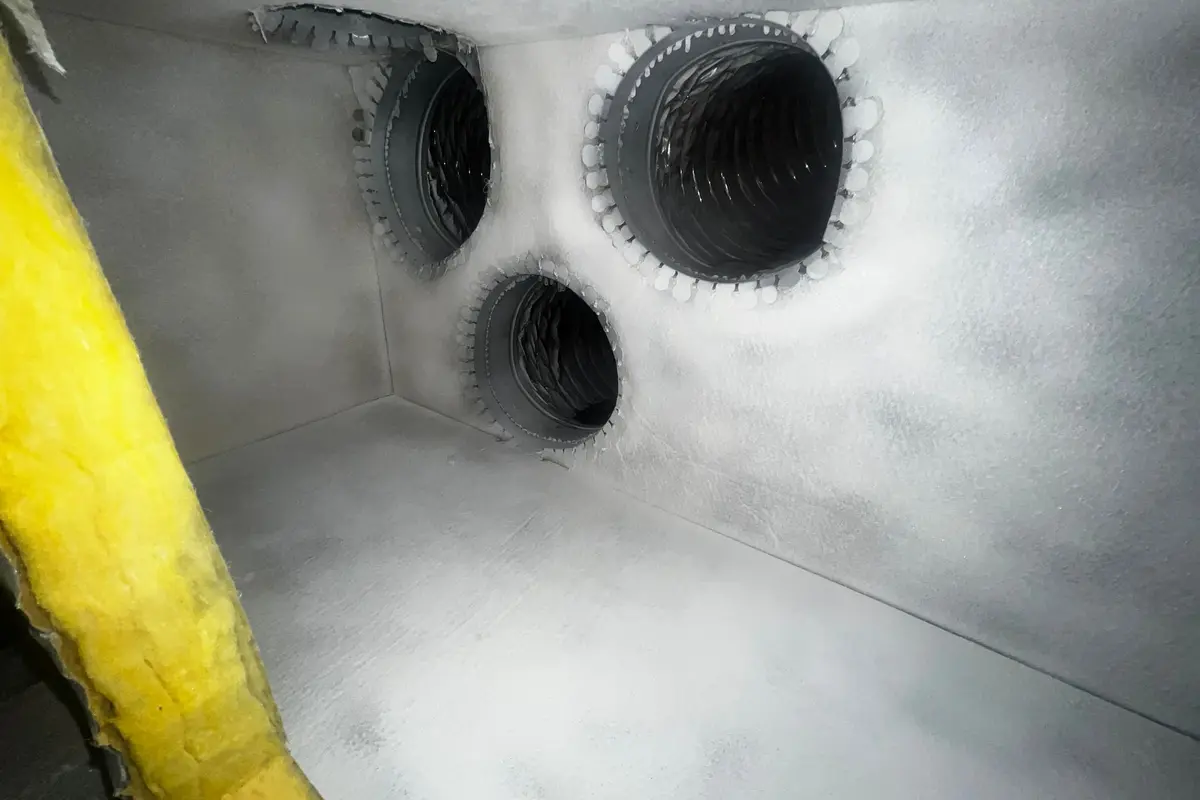
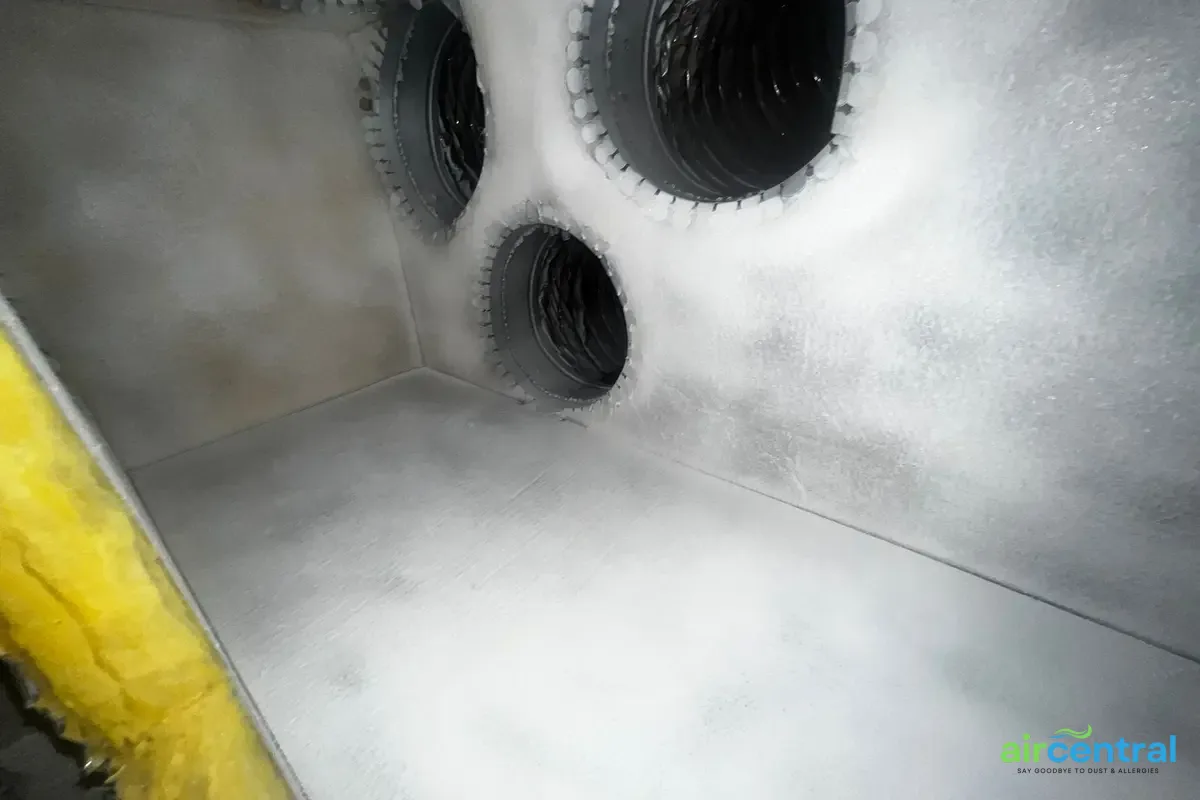
HEPA vacuuming removes loose debris from the coil fin channels, drain pan, and blower wheel. Specialized coil cleaner is applied to the fin surface using a foam or spray application. The cleaner dwells for 5-15 minutes to penetrate biofilm and mold colonies, then rinses through the drain pan and out the condensate line - carrying mold, debris, and cleaner residue into the drain. The drain pan is separately flushed with a diluted antimicrobial solution and the condensate drain line is cleared of any algae blockage using a wet-dry vacuum or pump.
Blower wheel cleaning requires removing the blower assembly if significant buildup is present. In Austin air handlers that have not been serviced in 5-10 years, the blower wheel can accumulate substantial debris that manual cleaning alone cannot fully remove. After all components are cleaned, the air handler access is inspected and sealed. UV-C lamp installation at the coil is performed as a prevention measure. Post-treatment camera inspection documents the cleaned condition. The technician verifies system operation before leaving.
UV-C Light Treatment: The Permanent Fix
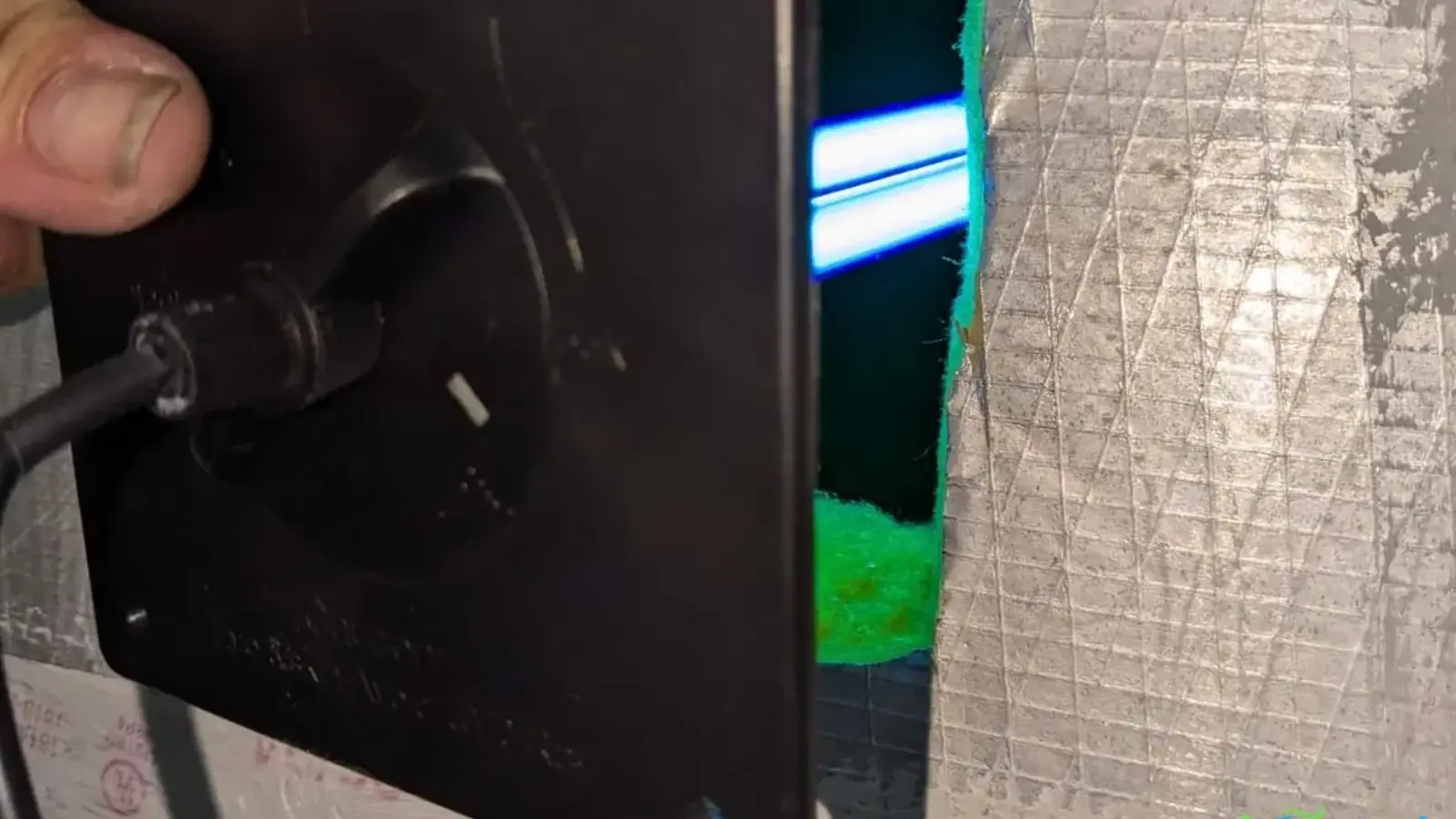
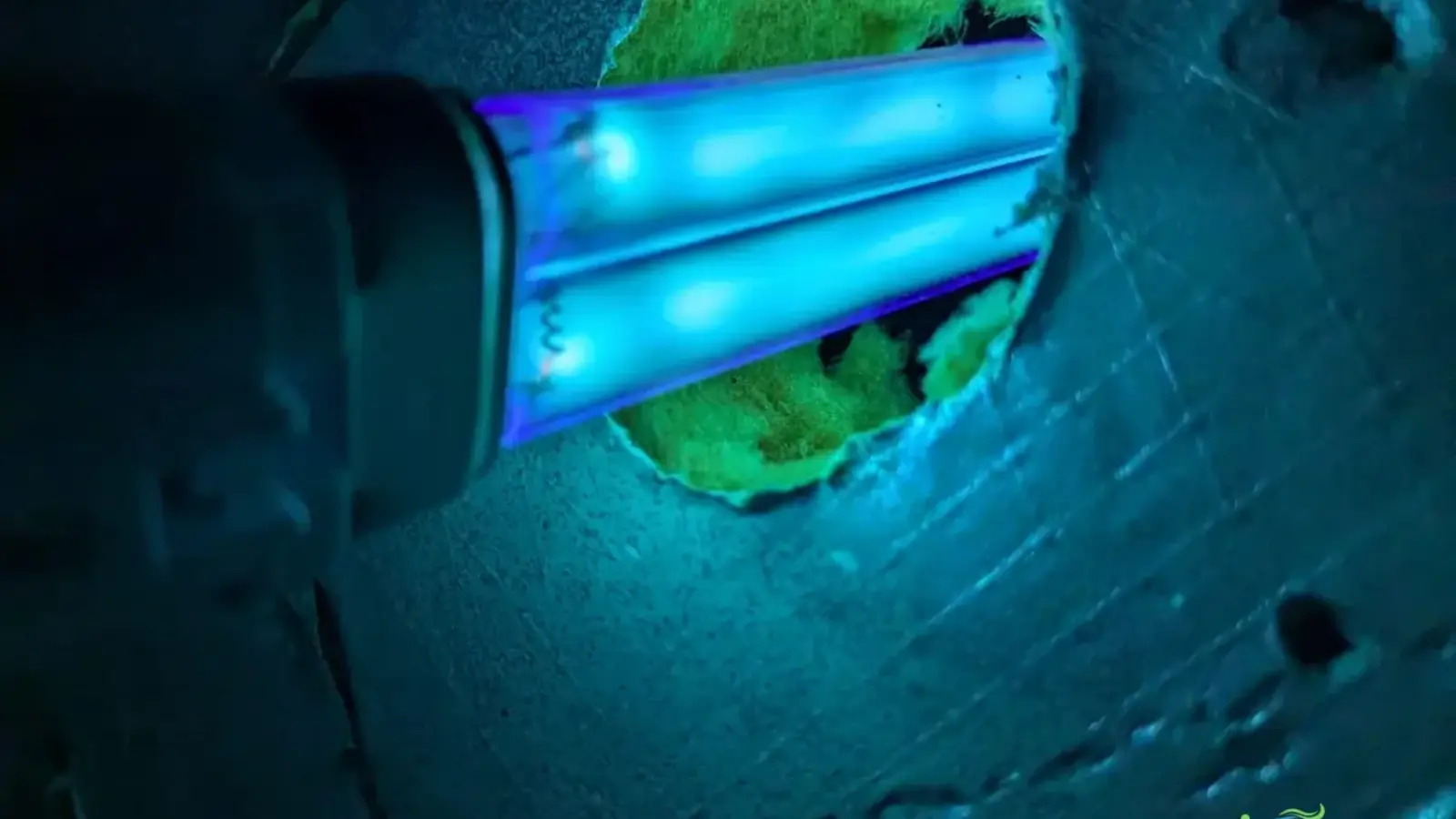
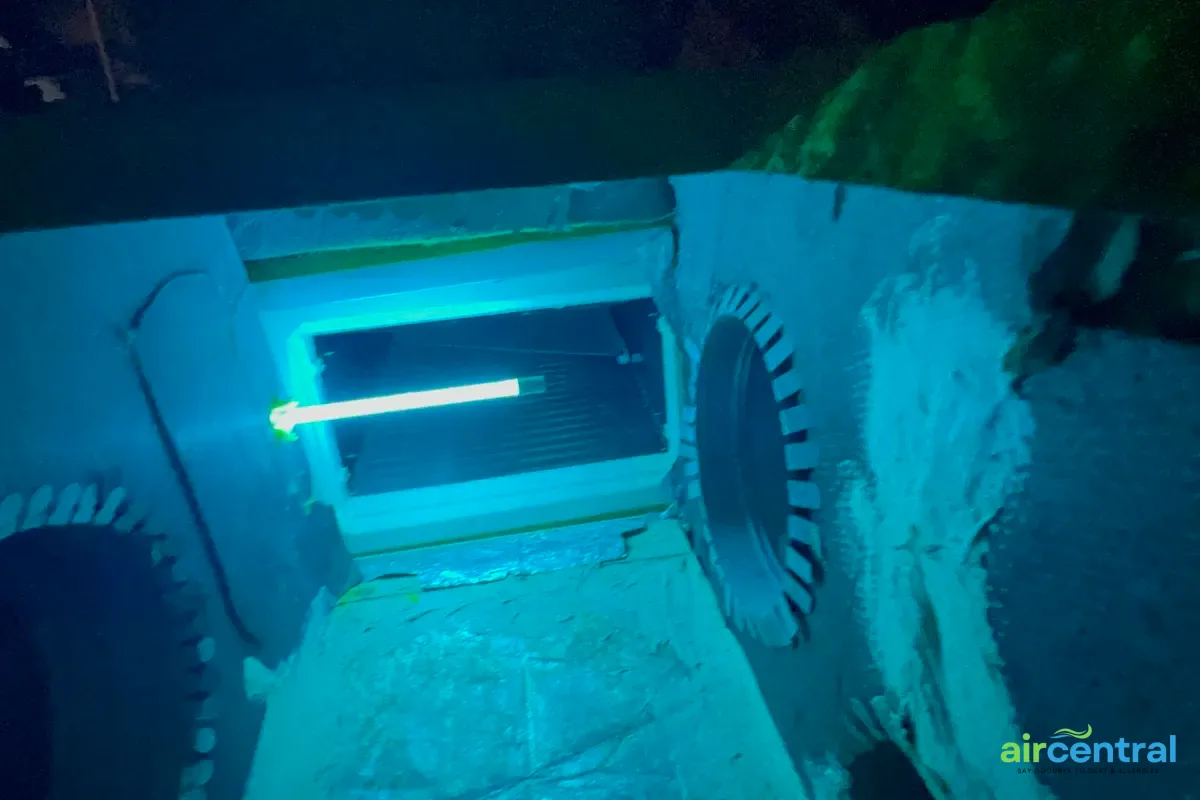
UV-C germicidal light at 254 nanometers disrupts the DNA and RNA of mold, bacteria, and viruses, preventing reproduction. Installed at the evaporator coil inside the air handler, a UV-C lamp runs continuously every time the blower operates - meaning every time air passes over the coil surface, any mold spores landing there are immediately sterilized. This is fundamentally different from periodic manual cleaning: UV-C provides continuous prevention rather than episodic remediation.
Healthcare facility data is the strongest evidence base for UV-C effectiveness. Hospitals began installing UV-C in HVAC systems in the 1990s specifically to prevent mold and bacterial growth on coil surfaces. Studies from healthcare settings consistently show greater than 99% reduction in surface mold counts within weeks of UV-C installation. The same mechanism applies in residential systems - the coil environment is not materially different from a hospital's.
For Austin homeowners, UV-C installation costs $200-$3,500 depending on equipment grade and single vs multi-system homes. Single-bulb coil-mounted systems at the lower end of that range are effective for most residential applications. Higher-end systems with dual lamps - one positioned above and below the coil - provide more complete coverage and are appropriate for larger systems or homes with known mold sensitivity. Air Central installs UV-C as part of a comprehensive air handler treatment package, and we confirm lamp operation with a UV intensity meter before leaving.
How Often to Inspect Your Air Handler for Mold in Austin
For Austin homes without UV-C, annual professional inspection is the minimum responsible interval. The ideal timing is October - the system has just completed 5 months of heavy operation through peak humidity season. Any mold that established itself during June-September is at maximum extent and most visible. Treating it in October rather than leaving it to run through the heating season and into the next summer means significantly less cumulative exposure.
For homes with UV-C installed, the inspection interval can extend to every 2-3 years for the air handler specifically, though annual HEPA duct cleaning remains recommended to address debris that accumulates in ductwork outside the air handler. UV-C bulbs require replacement every 2-3 years as UV output diminishes with age - a technician can measure current UV output and confirm whether replacement is needed during a routine inspection visit.
Post-renovation inspection is required outside the normal schedule. Any construction, major renovation, or HVAC work that disturbs ductwork or leaves the air handler exposed to construction dust should be followed by inspection and cleaning regardless of when the last service was performed. Cedar fever season changes every year - particularly heavy cedar years (when Austin's air quality index reads Poor for weeks at a time) warrant an extra spring cleaning to address the extraordinary pollen load. To schedule an air handler inspection, call Air Central at (512) 601-4451 - we bring HD camera equipment and show you what we find before recommending any work.
Related Services
Learn more about our professional services related to this topic:
- Air Duct Cleaning - Remove dust, allergens, and debris from your entire HVAC system for cleaner indoor air.
- UV Lighting System - Eliminate bacteria and allergens inside your HVAC with UV-C light technology.
Want the full picture?
Read our complete guide: The Complete Guide to Indoor Air Quality in Austin, TX (2026) →
Have questions about indoor air quality? Our team is available 7 days a week. Call us at (512) 601-4451 or visit our contact page.