Mold grows inside AC units on the evaporator coil, drain pan, and air handler because these components are permanently cold and wet in Austin's humidity. Health effects range from respiratory irritation to serious symptoms in sensitive individuals. Professional coil cleaning plus UV-C light installation is the most effective treatment - and the only method that prevents regrowth.
Why Mold Grows Inside AC Units
Your AC unit creates mold-perfect conditions every time it runs. The evaporator coil chills refrigerant to around 40 degrees Fahrenheit, causing moisture from Austin's humid air to condense on the coil surface continuously. This moisture, combined with the organic debris that accumulates on coil fins (dust, pollen, skin cells), creates a permanently wet, nutrient-rich surface in complete darkness. Mold cannot ask for a better habitat.
Austin amplifies this problem significantly. The city averages 67% relative humidity year-round - well above the 60% threshold at which mold can establish colonies within 24-48 hours. Austin AC systems run for nine months of the year, meaning the coil is condensing moisture and accumulating organic debris for three-quarters of every year. Cedar and oak pollen seasons (December-May) load additional organic matter onto the coil surface.
The drain pan beneath the evaporator coil is another high-risk zone. Designed to collect condensation, the drain pan is constantly wet and often accumulates a dark sludge of organic matter, biofilm, and mold. If the drain line gets partially blocked - common in Austin homes where algae growth from humidity clogs drain lines - water backs up in the pan and creates standing water conditions that accelerate mold growth dramatically.
Where Exactly Mold Grows in an AC Unit
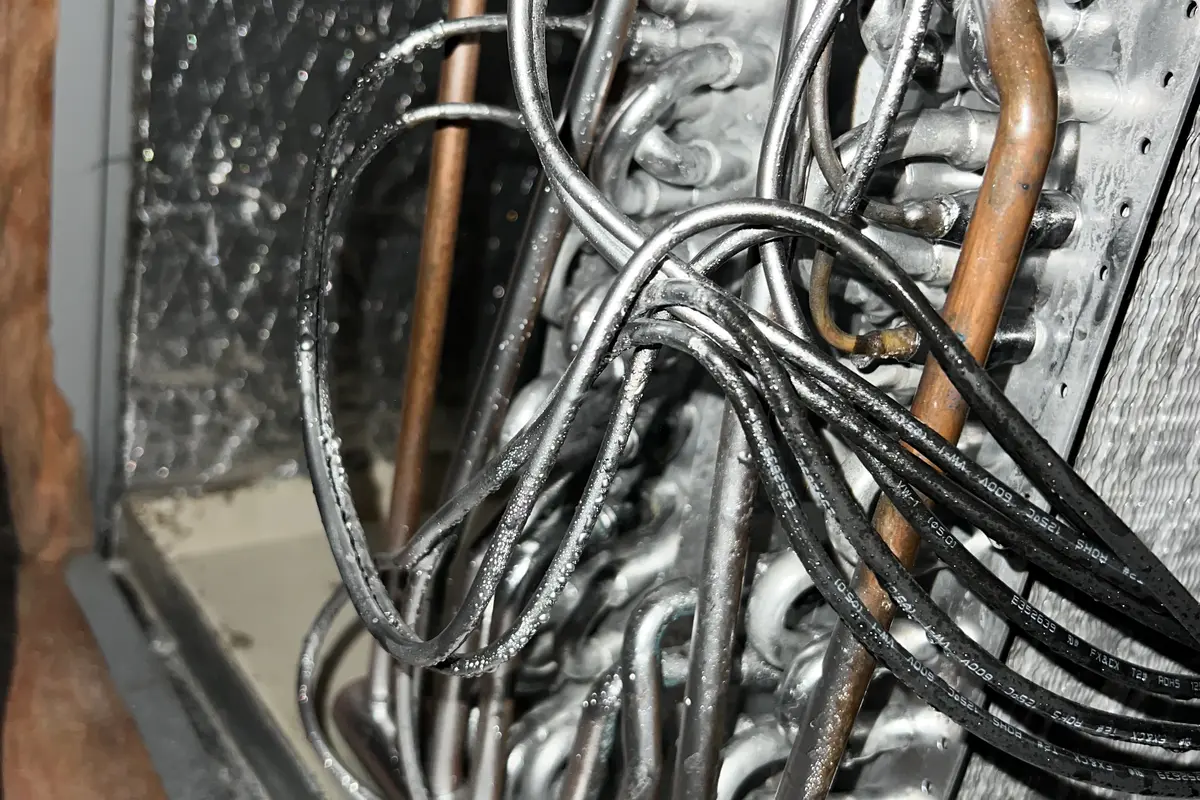
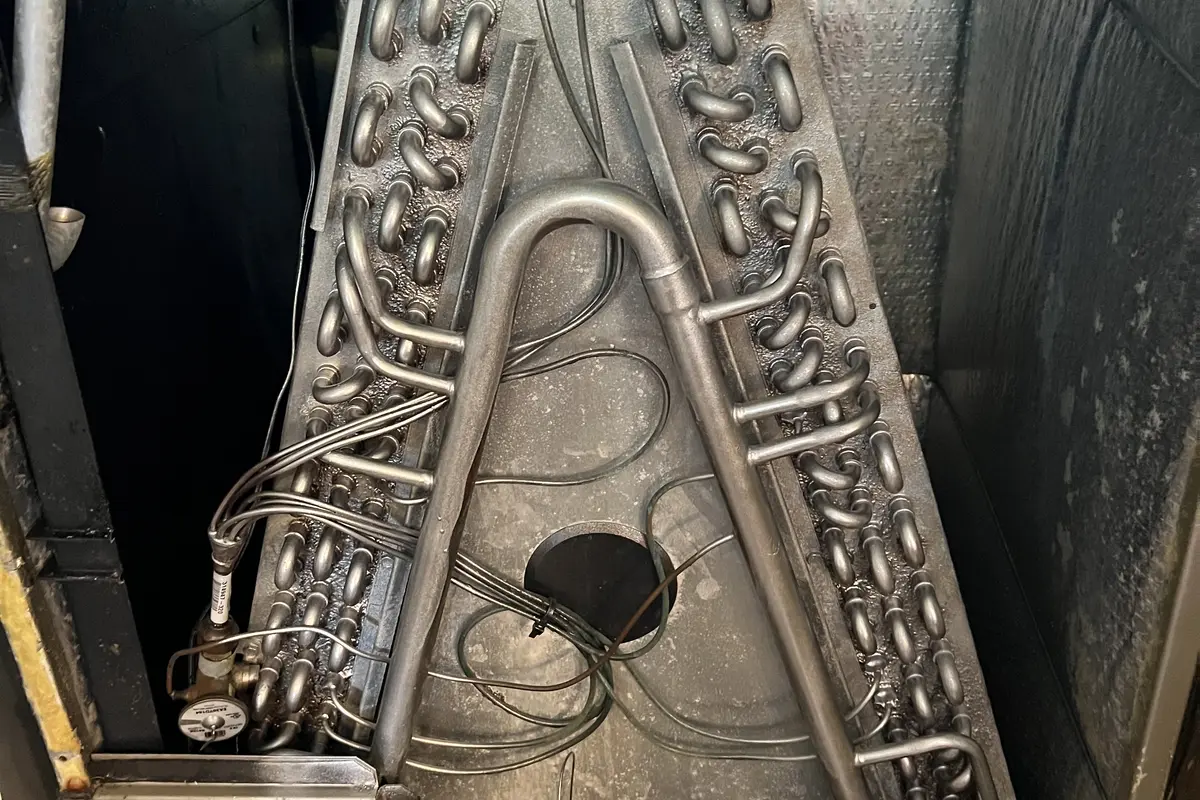
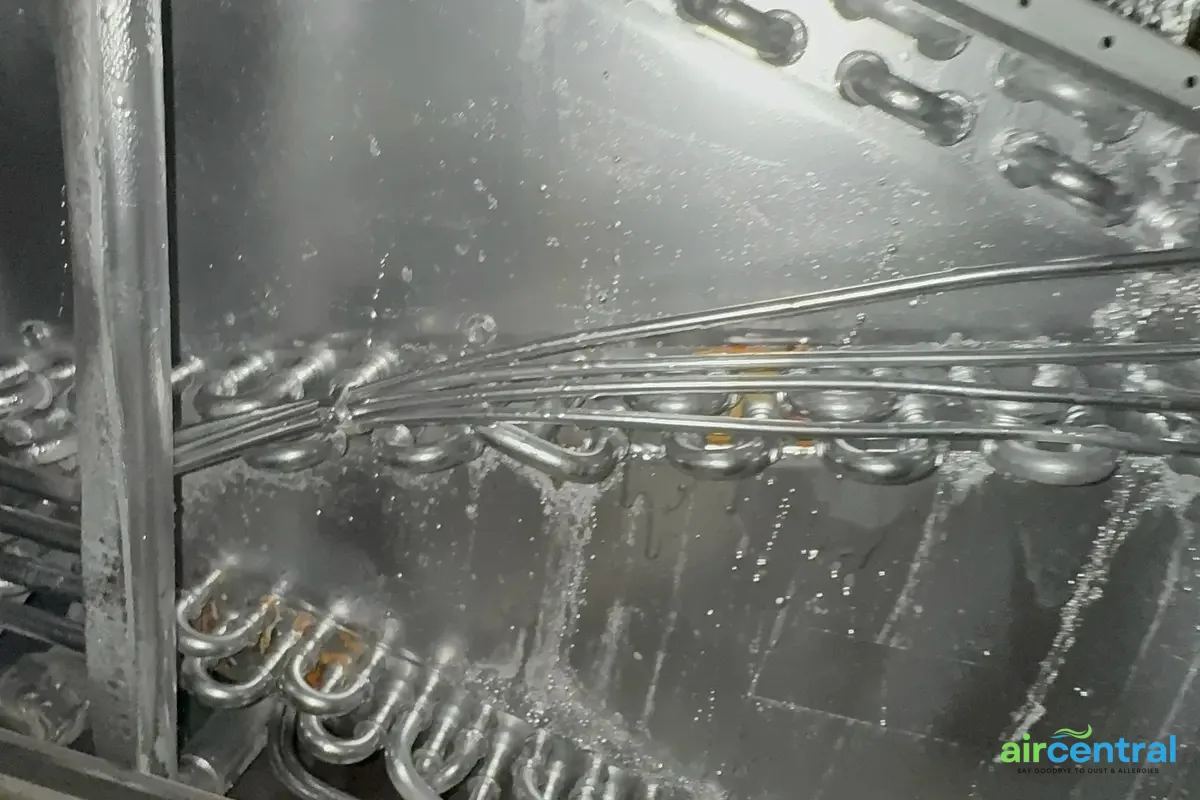
The evaporator coil is the primary mold location. Coil fins provide enormous surface area for condensation and biofilm accumulation. Mold establishes between the fins, on the coil face, and on the refrigerant lines themselves. A heavily contaminated coil appears dark brown or black instead of the silver-gray of clean aluminum. When mold on the coil reaches a critical mass, the AC system effectively becomes a mold-spore generator.
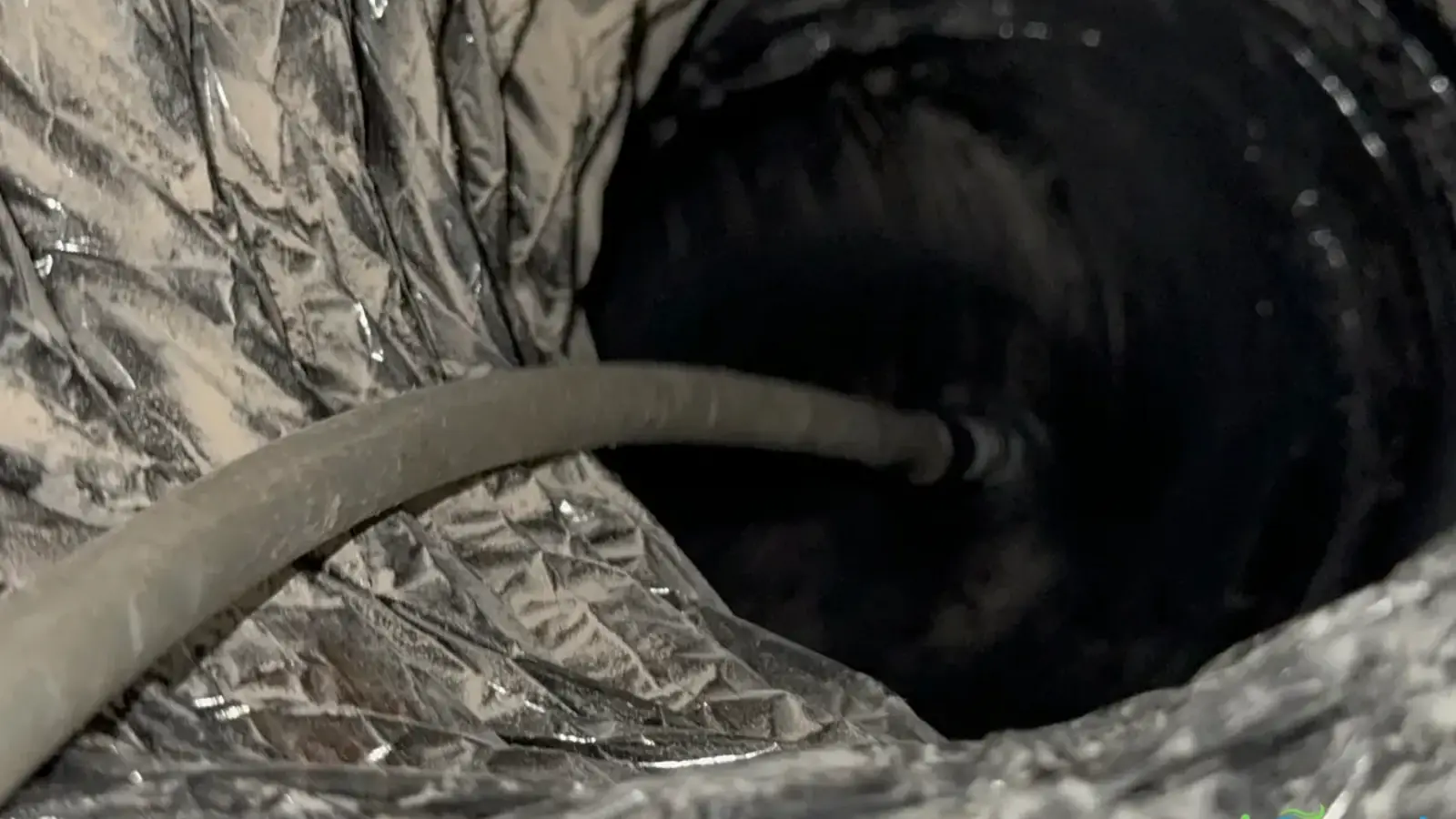
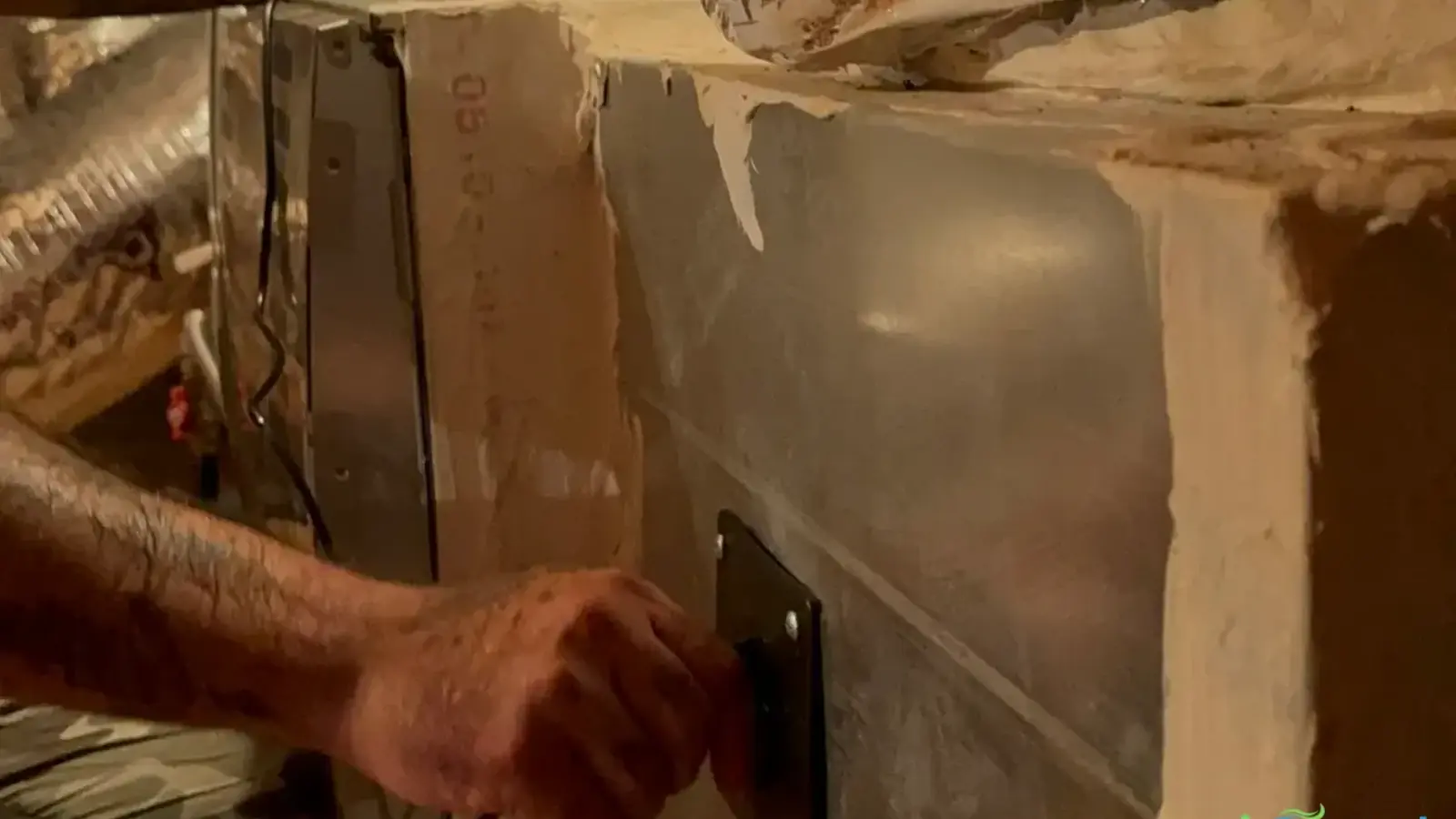
The air handler cabinet and plenum are the next zones. Air from the return ducts passes through the filter and then directly across the evaporator coil before entering the plenum and distribution ducts. If the filter has any gaps or the filter rating is insufficient to capture mold spores, spores pass freely and settle on plenum walls and duct interiors. The plenum, sitting directly adjacent to the coil, is exposed to the highest spore concentrations.
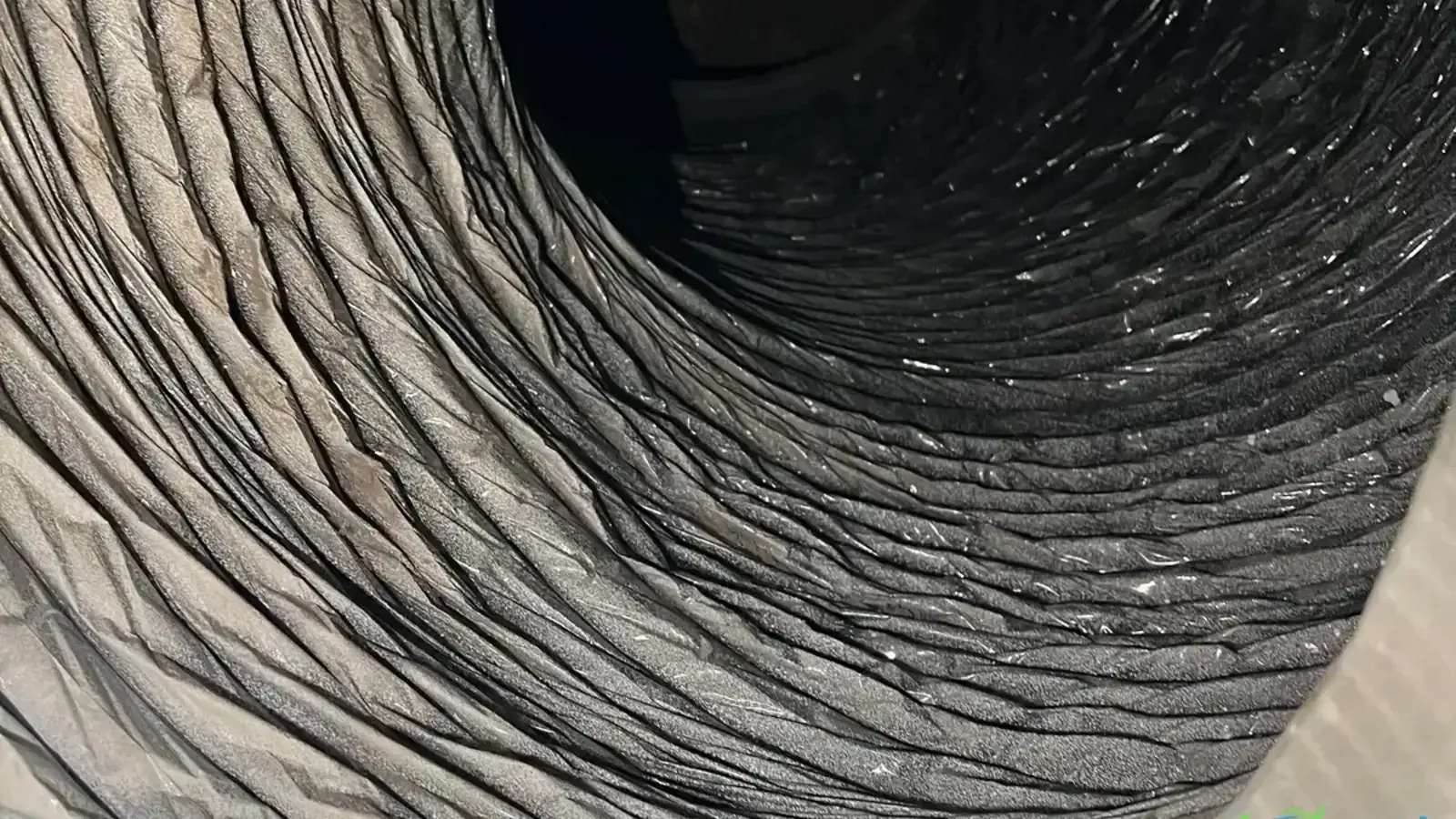
Supply ductwork carries contaminated air from the plenum to every room. Mold spores that are small enough to pass through MERV 8 filters (spores are 3-40 microns in size; MERV 8 captures down to 3 microns at only 70% efficiency) settle on duct walls wherever airflow slows or where condensation occurs near exterior walls.
Health Effects of Mold in an AC Unit
The CDC confirms that mold exposure causes nasal and sinus congestion, respiratory tract infections, throat irritation, coughing, wheezing, eye and skin irritation, and headaches. In people with asthma, mold is a documented trigger for attacks. In immunocompromised individuals, certain mold species can cause severe systemic infections.
The particular danger with AC mold is the distribution mechanism. A moldy shower wall exposes you to spores in one room. Mold on your evaporator coil distributes spores through every room in the house, every time the system runs, with no warning and no visible sign until contamination becomes severe. Indoor air can be 2-5 times more polluted than outdoor air according to the EPA - AC mold is one of the primary contributors.
Austin residents are at elevated risk because AC use is mandatory for comfort for nine months of the year. You cannot simply turn off the system. The longer mold on the coil goes untreated, the more spores accumulate in ductwork and the more severe the air quality impact becomes.
Signs of Mold in Your AC Unit
The most reliable sign is a musty, earthy, or sour smell when the AC runs - particularly when the system first turns on after a period of inactivity. This smell is caused by microbial volatile organic compounds (MVOCs) released by mold as it metabolizes. You smell mold growing in your coil and ducts before you see any visible evidence.
Other signs include: respiratory symptoms that improve when you leave home or open windows; dark rings or black spots around supply vent registers (mold carried by air settling around the vent opening); visible dark growth on drain pan surfaces accessible through the air handler; reduced cooling efficiency as mold buildup on coil fins insulates the coil and reduces heat transfer; and higher energy bills as the system runs longer to achieve the same temperature.
If you notice that family members have recurring allergy symptoms, headaches, or fatigue that improve away from home - particularly in summer when windows are closed and the AC runs constantly - mold in the AC unit is a primary suspect.
How to Treat Mold in an AC Unit
The only complete treatment for AC mold is physical removal followed by UV-C prevention. Antimicrobial sprays and chemical foggers kill surface mold on contact but leave dead spores and mold roots (hyphae) behind. Dead spores remain allergenic. Mold roots regrow once the chemical wears off - typically within 3-8 weeks in Austin's humidity. Spraying without physical removal is temporary maintenance, not treatment.
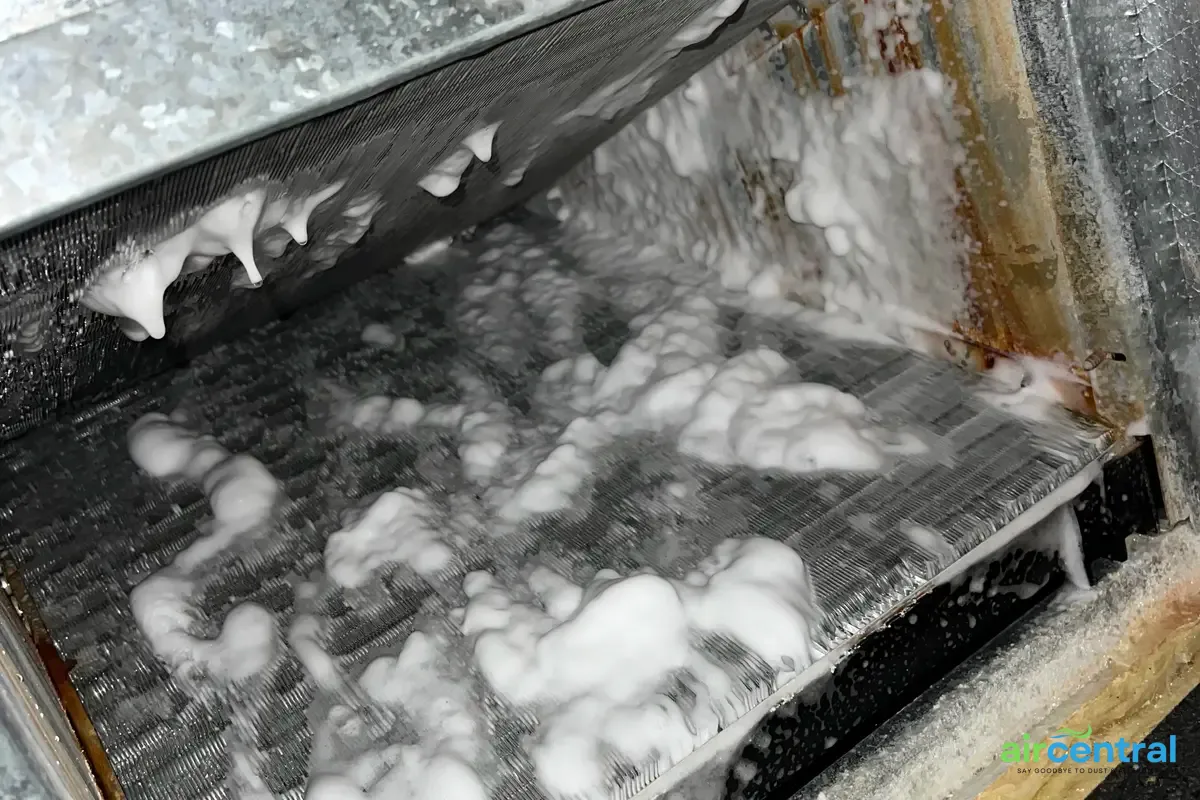
Professional coil cleaning involves shutting down the system, carefully accessing the air handler, and cleaning the coil using appropriate non-acid coil cleaner and low-pressure rinse to flush contamination from the fins without bending them. The drain pan is cleaned and flushed, and the drain line is cleared of algae blockage. The entire plenum interior and accessible duct connections are vacuumed with a commercial HEPA system.
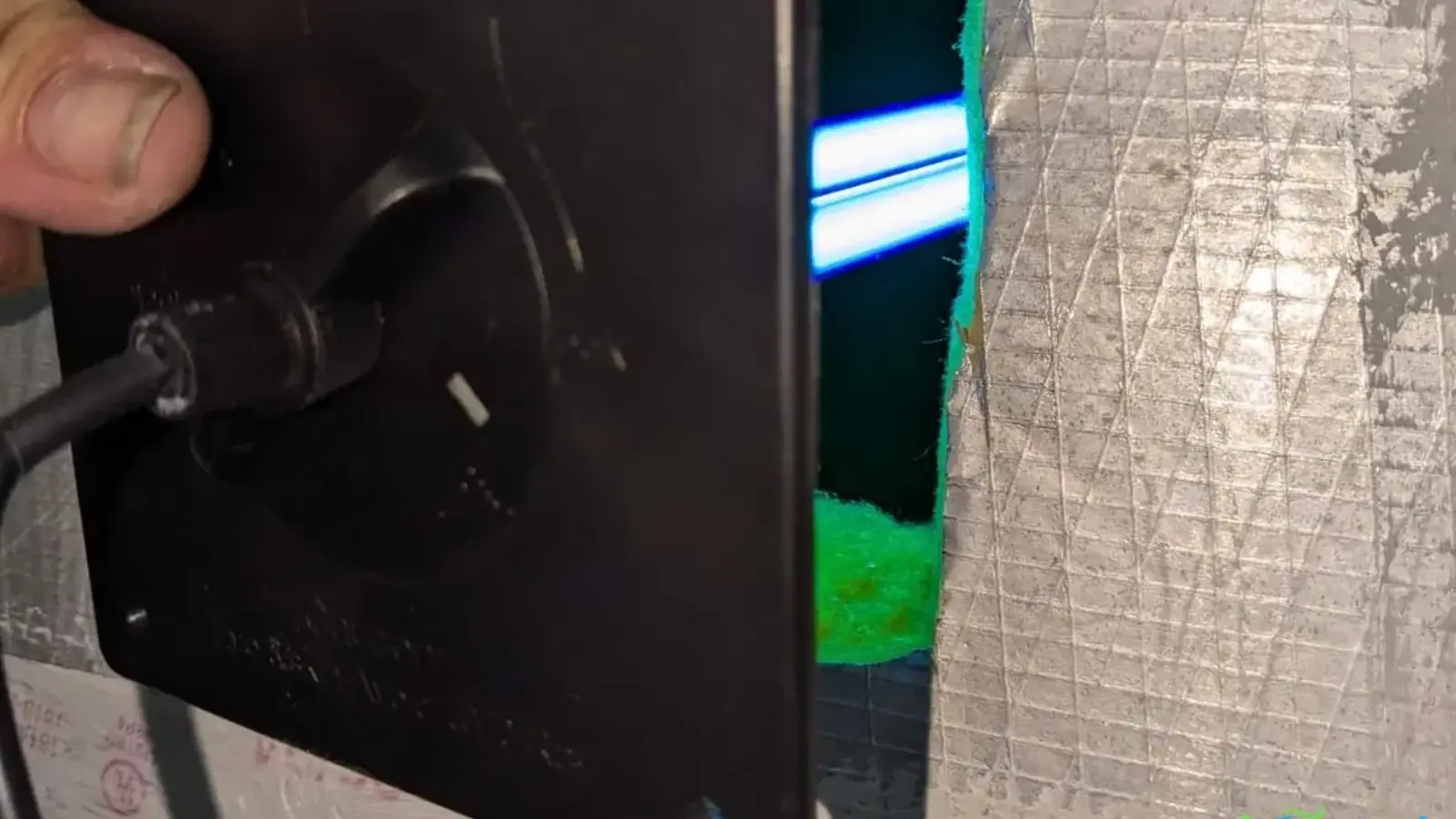
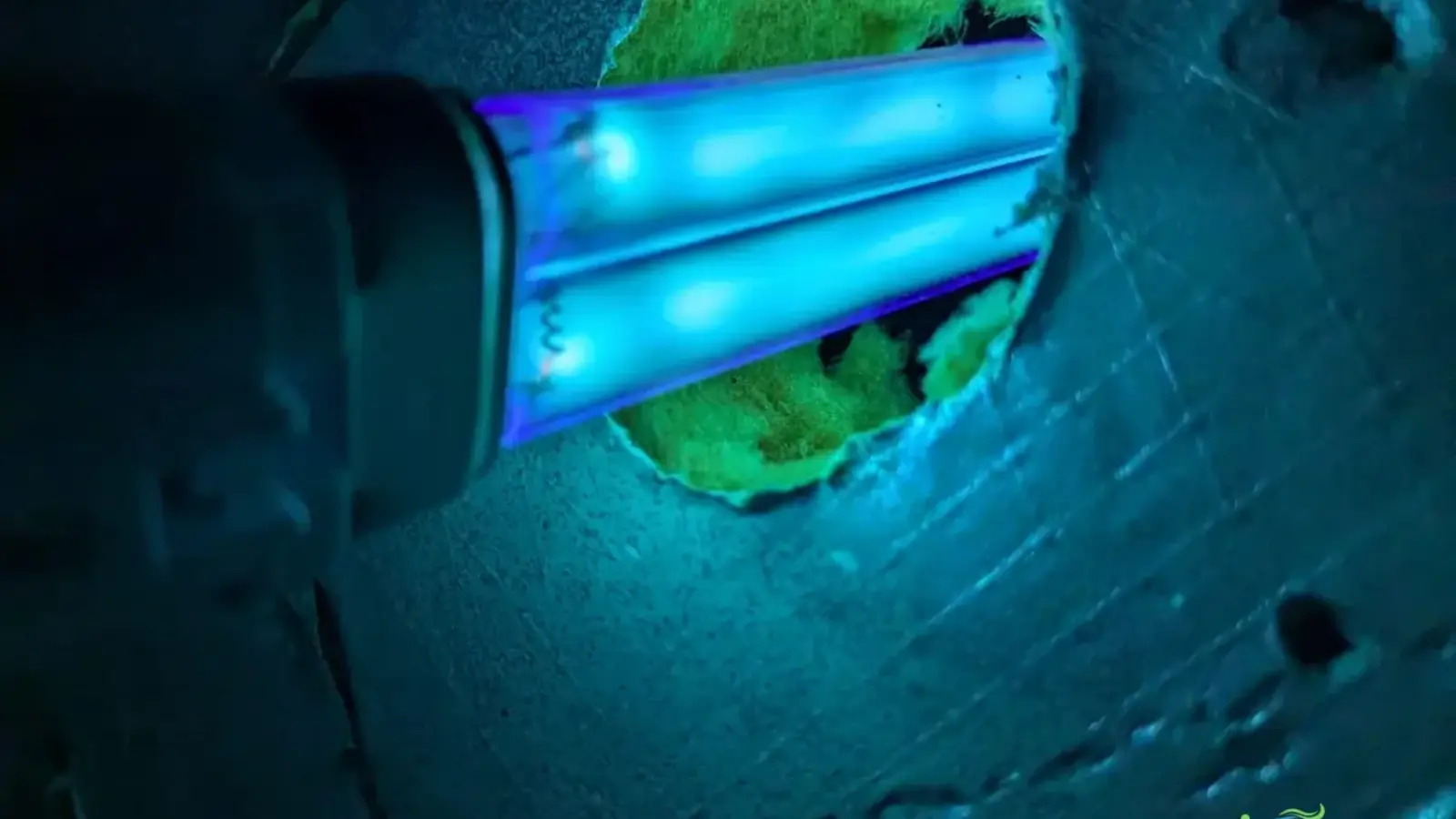
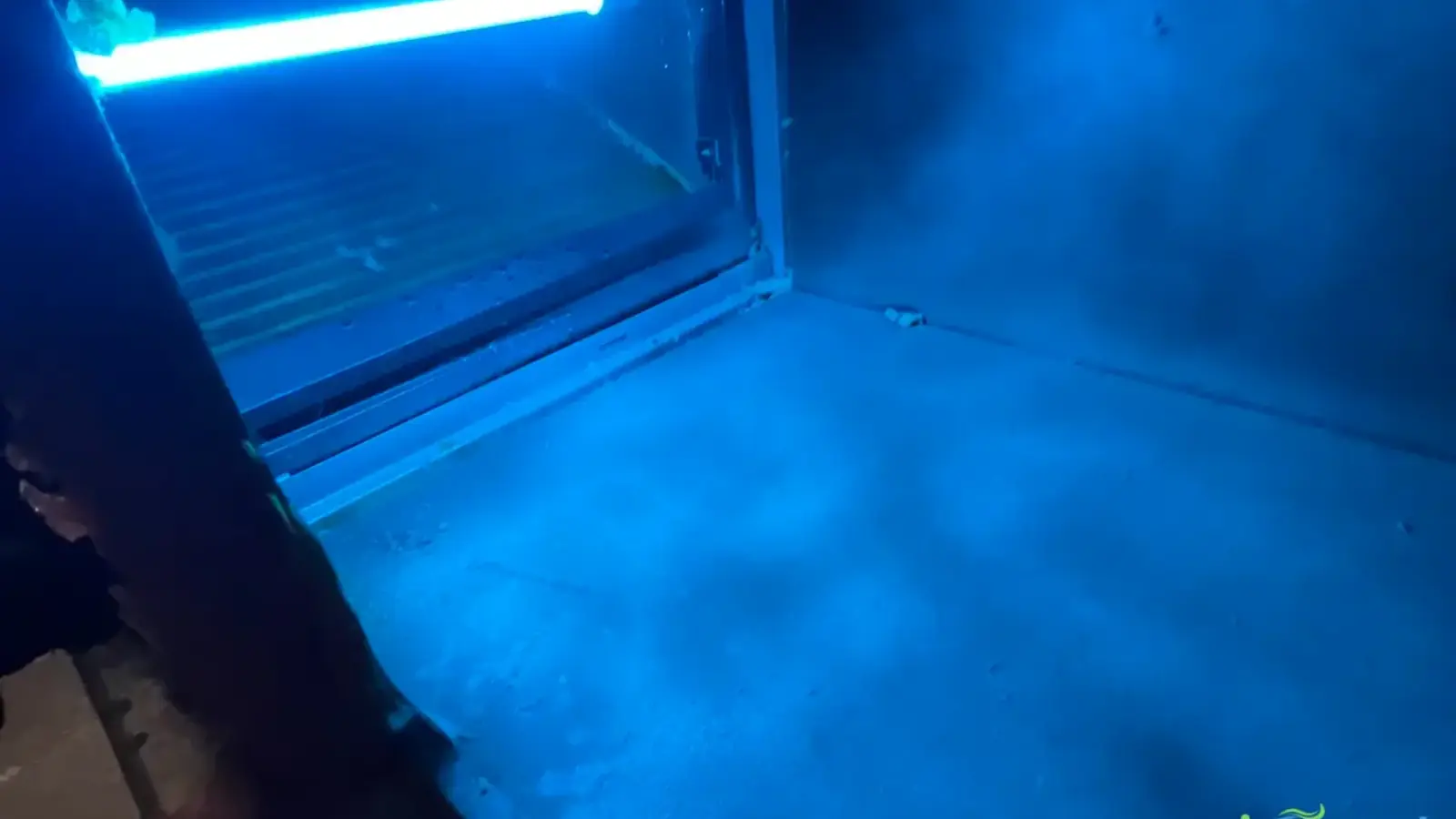
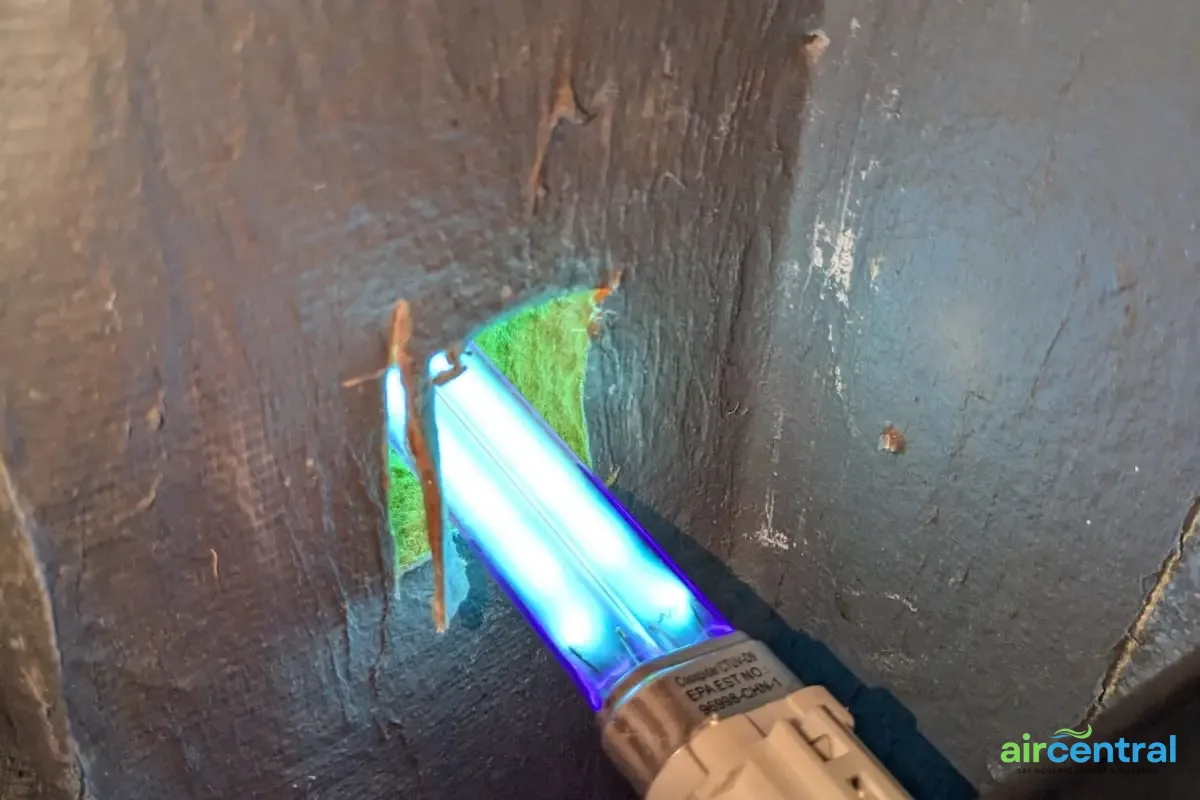
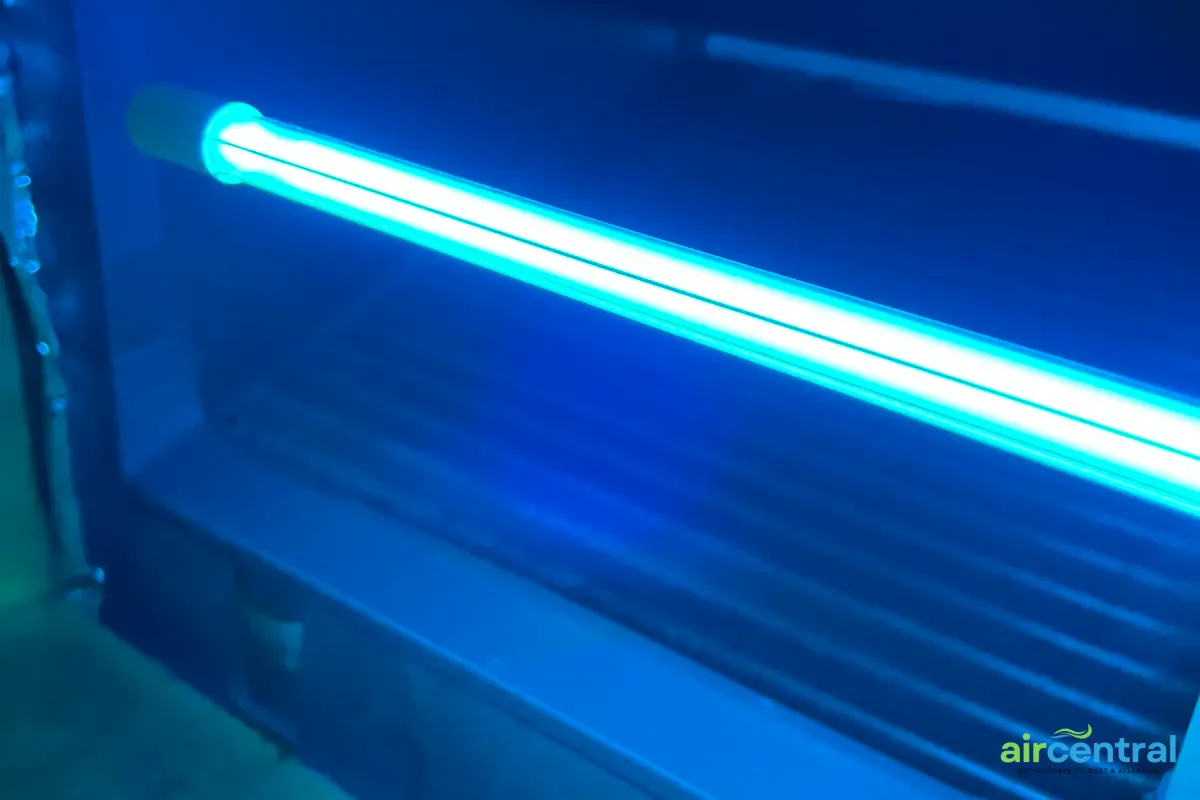
UV-C germicidal light installation is the prevention component. A lamp positioned adjacent to the evaporator coil emits continuous UV-C radiation (254nm wavelength) that destroys mold spores settling on the coil surface before they can establish. Studies in healthcare settings consistently show 99.9%+ reduction in surface mold on coils where UV-C is installed. For Austin homeowners, UV-C is the difference between a treatment that lasts and one that requires repeat cleaning every 1-2 years.
Concerned About Your Home's Air?
We provide professional air quality assessments for Austin homes. See what is in your ducts before deciding.
Call (512) 601-4451Rate your home's indoor air quality in 2 minutes
DIY Mold Treatment for AC Units: What Works and What Does Not
Homeowners can safely handle some AC mold-adjacent tasks: replacing dirty filters monthly during high-humidity periods, cleaning accessible drain pan surfaces with a diluted bleach solution, clearing the condensate drain line with a wet/dry vacuum, and ensuring the AC runs long enough each cycle to properly dehumidify (avoid short cycling by not setting the thermostat too close to the current temperature).
DIY approaches that do not work: shop-vac cleaning of duct interiors (cannot reach the deep ductwork where contamination accumulates), household bleach spray on coil fins (the bleach is ineffective against mold roots on aluminum and damages the fins over time), and UV-C grow light bulbs sold at hardware stores (wrong wavelength - visible UV lamps are not the same as UV-C germicidal lamps).
Professional coil cleaning requires system shutdown, access panel removal, and appropriate tools and chemicals to clean fins without damage. If you are not confident performing this work correctly, or if contamination has spread beyond the coil into ductwork and the plenum, professional service is the appropriate choice.
HVAC Mold Treatment Cost in Austin TX
Professional HVAC mold treatment in Austin ranges from $150-$5,000 depending on the scope. Coil cleaning as part of a full duct cleaning service runs $400-$2,500 for most Austin homes. UV-C germicidal light installation adds $200-$3,500 per system depending on equipment grade and number of air handlers.
Most Austin homeowners with active mold on the evaporator coil benefit most from the combined approach: professional cleaning to remove existing contamination, followed immediately by UV-C installation to prevent regrowth. The combined cost for a typical single-system Austin home runs $600-$3,000 - and the UV-C lamp provides ongoing protection for 2-3 years before bulb replacement.
Air Central provides HD camera documentation of your coil and duct interior before and after Antimicrobial Duct Treatment so you see exactly what was removed. We also verify UV-C lamp operation before we leave. Call (512) 601-4451 to schedule a camera inspection - we show you what is in your system before recommending any service.
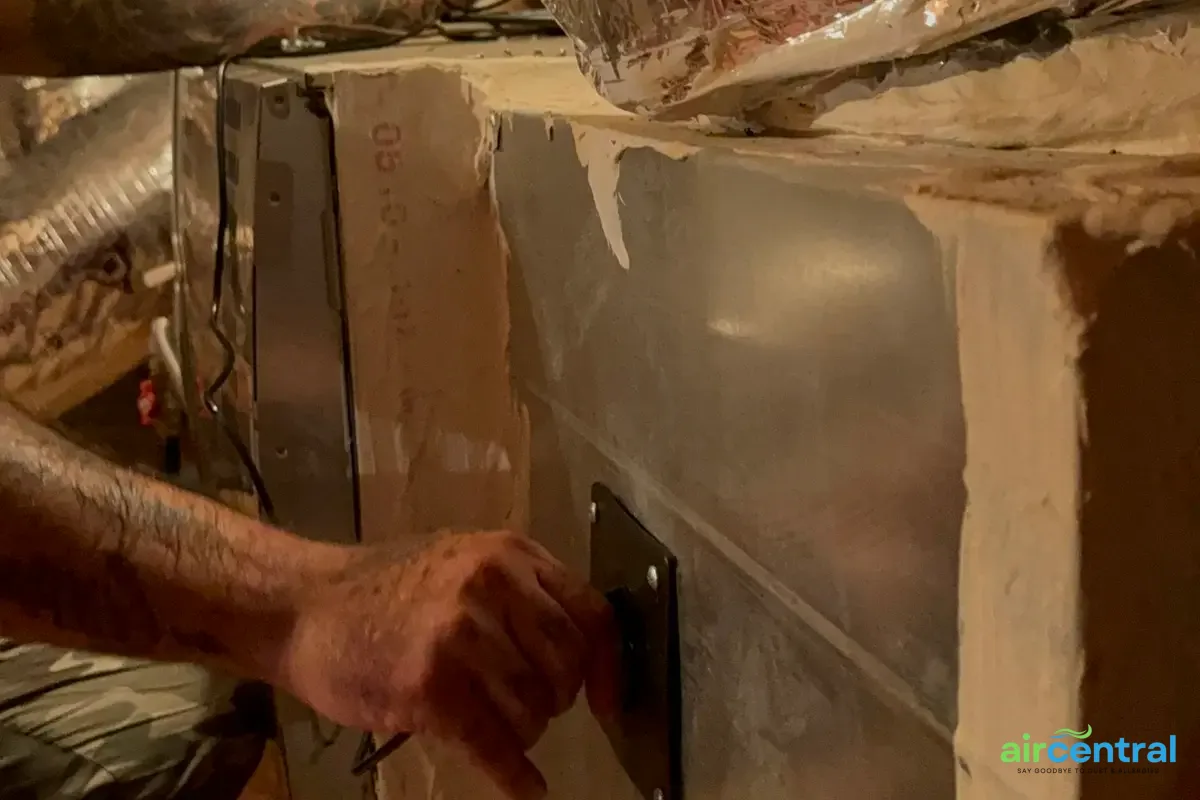
Preventing Mold in Your AC Unit in Austin
Prevention in Austin requires addressing the root cause: persistent humidity and organic debris on the coil. Use MERV 13 filters (changed monthly during cedar pollen season, every 2-3 months otherwise) to reduce the organic load reaching the coil. Keep indoor humidity below 55% with proper AC operation and a whole-home dehumidifier if needed. Have the evaporator coil professionally inspected every 2-3 years.
Clear the condensate drain line annually - pour a cup of diluted bleach or white vinegar into the drain pan access port to prevent algae blockage. A blocked drain line is one of the fastest paths to severe AC mold growth because it creates standing water on the drain pan floor.
UV-C germicidal light installation provides the most reliable ongoing prevention. Once installed, the lamp runs every time the blower operates, continuously sterilizing the coil surface. Austin homeowners with UV-C installed typically see coils remain clean on follow-up inspections for years after installation. NADCA and the EPA both reference UV-C as an effective HVAC mold prevention technology.
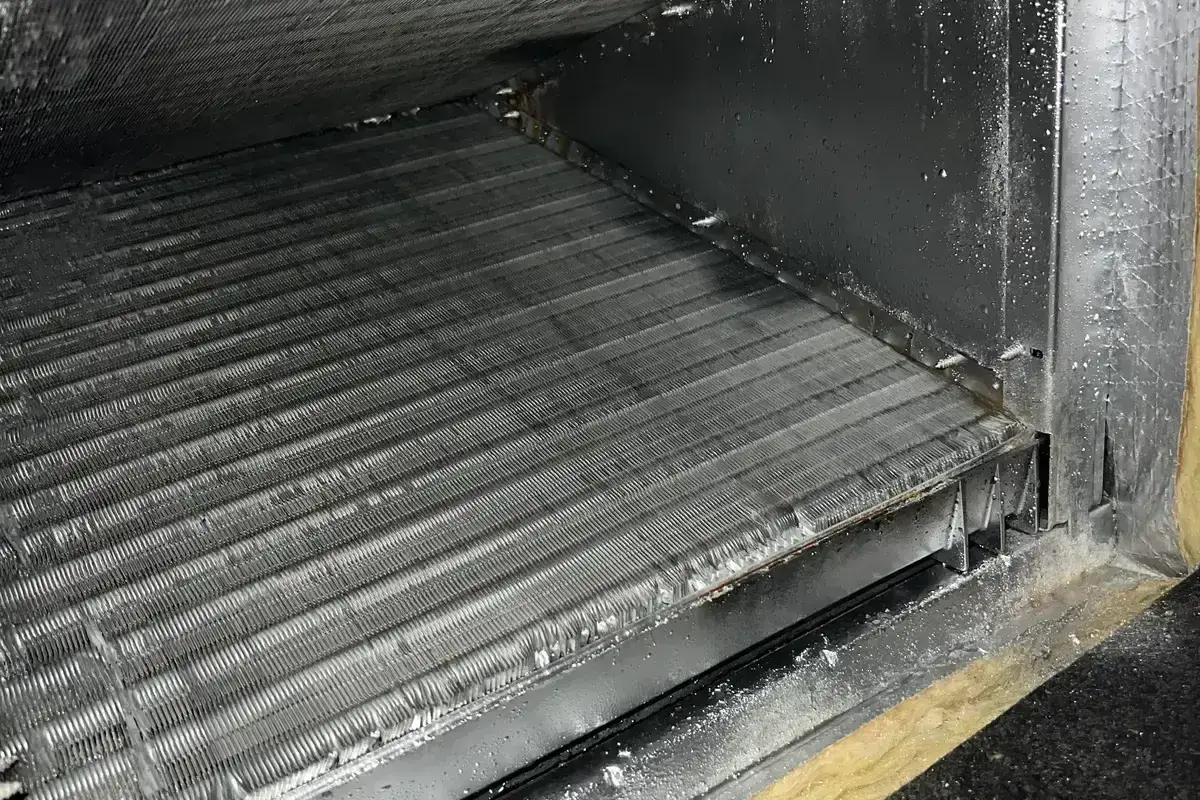
Related Services
Learn more about our professional services related to this topic:
- Air Duct Cleaning - Remove dust, allergens, and debris from your entire HVAC system for cleaner indoor air.
- UV Lighting System - Eliminate bacteria and allergens inside your HVAC with UV-C light technology.
Want the full picture?
Read our complete guide: The Complete Guide to Indoor Air Quality in Austin, TX (2026) →
Have questions about indoor air quality? Our team is available 7 days a week. Call us at (512) 601-4451 or visit our contact page.