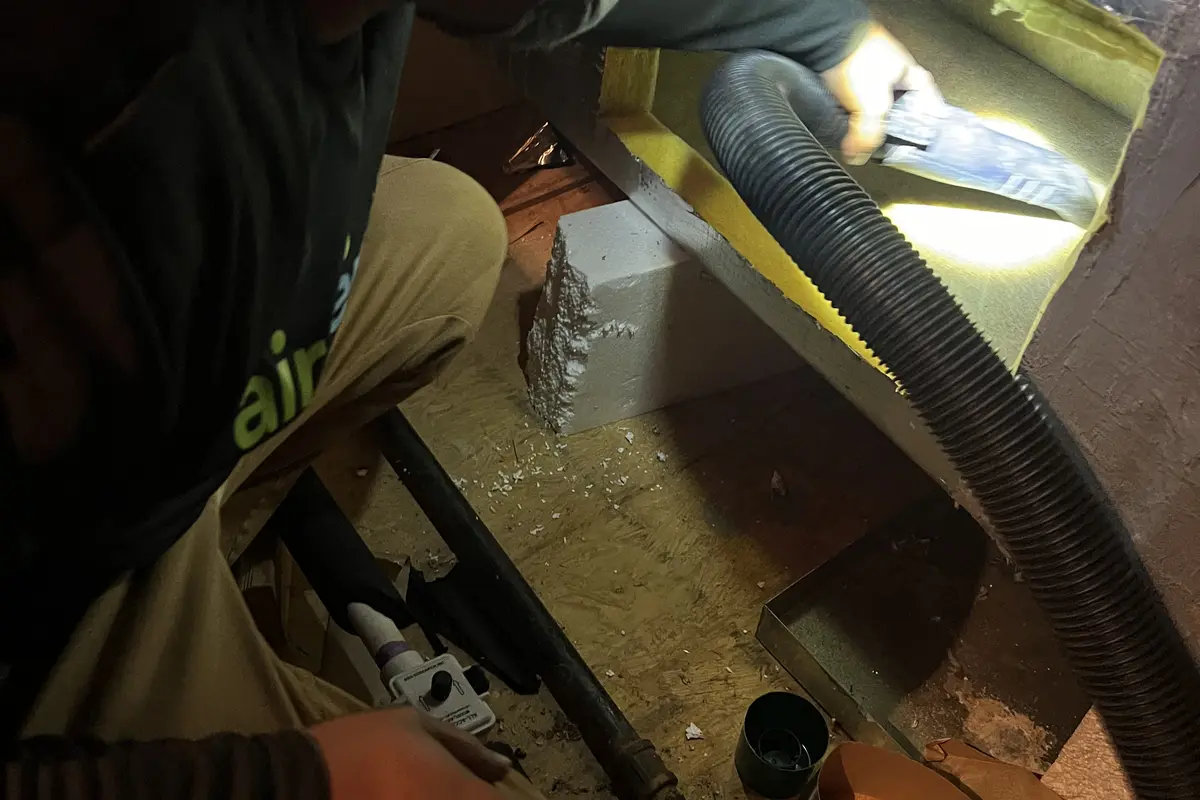
DIY surface cleaning does not eliminate mold in air ducts because it leaves the root structure intact inside porous duct materials. The only effective method is professional HEPA-filtered negative-pressure cleaning that physically removes contamination, followed by UV-C light installation and humidity control to prevent regrowth. Severe cases with structural penetration require a certified remediation specialist before duct cleaning.
Why DIY Mold Removal in Air Ducts Fails
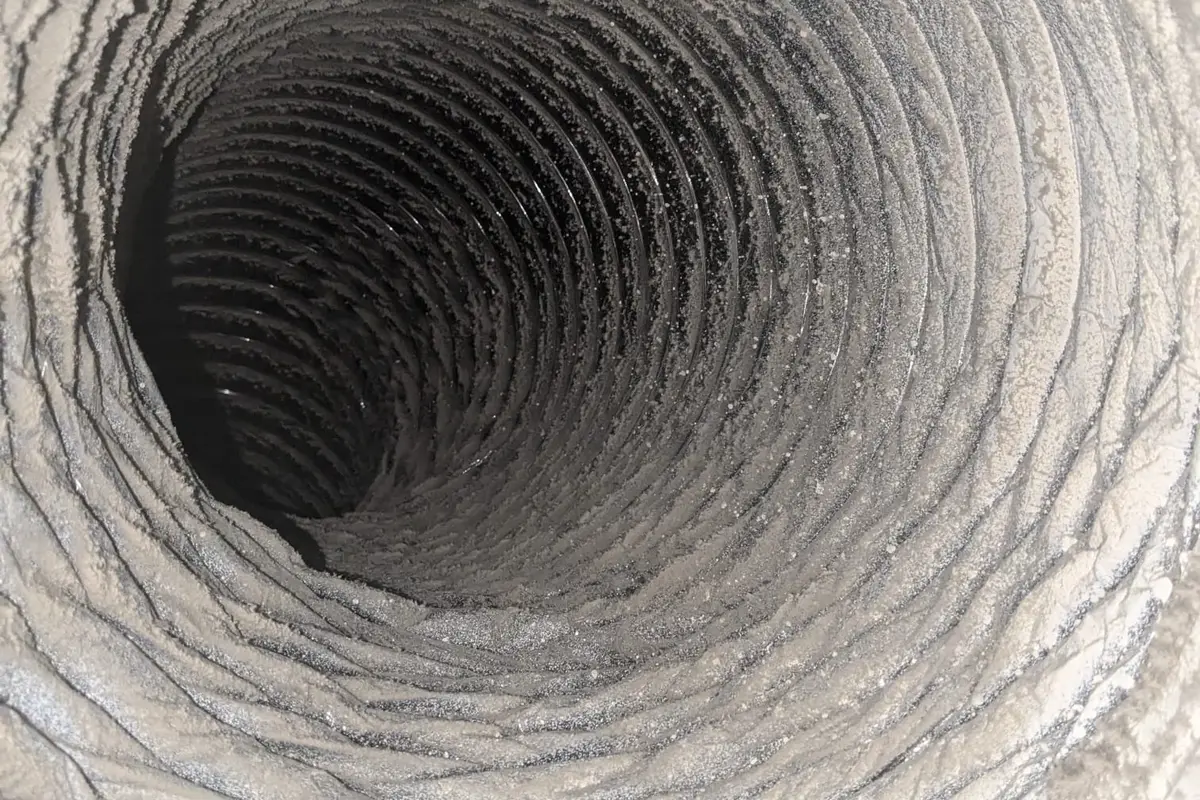
The internet is full of advice about removing mold from air ducts with household cleaners, vinegar, or tea tree oil. The problem is fundamental: mold you can see on duct surfaces is only the visible fruiting body. The root structure (hyphae) penetrates into the duct material itself - whether that is fiberglass duct liner, flex duct inner core, or even sheet metal seams where organic debris has accumulated.
When you wipe or spray the visible mold, you remove the surface layer but leave the roots embedded in the material. Within 1-3 weeks, the mold regrows from those intact roots. You also release a massive burst of spores into the air during the wiping process, which spreads contamination to other parts of your ductwork and your home. In Austin's 67% average humidity, regrowth after surface cleaning is virtually guaranteed.
The reach problem makes DIY even less practical. Your ductwork extends 50-100 feet through the attic, walls, and under floors. Even if you could effectively clean the first 2-3 feet visible from a vent opening, the remaining 90% of the duct system remains untouched and continues circulating spores every time the HVAC runs.
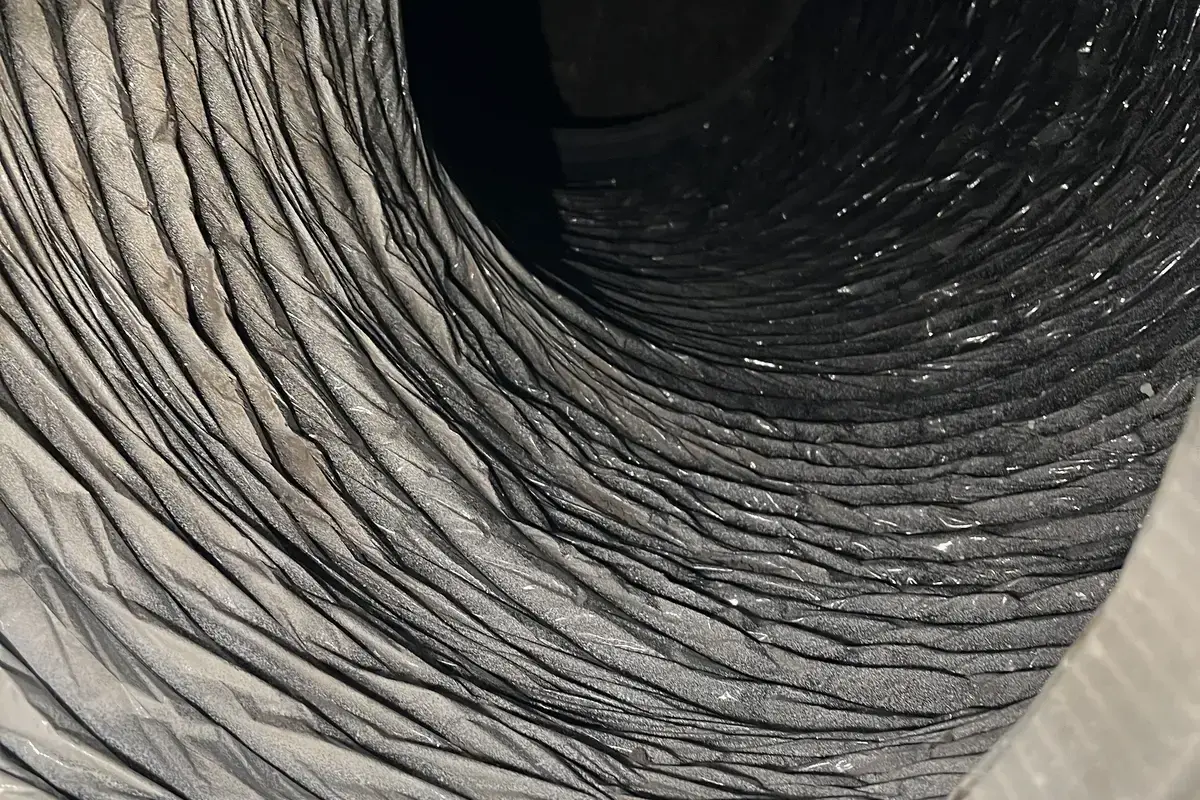
What the Internet Says vs What Actually Works
Bleach: kills surface mold on non-porous materials but does not penetrate porous duct liner or flex duct. The EPA specifically advises against using bleach on porous materials for mold remediation. Bleach also produces chlorine gas in enclosed spaces, which is a respiratory hazard inside ductwork.
Vinegar: mildly antifungal on surfaces but has no penetrating action on mold roots. Better than bleach because it does not produce toxic fumes, but still only a surface treatment. The mold returns in days to weeks.
Ozone generators: sometimes marketed as duct mold killers. Ozone can kill mold at very high concentrations, but those concentrations also damage rubber seals, electrical wiring insulation, and your lungs. The EPA states that ozone generators should not be used in occupied spaces. Even in unoccupied treatment, ozone does not physically remove the dead mold - it just kills it in place, and dead mold spores are still allergenic.
Chemical foggers and encapsulants: some companies spray antimicrobial chemicals through the duct system. These kill surface mold but do not remove it. The dead mold, along with the chemical residue, continues to circulate through your air. Some encapsulants (sealants sprayed inside ducts) can trap mold under a coating, but if moisture returns, mold grows under or through the sealant.
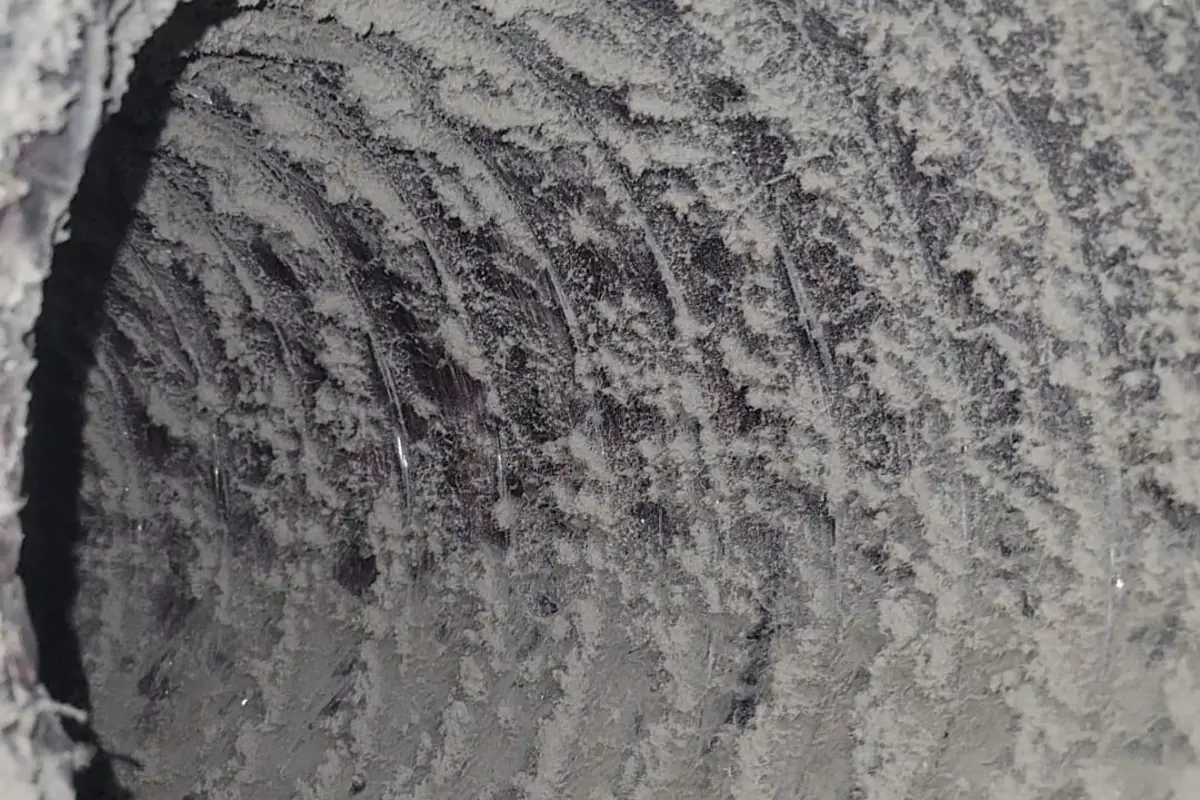
The Professional HEPA Cleaning Process
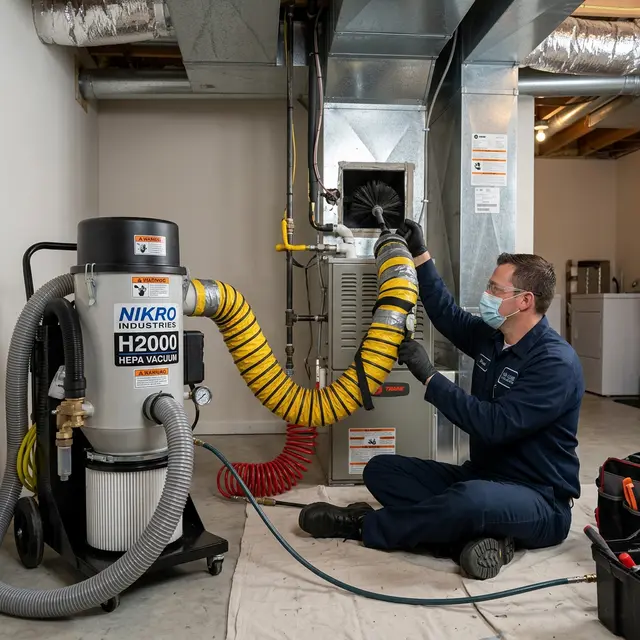
Professional mold removal from air ducts is a physical removal process, not a chemical treatment. The technician connects a commercial-grade HEPA-filtered negative-pressure vacuum to the main trunk line. This creates powerful suction that prevents spores from escaping into the home during cleaning.
Each duct run is cleaned individually using rotary brushes and compressed air whips that dislodge mold colonies and contaminated debris from duct walls. The negative pressure pulls everything toward the HEPA vacuum, which captures particles down to 0.3 microns - well below the 1-30 micron size range of mold spores.
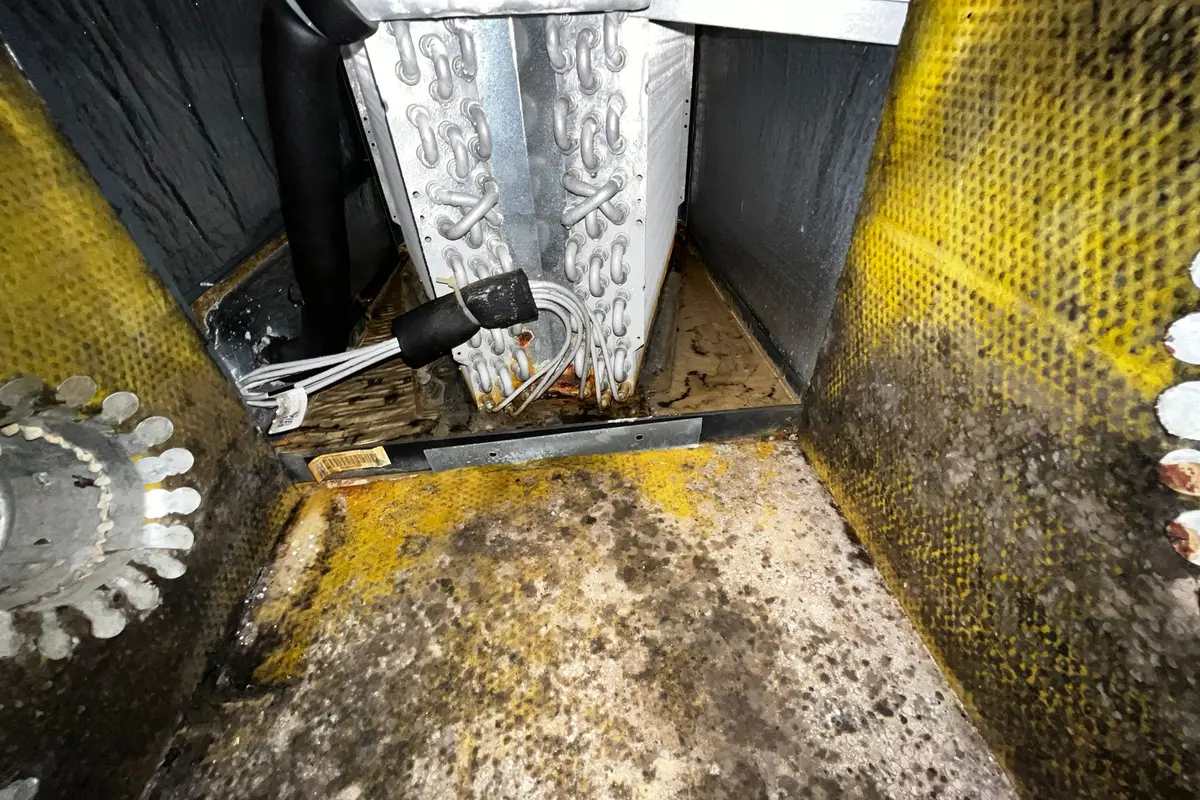
The evaporator coil, drain pan, blower housing, and plenum box receive special attention because these are the primary moisture sources where mold colonization typically begins. The coil's constant condensation provides the moisture, and organic debris on coil fins provides the food source.
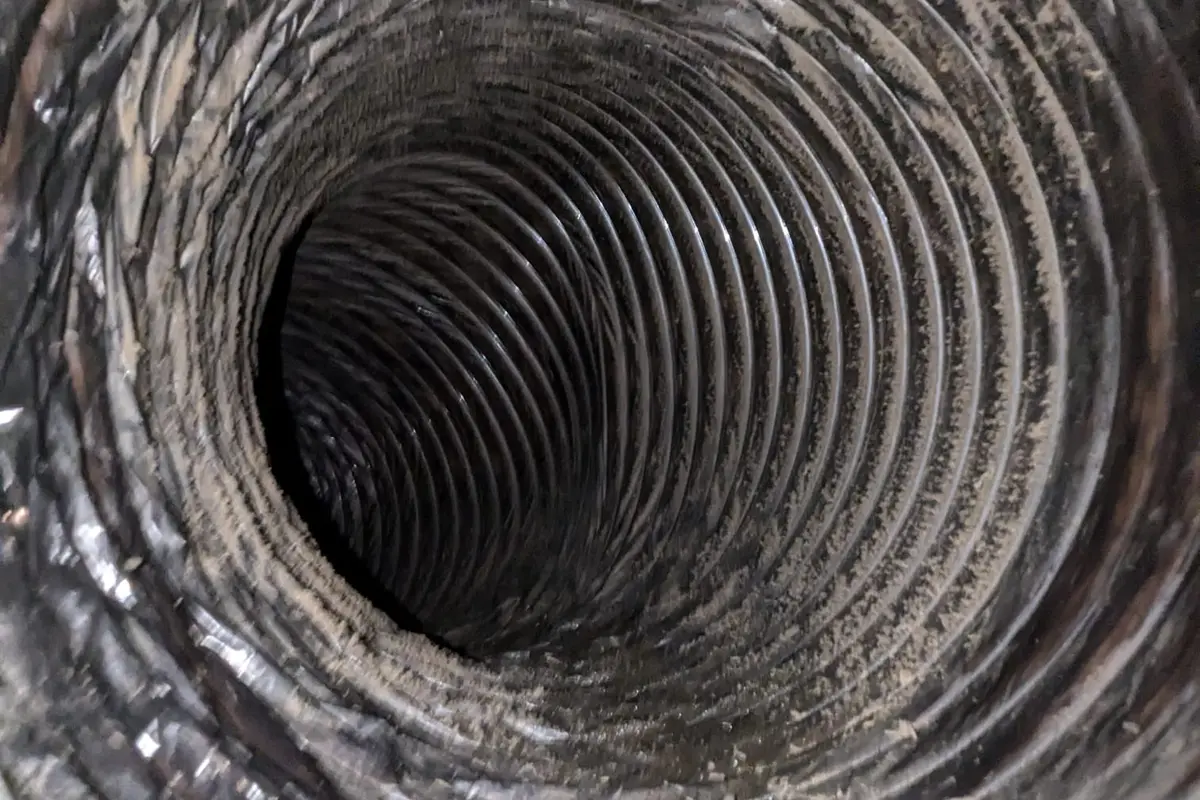
HD camera inspection before and after documents the results. You see the mold contamination on screen before cleaning and the clean duct surfaces afterward. This is not just for customer satisfaction - it is the only way to verify the cleaning was thorough.
UV-C Light: Preventing Regrowth After Cleaning
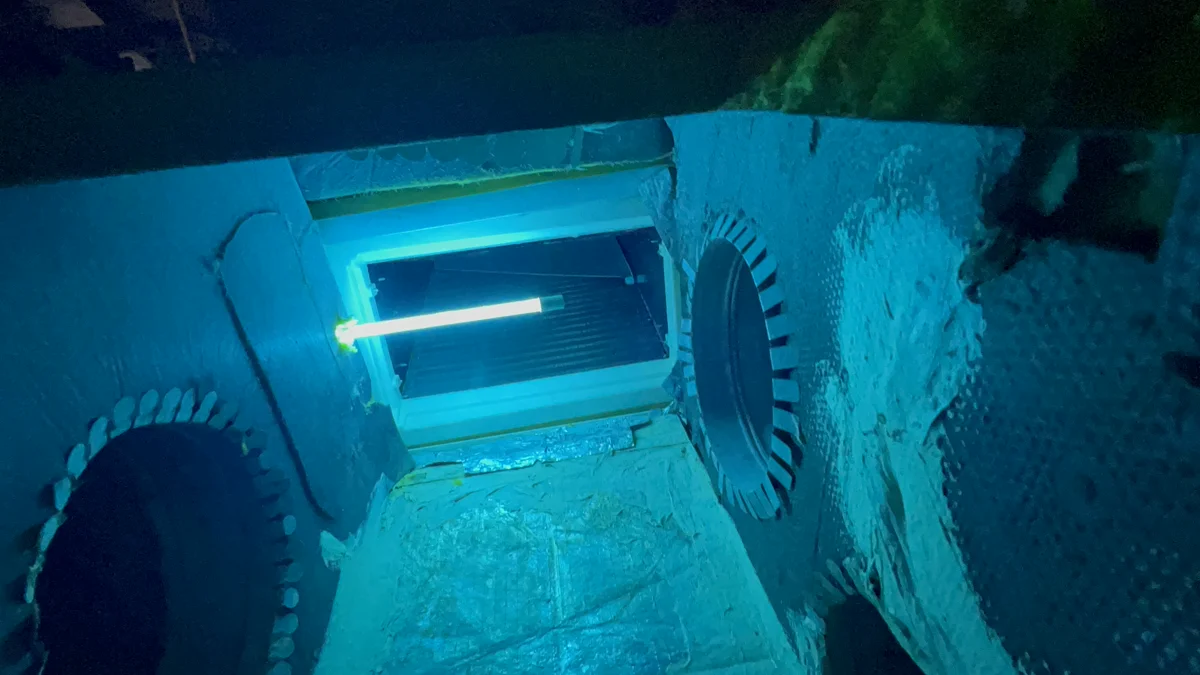
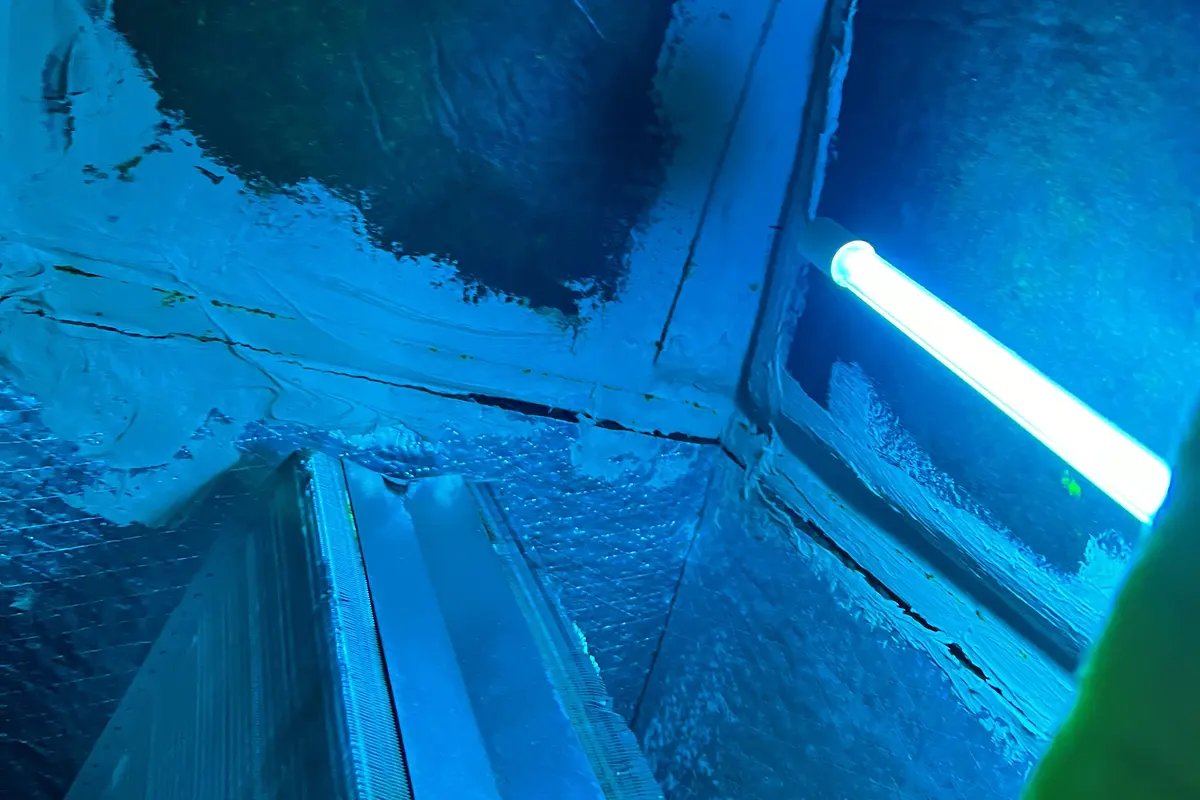
Cleaning removes existing mold, but without addressing the conditions that caused growth, mold returns. UV-C germicidal lights installed near the evaporator coil provide continuous protection by disrupting the DNA of mold spores, bacteria, and other microorganisms that pass through the air handler.
UV-C lights are effective because they target the highest-risk area - the coil and drain pan where moisture is always present. A properly sized UV-C system reduces microbial growth on the coil surface by up to 99.9% according to ASHRAE research. The bulbs require replacement annually, but the ongoing protection is significant for Austin homes where humidity drives persistent regrowth.
UV-C is a complement to cleaning, not a substitute. Installing UV-C lights in a system with existing mold does not remove the contamination - it only slows future growth. Clean first, then install UV-C to maintain the clean condition.
Concerned About Your Home's Air?
We provide professional air quality assessments for Austin homes. See what is in your ducts before deciding.
Call (512) 601-4451Rate your home's indoor air quality in 2 minutes
When You Need a Remediation Specialist Instead
Professional duct cleaning handles the majority of mold cases Air Central encounters in Austin homes. However, some situations require a certified mold remediation specialist before or instead of duct cleaning.
You need remediation when mold has penetrated structural components beyond the ductwork - the air handler cabinet, wall cavities around duct penetrations, or the attic structure near the HVAC unit. You need remediation when there has been significant water damage (flooding, prolonged roof leak, burst pipe) that soaked insulation and building materials. You need remediation when testing identifies Stachybotrys (black mold) in large quantities, which requires containment protocols beyond standard duct cleaning.
In these cases, the remediation specialist addresses the structural contamination while the duct cleaning professional handles the HVAC system itself. The two services work together - the ducts cannot stay clean if contaminated building materials remain nearby.
The Complete Solution for Austin Homes
Effective mold elimination in air ducts requires three things: physical removal of existing contamination through HEPA-filtered cleaning, elimination of the moisture source that enabled growth (fixing leaks, improving drainage, adding UV-C), and humidity control to prevent future conditions favorable to mold (keeping indoor humidity below 50-55%).
Air Central uses HD camera inspection to show you exactly what is growing in your ductwork before recommending any work. Most cases we encounter are resolved with thorough HEPA cleaning plus UV-C installation. We are straightforward about cases that need remediation and will refer you to a qualified specialist when appropriate. Call (512) 601-4451 to schedule an inspection of your ductwork.
Mold Remediation vs Duct Cleaning: What Is the Difference?
Homeowners often search for mold remediation and removal when they suspect a mold problem in their home. It is important to understand the distinction: mold remediation refers to the broader process of assessing, containing, and removing mold from a building, including structural components like drywall, framing, and insulation. Mold cleanup services for structural contamination require certified mold remediation specialists (IICRC-certified, CRM, or CMR credentialed professionals) who use containment barriers, air scrubbers, and proper disposal protocols.
Duct cleaning is a component of the overall mold cleanup process, but it specifically addresses your HVAC ductwork. Air Central is not a mold remediation company - we do not handle structural mold remediation and removal from walls, ceilings, or building materials. What we do is professionally clean and clear your air duct system using HEPA-filtered negative-pressure equipment, removing mold contamination from inside ductwork so your HVAC stops distributing spores throughout the home.
If you are searching for mold remediation companies near me for a whole-house mold problem, you need a certified remediation specialist. If your concern is specifically mold in your air ducts or on your evaporator coil, Air Central provides the professional duct cleaning side of that process. Many Austin homeowners need both: a mold remediation specialist for any structural damage, and a duct cleaning professional like Air Central to clean the HVAC system before it is returned to service. We work alongside mold remediation specialists regularly and are happy to coordinate service to ensure your entire home is addressed properly.
Related Services
Learn more about our professional services related to this topic:
- Air Duct Cleaning - Remove dust, allergens, and debris from your entire HVAC system for cleaner indoor air.
- Air Duct Inspection - Diagnose leaks, blockages, and efficiency issues with HD camera inspection.
- UV Lighting System - Eliminate bacteria and allergens inside your HVAC with UV-C light technology.
Want the full picture?
Read our complete guide: Indoor Air Quality in Austin: The Complete Guide (2026) →Have questions about indoor air quality? Our team is available 7 days a week. Call us at (512) 601-4451 or visit our contact page.