Most Austin homes built between 1990 and 2020 have flex duct (flexible plastic and fiberglass ductwork) in the attic. Flex duct is cheaper to install but has a corrugated interior that traps more dust, a shorter lifespan (15-25 years vs 30+ for metal), and is vulnerable to sagging, tearing, and disconnection in Austin's extreme attic heat. Metal duct lasts longer and cleans more easily but costs significantly more. Most Austin homeowners should maintain their flex duct with regular cleaning rather than replacing it with metal unless the flex duct is damaged or beyond repair.
What Flex Duct Looks Like and Why Austin Builders Use It
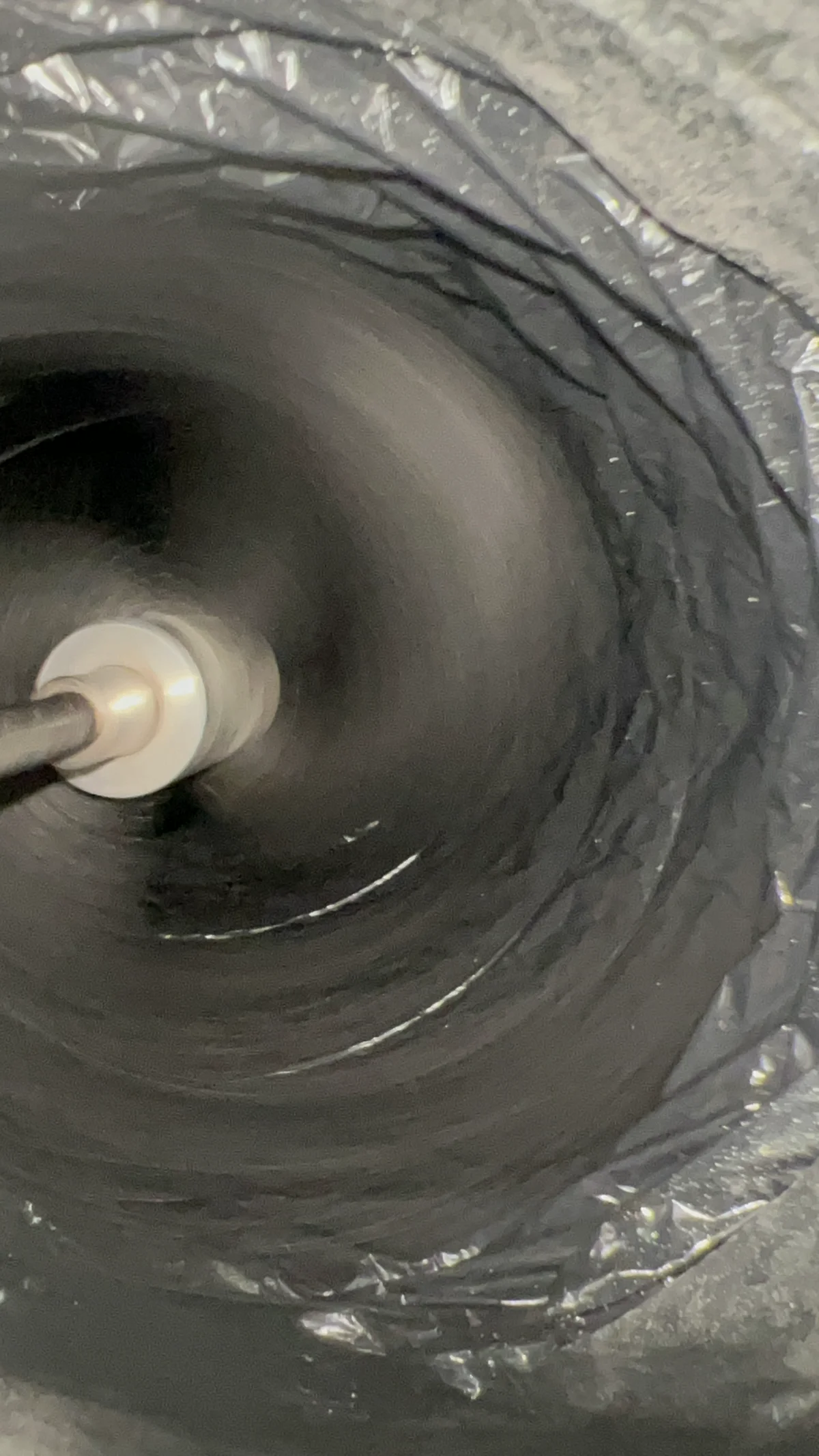
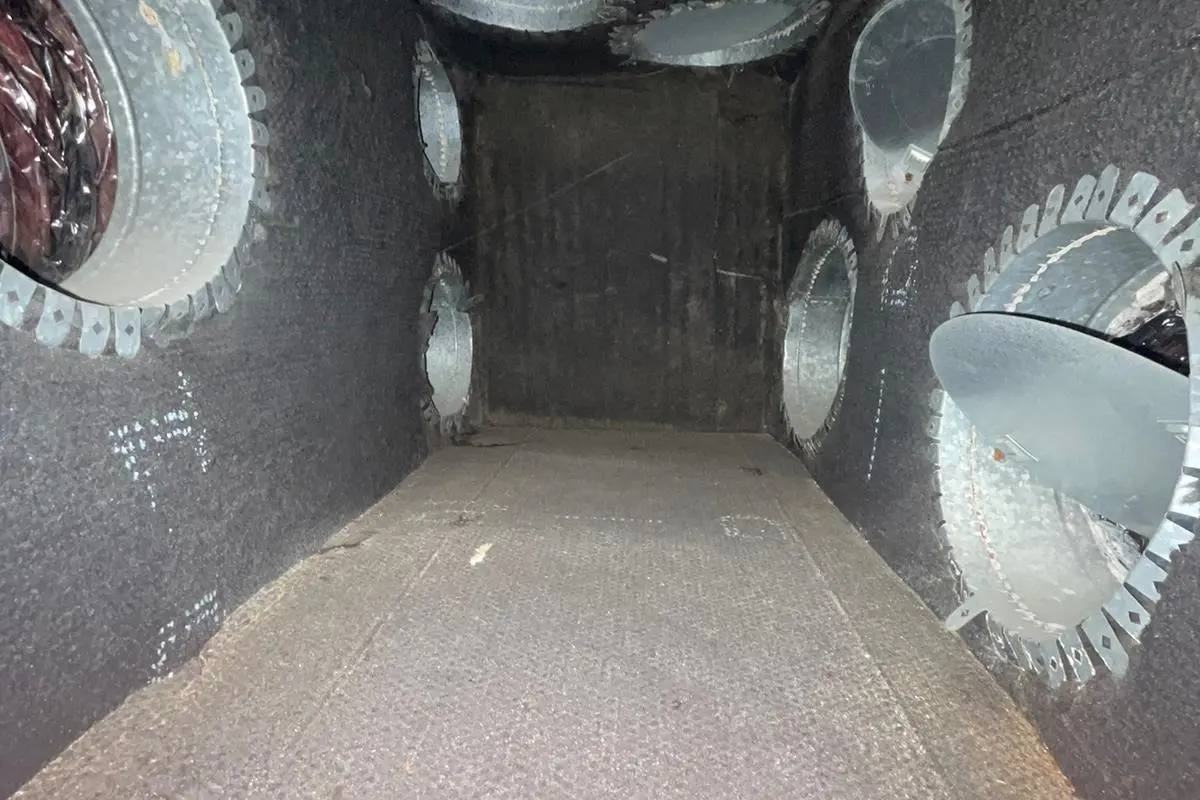
Flex duct is the silver or gray corrugated tubing you see running through most Austin attics. It consists of a wire coil wrapped in a plastic inner liner, surrounded by fiberglass insulation, and covered with a plastic or foil outer jacket. It bends around obstacles, connects with simple clamps and zip ties, and installs in a fraction of the time metal duct requires.
Austin builders overwhelmingly chose flex duct from the early 1990s through the 2020s because of cost and speed. In a production home, flex duct can be installed in half a day versus 2-3 days for a sheet metal system. The material cost is roughly one-third of metal. In a market where builders construct hundreds of homes per year in subdivisions like Avery Ranch, Circle C, Steiner Ranch, and the Mueller redevelopment, that time and cost difference adds up to millions.
There is nothing inherently wrong with flex duct when properly installed and maintained. The problems arise from installation shortcuts, the harsh conditions in Austin attics, and lack of maintenance over time. Understanding these factors helps you know when your flex duct needs attention and when it needs replacement.
How Austin's Attic Heat Affects Flex Duct
Austin attics regularly reach 140-160 degrees in summer. That extreme heat affects flex duct in several ways that metal duct handles better. The plastic inner liner of flex duct becomes more pliable at high temperatures, which means the wire coil supporting the duct shape can sag under the duct's own weight. Over 10-15 summers, this sagging creates low points where air pools instead of flowing freely. These belly sections restrict airflow and accumulate dust and debris.
The adhesive tape used to connect flex duct sections at joints deteriorates faster in attic heat than in conditioned spaces. UV exposure from attic vents accelerates this breakdown. When tape joints fail, the duct separates from the register boot or trunk connection, and conditioned air dumps directly into the attic instead of reaching the room. This is one of the most common HVAC problems we find in Austin homes older than 15 years.
Metal duct withstands attic heat without sagging or joint failure. Sheet metal maintains its shape regardless of temperature, and metal joints sealed with mastic (a permanent adhesive compound) do not fail from heat exposure. This durability is why metal duct systems in older Austin homes from the 1960s through 1980s are often still functioning after 40+ years.
Cleaning Differences: Flex Duct vs Metal
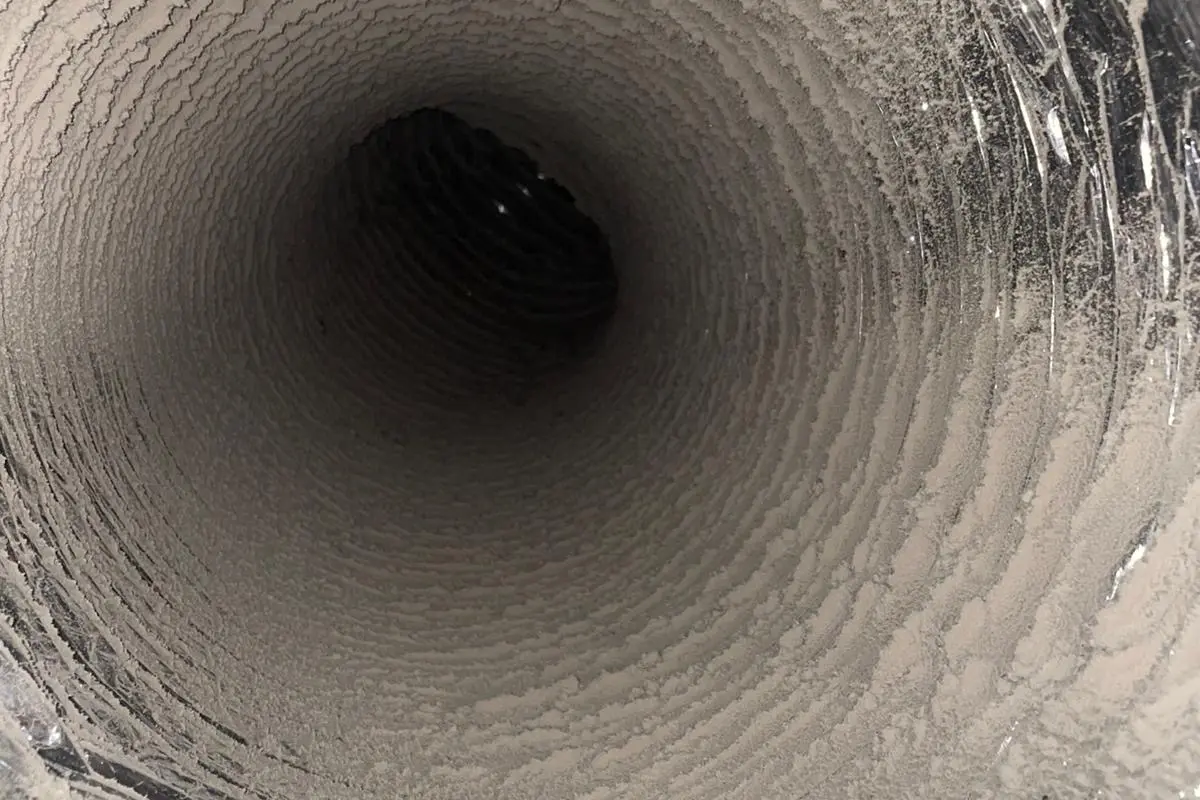
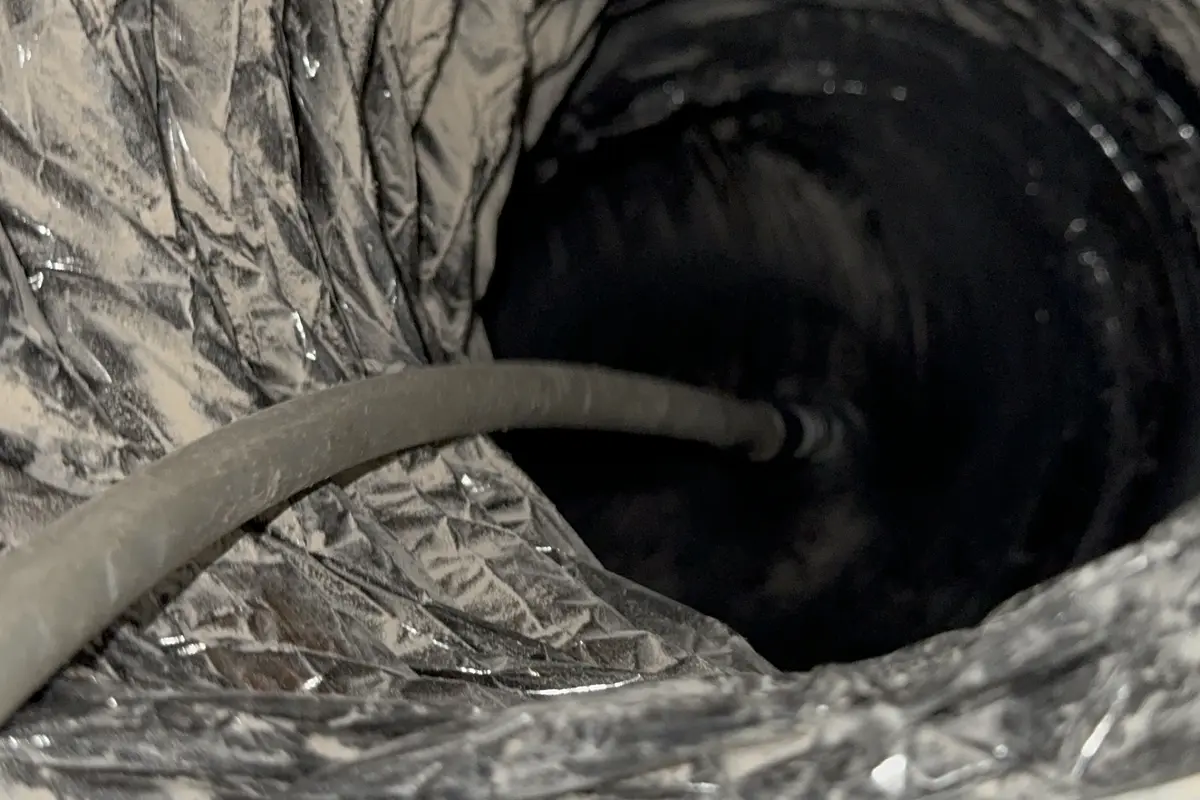
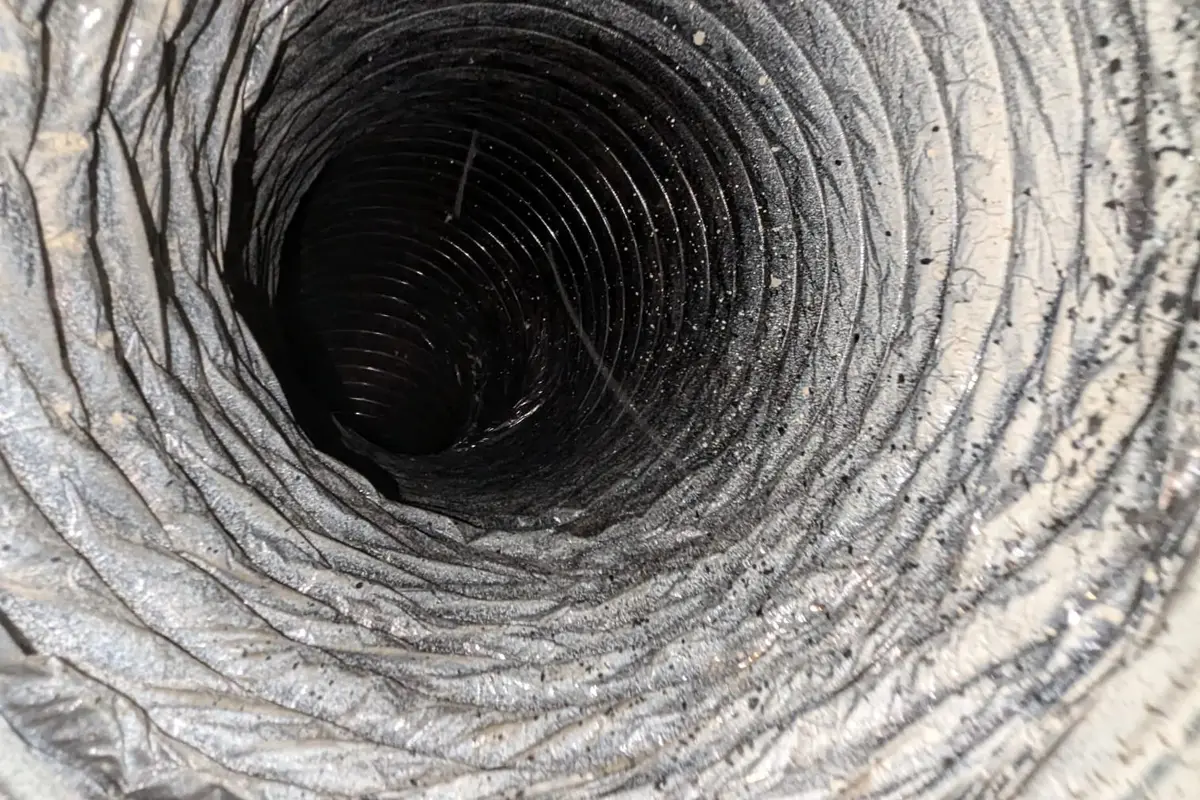
The corrugated interior of flex duct traps more dust, pollen, and debris than smooth metal duct. Each ridge in the corrugation catches particles that would otherwise flow through to the filter. Over 3-5 years, this accumulation can be significant - we routinely find heavy buildup in flex duct systems that would be much lighter in metal duct systems of the same age.
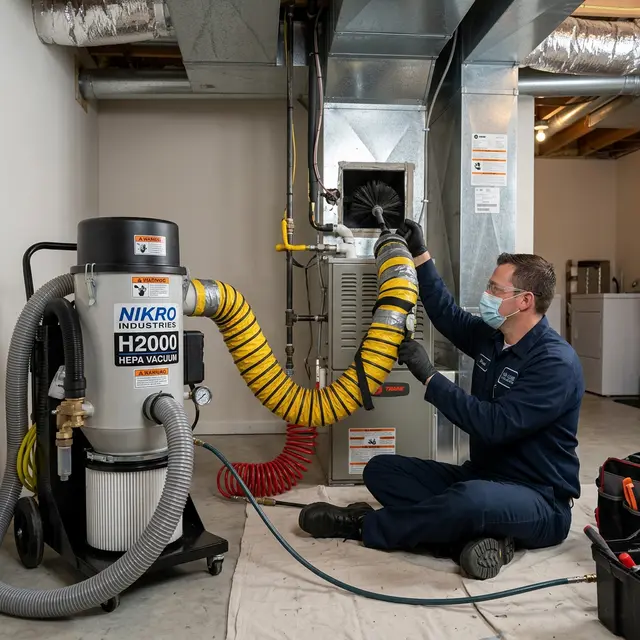
"About 90% of the Austin homes we clean have flex duct, and each one requires a different touch than metal," says Nessi Ziv, owner of Air Central. "We adjust our equipment pressure and use softer brush attachments specifically for flex. A technician who only knows metal duct can tear an inner liner in 30 seconds."
Cleaning flex duct requires more care than cleaning metal duct. The inner liner can tear if too much air pressure is applied or if brush tools are used too aggressively. Experienced technicians adjust their equipment and technique for flex duct - lower air pressure, softer brush attachments, and careful monitoring during the cleaning process. This is one of the reasons to choose a duct cleaning company with Austin-specific experience, since most homes here have flex duct.
Metal duct can handle more aggressive cleaning techniques without risk of damage. Rotary brushes, high-pressure air whips, and skipper balls can all be used at full intensity on rigid sheet metal duct. The smooth interior also means less buildup accumulates between cleanings, so metal duct systems typically need cleaning less frequently than flex duct systems in the same conditions.
Common Flex Duct Problems in Austin Homes
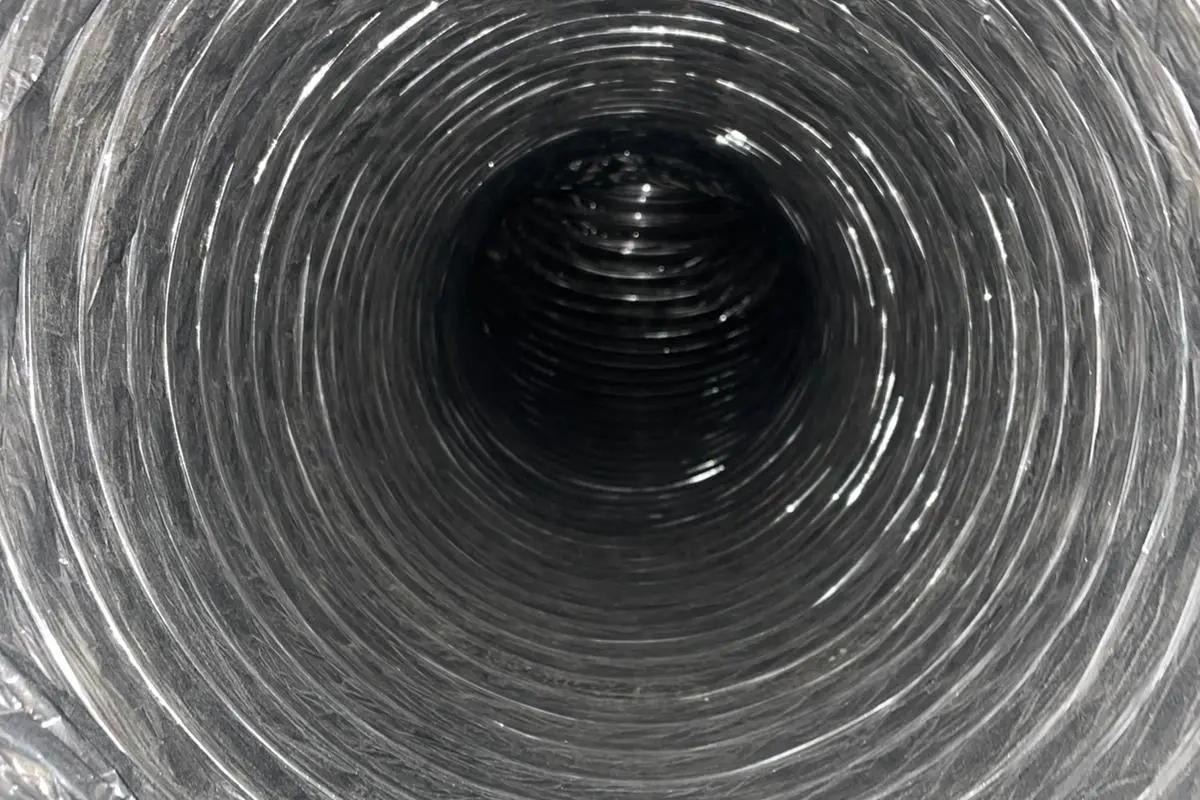
Sagging and belly formation are the most common flex duct issues in Austin. When support straps are spaced too far apart (every 6+ feet instead of the recommended 4-foot maximum) or when straps dig into the duct under the weight of insulation, the duct develops low points. These bellies restrict airflow by 20-40% and create collection points for dust and moisture.
Tears and punctures happen when someone steps on ductwork while in the attic, when items stored in the attic shift against the duct, or when animals chew through the material. A torn inner liner means fiberglass insulation fibers can enter the airstream and blow into living spaces. Even small tears should be repaired promptly.
Disconnected joints are surprisingly common. When the tape or clamp connecting a flex duct to a register boot or trunk line fails, the duct pulls away. The conditioned air blows into the attic, and the room served by that duct run gets little or no airflow. Homeowners often describe this as one room that is always warmer than the others - that is usually a disconnected or partially disconnected duct.
Compression and kinking occur where flex duct bends around obstacles like framing members, pipes, or other ductwork. A sharp bend in flex duct can reduce airflow by 50% or more. Proper installation uses sweeping, gradual bends with adequate support. Kinks that flatten the duct to less than half its diameter effectively block airflow to that branch.
Just Moved In? Start Here.
We help new Austin homeowners understand their HVAC system with honest assessments and straightforward recommendations.
Call (512) 601-4451Rate your home's indoor air quality in 2 minutes
When to Repair vs Replace Flex Duct
Repair is appropriate when the damage is localized - a single torn section, a disconnected joint, or a sagging run that can be re-supported. Most flex duct repairs involve cutting out the damaged section and splicing in a new piece, then securing with mastic and clamps. These repairs are relatively inexpensive and restore full performance to the affected duct run.
Replacement makes sense when the flex duct is more than 20 years old and showing widespread deterioration, when multiple runs have severe sagging or compression, when the inner liner has become brittle and is crumbling, or when rodent damage is extensive enough that contamination cannot be fully cleaned. In these cases, replacing the entire flex duct system is more cost-effective than patching numerous problems.
Replacing flex duct with metal duct is an option but typically costs 2-3 times more than replacing with new flex duct. For most Austin homeowners, replacing deteriorated flex duct with new flex duct (with proper installation and support spacing) is the practical choice. The new duct will perform well for 15-25 years with regular cleaning and maintenance.
What Austin Homeowners Should Do
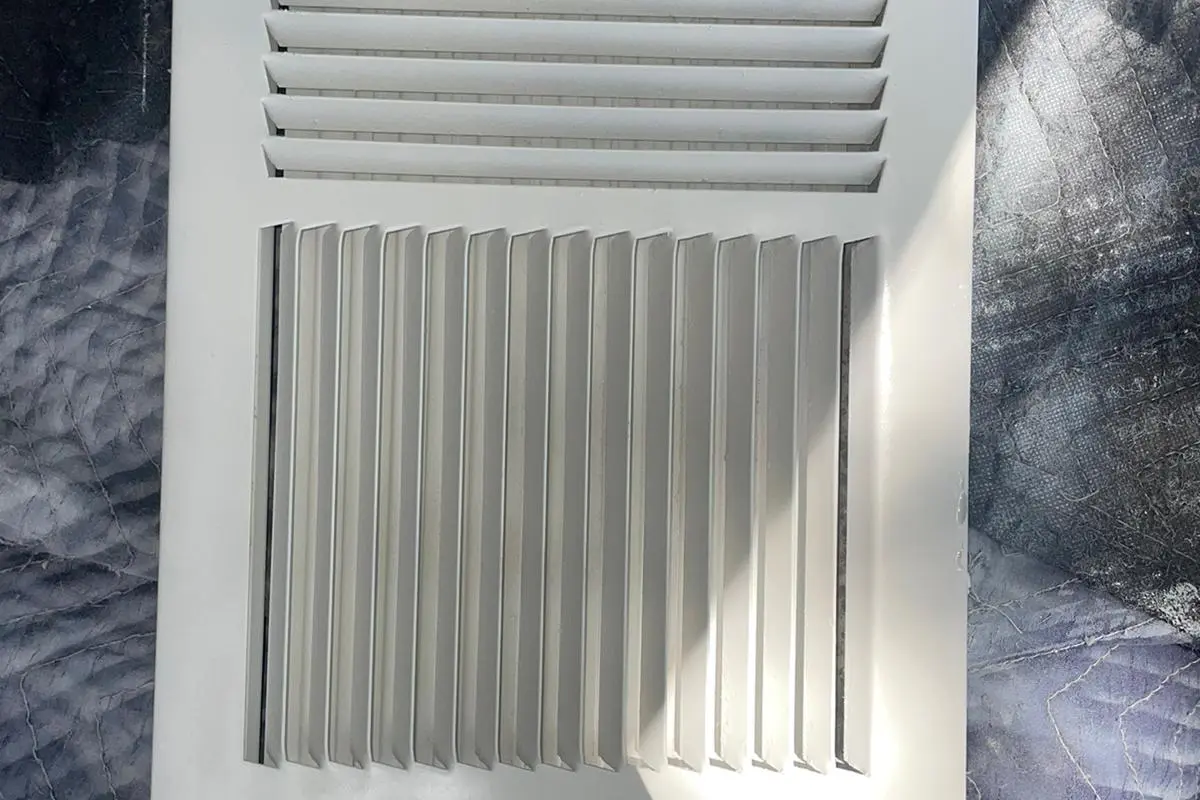
If your Austin home was built between 1990 and 2020, you almost certainly have flex duct in the attic. The best strategy is proactive maintenance: schedule professional duct cleaning every 3-5 years, have your attic ductwork visually inspected during cleaning, and address sagging, disconnections, or damage before they worsen.
If you are buying a home in Austin, ask for a duct inspection during the home inspection period. Many home inspectors do a cursory HVAC check but do not crawl through the attic to inspect ductwork condition. An HD camera inspection of the duct interiors combined with a visual check of the attic runs gives you a complete picture of what you are inheriting.
Air Central cleans both flex and metal duct systems with equipment and techniques calibrated to each type. Our HD camera inspection shows you the condition of your ductwork inside and out, and we will tell you honestly whether your ducts need cleaning, repair, or replacement. Call (512) 601-4451 for a professional assessment - we serve Austin and all surrounding areas Mon-Sun 8:00 AM - 7:00 PM.
Related Services
Learn more about our professional services related to this topic:
- Air Duct Cleaning - Remove dust, allergens, and debris from your entire HVAC system for cleaner indoor air.
- Air Duct Inspection - Diagnose leaks, blockages, and efficiency issues with HD camera inspection.
- Dryer Vent Cleaning - Clear lint buildup to prevent fires and cut drying time in half.
- Chimney Sweep & Repair - Professional cleaning and 21-point safety inspection for your fireplace.
- Solar Fan Installation - Solar-powered attic ventilation that cuts cooling costs naturally.
Want the full picture?
Read our complete guide: First-Time Homeowner's Complete HVAC Guide for Austin (2026) →Have questions about homeowner education? Our team is available 7 days a week. Call us at (512) 601-4451 or visit our contact page.