Clogged dryer vents cause an estimated 2,900 house fires per year in the US and are the number one cause of home appliance fires. Professional dryer vent cleaning is an affordable service in Austin, takes about an hour, and should be done annually. Warning signs include clothes taking more than one cycle to dry, the dryer exterior getting hot, and a burning smell during operation.
Why Dryer Vent Cleaning Is a Safety Issue, Not Just Maintenance
I want to be direct about something: dryer vent cleaning is not optional maintenance. It is fire prevention. The US Fire Administration reports that clothes dryers cause an estimated 2,900 residential fires every year, resulting in 5 deaths, 100 injuries, and $35 million in property damage. The leading cause in every case is failure to clean the dryer vent.
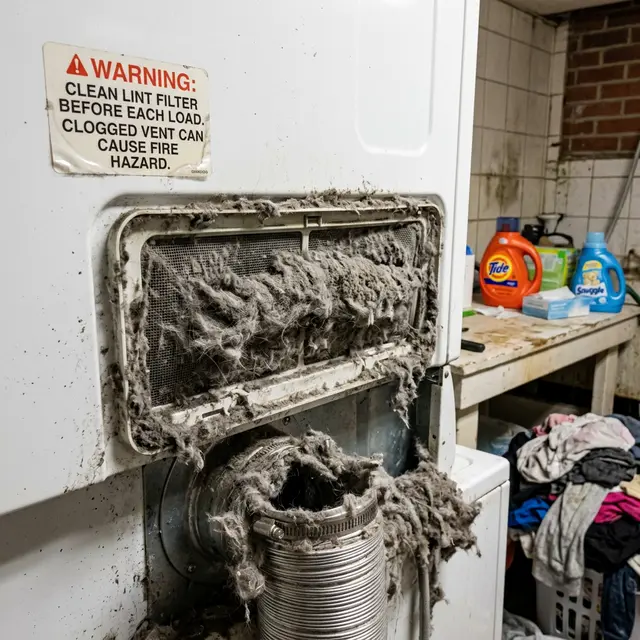
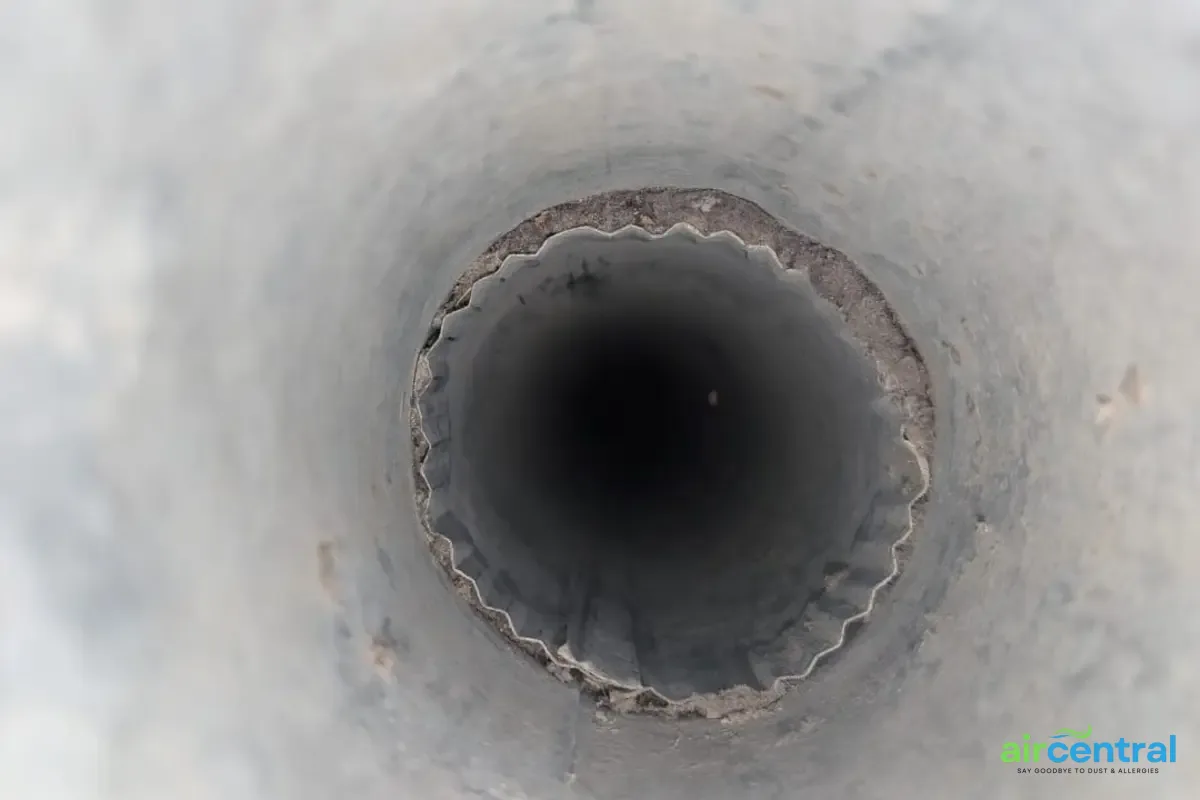
Lint is extremely flammable. It accumulates in your dryer vent with every load of laundry, building up in bends, corrugated sections, and at the exterior termination point. Your dryer's exhaust temperature ranges from 125 to 135 degrees Fahrenheit during normal operation. When airflow is restricted by lint buildup, the dryer overheats. Lint near the heating element or along the hot exhaust path can ignite.
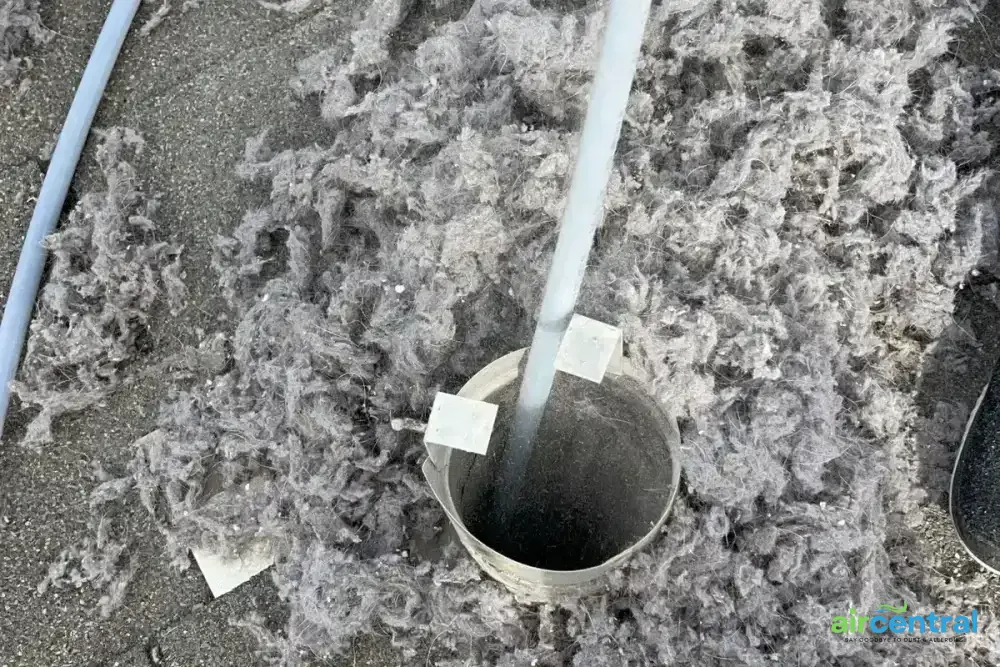
"In over 10 years cleaning dryer vents across Austin, I have seen lint blockages dense enough to stop a rotary brush in its tracks," says Nessi Ziv, owner of Air Central. "The worst one we pulled from a Round Rock home weighed over 2 pounds - a solid plug of compressed lint and pet hair. That homeowner had been running the dryer on double cycles for six months thinking the dryer was broken. It was not the dryer."
Austin's climate adds a wrinkle that many homeowners do not consider. We run our dryers year-round, and high humidity from April through October means lint is more likely to stick to vent walls and compact into dense, hard-to-remove blockages. I have pulled lint plugs from Austin homes that were solid enough to hold their shape when removed from the vent.
The National Fire Protection Association (NFPA) recommends professional dryer vent cleaning at least once per year. For large families doing heavy laundry loads, households with pets (pet hair accelerates lint buildup), or homes with long vent runs, cleaning every 6-8 months is safer.
Warning Signs of a Clogged Dryer Vent
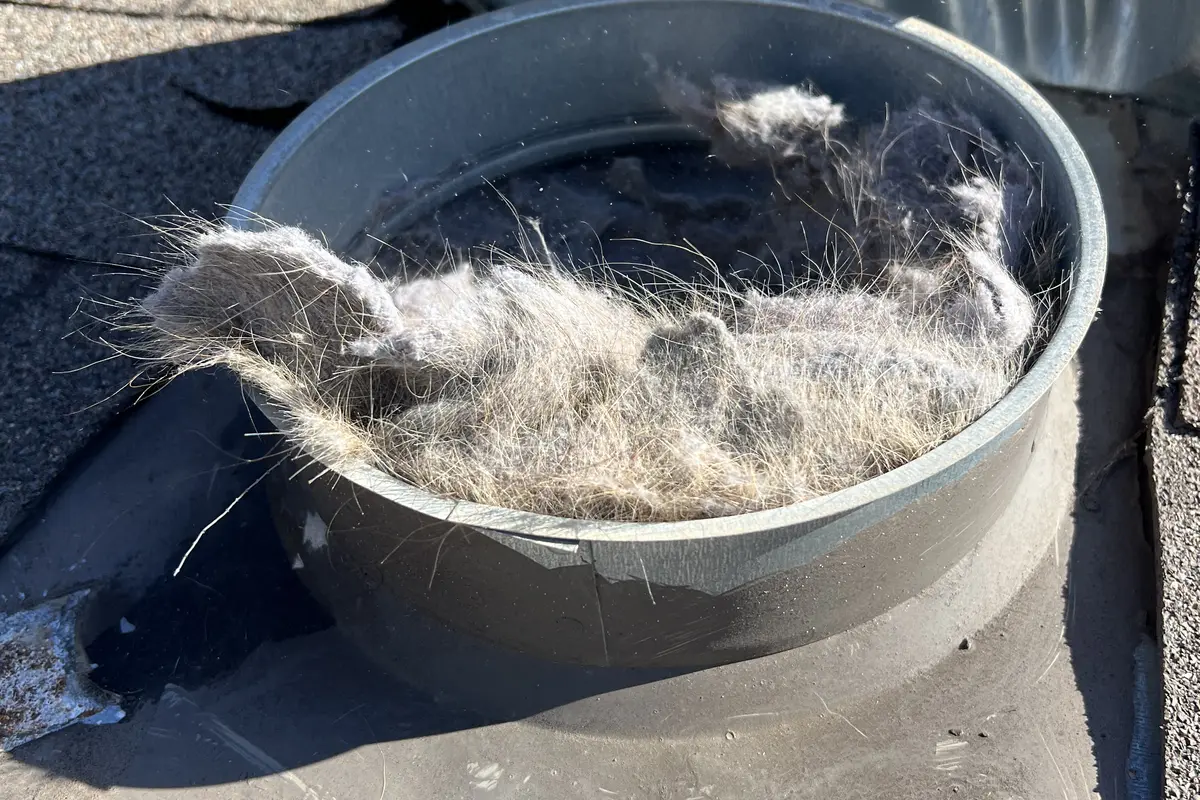
The most common sign is clothes taking longer to dry. If a normal load that used to dry in 45 minutes now needs 60-75 minutes or a second cycle, restricted airflow is almost certainly the cause. Your dryer is working harder to push moist air through a partially blocked vent, and the moisture cannot escape efficiently.
Touch the top and sides of your dryer while it is running. If the exterior is hot to the touch, your dryer is overheating because exhaust air is backing up instead of venting outside. This is a fire warning sign that demands immediate attention.
A burning smell during dryer operation is urgent. Stop the dryer immediately, disconnect it from power, and do not use it again until the vent has been professionally cleaned and inspected. That burning smell is overheated lint, and it means you are one load away from a potential fire.
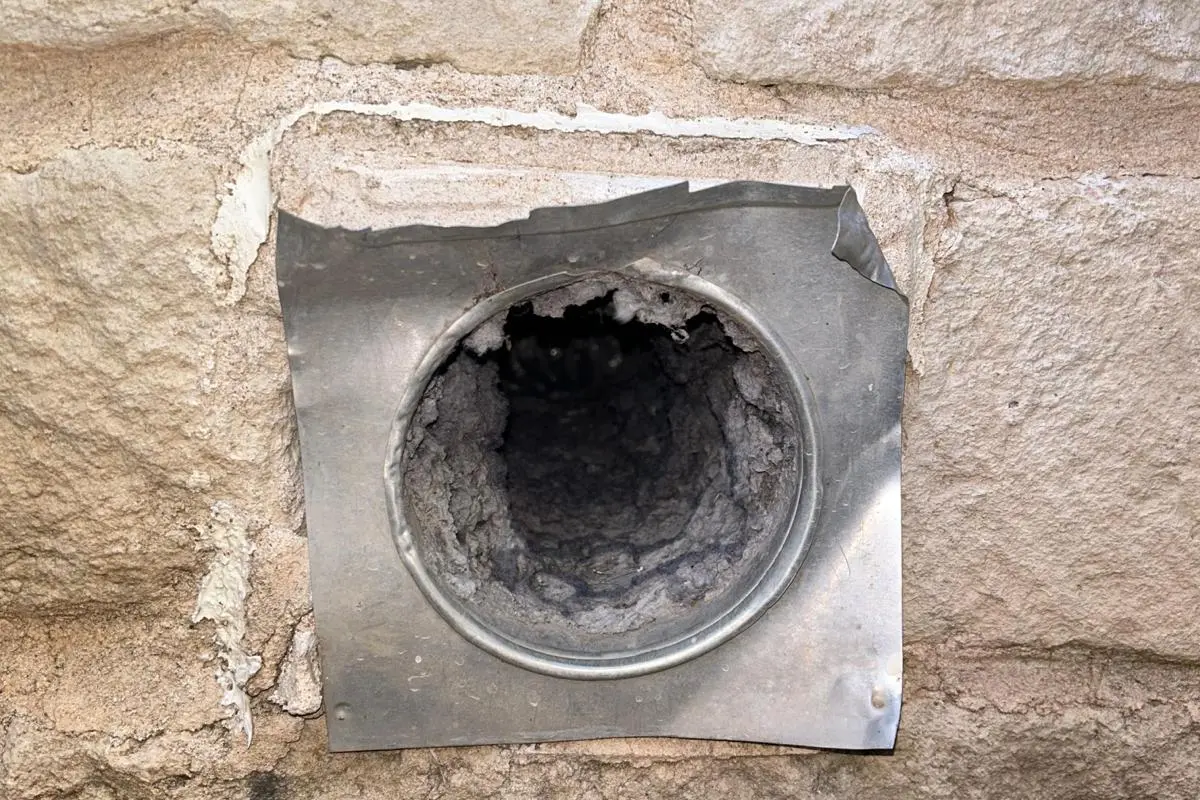
Check the exterior vent flap while the dryer is running. It should open freely and you should feel strong, warm airflow. If the flap barely opens, opens weakly, or does not open at all, the vent is obstructed. Also look for lint accumulation around the exterior opening - this is a visible sign of a venting problem.
Excessive lint on your clothing after a cycle, a musty smell on freshly dried clothes, and a laundry room that feels hot or humid during dryer operation are all indicators of a clogged or partially blocked vent. The humidity issue is particularly noticeable in Austin's already-humid climate.
If your dryer stops mid-cycle due to overheating (many modern dryers have thermal shutoff switches), that is your dryer's safety system telling you the vent is blocked. Do not override this protection - clean the vent before running another load.
How Professional Dryer Vent Cleaning Works
Professional dryer vent cleaning takes about 45 minutes to an hour for a standard installation. The process starts by disconnecting the dryer and inspecting the vent connection at the back of the machine. We check the transition hose (the flexible section between the dryer and the wall) for damage, kinks, or compression - these are common problems that restrict airflow.
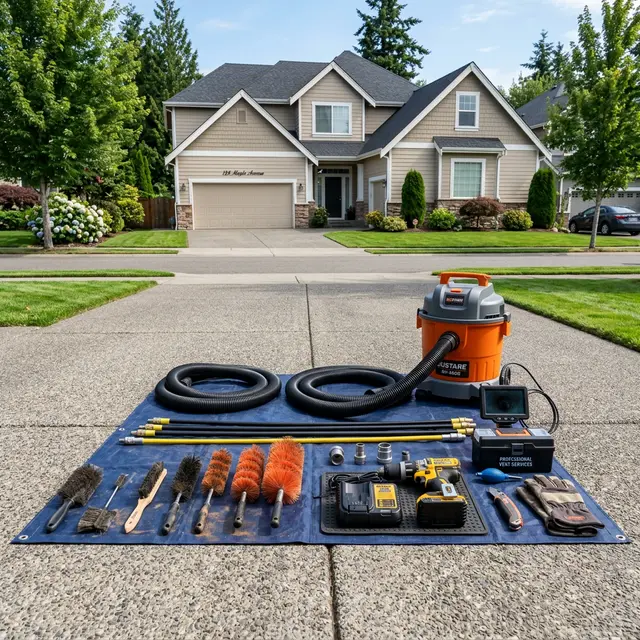
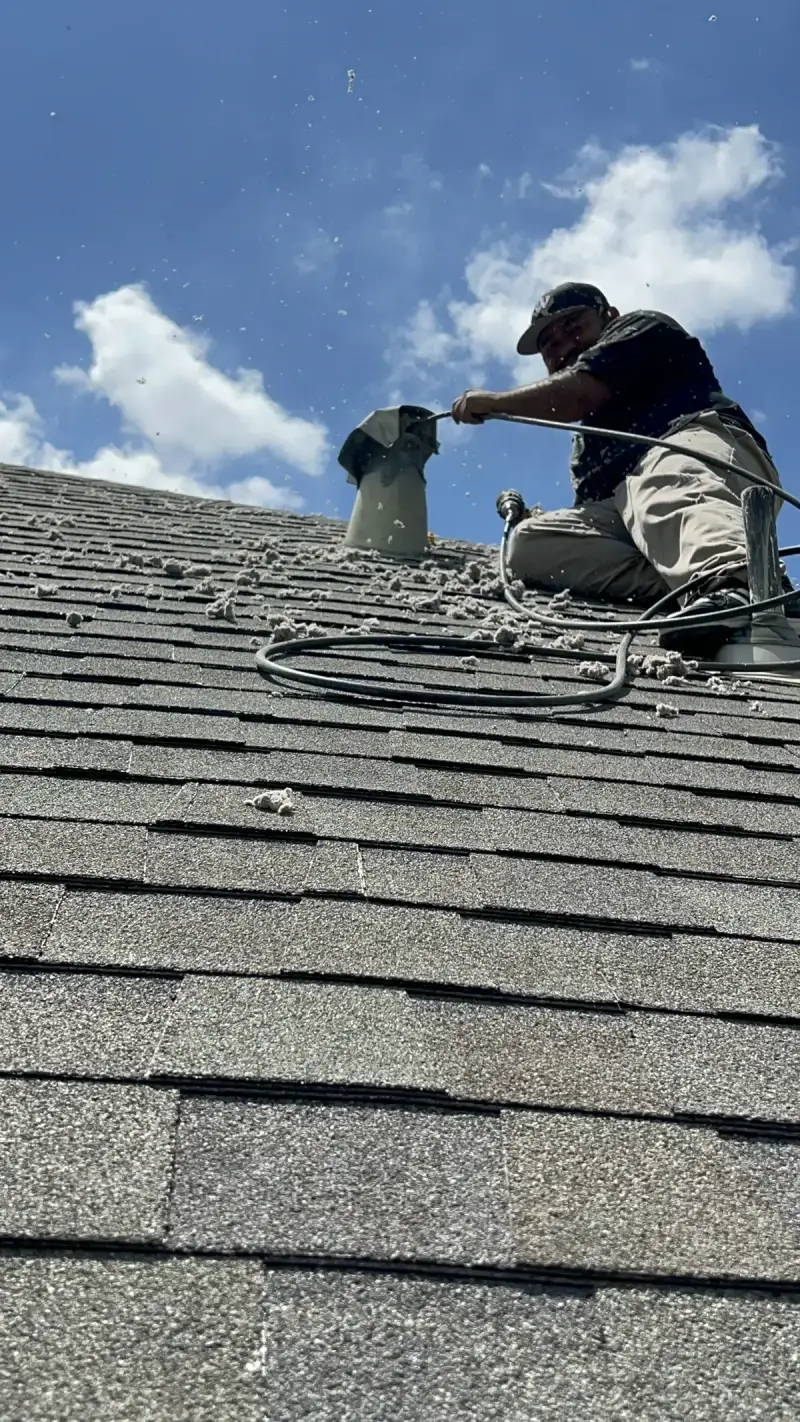
Using a specialized rotary brush system and high-powered vacuum, we clean the entire vent line from the dryer connection to the exterior termination. The rotary brush dislodges compacted lint from vent walls, bends, and joints. The vacuum captures everything without pushing lint further into the vent or out the exterior opening.
We clean the exterior vent cover, check the damper flap for proper operation, and verify unobstructed airflow through the entire line. After cleaning, we run the dryer briefly to confirm strong, warm exhaust at the exterior point.
The dryer's interior lint trap housing also gets cleaned. Lint accumulates around and behind the lint trap in areas you cannot reach during normal maintenance. This hidden buildup is a significant fire risk that homeowners typically do not know about.
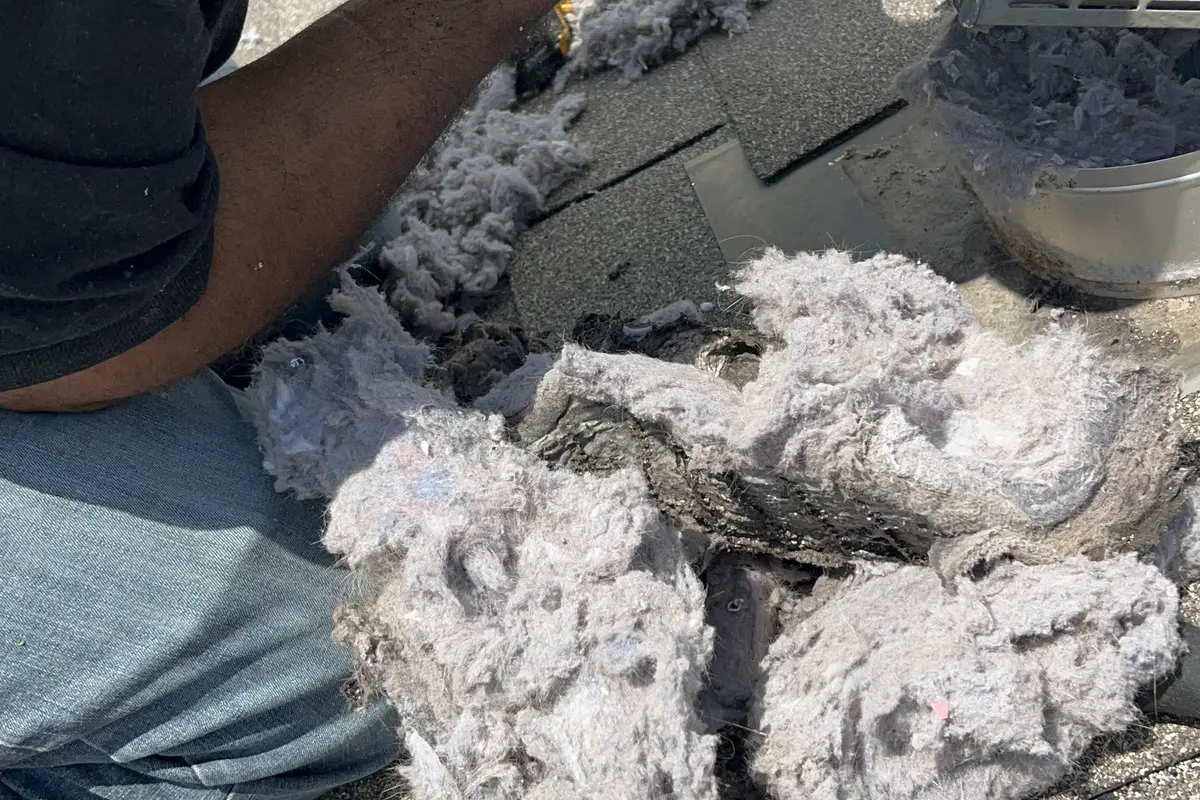
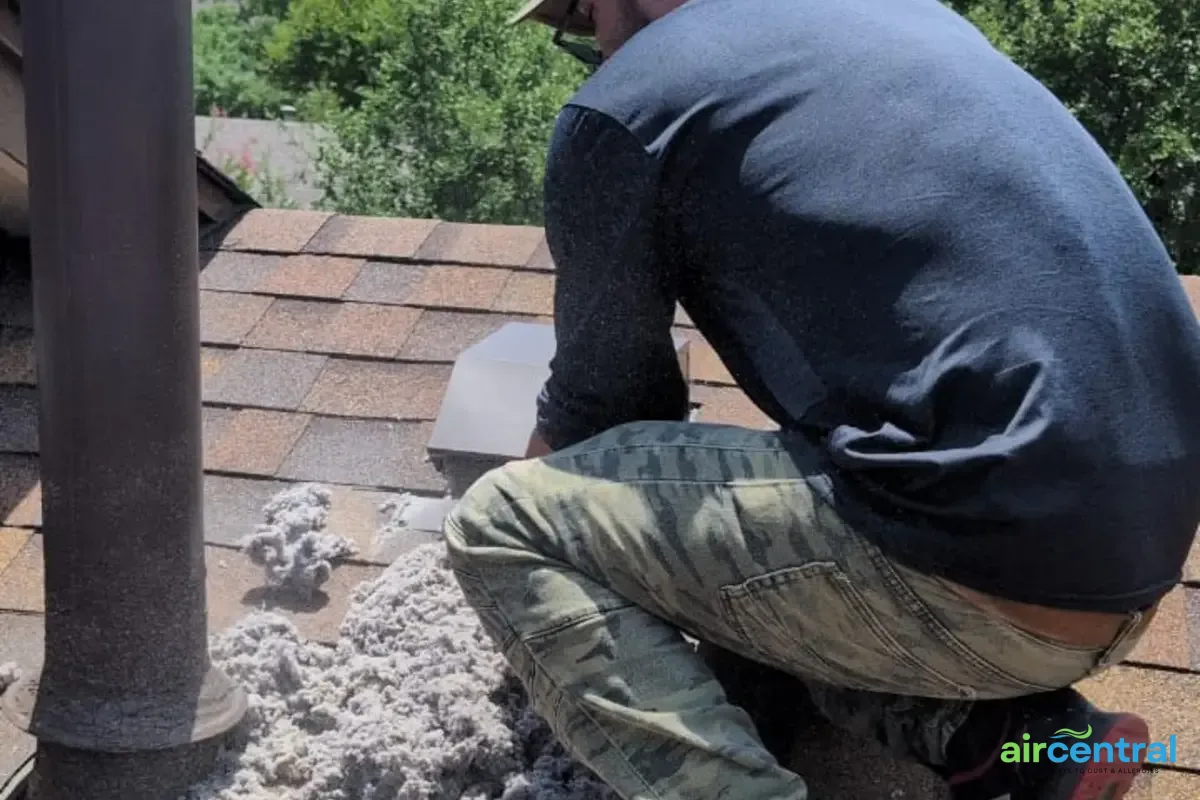
After cleaning, we can show you what we removed. In homes that have not had professional cleaning in 2-3 years, the amount of lint is usually surprising. We have filled garbage bags from single vent runs in Austin homes with heavy laundry usage.
Dryer Vent Cleaning Cost in Austin
Professional dryer vent cleaning in Austin is affordable for a standard installation with a single vent run. The price depends on the length and complexity of the vent routing, accessibility, and the degree of buildup.
Longer vent runs (over 25 feet), multiple bends, rooftop terminations, and second-story installations cost more due to the additional time and equipment required. If the vent requires repair - replacing a damaged transition hose, fixing a disconnected joint, or replacing a crushed exterior cover - parts and labor are quoted separately.
Some companies bundle dryer vent cleaning with air duct cleaning at a discounted rate. Air Central offers dryer vent cleaning as both a standalone service and an add-on to duct cleaning. When combined, you save on the service call fee since the technician is already at your home.
Watch out for bait-and-switch dryer vent operators. The red flags: aggressive upselling once the technician is in your home, or superficial work where they clean only the first few feet of vent rather than the entire run. A legitimate dryer vent cleaning covers the full length of the vent from the dryer connection to the exterior termination point.
How Often Should You Clean Your Dryer Vent
The baseline recommendation is once per year. This is what the NFPA recommends, and for most Austin households of 2-3 people doing average laundry loads, annual cleaning maintains safe operation.
Clean more frequently if your household does 8 or more loads per week. Large families and households with young children who generate heavy laundry volume should consider cleaning every 6-8 months.
Homes with pets need more frequent cleaning. Pet hair mixes with lint and creates dense buildup faster than lint alone. If you have dogs or cats, plan on cleaning every 8-10 months.
The length and routing of your vent matters. Short, straight vent runs (under 15 feet with one or two bends) accumulate lint more slowly than long runs with multiple turns. If your vent exceeds 25 feet or has more than two 90-degree bends, clean every 8-10 months regardless of household size.
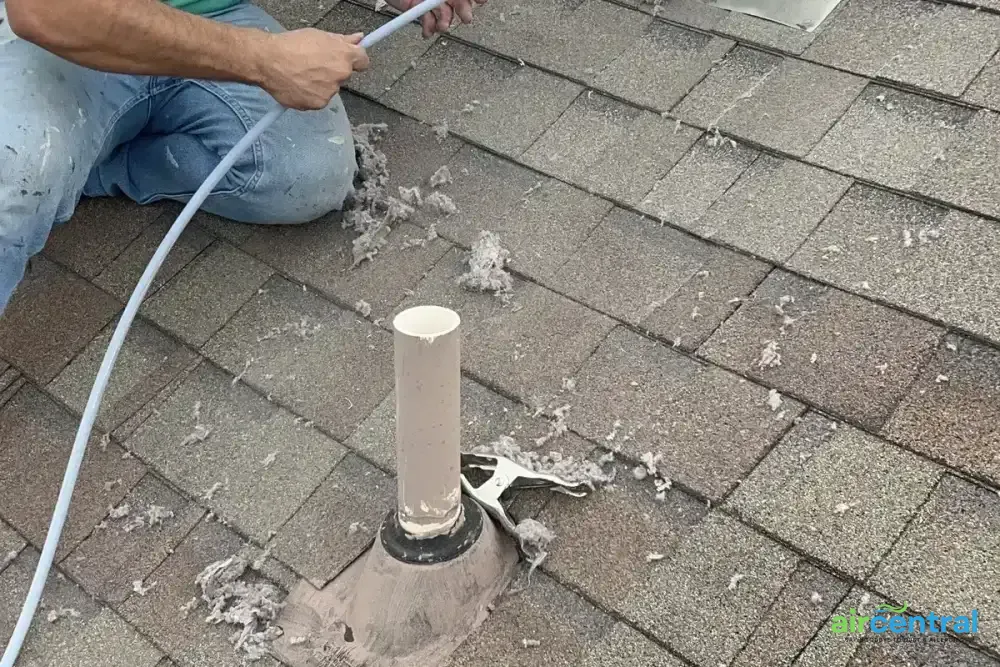
Dryer vents that terminate on the roof require cleaning at least annually, and the exterior opening should be checked quarterly. Roof terminations are harder for homeowners to visually inspect, so blockages can develop unnoticed.
Bird Nests and Pest Blockages in Dryer Vents
In Austin, dryer vents are a popular nesting spot for birds, particularly house sparrows and European starlings. The warm air escaping from the vent attracts birds looking for nesting sites, especially during spring breeding season (March through May). If the exterior damper flap is missing, broken, or stuck open, birds can build nests inside the vent in just a few days.
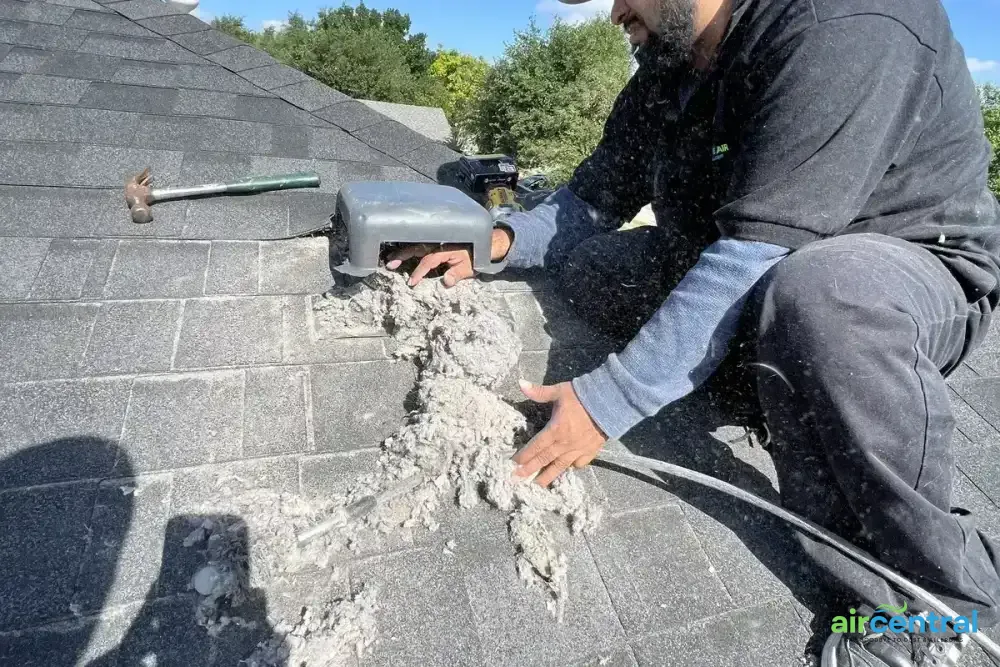
A bird nest completely blocks dryer airflow and creates an immediate fire hazard. Nesting materials - twigs, grass, feathers, and dryer lint - are all highly flammable. We remove bird nests from Austin dryer vents regularly, particularly in the Round Rock, Georgetown, and Pflugerville areas where starling populations are high.
Signs of a bird nest blockage include sudden dramatic loss of dryer performance (clothes completely wet after a full cycle), chirping or scratching sounds near the exterior vent, and debris falling out of the exterior opening. If you suspect a bird nest, do not run the dryer until the vent has been cleared.
Prevention is straightforward: ensure your exterior vent cover has an intact damper flap that closes when the dryer is not running, and consider installing a bird guard - a metal cage that allows airflow but prevents birds from entering. We install bird guards as part of our dryer vent cleaning service when needed.
Wasps and mud daubers also build nests inside dryer vents in Austin, particularly during summer. These blockages are smaller but equally problematic for airflow. Annual professional cleaning catches these issues before they become dangerous.
Texas Dryer Vent Code Requirements
The International Residential Code (IRC), which Texas and Austin follow, sets specific requirements for dryer vent installations. Understanding these codes helps you identify whether your home's dryer vent meets safety standards.
Maximum vent length is 35 feet for a 4-inch diameter smooth metal duct. Each 90-degree elbow reduces the allowable length by 5 feet, and each 45-degree elbow reduces it by 2.5 feet. A vent with three 90-degree turns, for example, has a maximum allowable length of 20 feet (35 minus 15). Many Austin homes built in the 1990s and 2000s exceed these limits, creating chronic venting problems.
Dryer vents must terminate outside the building. Venting into a garage, attic, crawl space, or between walls is a code violation and a serious fire and moisture hazard. We occasionally find improper terminations in Austin homes, particularly in garage laundry setups.
The vent material matters. Flexible plastic or foil transition ducts should only be used for the short connection between the dryer and the wall (and code now prefers semi-rigid aluminum even for this section). The main vent run through walls, floors, or ceilings should be smooth rigid metal duct. Corrugated flex duct is not allowed for concealed runs because lint accumulates in the ridges and restricts airflow.
If your dryer vent does not meet current code, a professional can often reroute or modify the vent to comply. The cost of bringing a vent into compliance is far less than the potential cost of a dryer fire.
When Was Your Dryer Vent Last Cleaned?
Most Austin homeowners go too long between cleanings. A quick inspection takes minutes and could prevent a fire.
Call (512) 601-4451Rate your home's indoor air quality in 2 minutes
DIY Dryer Vent Maintenance Between Professional Cleanings
While annual professional cleaning is essential, there are maintenance steps you should do regularly to keep your dryer vent functioning safely between service visits.
Clean the lint trap before every load. This is basic but frequently neglected. A full lint trap restricts airflow immediately and forces more lint into the vent itself. Also wash the lint trap with soap and water monthly - fabric softener residue creates a film that blocks airflow through the mesh.
Every three months, pull the dryer away from the wall and inspect the transition hose. Check for kinks, compression, or disconnections. The transition hose should have a smooth path with no tight bends. Replace foil or plastic transition hoses with semi-rigid aluminum for better airflow and fire resistance.
Check the exterior vent cover monthly. Remove any visible lint buildup around the opening. Verify the damper flap opens freely. Look for bird nesting material or insect activity.
Never run the dryer when you are not home or when you are sleeping. If a fire starts, early detection is critical. Many dryer fires happen at night or when homeowners are away.
Use the correct dryer settings. Over-drying clothes generates more lint and increases exhaust temperatures. Use moisture-sensing cycles when available. Also clean up lint around and behind the dryer regularly - lint that escapes the trap can accumulate in the dryer cabinet and around the motor.
Dryer Vent Materials: What Is in Your Home
The material your dryer vent is made from directly affects how quickly lint accumulates, how well it vents, and how safe it is. Rigid smooth metal duct (typically 4-inch galvanized steel or aluminum) is the gold standard. Its smooth interior surface allows lint to pass through with minimal accumulation, it withstands heat without degrading, and it meets all building codes for both exposed and concealed runs. If your home has rigid metal throughout, you have the best possible setup. Most newer Austin homes use rigid metal for the main vent run through walls and ceilings.
Semi-rigid aluminum is the recommended material for the short transition section between the dryer and the wall connection. It is flexible enough to allow the dryer to be pushed back against the wall, but sturdy enough to hold its shape without kinking. Semi-rigid aluminum can handle dryer exhaust temperatures and does not sag or collapse like cheaper alternatives. Current building code in Texas prefers semi-rigid aluminum for this transition piece over the older foil or plastic options that many homes still have.
Vinyl and thin foil flex duct are the materials you want to replace as soon as possible. Vinyl is a fire hazard - it cannot handle dryer exhaust temperatures and can melt or ignite. Many homes built in the 1980s and 1990s in Austin still have vinyl dryer vent connections. Thin foil flex duct is slightly better than vinyl but its corrugated surface traps lint aggressively, and it tears and crushes easily. Building code no longer allows either material for concealed dryer vent runs. If your dryer vent uses vinyl or foil flex for anything beyond a very short exposed transition, replacement with proper materials is a safety priority.
Multi-Story and Long Run Considerations
Second-floor laundry rooms have become increasingly common in Austin homes built after 2005, particularly in two-story floor plans throughout neighborhoods in Cedar Park, Round Rock, and Pflugerville. While convenient for reducing trips up and down stairs, a second-floor dryer creates significant venting challenges. The vent must travel down through the wall cavity, across the first-floor ceiling or crawl space, and out an exterior wall - or up through the attic and out the roof. Either path adds length, turns, and complexity that make lint buildup faster and harder to clean without professional equipment.
Every 90-degree elbow in a dryer vent reduces effective airflow equivalent to adding 5 feet of straight vent length. A second-floor installation typically has three to four elbows minimum, which means a 20-foot vent run performs more like a 35-40 foot run. That is right at or beyond the code maximum of 35 feet for 4-inch smooth metal duct. If your second-floor dryer takes noticeably longer to dry clothes than a previous first-floor setup, the vent length and turns are almost certainly the reason. These installations need cleaning every 8-10 months rather than annually.
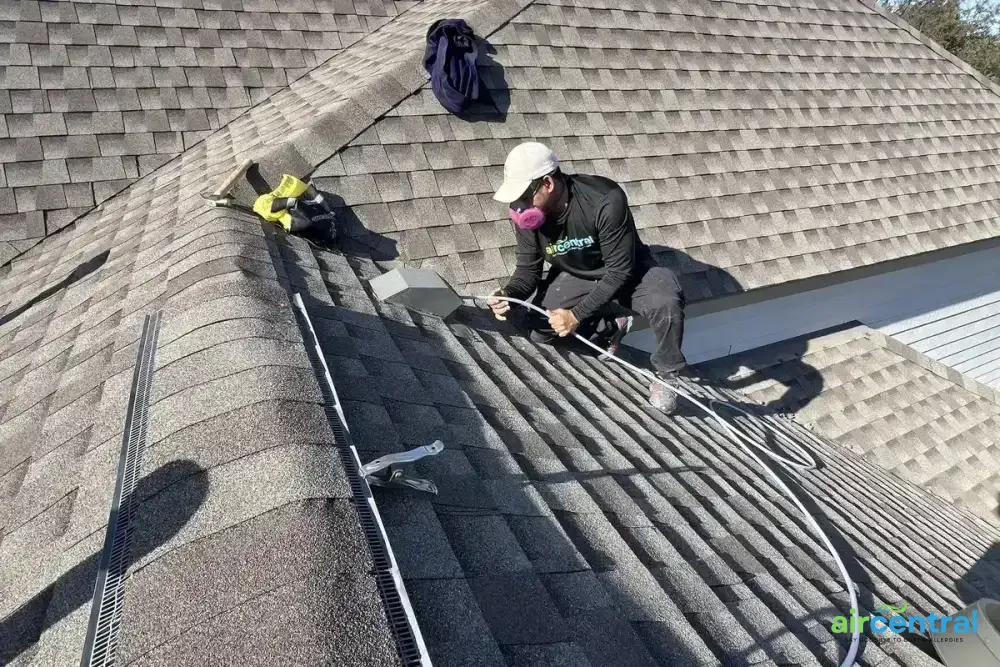
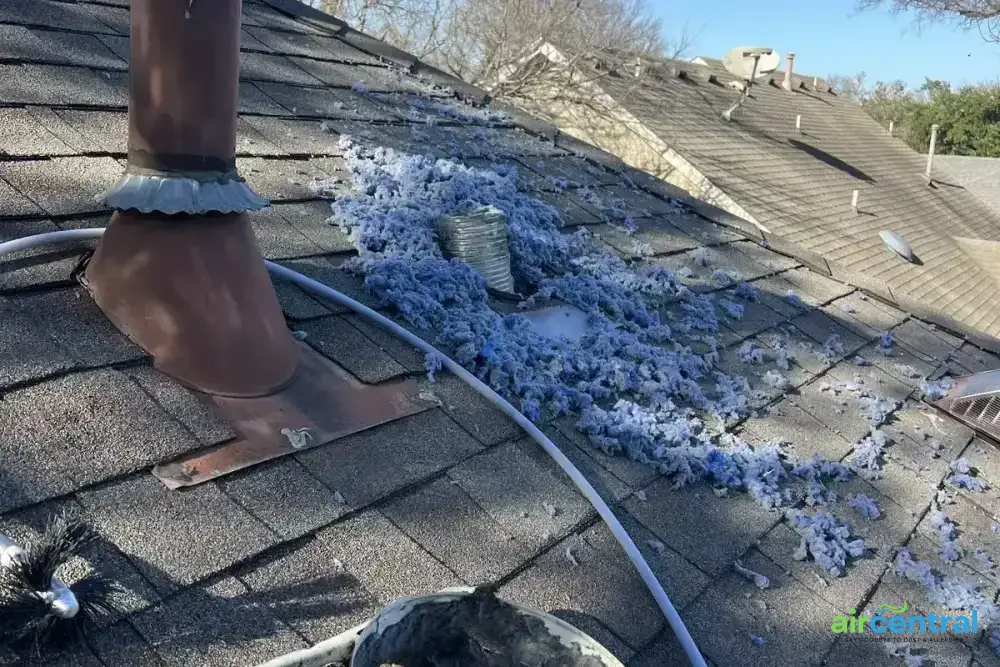
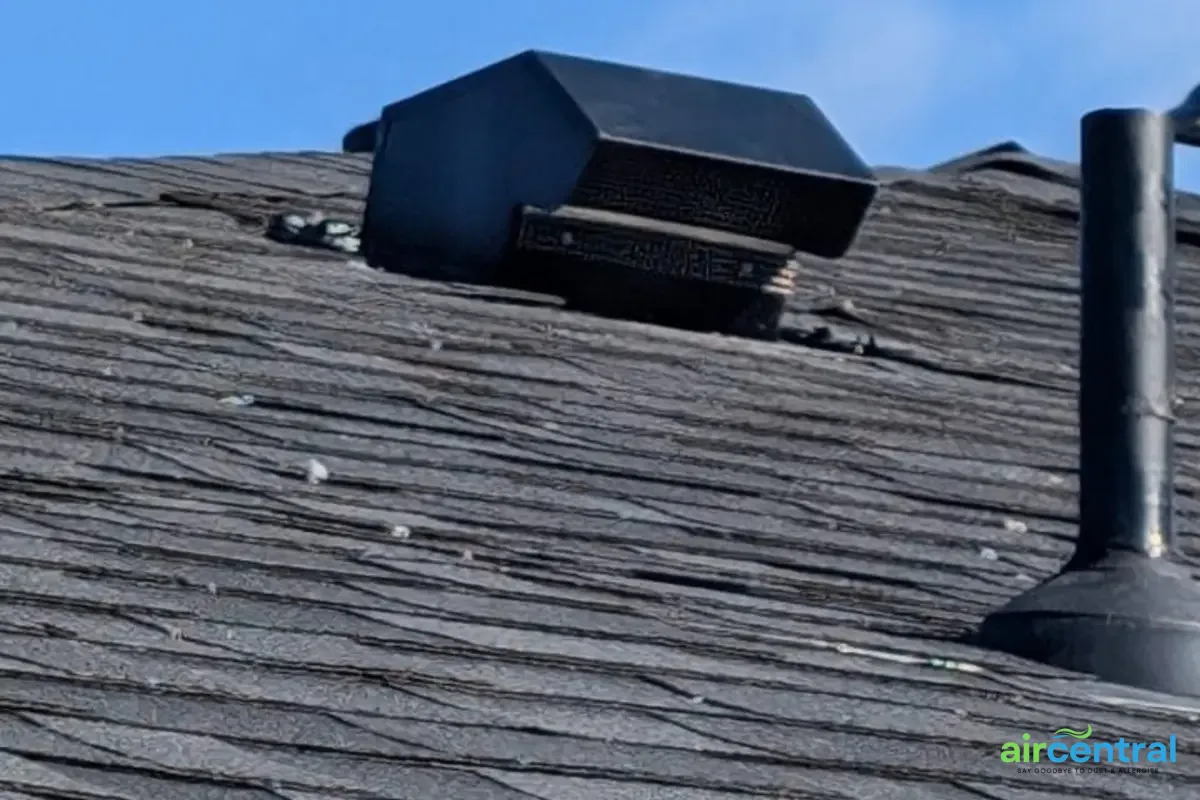
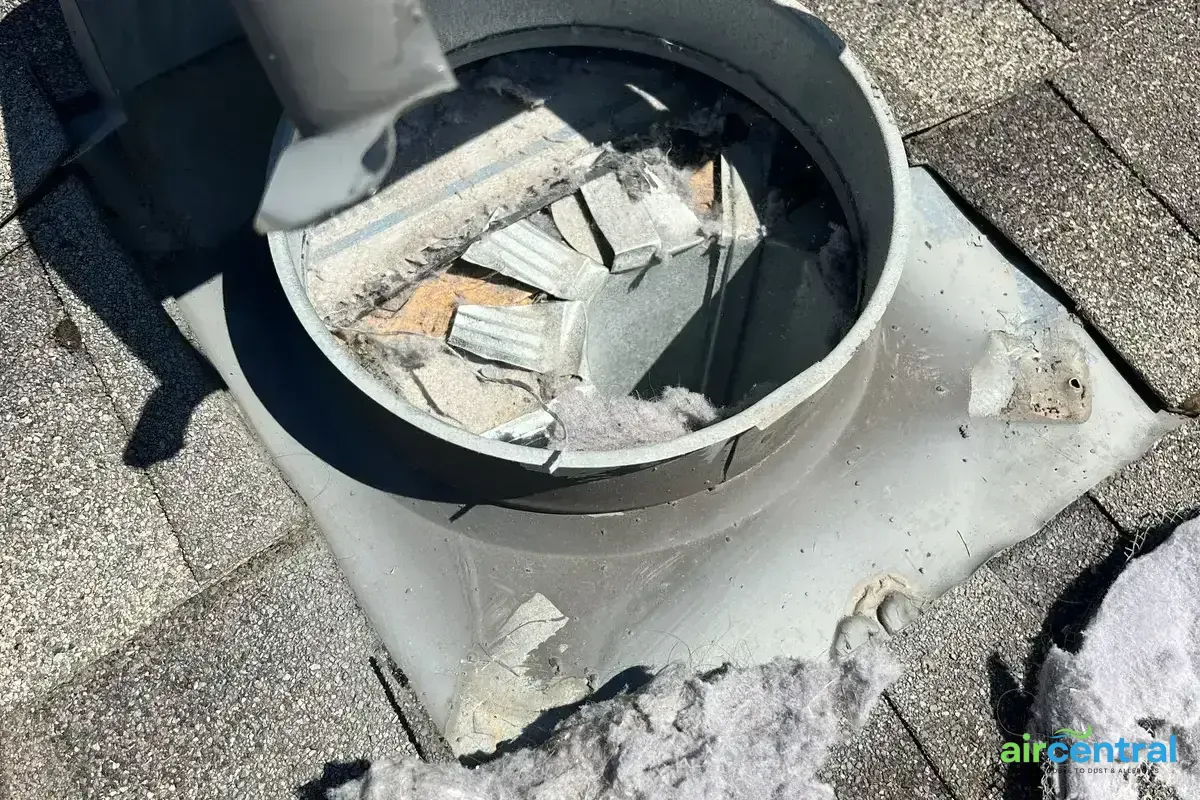
Roof-terminated dryer vents add another layer of difficulty. The exterior cap is not visible from ground level, so homeowners rarely notice when the damper gets stuck, the screen clogs with lint, or birds start nesting in the opening. Rain can also enter poorly designed roof caps, wetting lint inside the vent and creating dense blockages that are hard to clear. For long or complex vent runs, a dryer vent booster fan installed inline can maintain adequate airflow. These fans are code-approved, activate automatically when the dryer runs, and make a real difference in drying performance for homes where the vent path cannot be shortened. Air Central handles long-run and multi-story dryer vent cleaning regularly and can advise on whether a booster fan would help your specific setup.
Dryer Vent Safety Statistics and Austin Context
The numbers behind dryer vent fires are worth understanding because they put the cost of an affordable annual cleaning into perspective. The NFPA reports that US fire departments respond to an average of 13,820 home fires per year involving clothes dryers or washing machines, with dryers accounting for 92 percent of those incidents. Texas consistently ranks among the top states for total residential fire losses, and the Texas Department of Insurance identifies failure to clean dryer vents as a leading preventable cause. In the Austin-Travis County area, the fire department responds to structure fires daily during peak months, and appliance-related fires represent a significant share. These are not abstract statistics - they are house fires that start in laundry rooms in neighborhoods across Round Rock, Cedar Park, Pflugerville, and central Austin.
The financial math is straightforward. Professional dryer vent cleaning is a modest annual expense. The average dryer fire causes $8,000-$12,000 in damage according to NFPA data, and severe fires can result in total home losses exceeding $200,000. Many homeowners insurance policies require reasonable maintenance of appliances and venting systems. A denied claim due to a documented lint-clogged vent that had not been cleaned in years is a real scenario - insurers investigate fire origins, and a packed dryer vent is easy to identify as neglect. The cost-benefit calculation is not close. Annual cleaning eliminates the primary ignition risk, preserves your insurance standing, extends your dryer's lifespan by reducing operating temperatures, and costs less than a single service call for a dryer that overheated and tripped its thermal fuse.
When to Replace vs Clean Your Dryer Vent
Cleaning solves most dryer vent problems, but some situations require vent replacement or modification.
Replace if the vent is made of plastic or thin foil flex duct for concealed runs. These materials do not meet current code, accumulate lint faster than smooth metal, and present a higher fire risk. Replacement with rigid metal duct is a one-time cost that permanently improves safety and performance.
Replace if the vent exceeds code-maximum length after accounting for elbows. An overly long vent cannot maintain adequate airflow regardless of how frequently it is cleaned. In some cases, rerouting to a shorter path is possible.
Repair or replace if inspection reveals damaged sections - crushed duct, disconnected joints, or holes that allow lint to escape into wall cavities. Lint in wall cavities is a hidden fire hazard that should be addressed immediately.
For homes where the dryer is located far from an exterior wall - common in Austin homes where laundry rooms are in the center of the house - a dryer vent booster fan may be needed. These inline fans assist airflow in long vent runs and are code-approved when properly installed.
If your dryer is taking longer than it used to, the answer is almost always in the vent, not the dryer itself. Before you spend $800 on a new appliance, spend a fraction of that on a professional vent cleaning and find out. Air Central checks the full vent path - from the back of the dryer to the exterior exit - and if the vent material itself is the problem, we will tell you straight. Call (512) 601-4451 and find out what is actually going on before the next load of laundry.
Finding Dryer Vent Cleaning Services Near You in Austin
Searching for a dryer cleaner near me or companies that clean dryer vents in Austin returns a mix of legitimate service providers and HVAC companies that offer dryer vent cleaning as an add-on without the specialized equipment required for a thorough job. What separates a proper dryer vent cleaning service from a quick upsell: the technician uses a rotary brush system designed specifically for dryer vents (different from duct cleaning brushes), measures airflow before and after to verify improvement, and inspects the exterior termination for obstruction or damage.
Professional clothes dryer vent cleaning service takes 45-60 minutes for a standard installation. For long runs or multi-story configurations common in newer Austin construction, expect 60-90 minutes with a booster fan assessment included. The price for a professional dryer vent cleaning service in Austin ranges from $89 to $300 depending on vent length, accessibility, and whether roof access is required. Air Central offers dryer vent air duct cleaning combinations - cleaning both systems together in one visit is more efficient than scheduling them separately and typically comes at a bundled rate.
Air Central is one of the leading cleaning dryer vents services in the Austin metro. Our technicians handle everything from standard single-story vent cleaning to complex multi-story runs with roof terminations. We serve Austin and all 27 surrounding communities - from Georgetown and Round Rock in the north to Kyle and Buda in the south. Same-week appointments are typically available. Call us to schedule your dryer vent cleaning and ask about combining it with duct or chimney service for a streamlined visit.
Related Services
Learn more about our professional services related to this topic:
- Dryer Vent Cleaning - Clear lint buildup to prevent fires and cut drying time in half.
All Articles in This Series
- Dryer Vent Cleaning Cost in Austin: 2026 Price Guide
- 6 Warning Signs of a Clogged Dryer Vent
- How Often Should You Clean Your Dryer Vent?
- Bird Nests in Dryer Vents: Removal & Prevention Guide
- Dryer Taking Too Long to Dry? Causes & Fixes
- Texas Dryer Vent Code: What Homeowners Need to Know
- Can a Dryer Catch Fire When It's Off? The Surprising Answer
- 7 Dryer Fire Warning Signs Every Homeowner Should Know
- Dryer Vent Booster Fans: Do You Need One?
- Dryer Vent Cleaning with Roof Access: What to Know
- Professional Dryer Vent Cleaning: What's Included
- Dryer Vent Cleaning in Austin: Complete Service Guide (2026)
- Dryer Vent Cleaning in an Apartment: Who's Responsible?
- HOA and Condo Dryer Vent Cleaning Requirements in Texas
Have questions about dryer vent safety? Our team is available 7 days a week. Call us at (512) 601-4451 or visit our contact page.