Check your thermostat settings, air filter, circuit breaker, outdoor unit, and supply vents before calling for AC repair. About 30% of service calls in Austin are resolved by homeowner fixes that take under 5 minutes. If these 8 checks do not solve the problem, call (512) 601-4451 for professional diagnosis.
Check 1: Thermostat Settings
This solves the problem more often than you would expect. Verify the thermostat is set to COOL (not HEAT or OFF), the fan is set to AUTO (not ON - ON runs the fan continuously even without cooling), and the set temperature is at least 3-5 degrees below the current room temperature. If someone bumped the thermostat or a power glitch reset it, the system may be running in the wrong mode.
For smart thermostats, check the app for any automated schedule changes, energy-saving modes that raise the target temperature, or geo-fencing features that may have switched to Away mode. Nest and Ecobee thermostats can learn schedules that raise the temperature when they think you are away.
Check 2: Air Filter
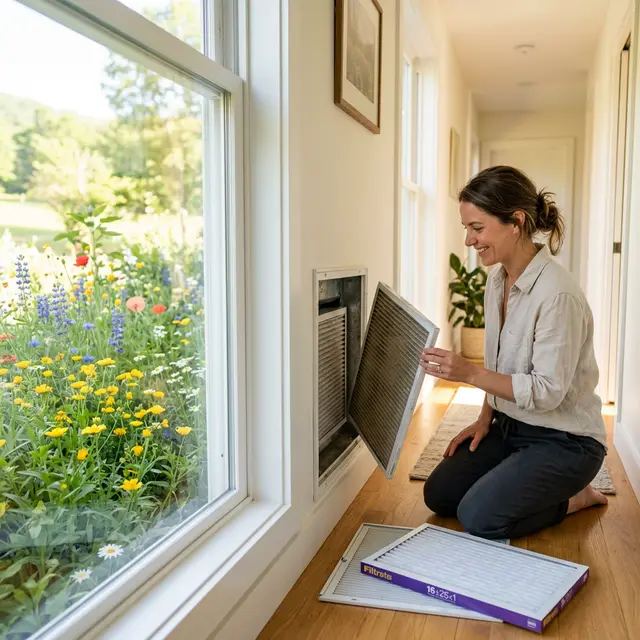
A clogged filter is the number one cause of AC underperformance in Austin homes. Pull out the filter and hold it up to a light source. If you cannot see light through it, it is too dirty and is restricting airflow to the point where your system cannot cool effectively. In Austin, filters need replacement every 30-60 days during summer because the system runs almost continuously.
Replace the filter and wait 30 minutes. A severely clogged filter can cause the evaporator coil to freeze, which blocks airflow completely. If you see ice on the refrigerant lines near the indoor unit, turn the system to FAN ONLY for 2-3 hours to let the ice melt, then switch back to COOL with the new filter installed.
Check 3: Circuit Breakers
Your AC system uses two breakers: one for the indoor air handler and one for the outdoor condenser. Check both in your electrical panel. A tripped breaker will be in the middle position (not fully ON or OFF). Flip it fully OFF, wait 30 seconds, then flip it back ON. If the breaker trips again immediately, do not keep resetting it - this indicates an electrical problem that needs professional repair.
Also check for a disconnect switch near the outdoor unit. Some homes have a pull-out disconnect or a small breaker box mounted on the exterior wall near the condenser. If this was accidentally switched off during yard work or maintenance, the outdoor unit will not run even though the indoor fan operates normally.
Check 4: Outdoor Unit
Go outside and look at the condenser unit. Is the fan spinning? If not, and the system is set to cool, there may be a capacitor or contactor failure (requires professional repair). If the fan is spinning, check for obstructions: grass clippings, leaves, cottonwood fluff, or debris clogging the fins. In Austin, cottonwood season in late spring coats outdoor units with a thick white film that blocks airflow.
Clear any debris at least 2 feet around the unit. Gently hose down the condenser fins from the inside out (not a pressure washer - that damages the fins). If the fins are significantly bent or flattened, airflow is restricted and may need professional fin combing.
Check 5: Supply Vents and Returns
Walk through every room and check that supply vents are open and unobstructed. Furniture pushed against vents, rugs covering floor registers, or closed vent louvers in unused rooms all restrict airflow and can cause the system to struggle. Open every vent in the house - closing vents in unused rooms does not save energy and actually increases pressure in the duct system, reducing overall efficiency.
Check the return vents too. These are the larger grilles, usually in hallways or central areas. If return vents are blocked by furniture or curtains, the system cannot pull enough air to cool and recirculate effectively.
Just Moved In? Start Here.
We help new Austin homeowners understand their HVAC system with honest assessments and straightforward recommendations.
Call (512) 601-4451Rate your home's indoor air quality in 2 minutes
Check 6: Refrigerant Lines
Look at the copper lines running from your outdoor unit into the house. The larger line (suction line) should be cold and covered in insulation. If the insulation is missing or deteriorated, the system loses cooling capacity. If you see ice forming on the line, this indicates low refrigerant or restricted airflow (often from a dirty filter - see Check 2).
If both lines are warm or room temperature while the system is running, the compressor may not be operating even though the fan is. This requires professional diagnosis - do not attempt to add refrigerant yourself.
Check 7: Drain Line
Austin's humidity means your AC produces a significant amount of condensation. This drains through a PVC pipe, usually to the outside of your home near the foundation or into a utility drain. If the drain line is clogged with algae or debris (extremely common in Austin), water backs up, triggers the float safety switch, and shuts down the system.
Find the drain line exit point outside and check for water flow while the system runs. If it is dry, the line is likely clogged. You can try pouring a cup of white vinegar into the drain access point (usually a T-fitting near the indoor unit) and flushing with warm water. For persistent clogs, a wet-dry vacuum on the outdoor drain exit can clear the blockage.
Check 8: Age and Recent Changes
Consider what has changed recently. Did you add a room, close off a space, add blackout curtains (which reduce solar heat gain and might mean the system is actually working but your expectations changed), or have work done on the house? New additions or layout changes can exceed the original system's capacity.
If none of these 8 checks solve the problem, you need professional diagnosis. Common issues beyond homeowner fixes include failed compressors, refrigerant leaks, bad expansion valves, failed capacitors, and faulty control boards. Air Central can diagnose the issue and, for HVAC repairs beyond our core services, connect you with our vetted partner network of licensed HVAC contractors. Call (512) 601-4451 for same-day assessment.
Related Services
Learn more about our professional services related to this topic:
- Air Duct Cleaning - Remove dust, allergens, and debris from your entire HVAC system for cleaner indoor air.
- Air Duct Inspection - Diagnose leaks, blockages, and efficiency issues with HD camera inspection.
- Dryer Vent Cleaning - Clear lint buildup to prevent fires and cut drying time in half.
- Chimney Sweep & Repair - Professional cleaning and 21-point safety inspection for your fireplace.
- Solar Fan Installation - Solar-powered attic ventilation that cuts cooling costs naturally.
Want the full picture?
Read our complete guide: First-Time Homeowner's Complete HVAC Guide for Austin (2026) →Have questions about homeowner education? Our team is available 7 days a week. Call us at (512) 601-4451 or visit our contact page.