Professional dryer vent cleaning uses commercial rotary brush systems and high-CFM vacuums to clear the entire vent path from dryer connection to exterior cap. A real cleaning takes 30-60 minutes, costs less than most homeowners expect, and should be done annually. The difference between professional cleaning and DIY is the equipment: commercial tools reach and clear the full vent run, while household kits only clean the first few feet.
What Professional Dryer Vent Cleaning Actually Includes
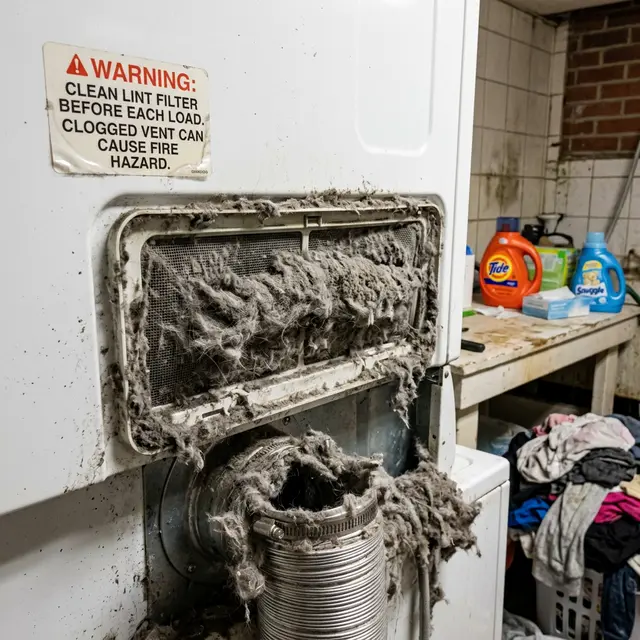
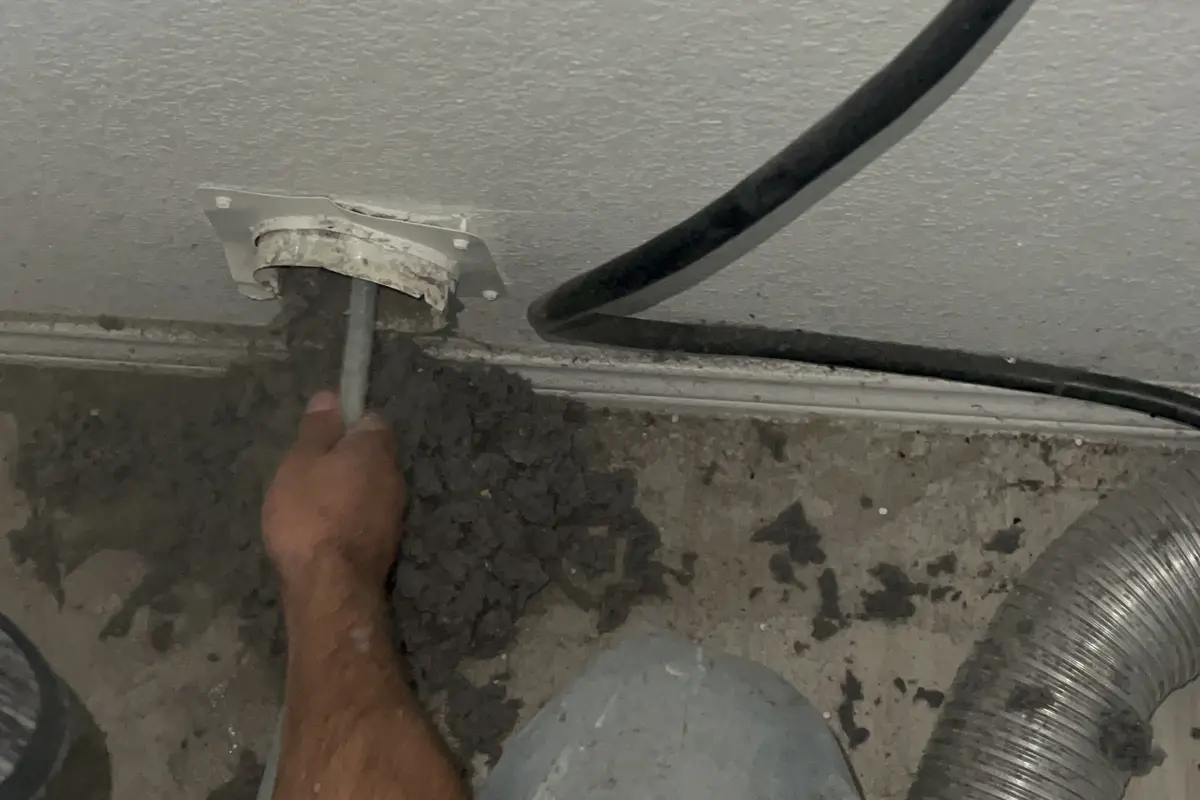
A professional dryer vent cleaning is a systematic process that covers every component between your dryer and the exterior exhaust cap. The technician starts by pulling the dryer away from the wall and disconnecting the transition hose - the flexible connection between the dryer and the wall vent. This transition hose is one of the most common points of lint accumulation and is often the first place problems develop. In Liberty Hill and Hutto, where post-2010 construction boom homes often have second-floor laundry rooms with long vent runs up through the roof, lint compaction in those vertical sections is a particularly common finding.
The technician inspects the transition hose for damage, kinks, or excessive lint buildup. If the hose is a flexible foil or vinyl type (common in older installations), the technician will recommend replacing it with a semi-rigid metal transition hose, which is safer and collects less lint. This is a code requirement in many jurisdictions and a safety best practice everywhere.
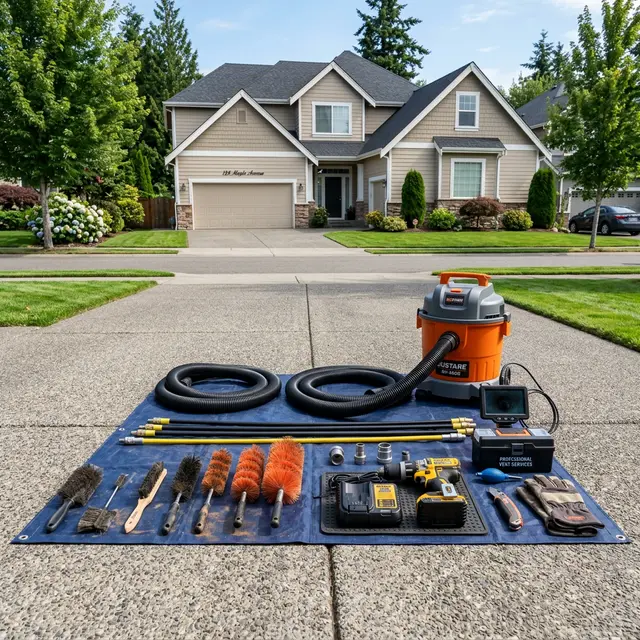
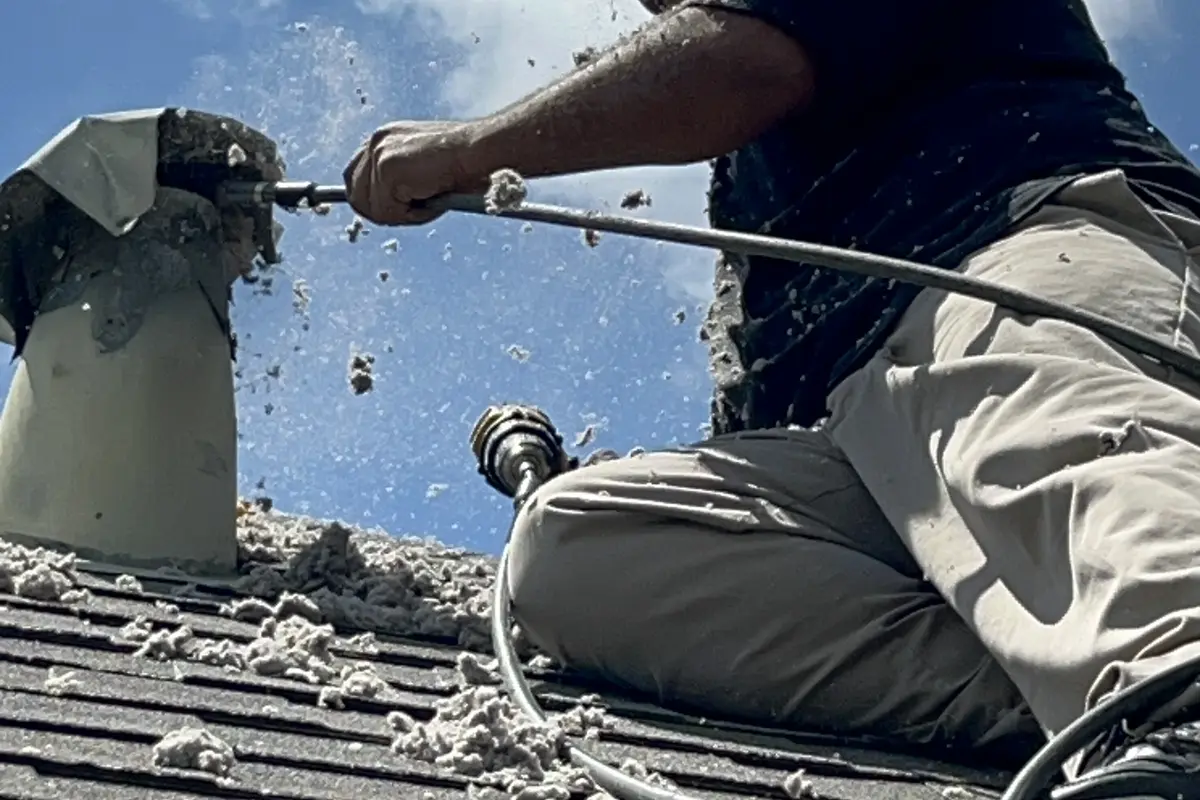
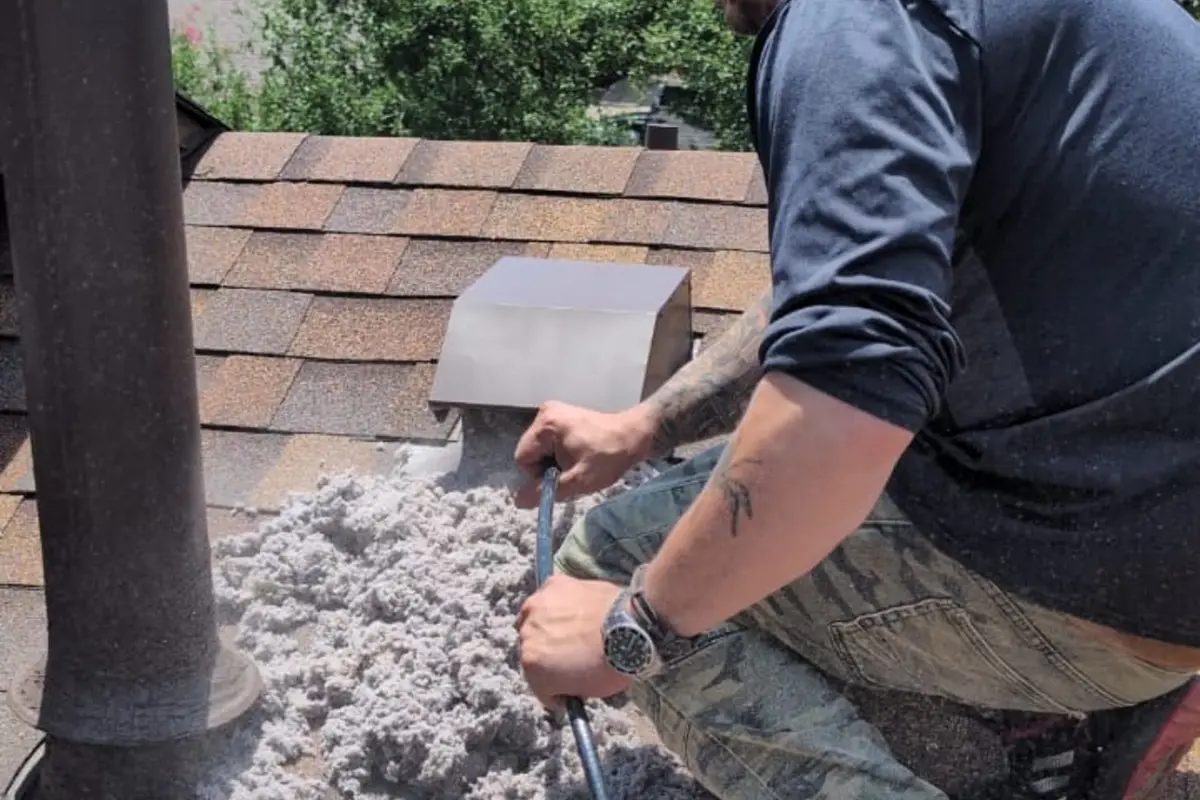
The main vent line is cleaned using a commercial rotary brush system. The brush head attaches to flexible rods that feed into the vent opening and extend the full length of the vent run - typically 10-30 feet depending on your home's layout. The rotating brush scrubs lint and debris from the interior walls of the vent pipe while a high-CFM (cubic feet per minute) vacuum captures everything that is dislodged.
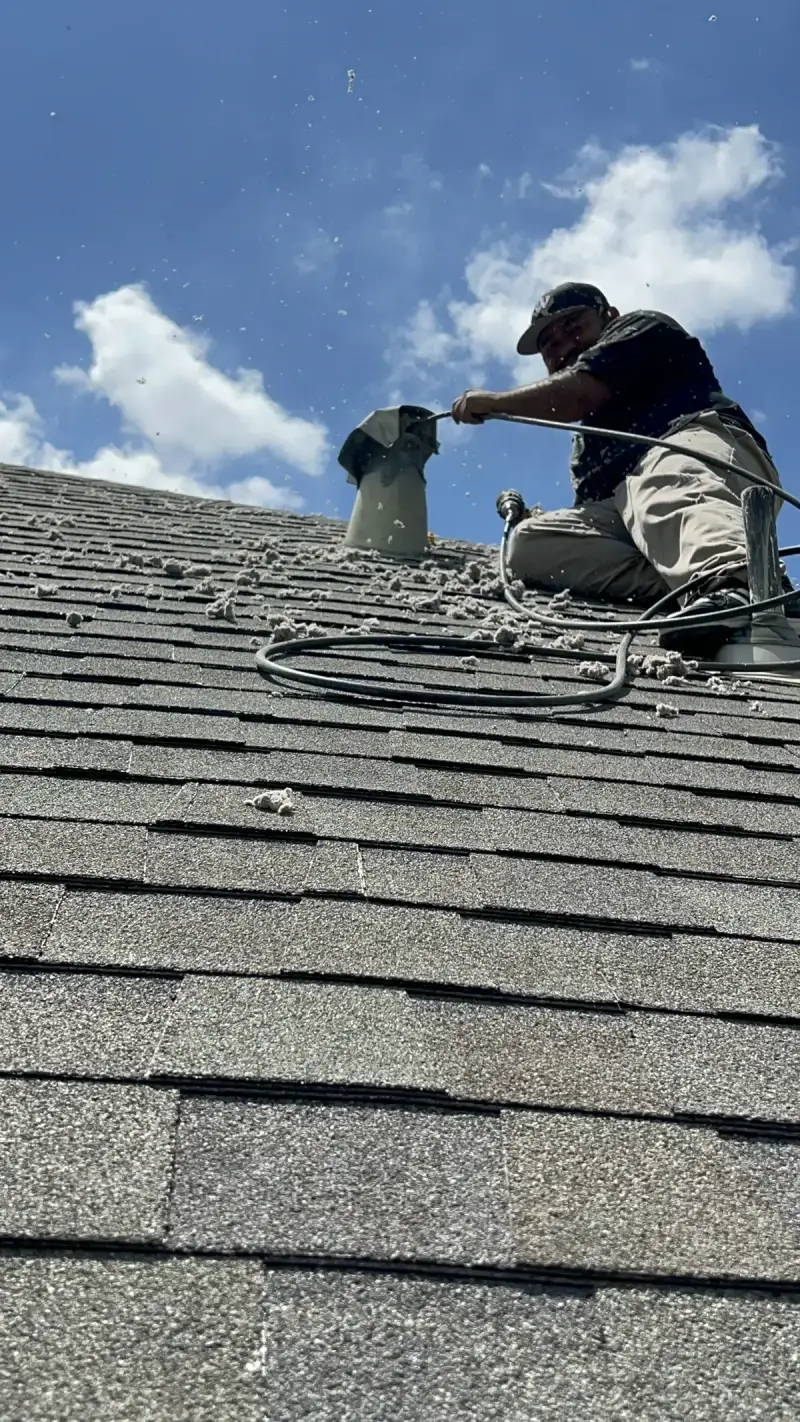
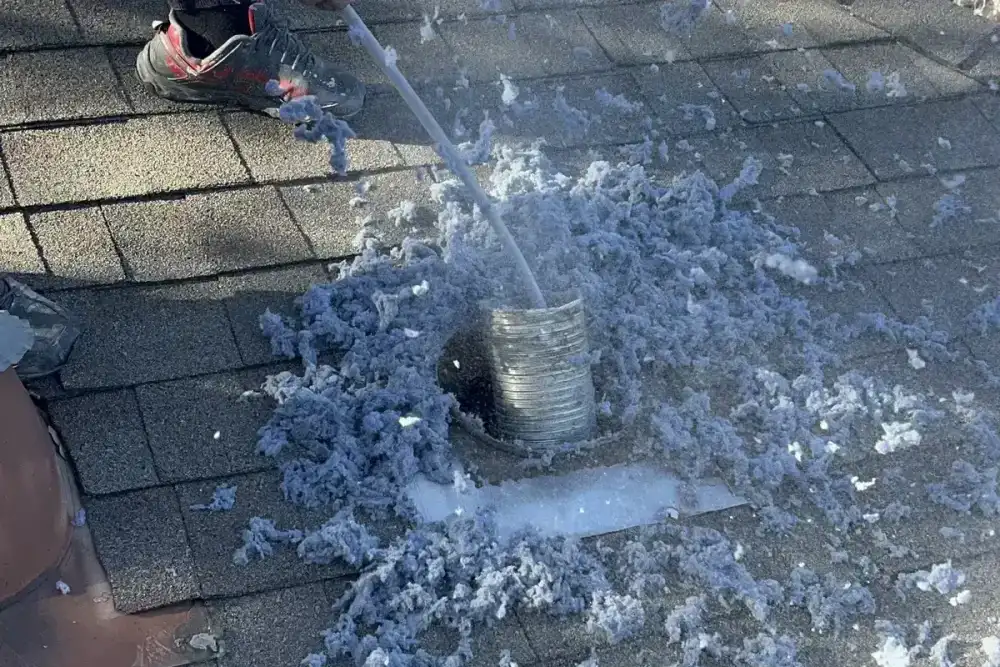
The exterior cap is inspected and cleaned. The technician checks the flapper or damper mechanism to ensure it opens and closes freely, removes any lint buildup or pest nesting material, and verifies that the cap is properly sealed against the exterior wall or roof. A damaged or missing cap allows pests, rain, and outside air into the vent line.
The Equipment That Makes the Difference
The gap between professional equipment and consumer-grade dryer vent cleaning kits is enormous. Professional rotary brush systems use a drill-powered or motor-driven brush head on flexible rods that reach 30 feet or more. The brush spins at controlled speeds to dislodge compacted lint without damaging the vent pipe. Consumer kits from hardware stores typically include a static brush on a flexible rod that reaches 12-15 feet - not enough for most installations.
High-CFM vacuum systems are the other critical piece. Professional dryer vent vacuums generate enough suction to pull lint through the entire vent run and capture it rather than just pushing it from one section to another. A household vacuum does not generate the airflow needed to clear a 20-foot vent line. Without adequate vacuum power, a brush just moves lint around instead of removing it.
Compressed air tools supplement the brush and vacuum in cases of severe buildup. Technicians use air snakes - flexible hoses with forward-facing nozzles - to blast through compacted lint blockages that the brush alone cannot clear. This is particularly important for vents with multiple bends or long vertical runs where lint compacts under its own weight.
Inspection cameras allow the technician to visually verify that the vent is clear after cleaning. For roof-exit vents and vents with multiple bends, a camera check confirms that no lint remains in areas the brush may have missed. Not every company uses inspection cameras for dryer vents, but it is a sign of a thorough operation.
How Long It Takes and What It Costs
A standard professional dryer vent cleaning takes 30-60 minutes for a typical Austin home. Wall-exit vents with short, straight runs are on the faster end. Roof-exit vents, vents with long runs or multiple bends, and severely clogged vents take longer. If the technician discovers a damaged transition hose, collapsed vent section, or pest nesting, additional time is needed to address those issues.
Cost varies based on vent length, access difficulty (wall vs roof exit), and the level of buildup. Most Austin homeowners pay within the range you would expect for a skilled service call involving specialized equipment. The investment is modest compared to the cost of a dryer fire (average property damage from a dryer fire exceeds $10,000 according to the NFPA) or the energy waste from a clogged vent forcing your dryer to run double cycles.
Some companies offer dryer vent cleaning as an add-on service when you schedule air duct cleaning. Bundling the two services often saves compared to scheduling them separately, and it makes sense logistically since the technician and equipment are already at your home.
Air Central provides professional dryer vent cleaning as both a standalone service and bundled with air duct cleaning. Call (512) 601-4451 for a professional estimate based on your home's specific setup.
How to Spot a Scam Dryer Vent Cleaner
The dryer vent cleaning industry has its share of operators who cut corners. Knowing what to look for protects you from paying for a service that was never actually performed properly.
A company that arrives, spends 10-15 minutes, and declares the job done did not perform a real cleaning. Proper dryer vent cleaning requires disconnecting the dryer, feeding a rotary brush through the full vent run, vacuuming with commercial equipment, cleaning the exterior cap, and reconnecting everything. That process takes a minimum of 30 minutes even for a short, simple vent.
Companies that clean only from the exterior cap or only from the dryer end are doing half the job. Effective cleaning addresses the full vent path from both access points. Lint accumulates at different rates in different sections, and a single-direction approach leaves buildup in the areas that were not directly reached.
Beware of operators who claim you need additional services like vent sanitizing sprays, vent coatings, or internal vent liners. These are upsells with little to no proven benefit for dryer vents. The goal of dryer vent cleaning is simple: remove lint and debris so air flows freely. If the vent is physically intact and the path is clear, the job is done.
Check reviews before hiring. Look for specific descriptions of the cleaning process, not just star ratings. A company with dozens of detailed reviews describing thorough, professional service is far more trustworthy than one with vague or generic feedback.
When Was Your Dryer Vent Last Cleaned?
Most Austin homeowners go too long between cleanings. A quick inspection takes minutes and could prevent a fire.
Call (512) 601-4451Rate your home's indoor air quality in 2 minutes
How Often You Need Professional Cleaning
The National Fire Protection Association recommends annual dryer vent cleaning. For most Austin households, once per year is the right frequency. However, several factors can shorten that interval.
Large families that run the dryer daily or multiple times per day should consider cleaning every 8-10 months. The volume of lint generated is directly proportional to dryer usage, and heavy-use households exceed the capacity of annual cleaning.
Homes with long vent runs (over 20 feet), multiple bends, or roof-exit configurations accumulate lint faster than homes with short, straight wall-exit vents. If your vent has more than two 90-degree turns, annual cleaning is the minimum.
Pet owners who wash pet bedding, blankets, or towels regularly should clean more often. Pet hair produces heavy lint loads that clog vents faster than clothing lint alone.
Between professional cleanings, homeowners should clean the lint trap before every dryer load, check behind the dryer periodically for lint accumulation, and pay attention to changes in drying time. If clothes suddenly take longer to dry, do not wait for your annual cleaning - call a professional to inspect the vent.
Why Dryer Vent Cleaning Matters for Safety and Efficiency
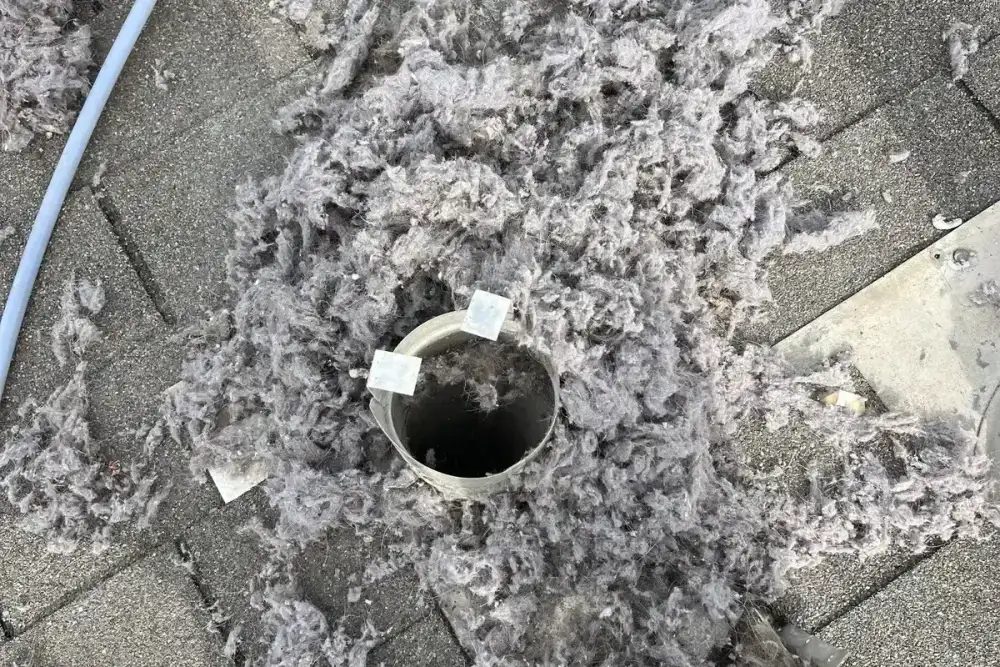
The U.S. Fire Administration reports approximately 2,900 residential dryer fires per year, causing an estimated $35 million in property damage. The leading cause is failure to clean dryer vents. Lint is highly combustible - it ignites at relatively low temperatures and burns rapidly. A vent packed with lint is a fire waiting for a spark.
Beyond fire safety, a clogged dryer vent wastes energy and money. When exhaust air cannot exit freely, the dryer runs longer to achieve the same drying result. A dryer running double cycles because of a restricted vent uses twice the electricity or gas. Over the course of a year, the wasted energy cost often exceeds the cost of professional cleaning.
A restricted vent also shortens your dryer's lifespan. The excess heat from poor exhaust flow stresses heating elements, thermal fuses, drum bearings, and electronic controls. Dryer repairs average several hundred dollars, and a new dryer costs $500-$1,500. Annual vent cleaning protects your investment in the appliance itself.
Professional dryer vent cleaning is one of the most cost-effective home maintenance services available. It reduces fire risk, cuts energy waste, and extends appliance life - all for a modest annual investment. Call (512) 601-4451 to schedule your dryer vent cleaning with Air Central.
Related Services
Learn more about our professional services related to this topic:
- Dryer Vent Cleaning - Clear lint buildup to prevent fires and cut drying time in half.
Want the full picture?
Read our complete guide: Dryer Vent Cleaning Austin: Complete Safety Guide (2026) →Have questions about dryer vent safety? Our team is available 7 days a week. Call us at (512) 601-4451 or visit our contact page.