The "new home smell" is volatile organic compounds (VOCs) off-gassing from building materials: formaldehyde from pressed-wood cabinets and flooring, VOCs from paint, carpet adhesives, caulk, and insulation. Off-gassing peaks in the first 6-12 months and can cause headaches, eye irritation, and respiratory symptoms. HVAC strategies include MERV 13 filtration, activated carbon filters, UV-C systems, increased ventilation, and scheduling duct cleaning at the 6-month mark. Call (512) 601-4451 for a new home indoor air quality assessment.
What Causes the New Home Smell
That distinctive new home smell is not a sign of cleanliness - it is a cocktail of volatile organic compounds (VOCs) off-gassing from nearly every surface in the house. Pressed-wood products like kitchen cabinets, bathroom vanities, and engineered wood flooring release formaldehyde, a known carcinogen classified by the International Agency for Research on Cancer. Interior paint releases toluene, xylene, and ethylbenzene. Carpet adhesives release 4-phenylcyclohexene (4-PCH), which produces the characteristic 'new carpet' smell. Caulk and sealants release acetaldehyde. Insulation, weather stripping, and composite trim pieces each contribute their own VOC profiles.
The total VOC load in a newly built home can be 5-10 times higher than in a home that is 2-3 years old. A 2021 study published in Environmental Science and Technology measured formaldehyde levels in new homes at 2-4 times the California guideline of 7 parts per billion, with some homes exceeding 10 times the guideline during the first summer after construction when heat accelerated off-gassing.
Austin's new construction boom makes this particularly relevant. Thousands of homes are built annually in Round Rock, Pflugerville, Georgetown, Leander, Hutto, and new developments across the metro area. Most buyers move in within weeks of completion, during the peak off-gassing period, with no awareness that the air inside their new home contains elevated levels of chemicals that can cause health effects.
How Long Off-Gassing Lasts
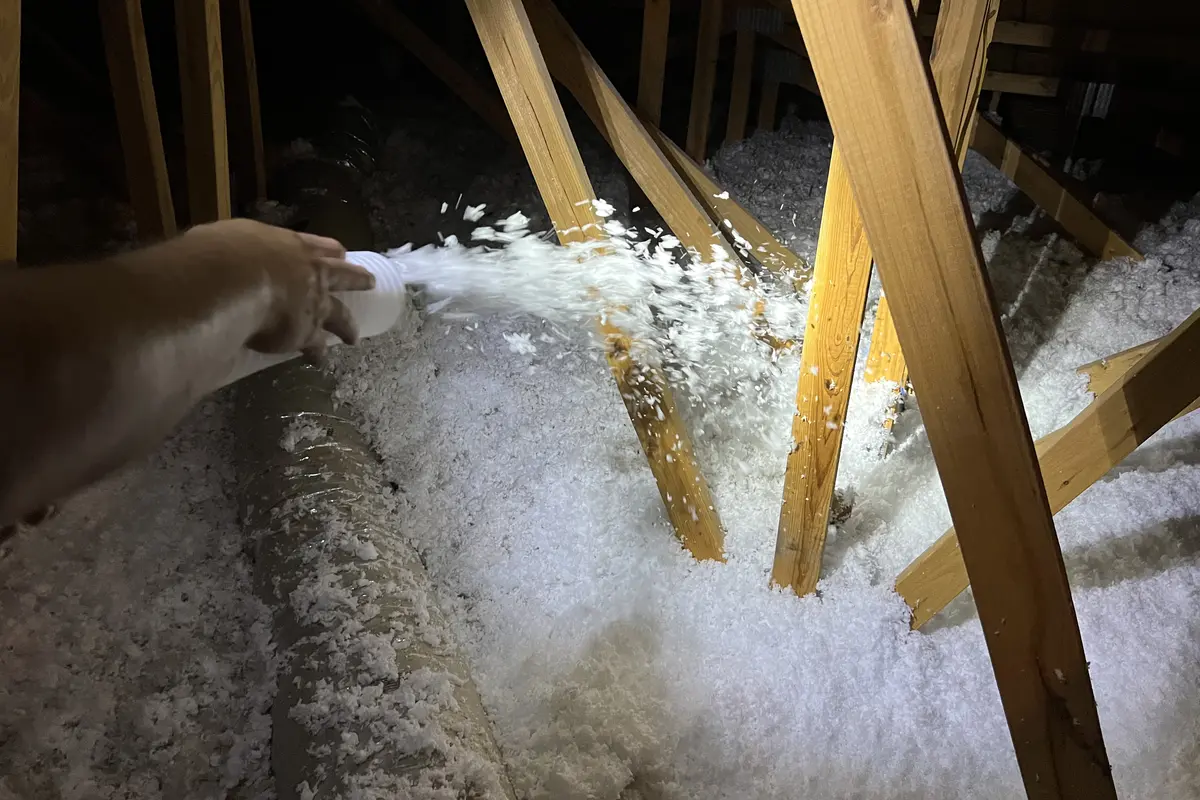
Most VOCs off-gas most intensely during the first 6-12 months after installation. Formaldehyde from pressed-wood products can continue off-gassing at lower levels for 2-5 years, with emissions declining exponentially over time. Paint VOCs typically reach background levels within 3-6 months. Carpet adhesives can take 6-12 months.
Heat accelerates off-gassing, which is why Austin homes experience higher VOC levels during the first summer. When an empty new home sits closed up in July with attic temperatures reaching 140-150 degrees, the interior temperature can climb to 90+ degrees even with the AC running, dramatically increasing the rate of chemical release from all surfaces.
Here is a rough timeline for a typical Austin new build: months 1-3 are the highest VOC period (paint, adhesives, caulk actively off-gassing). Months 3-6 see a significant decline as the most volatile compounds dissipate. Months 6-12 continue declining but formaldehyde from cabinets and flooring persists. After 12 months, most homes have reached near-background VOC levels, though formaldehyde from pressed-wood products may remain slightly elevated for another 1-2 years.
Health Effects of VOC Exposure
Short-term exposure to elevated VOC levels causes symptoms that many new homeowners attribute to allergies or stress: headaches, eye and throat irritation, dizziness, nausea, and fatigue. These symptoms are often worst in the morning after sleeping 7-8 hours in a closed bedroom with off-gassing furniture and flooring.
Long-term exposure to formaldehyde at elevated levels is associated with increased cancer risk (nasopharyngeal carcinoma) and chronic respiratory issues. The EPA sets no safe level for formaldehyde - any reduction in exposure reduces risk. Children and pregnant women are more susceptible because of developing respiratory and immune systems.
The tricky part is that many people become 'nose blind' to VOCs within days of exposure. The smell fades from perception even though the chemicals continue to off-gas. New homeowners often say 'the smell went away in a week' when in reality their olfactory system adapted. Objective VOC measurements show levels remain elevated for months after the smell becomes imperceptible.
"New construction homes in Leander, Pflugerville, and Manor are where we see the worst new-home smell issues," says Nessi Ziv, owner of Air Central. "The homes are tight and well-insulated, which is great for energy, but it traps VOCs inside. We recommend running the fan on 'on' mode for the first 3 months and scheduling the first duct cleaning at the 6-month mark."
HVAC Strategies to Reduce VOC Exposure
Ventilation is the most effective VOC reduction strategy. Opening windows whenever weather permits creates cross-ventilation that dilutes indoor VOCs with outdoor air. In Austin's climate, this is practical in spring (March-May) and fall (September-November). During summer, running the HVAC fan in 'on' mode rather than 'auto' increases air circulation through the filter, even when the AC is not actively cooling.
MERV 13 filters are the minimum recommended for new homes during the off-gassing period. While standard MERV filters are designed primarily for particulate capture, MERV 13 and above capture some of the larger VOC-carrying particles. For targeted VOC removal, an activated carbon filter insert (available for most HVAC systems) adsorbs gas-phase VOCs that pass through particulate filters. These inserts need replacement every 2-3 months during peak off-gassing.
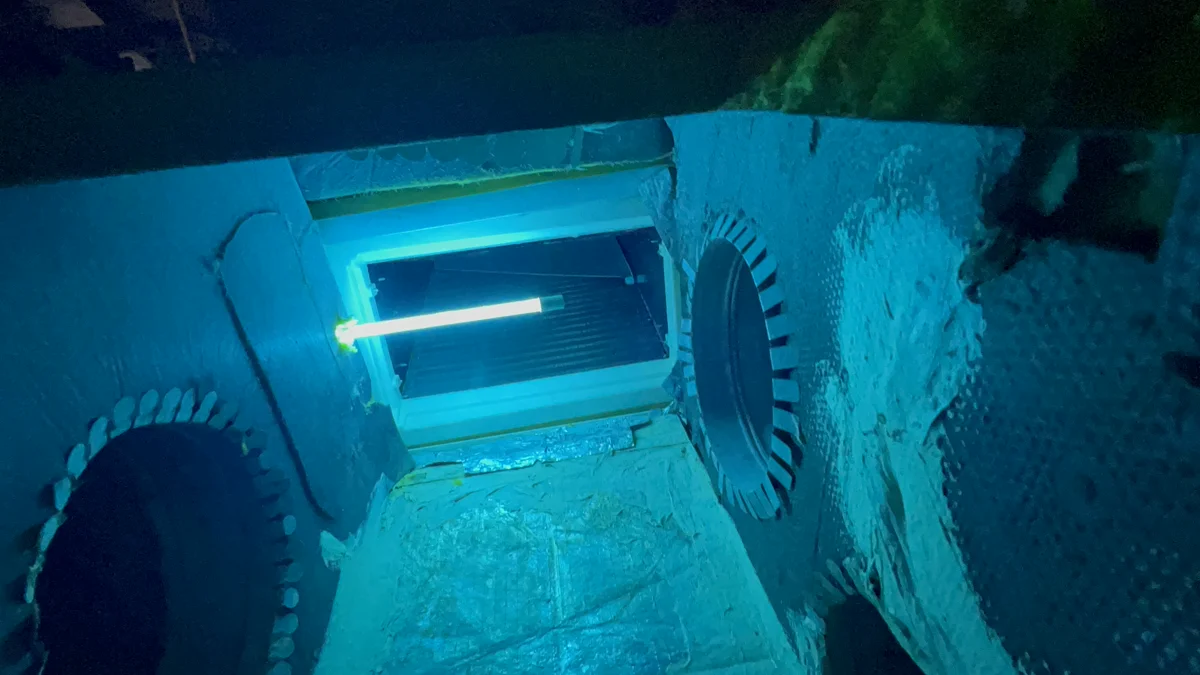
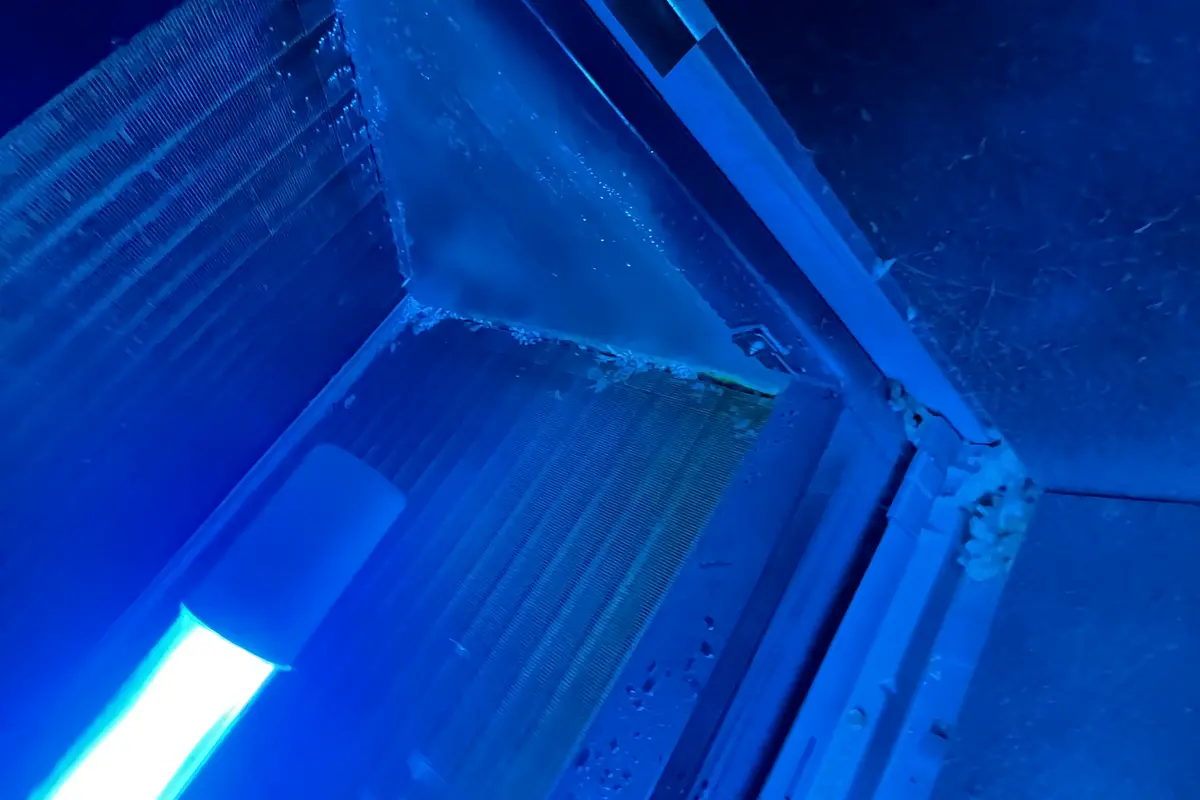
UV-C germicidal lights installed in the HVAC system help break down certain VOCs through photocatalytic oxidation, particularly when combined with titanium dioxide (TiO2) catalyst panels. This is a supplementary approach rather than a primary VOC solution, but it adds another layer of air treatment that benefits overall indoor air quality.
Running the HVAC system continuously during the first 3-6 months (fan set to 'on' rather than 'auto') increases the number of times indoor air passes through the filter and any supplementary filtration. Each pass through a MERV 13 filter or activated carbon insert removes a fraction of airborne VOCs, so more passes per day equals lower concentrations.
Concerned About Your Home's Air?
We provide professional air quality assessments for Austin homes. See what is in your ducts before deciding.
Call (512) 601-4451Rate your home's indoor air quality in 2 minutes
When to Schedule the First Duct Cleaning
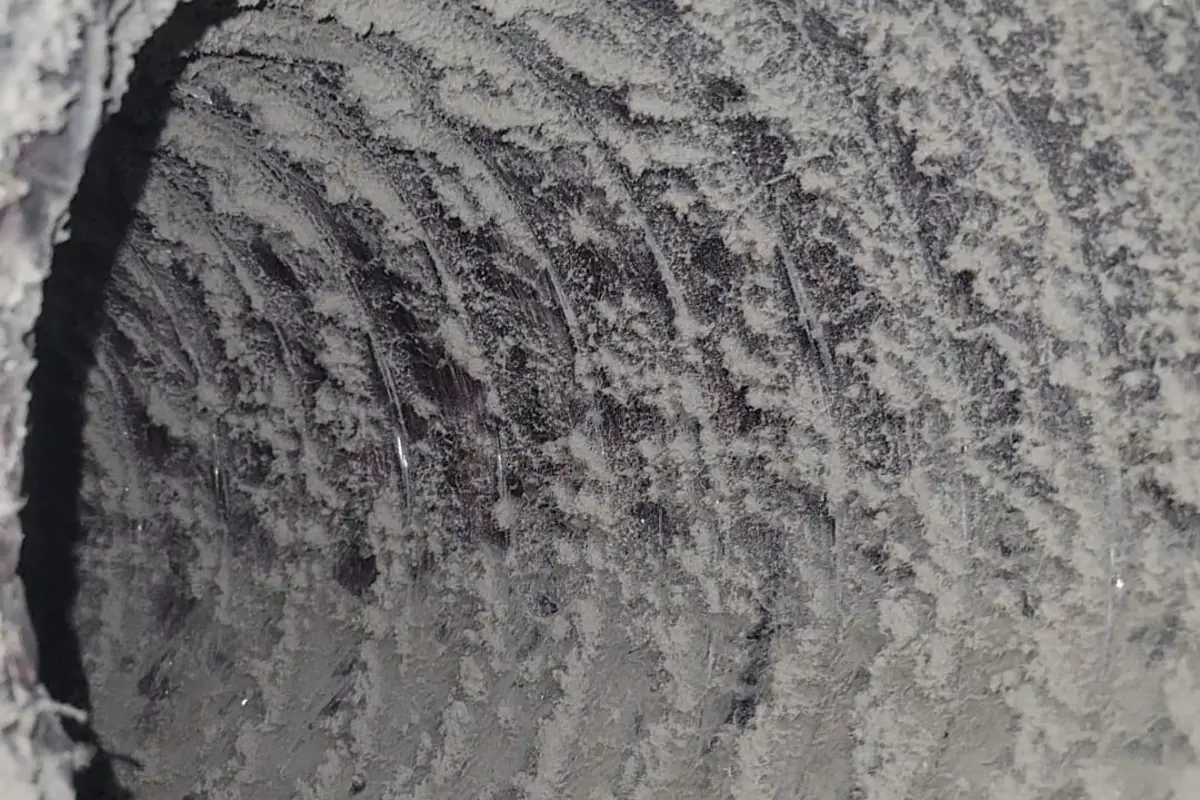
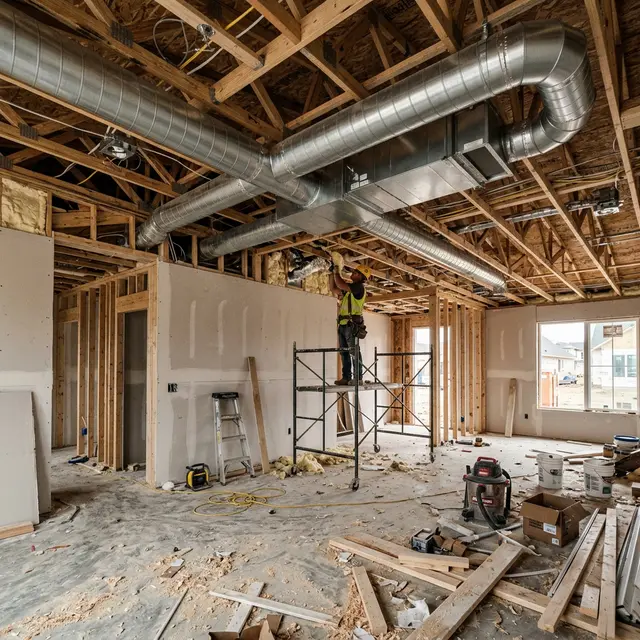
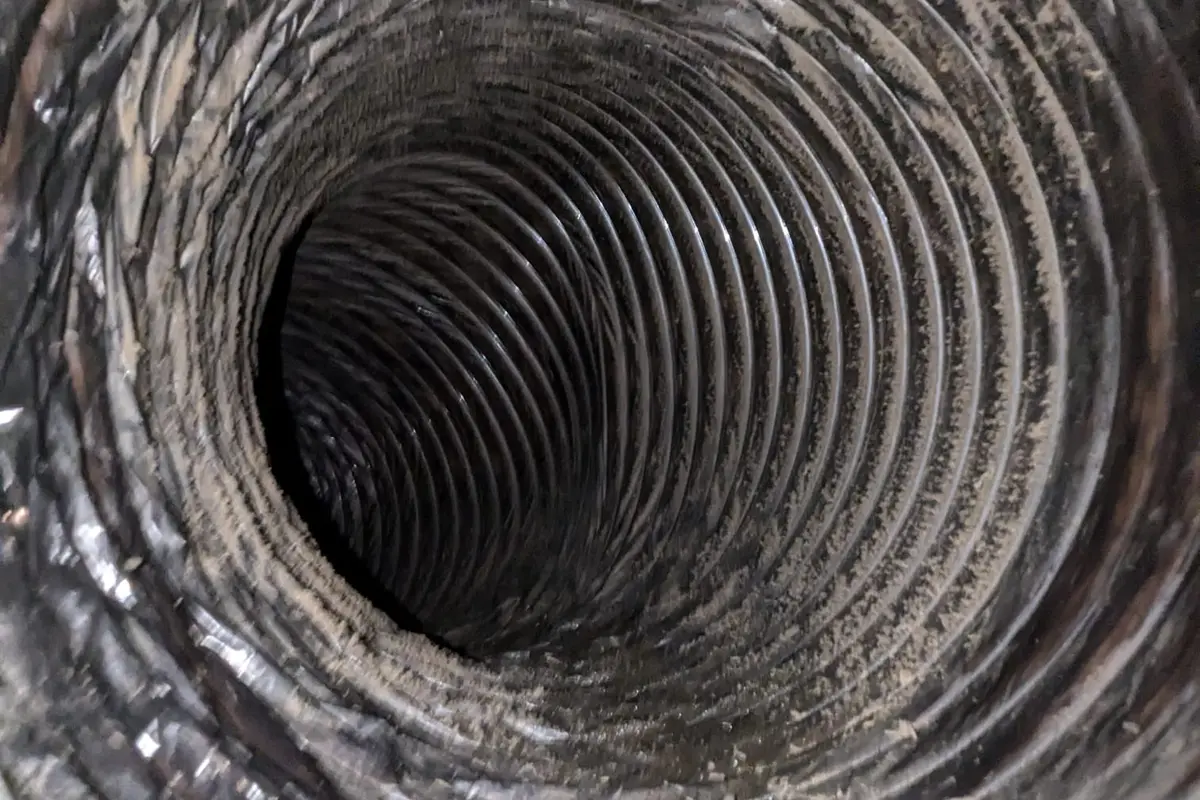
New homes need duct cleaning, and the ideal timing is 6-12 months after move-in. During construction, ductwork accumulates drywall dust, sawdust, insulation fibers, paint overspray, and debris from workers. The HVAC system runs during construction for temperature control, pulling all of this into the ducts. Builder cleaning (if any) typically means running the system with a basic filter, which does not address debris stuck to duct walls.
Waiting 6 months allows the heaviest initial VOC off-gassing to occur while the construction debris remains in the ducts. Cleaning at this point removes both the construction contamination and any VOC-laden dust that has settled in the ductwork during the peak off-gassing period. Cleaning earlier misses some of the VOC-laden dust that continues to accumulate during the first few months.
After the initial cleaning, new homes typically need their second duct cleaning at the 3-year mark, then every 3-5 years based on household factors (pets, allergies, cooking habits).
Austin New Construction: Where This Matters Most
Austin's growth corridors - Round Rock, Pflugerville, Georgetown, Leander, and Hutto - have seen thousands of new homes built annually since 2020. Builders in these areas use similar materials: pressed-wood kitchen cabinets from major suppliers, LVP or engineered hardwood flooring, and standard interior paint. The VOC profiles are consistent across most new construction in the $300K-$600K range.
Higher-end custom homes sometimes specify low-VOC or no-VOC paints and formaldehyde-free cabinets, but these upgrades are not standard in production builds. If your builder did not specifically advertise low-VOC materials, assume standard materials were used.
The tightest homes off-gas the worst. Modern energy codes require excellent air sealing, which is great for energy efficiency but terrible for VOC dilution. A well-sealed new home with an ACH (air changes per hour) of 3-5 traps VOCs inside more effectively than an older drafty home with 10-15 ACH. This is the paradox of modern construction: the tighter the house, the more important mechanical ventilation and air treatment become.
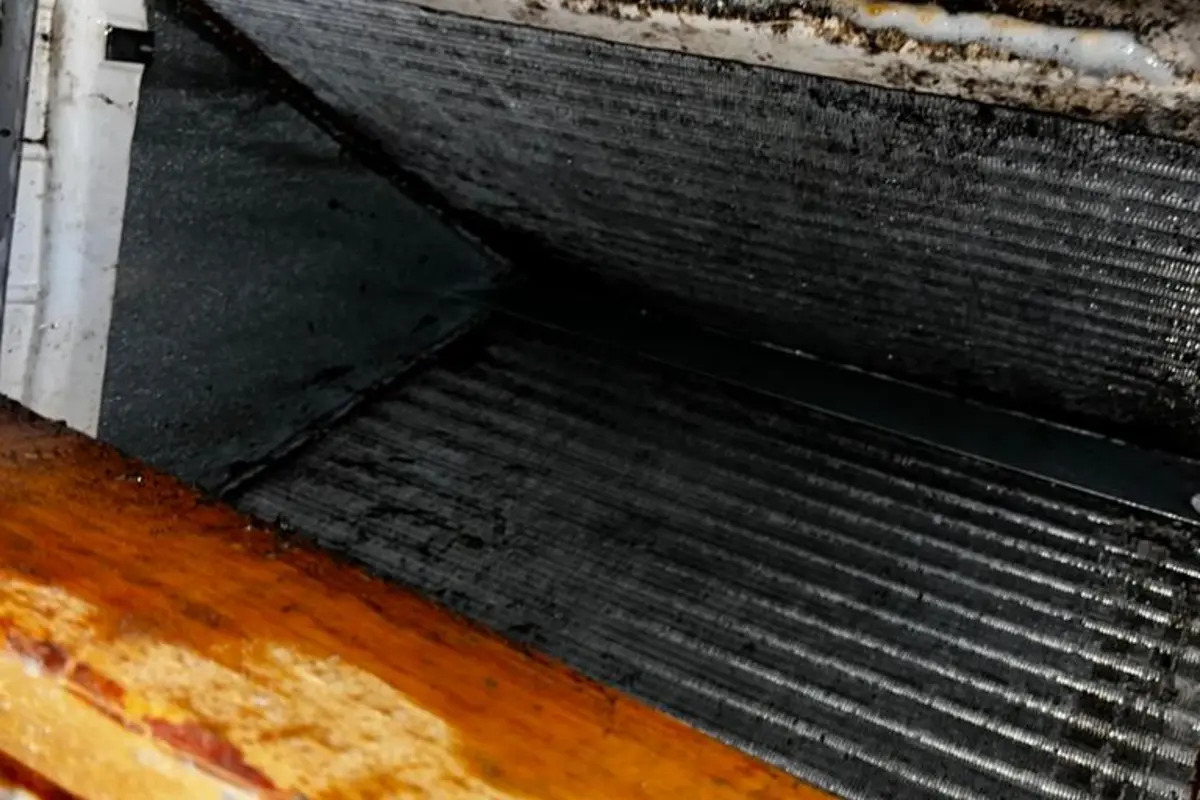
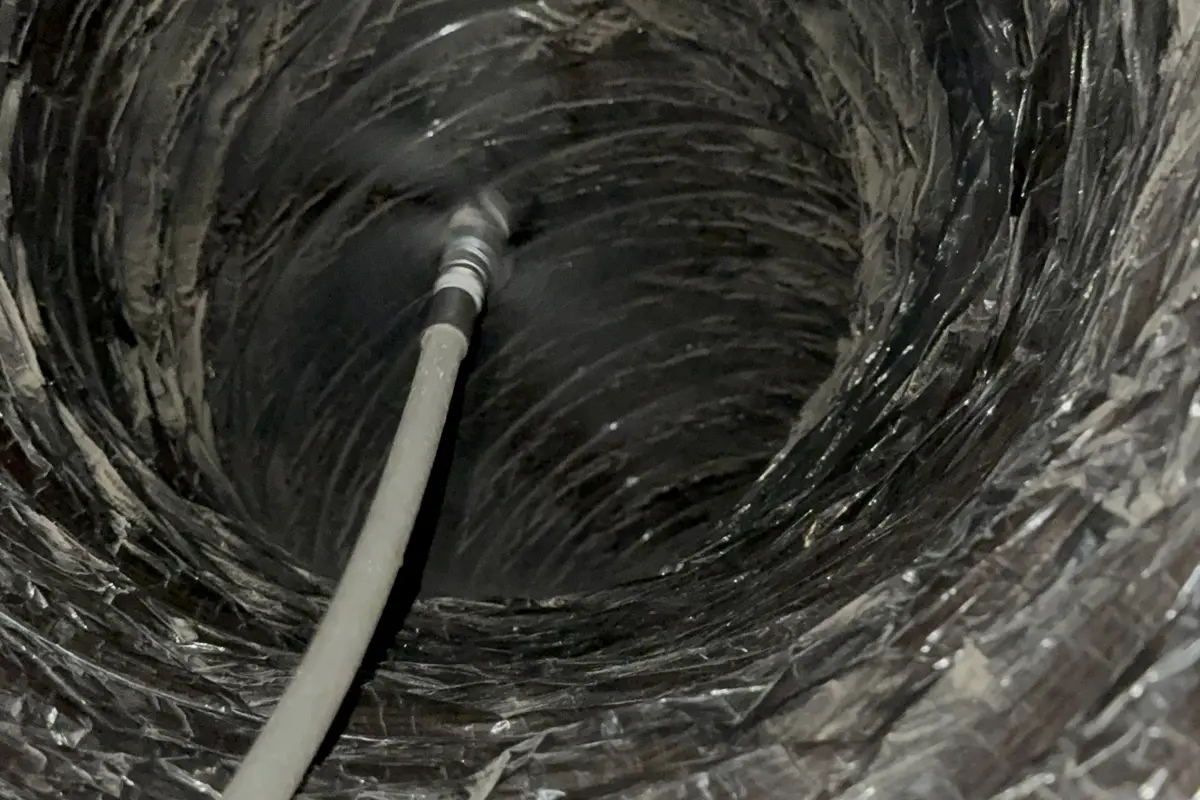
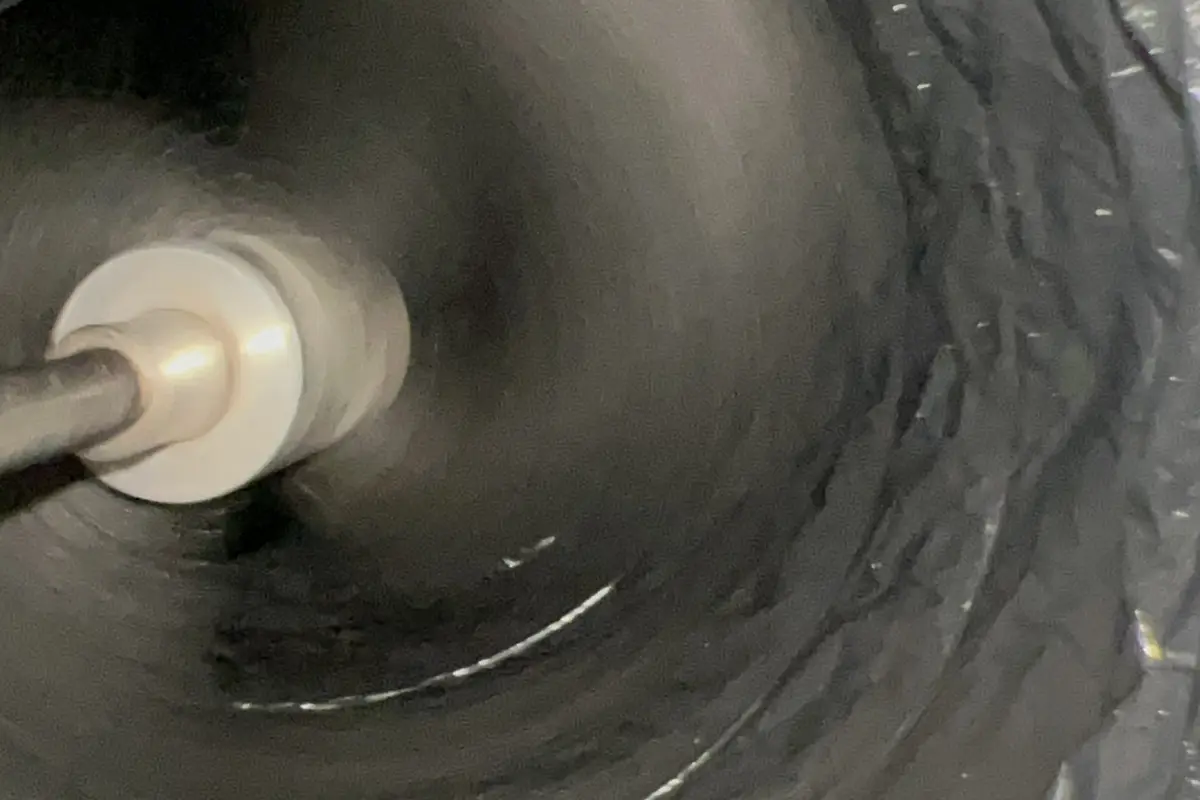
Air Central works with new homeowners throughout the Austin metro area. We provide initial duct cleaning for new construction homes, install MERV 13 filtration, and recommend VOC reduction strategies specific to your home's materials and layout. Call (512) 601-4451 to schedule an inspection - we will show you what is inside your new home's ductwork on HD camera and recommend the right timing for cleaning.
Related Services
Learn more about our professional services related to this topic:
- Air Duct Cleaning - Remove dust, allergens, and debris from your entire HVAC system for cleaner indoor air.
- Air Duct Inspection - Diagnose leaks, blockages, and efficiency issues with HD camera inspection.
- UV Lighting System - Eliminate bacteria and allergens inside your HVAC with UV-C light technology.
Want the full picture?
Read our complete guide: Indoor Air Quality in Austin: The Complete Guide (2026) →Have questions about indoor air quality? Our team is available 7 days a week. Call us at (512) 601-4451 or visit our contact page.