Mildew is a surface-level fungus that appears white or gray and wipes off easily. Mold penetrates deeper, appears black, green, or brown, and requires more aggressive removal. In HVAC systems, mildew is typically found on vent covers and air handler surfaces, while mold colonizes the evaporator coil, drain pan, and duct interiors. Both indicate excess moisture in the system.
How to Identify Mildew in Your HVAC
Mildew appears as a flat, powdery or downy growth that is typically white, gray, or light yellow. In HVAC systems, you will most often find mildew on the surface of vent registers, on the visible portions of the return vent grille, and on the exterior of the air handler cabinet where condensation collects. Mildew has a mild musty smell - unpleasant but not as pungent as mold.
Mildew is a surface fungus. It grows on top of materials rather than penetrating them. This means it is relatively easy to clean: a cloth with a diluted bleach or vinegar solution removes mildew from hard surfaces. If you can wipe the growth off the vent register and it does not return within a week, you likely had surface mildew, not mold.
How to Identify Mold in Your HVAC
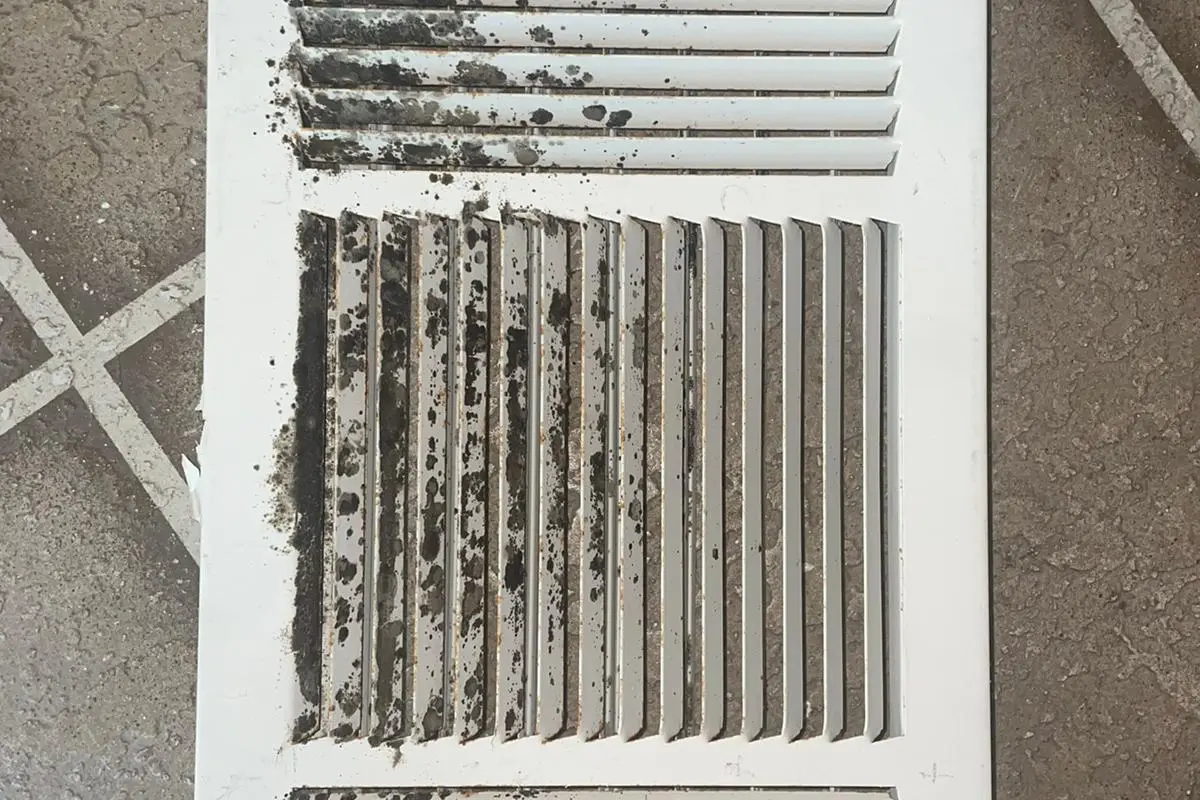
Mold appears as fuzzy or slimy patches that range from black and dark green to brown and orange. Unlike mildew, mold penetrates into the material it grows on - it sends root structures (hyphae) into porous surfaces like duct insulation, drywall, and the organic buildup inside ductwork. Mold has a distinctly stronger, earthier smell than mildew.
In HVAC systems, mold most commonly appears on the evaporator coil (where condensation is constant), inside the drain pan, on the interior walls of the plenum, and in flexible duct runs that have developed condensation issues. You may also find mold on the backside of vent registers if moisture is condensing at the vent opening.
The critical difference: mold cannot simply be wiped off. Because it penetrates surfaces, surface cleaning removes visible growth but leaves the root structure intact, allowing regrowth within days. Mold inside ductwork requires professional cleaning equipment that physically removes both the visible colonies and the contaminated dust layer they grow in.
Health Risks: Mold vs Mildew Compared
Mildew poses a lower health risk than mold, but neither should be ignored in your HVAC system. The EPA notes that mildew exposure can cause coughing, headaches, and mild respiratory irritation, particularly in individuals with existing sensitivities. Because mildew stays on surfaces, the spore concentration it releases into the air stream is relatively limited compared to mold.
Mold exposure carries more significant health risks. The CDC reports that mold exposure can trigger allergic reactions including sneezing, red eyes, and skin rash in sensitized individuals. People with chronic lung conditions or compromised immune systems face a higher risk of fungal infections from sustained mold exposure. In Austin, where HVAC systems run 10-11 months per year, a mold colony inside ductwork means continuous spore distribution throughout the home every time the blower activates.
The WHO estimates that occupants of damp or moldy buildings have a 40% increased risk of asthma and respiratory symptoms. In Austin's humid climate - where outdoor relative humidity averages 67% annually and routinely exceeds 80% on summer mornings - HVAC systems that are not properly maintained become prime sites for fungal colonization. Cedar fever season (December through March) already taxes the respiratory systems of Austin residents, and adding mold spore exposure from contaminated ductwork compounds the problem.
Children and elderly household members are especially vulnerable. The American Academy of Pediatrics identifies indoor mold exposure as a modifiable risk factor for childhood respiratory disease. If anyone in the household experiences symptoms that improve when away from home and worsen upon return, the HVAC system should be a primary suspect.
Concerned About Your Home's Air?
We provide professional air quality assessments for Austin homes. See what is in your ducts before deciding.
Call (512) 601-4451Rate your home's indoor air quality in 2 minutes
When Each Requires Professional Attention
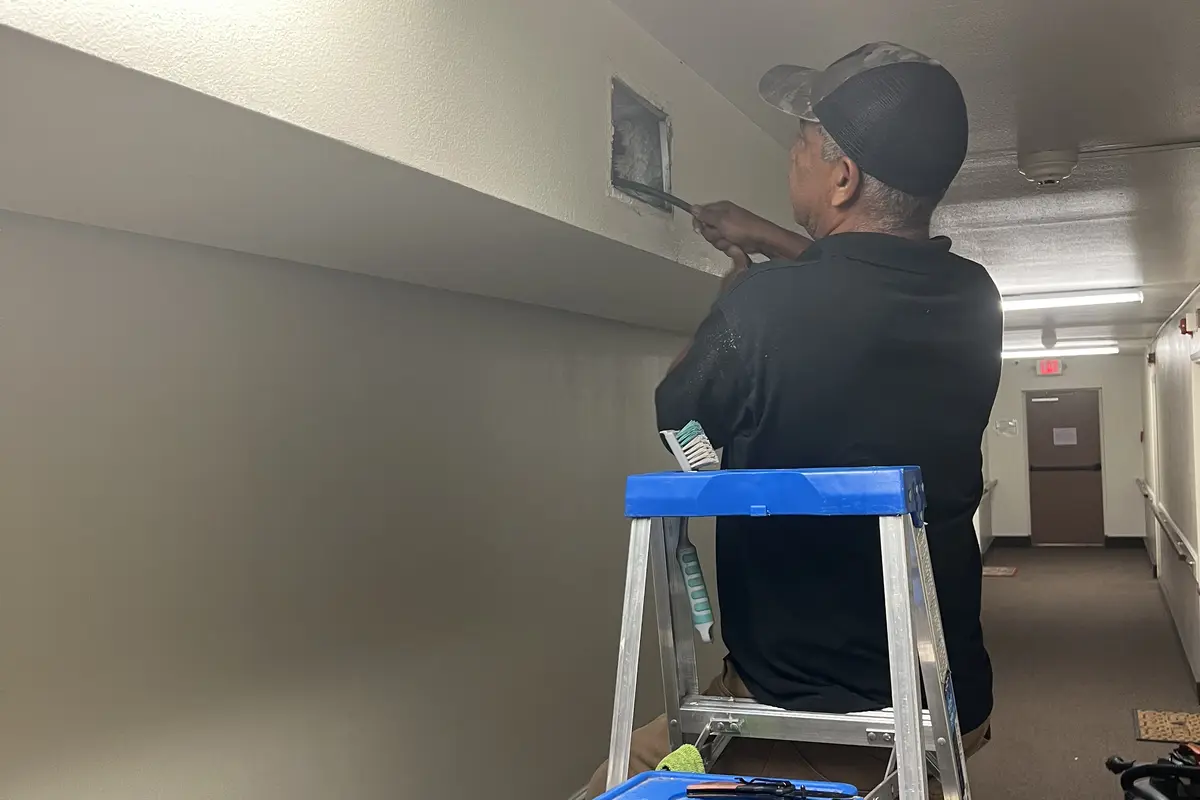
Surface mildew on vent registers can be cleaned by the homeowner. Remove the vent cover, clean both sides with diluted vinegar or a mild bleach solution, dry thoroughly, and reinstall. If mildew returns within 1-2 weeks, the moisture source has not been addressed and you should have the system inspected.
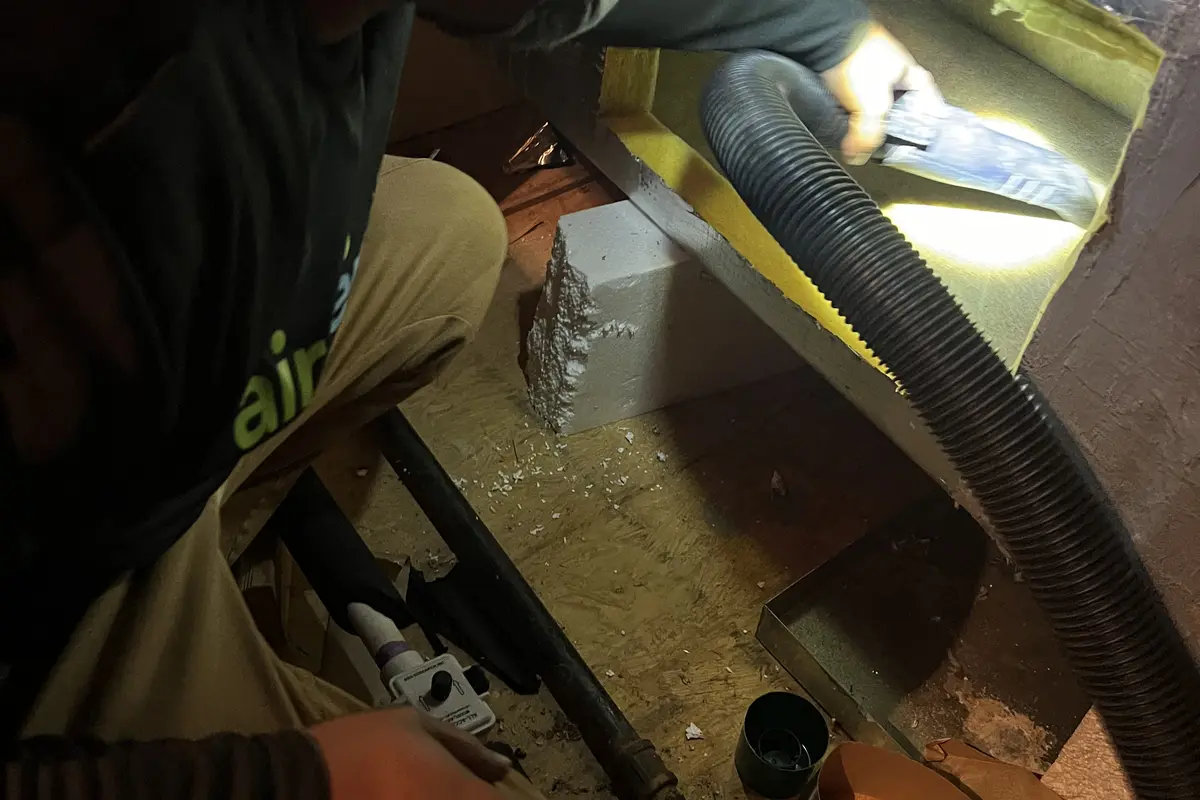
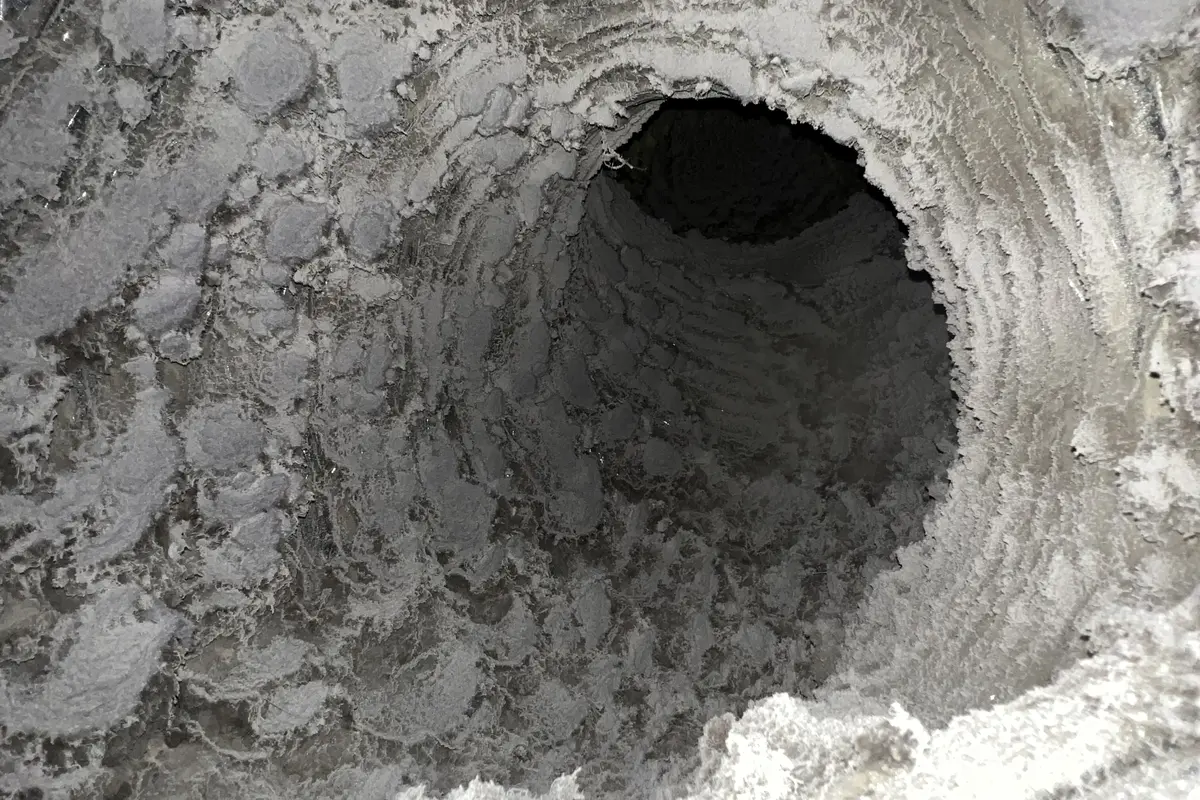
The professional cleaning process for mold in ductwork follows a specific protocol. First, an HD camera inspection documents the extent and location of growth throughout the system. This step is critical because mold is often more widespread than what is visible at the vent opening. Technicians then seal the system and connect commercial-grade HEPA-filtered negative-pressure equipment to the main trunk line, ensuring that disturbed spores are captured rather than released into the living space.
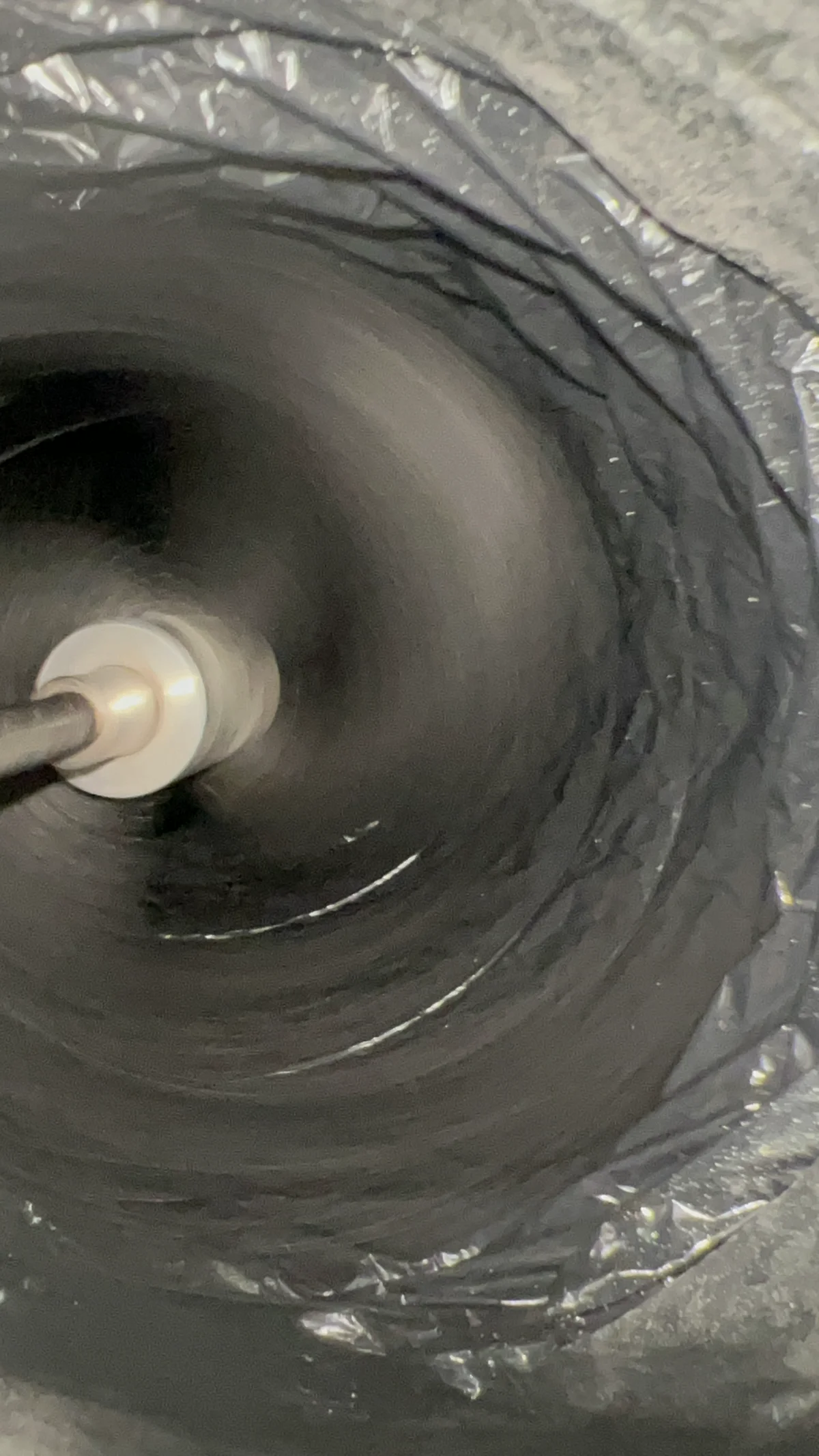
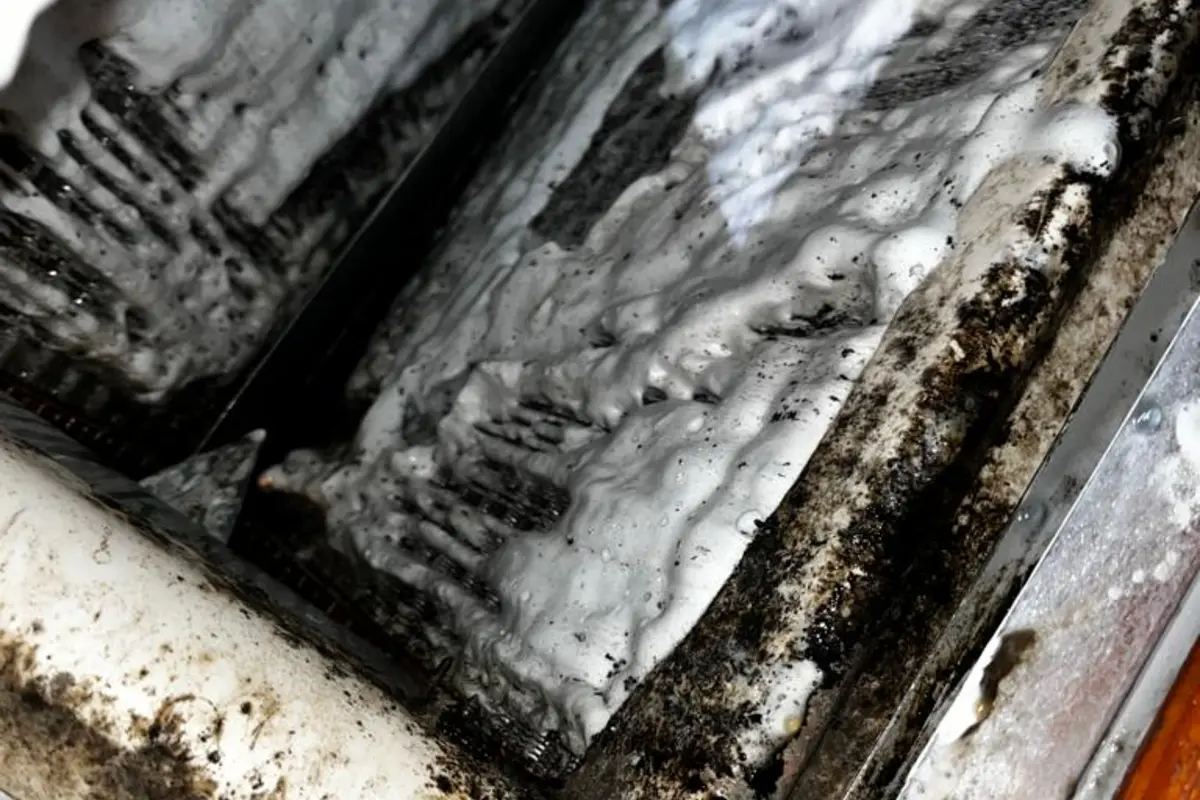
Each duct run is cleaned individually using rotary brushes and compressed air tools that dislodge the mold colonies and the layer of organic debris they feed on. Removing the food source is just as important as removing the visible growth - without it, re-colonization is far less likely. For hard metal duct surfaces, this mechanical cleaning is typically sufficient. For porous materials like fiberglass duct board or interior duct insulation that mold has penetrated, replacement is usually the better option because cleaning cannot reach the root structures embedded in the material.
After cleaning, a second camera inspection verifies that contamination has been fully addressed. Air Central provides honest assessment at every stage - we tell you exactly what we can resolve with professional duct cleaning and when the situation warrants a certified mold remediation specialist. We work alongside remediation companies when needed so the entire problem gets solved. Call (512) 601-4451 to schedule an inspection.
Preventing Recurrence in Austin's Climate
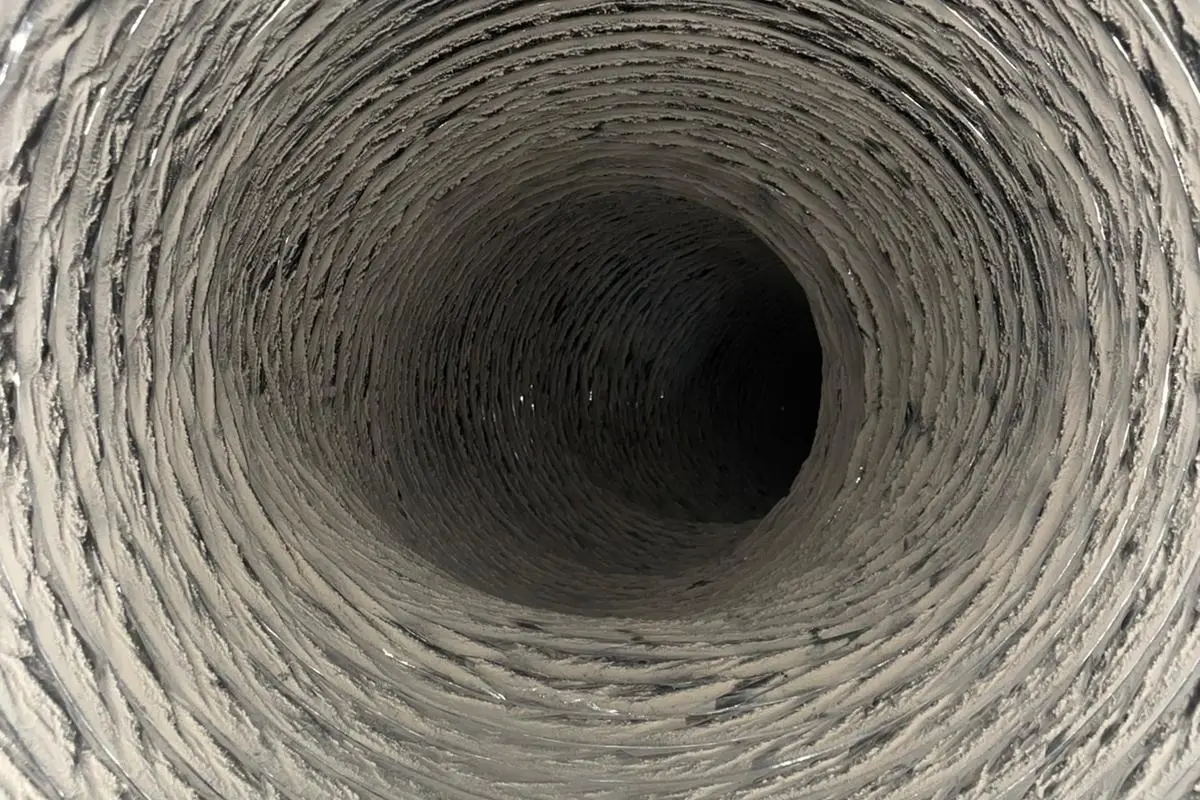
Addressing the moisture source is the single most important step in preventing both mold and mildew from returning. In Austin's humid subtropical climate, your AC system is your primary dehumidification tool. Set the thermostat fan to AUTO rather than ON - continuous fan operation re-evaporates moisture from the wet evaporator coil back into the air stream, raising humidity inside the ductwork.
Keep indoor humidity between 30-50% by running the AC consistently during humid months. A standalone hygrometer (available for under $15 at any hardware store) placed in a central hallway gives you a quick read on indoor conditions. If humidity consistently reads above 55% while the AC is running, the system may need maintenance - a dirty evaporator coil, clogged condensate drain, or oversized unit can all reduce dehumidification performance.
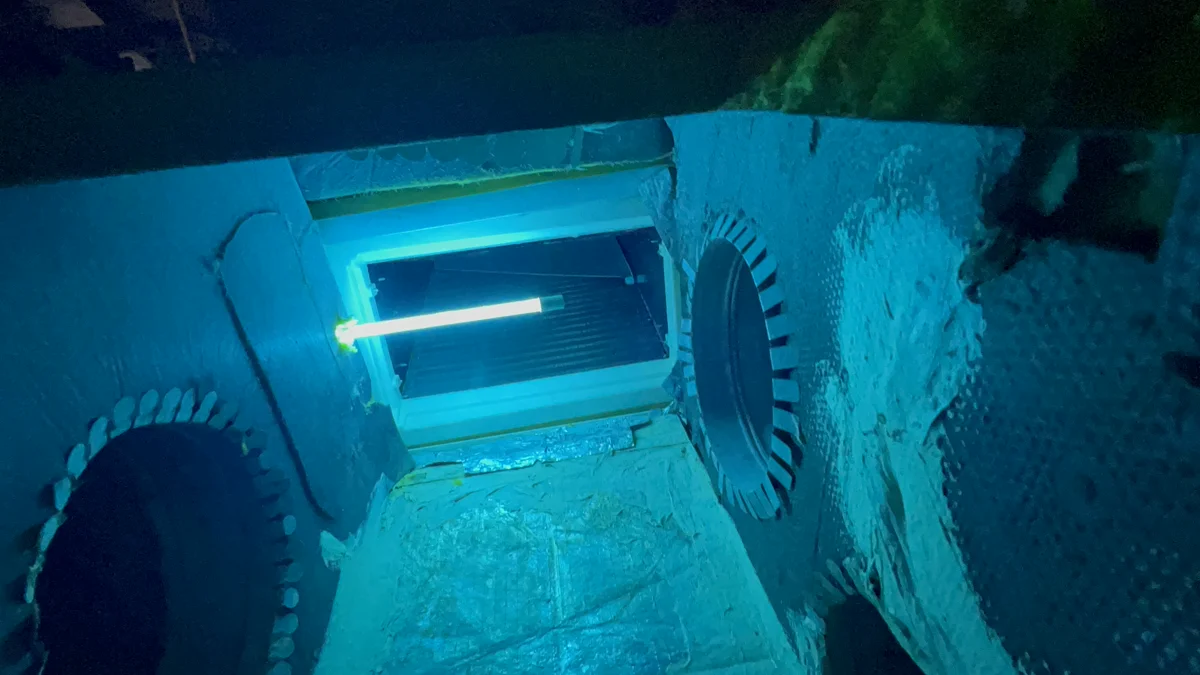
Schedule annual evaporator coil cleaning and quarterly condensate drain maintenance. Clear the drain line with distilled white vinegar to prevent clogs that back up water into the drain pan - a direct mold growth site. Consider UV-C germicidal light installation near the evaporator coil for continuous biological control. These prevention steps cost far less than repeated remediation and keep your HVAC system working as a mold prevention tool rather than a mold distribution system.
Related Services
Learn more about our professional services related to this topic:
- Air Duct Cleaning - Remove dust, allergens, and debris from your entire HVAC system for cleaner indoor air.
- Air Duct Inspection - Diagnose leaks, blockages, and efficiency issues with HD camera inspection.
- UV Lighting System - Eliminate bacteria and allergens inside your HVAC with UV-C light technology.
Want the full picture?
Read our complete guide: Indoor Air Quality in Austin: The Complete Guide (2026) →Have questions about indoor air quality? Our team is available 7 days a week. Call us at (512) 601-4451 or visit our contact page.