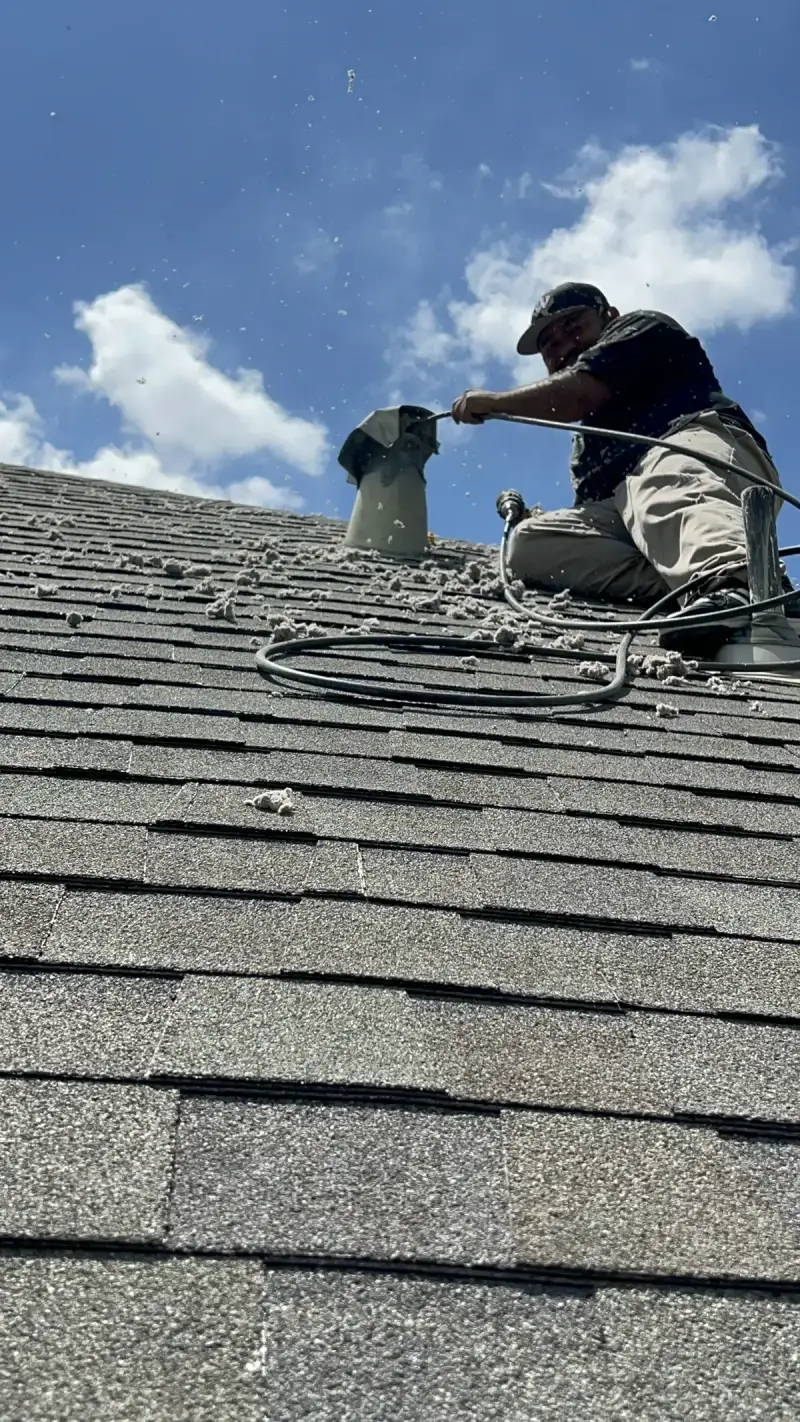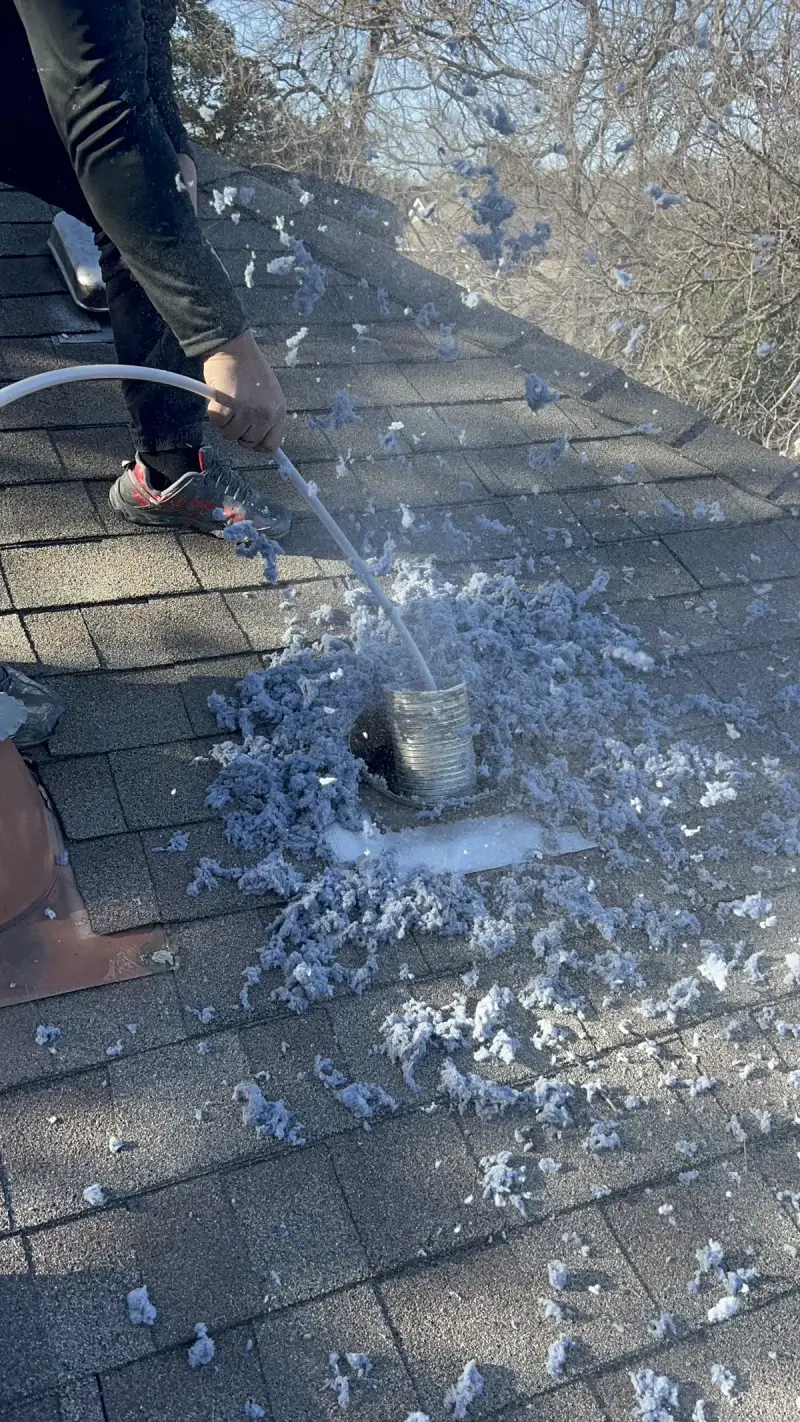
Dryer vents that exit through the roof are common in Austin two-story homes and are significantly harder to clean than wall-exit vents. Roof vent caps trap lint, attract nesting birds, and create fire hazards that require professional equipment and roof access to address safely. Never climb your roof to clean a dryer vent yourself - the combination of height, slope, and specialized tools makes this a job for trained technicians.
Why So Many Austin Homes Vent Through the Roof
When a dryer sits on the first floor of a two-story home or in an interior laundry room, there is often no practical path to route the vent horizontally through an exterior wall. The vent line runs up through the wall cavity, into the attic space, and exits through a roof cap. This is extremely common in Austin neighborhoods built from the mid-1990s onward, when builders prioritized interior laundry room layouts over exterior wall placement.
Neighborhoods like Avery Ranch, Steiner Ranch, Circle C Ranch, and the newer subdivisions in Cedar Park and Round Rock are full of two-story homes with roof-exit dryer vents. The design makes sense from a building standpoint - it keeps the laundry room where homeowners want it - but it creates a maintenance challenge that many homeowners do not think about until something goes wrong.
Roof-exit vents also tend to have longer vent runs than wall-exit vents. A typical wall exit might run 8-15 feet from the dryer to the outside. A roof exit in a two-story home can run 20-35 feet, including vertical rises and bends. Every additional foot and every bend reduces airflow and increases lint accumulation. The longer the vent run, the more frequently it needs professional cleaning.
Why Roof Dryer Vents Are Harder to Clean
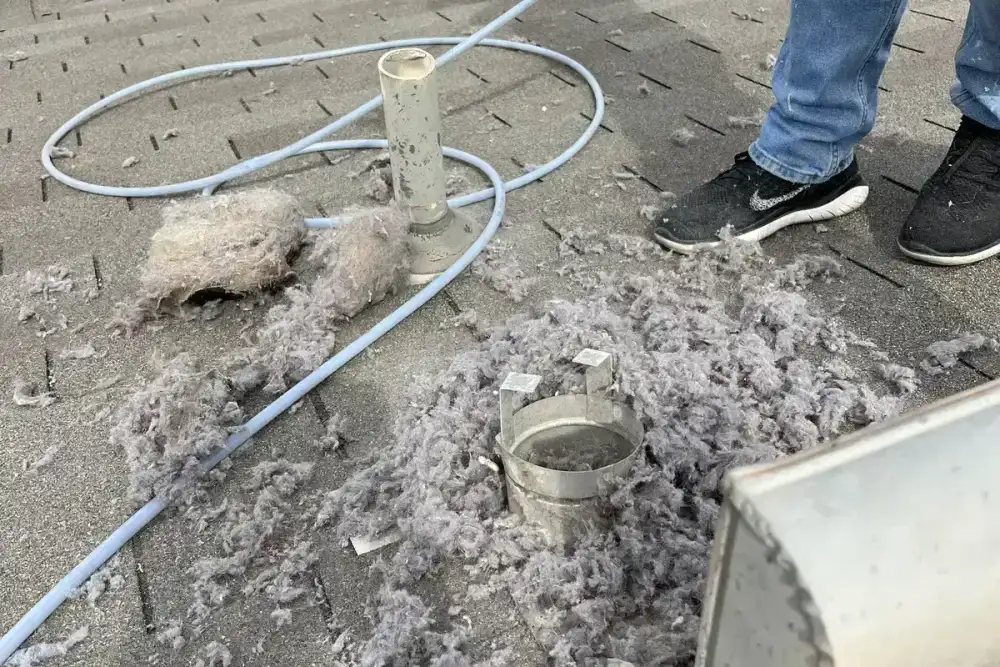
Gravity works against roof-exit dryer vents. In a wall-exit vent, hot air naturally pushes lint horizontally and out. In a roof-exit vent, lint must travel upward against gravity. Heavier lint particles settle in the vertical sections and accumulate faster than in horizontal runs. Over time, this creates partial blockages that restrict airflow and force the dryer to work harder.
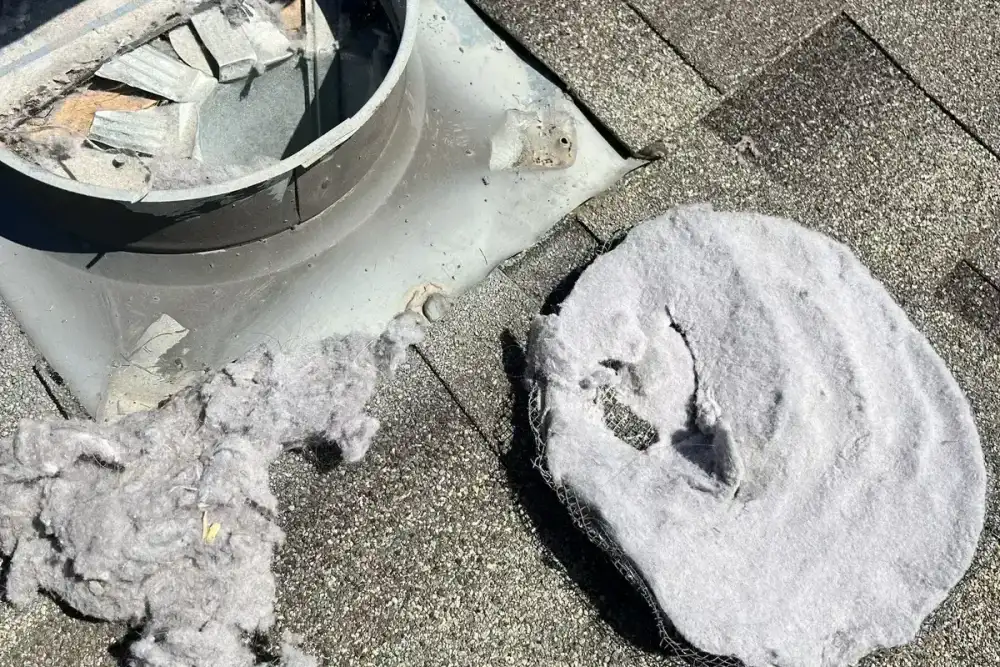
Roof vent caps are also more prone to obstruction than wall caps. The cap sits exposed on the roof where birds, squirrels, and wasps find it an attractive nesting location. In Austin, grackles and house sparrows frequently build nests inside or directly over roof vent caps, completely blocking exhaust airflow. Homeowners often have no idea this has happened because they cannot see the roof cap from ground level.
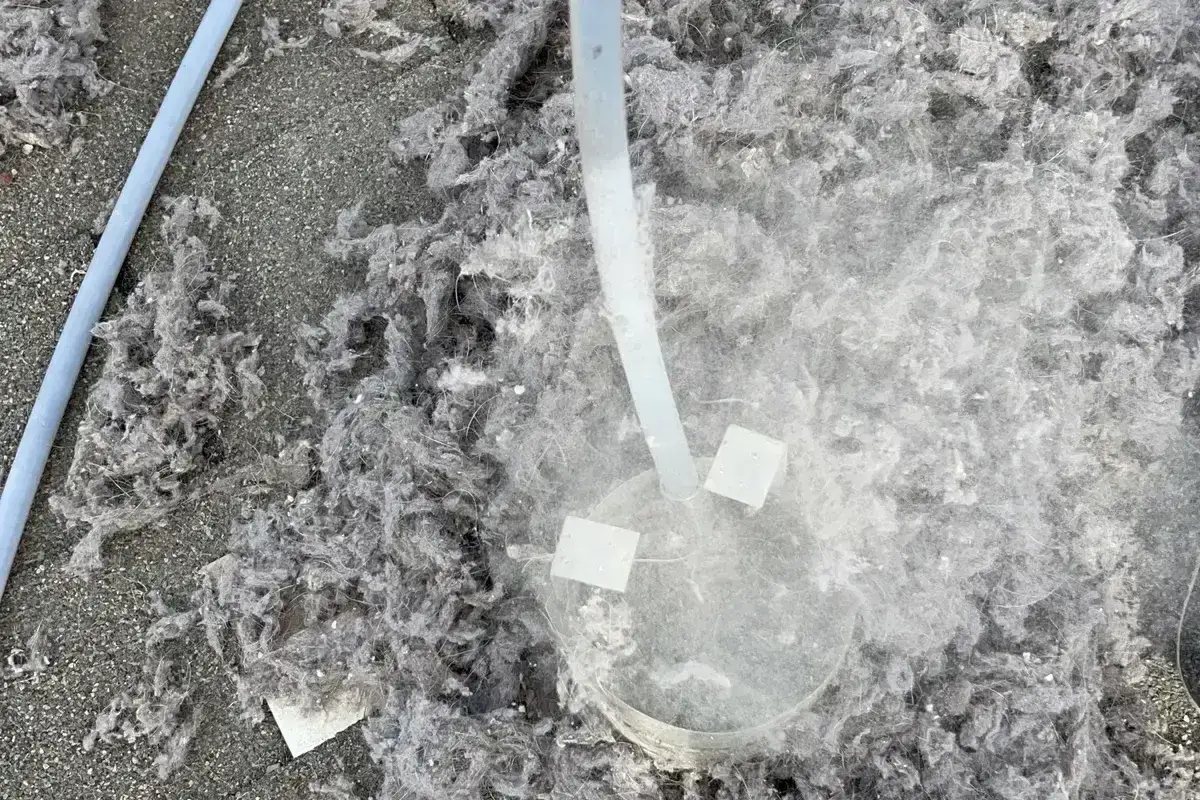
The cap itself collects lint on its internal screen or flapper mechanism. Austin's wind carries dust and pollen that combines with lint to form a dense, matted layer that blocks airflow. Rain can wet this lint mat, causing it to harden into a crust that does not clear on its own. A wall-exit cap is easy to check and clean from the ground. A roof cap requires a ladder, proper safety equipment, and comfort working on a sloped roof.
Temperature extremes in Austin attics also affect roof-exit vent lines. Attic temperatures reach 140-150 degrees in summer. The vent line running through this space gets extremely hot, which can cause flexible vent material to sag, kink, or separate at joints. These sags become lint traps that accelerate buildup and are invisible without entering the attic to inspect.
Signs Your Roof Dryer Vent Is Clogged
The most common sign is clothes taking longer to dry. If loads that used to finish in 45 minutes now take 60-90 minutes or require a second cycle, restricted airflow from a clogged vent is the most likely cause. This happens gradually, so many homeowners adjust without realizing the vent is the problem.
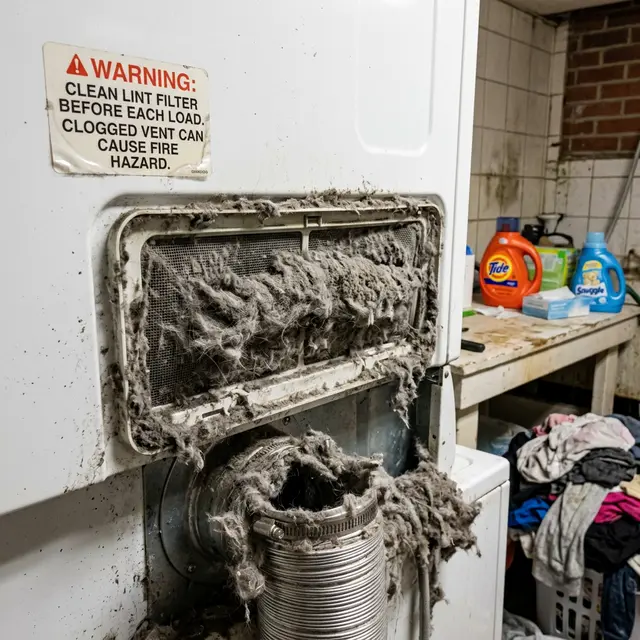
A dryer that feels unusually hot to the touch during operation is a serious warning sign. When exhaust cannot exit freely, heat builds up inside the dryer and the surrounding area. The top of the dryer, the laundry room walls, and even the floor near the dryer may feel warm. This excess heat is a fire risk.
A burning smell during dryer operation means lint is overheating somewhere in the system. Stop the dryer immediately and do not use it again until the vent has been professionally inspected and cleaned. This is not a wait-and-see situation.
Visible lint around the dryer door seal, excessive lint in the lint trap housing (not just the screen), and humidity in the laundry room during dryer operation all point to restricted exhaust. If you notice moisture on laundry room windows or walls when the dryer runs, the exhaust is not making it to the roof cap.
If you can safely view your roof cap from a distance (binoculars work), look for visible lint buildup, a flapper that appears stuck, or bird nesting material around the cap. Any of these means the vent needs immediate professional attention.
Professional vs DIY: Why This Is Not a DIY Job
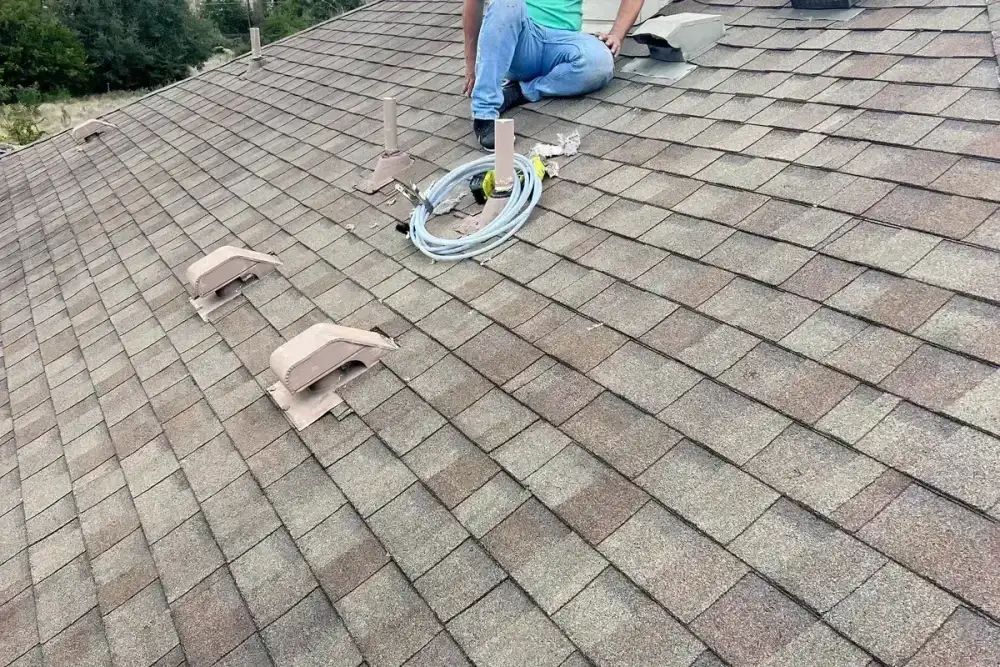
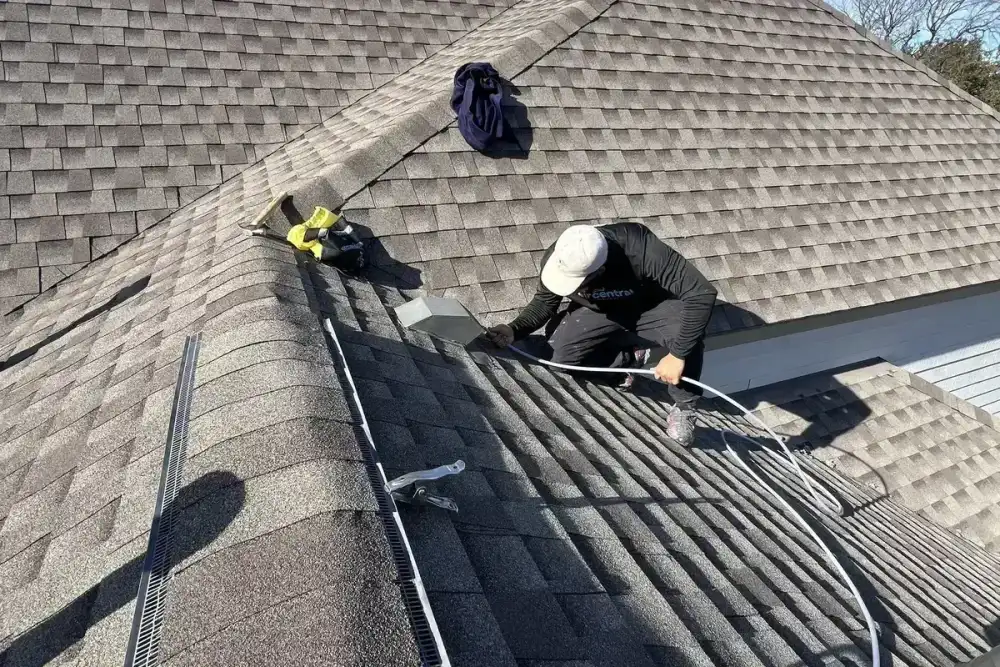
Cleaning a dryer vent that exits through the roof requires working at height on a sloped surface while handling specialized equipment. Falls from residential roofs are one of the most common causes of serious injury for homeowners attempting maintenance. Austin roofs get extremely hot in direct sun, making surfaces slippery from sweat and uncomfortable to work on for extended periods.
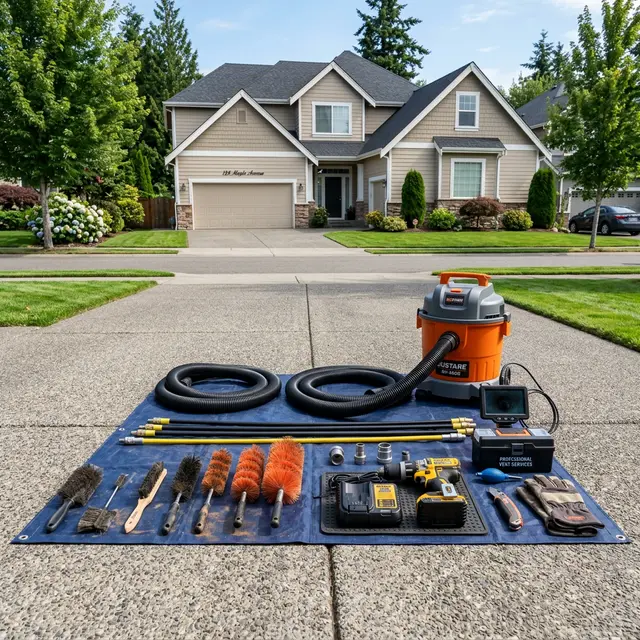
The cleaning process requires commercial rotary brush equipment long enough to reach the full length of the vent run - often 25-35 feet. Household dryer vent cleaning kits sold at hardware stores typically reach 12-15 feet, which is not enough for most roof-exit installations. If you clean from the dryer end only and cannot reach the roof cap, you push lint upward where it compacts against the blocked cap and makes the problem worse.
Professional technicians clean roof-exit vents from both ends simultaneously. One technician works from the dryer connection point with a rotary brush, while the other accesses the roof cap to clear the cap, remove any nesting material, and vacuum debris as it is pushed upward. This two-point approach ensures the entire vent path is clear.
A professional dryer vent cleaning for a roof-exit installation typically takes 45-60 minutes and costs more than a standard wall-exit cleaning due to the roof access, longer vent run, and additional equipment required. The cost difference is modest compared to the risk of a dryer fire or a fall from your roof. Call (512) 601-4451 if your Austin home has a roof-exit dryer vent that has not been cleaned in the past year.
When Was Your Dryer Vent Last Cleaned?
Most Austin homeowners go too long between cleanings. A quick inspection takes minutes and could prevent a fire.
Call (512) 601-4451Rate your home's indoor air quality in 2 minutes
Bird and Pest Nesting in Roof Vent Caps
Austin's bird population sees roof dryer vent caps as prime nesting real estate. The caps provide shelter from weather and predators, and the warm exhaust air makes them especially attractive during cooler months. Grackles, house sparrows, and starlings are the most common culprits in the Austin area.
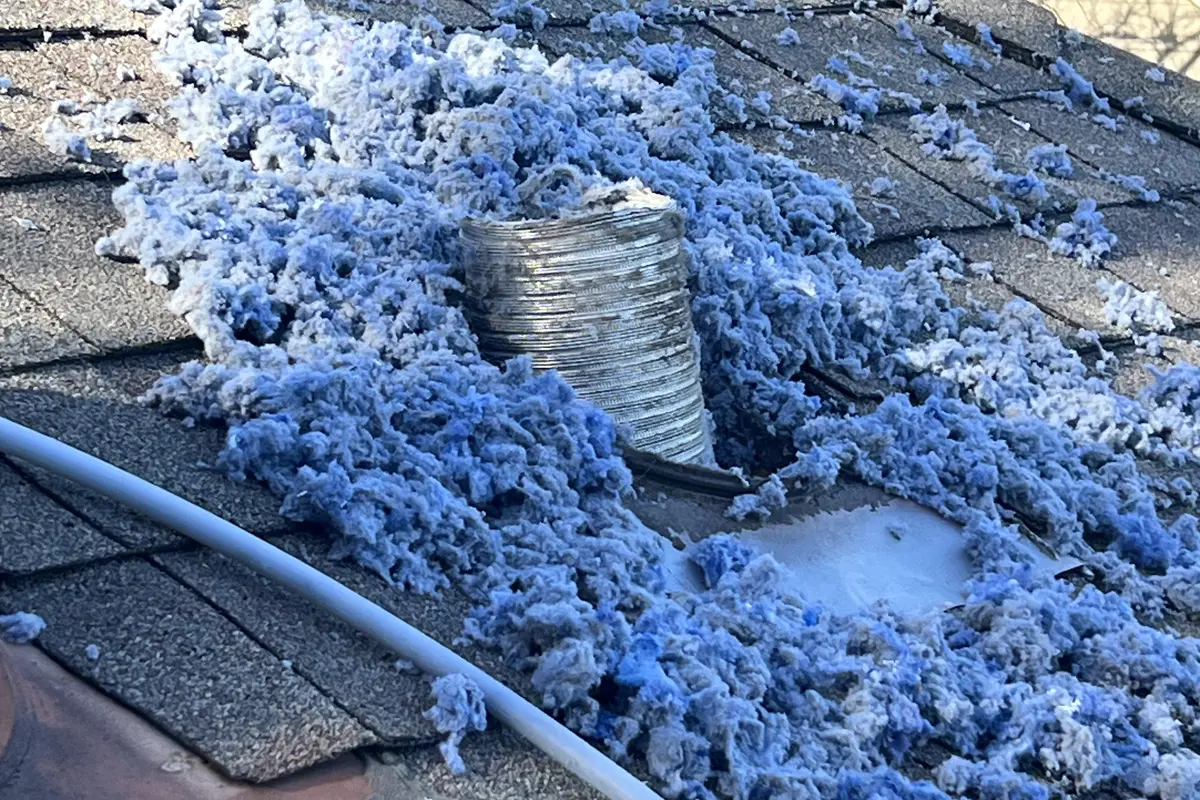
A bird nest in your dryer vent cap creates an immediate fire hazard. The nest material - twigs, grass, feathers, and debris - blocks exhaust airflow and sits directly in the path of hot, lint-laden air. Lint accumulates in and around the nest material, creating a highly combustible combination.
Pest-guard caps and bird-proof vent covers are available and worth the investment for Austin homes with roof-exit dryer vents. These caps use cage-style guards or spring-loaded flappers that allow exhaust to exit but prevent birds and rodents from entering. Your dryer vent technician can install a pest-proof cap during a routine cleaning visit.
If you suspect a bird or animal is nesting in your dryer vent, do not attempt to remove it yourself from the roof. Some bird species are protected under the Migratory Bird Treaty Act, and removal during nesting season may require specific handling. A professional can assess the situation, remove the nest safely and legally, clean the vent, and install a guard to prevent future nesting.
How Often to Clean a Roof-Exit Dryer Vent
The National Fire Protection Association recommends annual dryer vent cleaning for all homes. For roof-exit vents specifically, annual cleaning is the minimum - not a suggestion. The longer vent runs, gravity working against lint removal, and susceptibility to cap blockage mean roof-exit vents accumulate dangerous levels of lint faster than wall-exit vents.
Households that do heavy laundry loads - families with children, pet owners who wash pet bedding frequently, or homes where the dryer runs daily - should consider cleaning every 8-10 months rather than waiting a full year.
After any severe weather event that could have damaged the roof cap or after noticing birds around your roofline, schedule an inspection even if your annual cleaning is not yet due. A damaged or blocked cap can create a fire hazard within a few weeks of heavy dryer use.
Air Central has cleaned thousands of roof-exit dryer vents across Austin, from Avery Ranch to Circle C. Our technicians carry the equipment and safety gear needed for roof access and clean the full vent path from both ends. Call (512) 601-4451 to schedule your dryer vent cleaning.
Related Services
Learn more about our professional services related to this topic:
- Dryer Vent Cleaning - Clear lint buildup to prevent fires and cut drying time in half.
Want the full picture?
Read our complete guide: Dryer Vent Cleaning Austin: Complete Safety Guide (2026) →Have questions about dryer vent safety? Our team is available 7 days a week. Call us at (512) 601-4451 or visit our contact page.