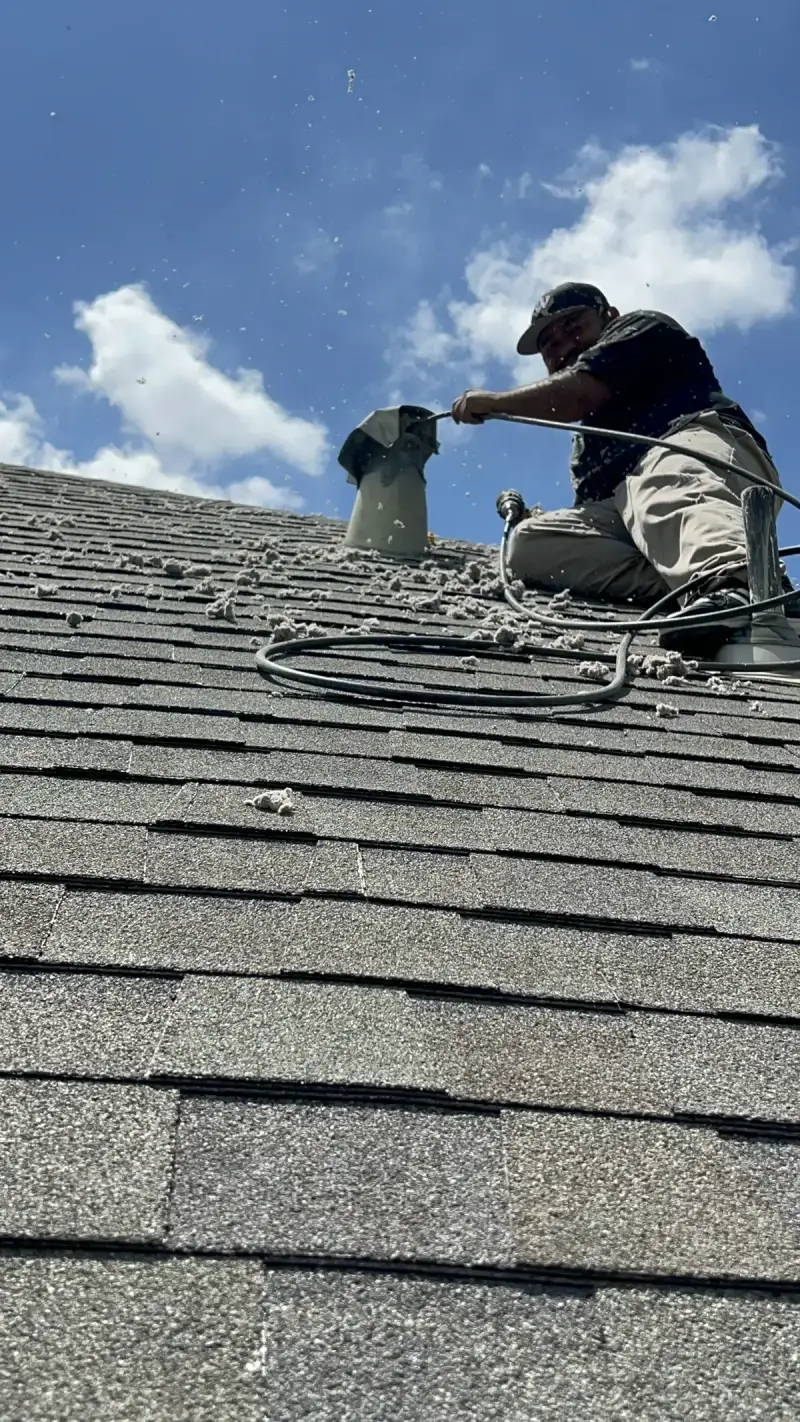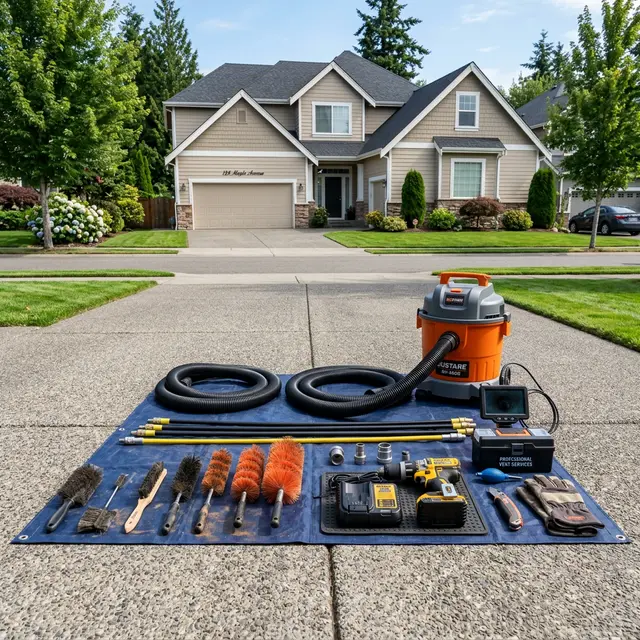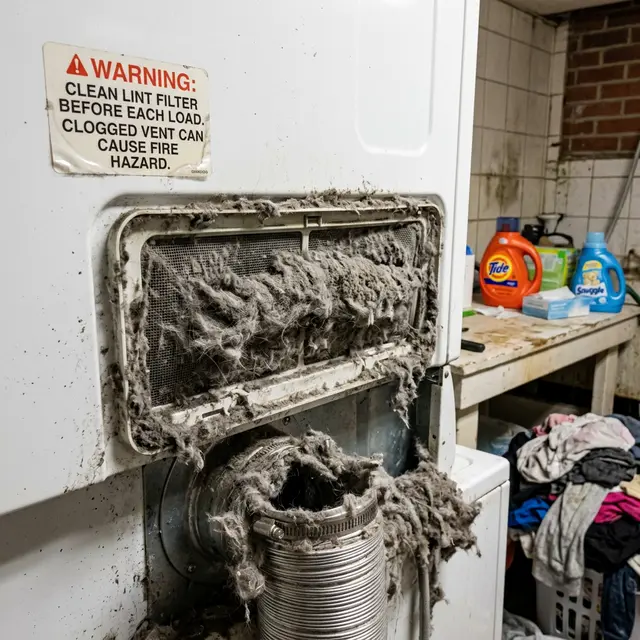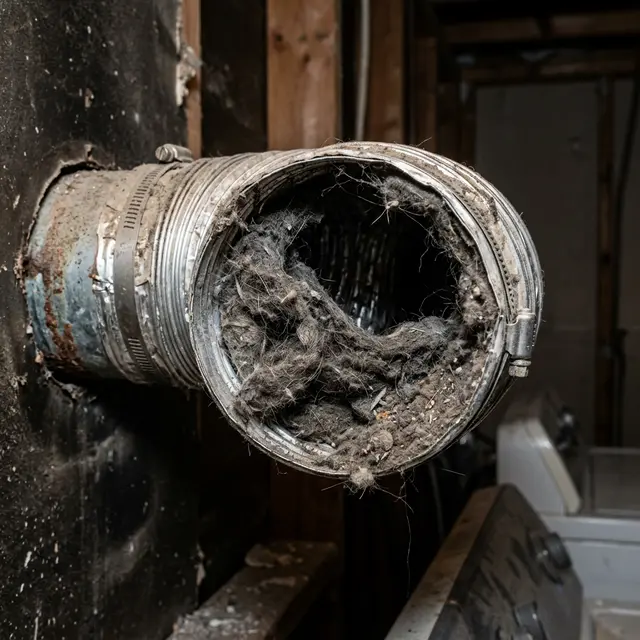
Dryer vent fires cause 2,900 house fires annually in the US, killing 5 people and injuring 100 each year. Annual professional vent cleaning reduces fire risk by removing the highly flammable lint that accumulates beyond the lint trap.
The Statistics
According to the US Fire Administration: 2,900 dryer fires occur annually, causing 5 deaths, 100 injuries, and $35 million in property damage. The leading cause (34%) is failure to clean the dryer vent. The NFPA (National Fire Protection Association) reports similar numbers and notes that dryer fires peak in January and February when laundry volume increases due to heavier winter clothing and bedding.
Lint is highly flammable - it ignites at approximately 250F, and the dryer heating element operates at 125-135F during normal operation. Under restricted airflow conditions, internal dryer temperatures can climb well above normal operating range. A concentrated lint buildup near the heating element or at a vent joint can reach ignition temperature when airflow drops low enough that heat cannot escape.
In Texas specifically, the State Fire Marshal reports dryer fires as one of the top five causes of residential fires. Austin Fire Department responds to dryer-related fires throughout the year. Many of these fires are entirely preventable with annual professional vent cleaning.
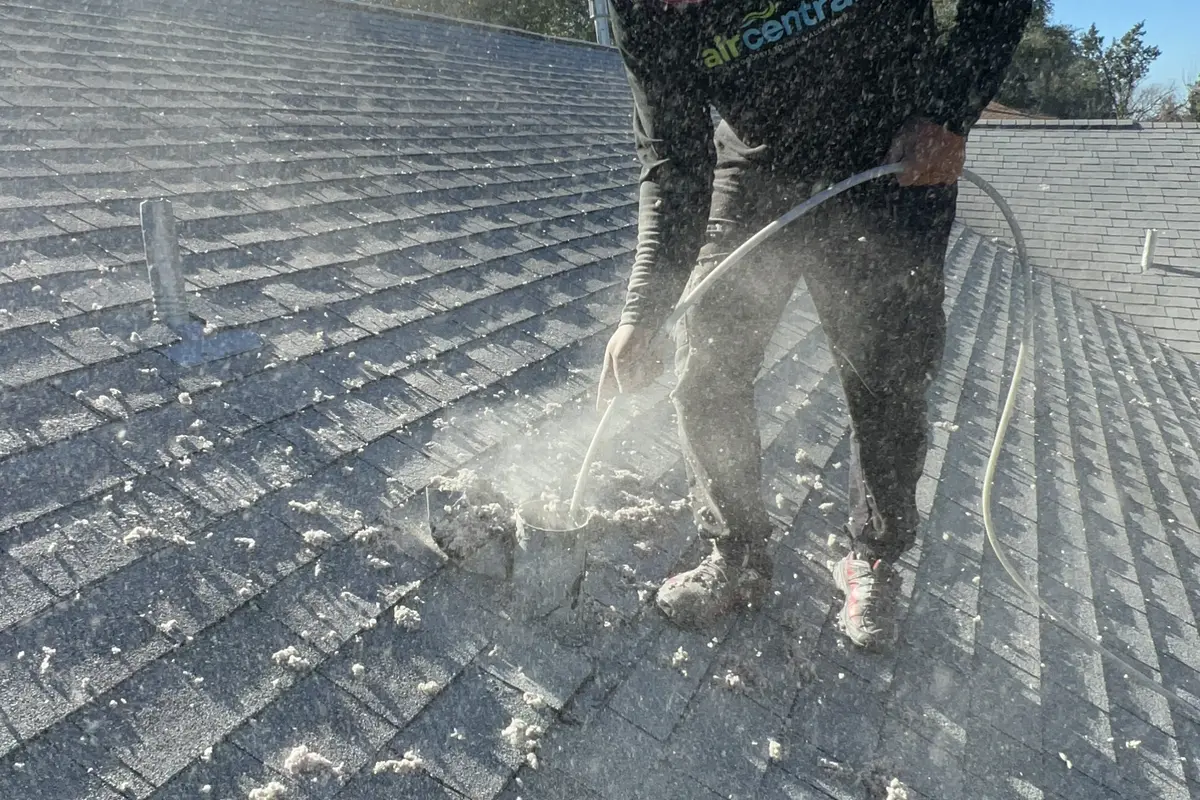
How Lint Becomes Dangerous
Your lint trap catches about 75% of lint. The remaining 25% enters the vent system. Over months and years, it accumulates along the vent walls, at turns and joints, and at the exterior exit. As the buildup grows, airflow decreases. The dryer runs hotter because exhaust cannot escape.
This creates a positive feedback loop: more heat, more lint sticking to vent walls, more restriction, higher temperatures, until either the thermal fuse blows (best case) or the lint ignites (worst case). The thermal fuse is a safety device designed to cut power if the dryer overheats, but it is not foolproof - it can fail to trip if the temperature rises gradually, and it does not prevent ignition of lint that has already accumulated in the vent beyond the dryer.
The most dangerous spots are at 90-degree turns (where lint accumulates fastest), at joints where duct sections connect (especially if screws were used, which catch lint fibers), and at the exterior termination where lint meets outdoor moisture and compacts into a dense, slow-drying mass. A vent with three turns and 25 feet of run can accumulate enough lint to become a fire hazard in as little as 6 months of regular use.
Fire Prevention Checklist
Clean the lint trap before every single load - this is the most effective daily prevention step. A clean trap maximizes airflow and captures the majority of lint before it enters the vent system. It takes five seconds and should be automatic.
Schedule professional vent cleaning once per year. Mark it on your calendar for the same month every year so it does not get forgotten. If your household does heavy laundry (5+ loads per week) or you have pets, schedule every 6 months.
Use rigid metal vent pipe instead of flexible plastic or foil for the main vent run. Rigid pipe has a smooth interior that accumulates lint far more slowly than corrugated flex duct. Replace any plastic or vinyl flex duct immediately - it is a fire hazard and not code-compliant.
Keep vent runs as short and straight as possible. Every turn and every extra foot of length creates more surface area for lint to collect and more resistance to airflow. If you are building or renovating, position the laundry room on an exterior wall to minimize vent length.
Never run the dryer when leaving the house or going to sleep. If a dryer fire starts while you are home and awake, you can respond immediately. If it starts while you are asleep or away, the fire can spread significantly before being detected. The NFPA reports that dryer fires occurring between 11 PM and 7 AM cause disproportionately more damage and injuries because of delayed detection.
If your dryer takes longer than usual to dry clothes, stop using it and schedule a vent cleaning immediately. Increased drying time is the earliest warning sign of a clogged vent, and continuing to run the dryer with restricted airflow accelerates the buildup and increases fire risk with every load.
When Was Your Dryer Vent Last Cleaned?
Most Austin homeowners go too long between cleanings. A quick inspection takes minutes and could prevent a fire.
Call (512) 601-4451What to Do If You Suspect a Dryer Fire
If you smell burning while the dryer is running, stop the dryer immediately and unplug it (or turn off the circuit breaker). Do not open the dryer door - opening the door introduces oxygen that can feed a fire. Feel the dryer exterior and the wall behind it for heat. If the wall is hot or you see smoke, call 911 and evacuate the house.
If there is no smoke or excessive heat, leave the dryer unplugged and do not use it again until a professional has cleaned and inspected the vent. The burning smell was likely overheated lint, which means the vent is dangerously clogged. Even if no fire occurred this time, the conditions for ignition are present and will only worsen with continued use.
Related Services
Learn more about our professional services related to this topic:
- Dryer Vent Cleaning - Clear lint buildup to prevent fires and cut drying time in half.
Want the full picture?
Read our complete guide: Dryer Vent Cleaning in Austin: The Complete Safety Guide (2026) →Have questions about dryer vent safety? Our team is available 7 days a week. Call us at (512) 601-4451 or visit our contact page.