Dryer vent cleaning in Austin is an affordable service for standard residential vents. Price depends on vent length, number of turns, and roof vs wall exit. Most jobs take 30-60 minutes.
2026 Austin Pricing
Dryer vent cleaning pricing varies based on your specific setup. Shorter wall-exit vents are the most affordable, while longer runs (20-35 feet), roof exit vents (which require roof access), vents with multiple 90-degree turns, and jobs involving bird nest or heavy blockage removal cost more.
These prices reflect the Austin market as of 2026. Prices in surrounding areas like Round Rock, Cedar Park, Georgetown, and Pflugerville fall in the same range. Companies charging significantly above $250 for a standard wall-exit vent are likely padding the price. Watch out for bait-and-switch operators whose advertised price changes after the technician arrives - always get a flat-rate written quote before work begins.
"We clean about 40 dryer vents a week across Austin, and the cost surprise is almost never the cleaning itself - it is the repair that could have been avoided," says Nessi Ziv, owner of Air Central. "A $89-$150 annual cleaning prevents a $400 vent reroute or a $600 dryer replacement. Our 2025 data shows the average Austin dryer vent we service has not been cleaned in 3.2 years."
Most companies charge a flat rate rather than hourly. This protects you from surprise charges if the job takes longer than expected due to heavy buildup or difficult access. Always confirm the quote is flat-rate before scheduling.
What Affects the Cost
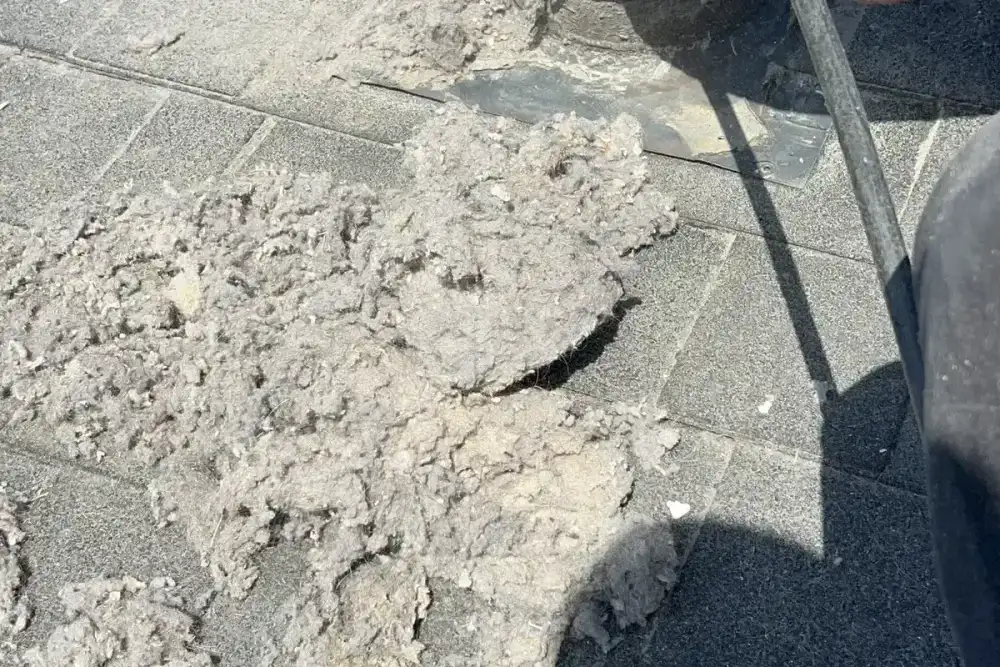
Vent length is the biggest factor. A short, straight vent run from the dryer through an exterior wall (10-15 feet) is the simplest job. Longer runs that travel through interior walls, up through the attic, or across the house to reach an exterior wall take more time and require more equipment to clean thoroughly.
Number of turns matters because each 90-degree elbow creates a spot where lint accumulates heavily. A vent with three or more 90-degree turns can take twice as long to clean as a straight run. The technician needs to work the rotating brush through each turn carefully to avoid damaging the duct while still clearing the buildup.
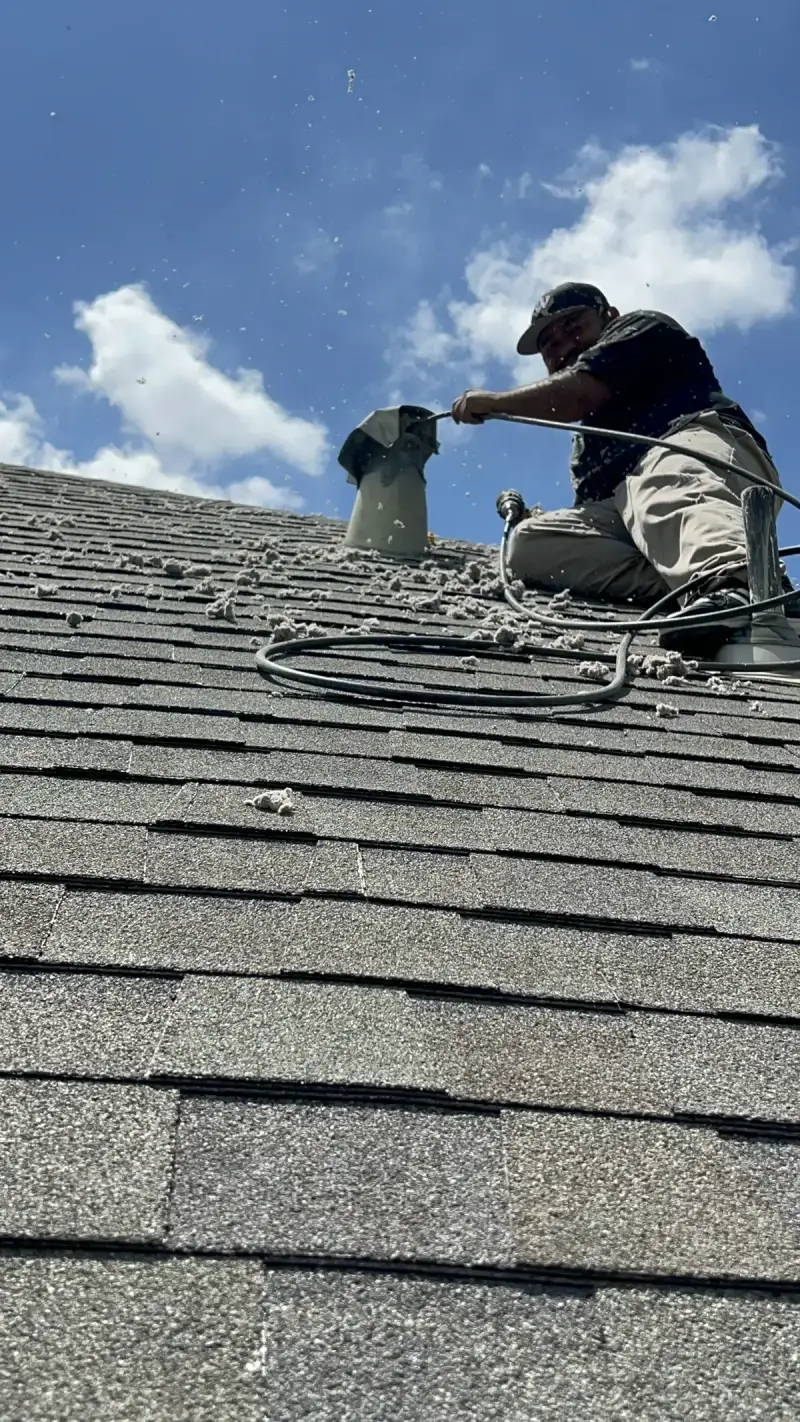
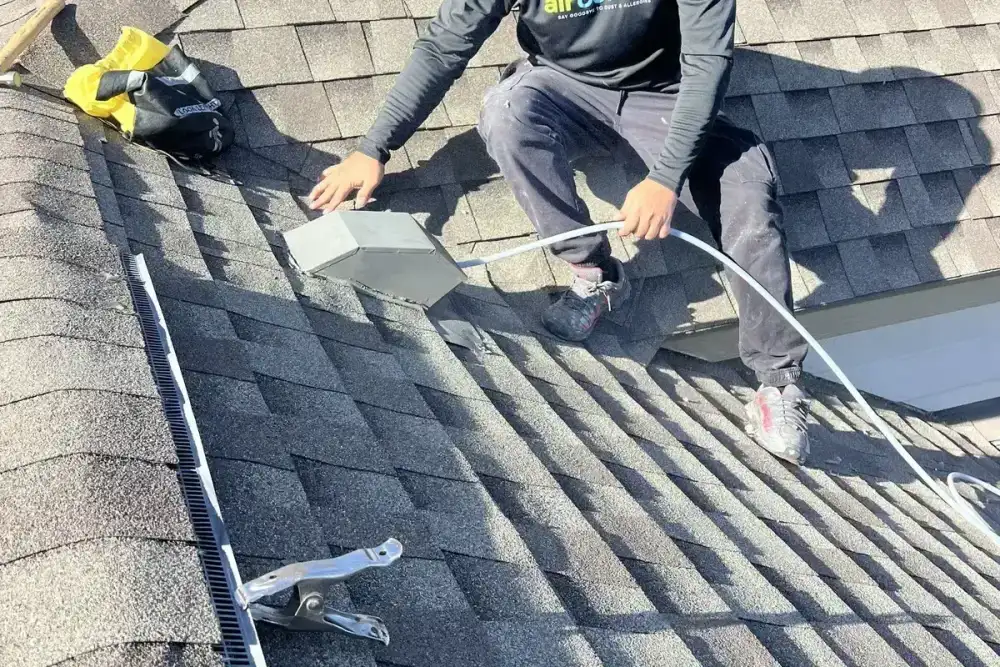
Roof exits cost more because the technician needs to access the roof to inspect and clean the exterior termination point. Wall exits are accessible from ground level. In Austin, many homes built in the 2000s and later have dryers on second floors or in interior laundry rooms, which often means longer runs and roof exits that increase the cleaning cost.
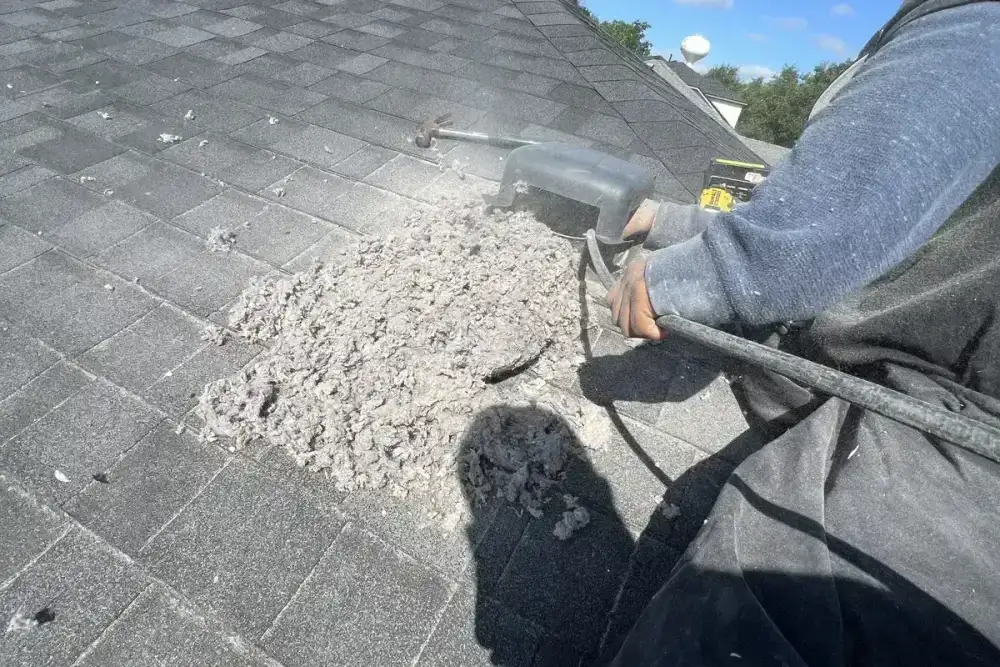
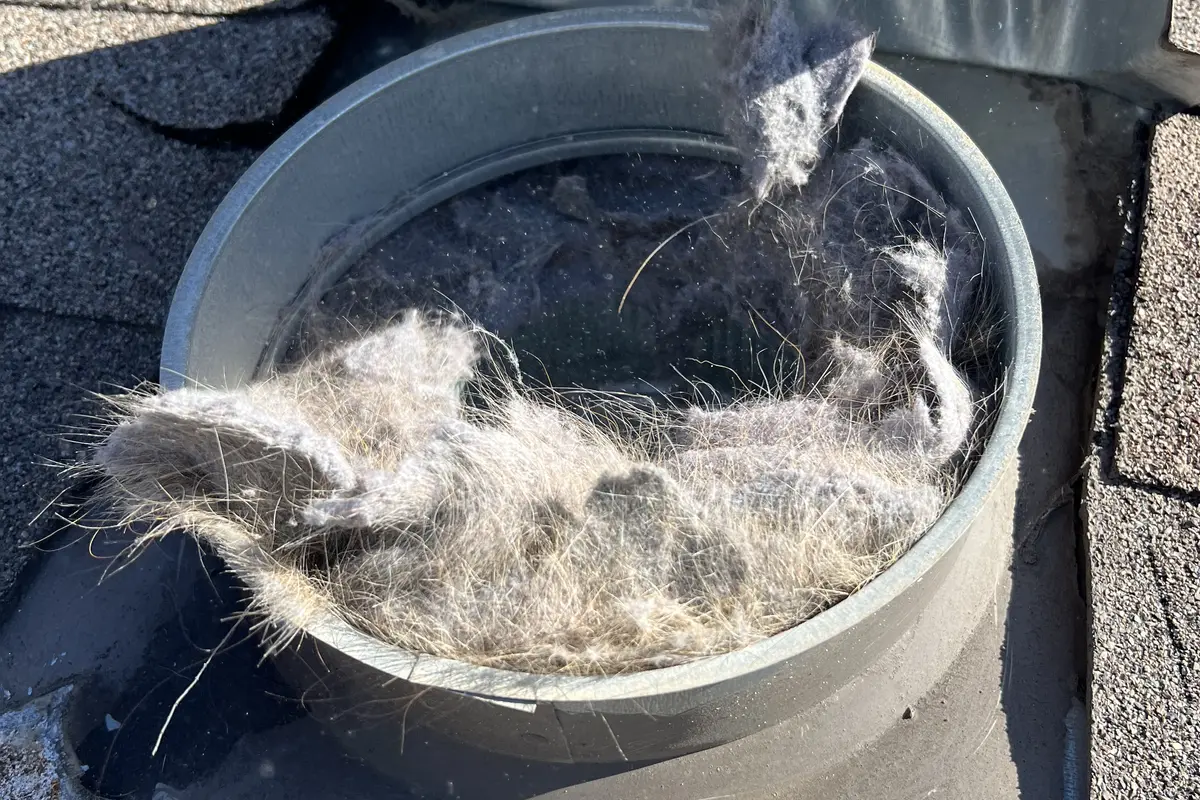
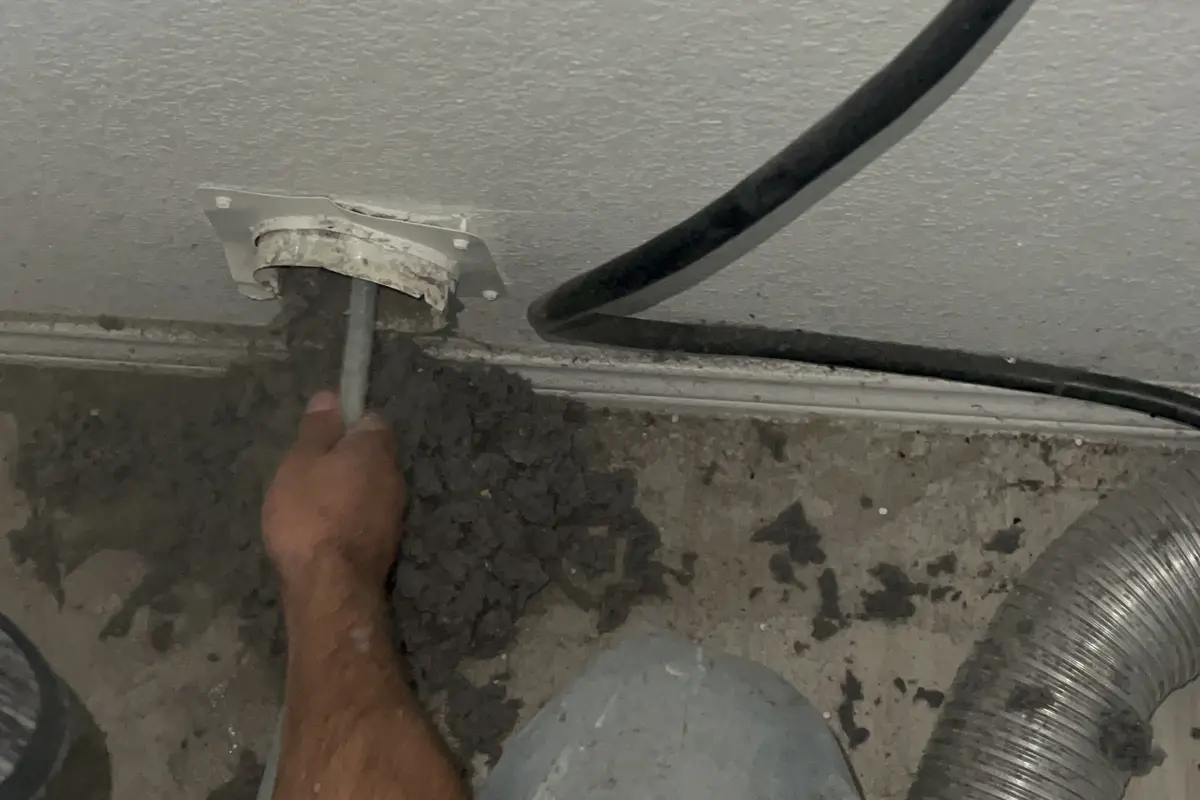
Blockage severity also affects price. A routine annual cleaning with light lint buildup is straightforward. A vent that has not been cleaned in 5+ years, has a bird nest, or is nearly fully blocked requires additional time and effort to clear. Heavy blockages sometimes require the technician to access the vent from both ends to push and pull the debris out.
What Is Included
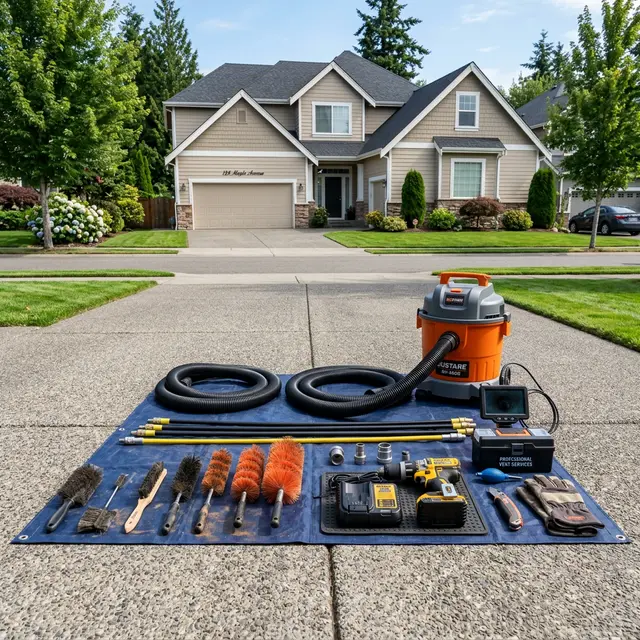
A professional dryer vent cleaning includes: disconnecting the dryer and pulling it from the wall, cleaning the full vent run from inside to the exterior exit with rotating brushes and compressed air, clearing the lint trap housing area, inspecting the vent for damage or code violations, reconnecting the dryer and testing airflow. The technician should measure exhaust airflow before and after to verify improvement.
The exterior vent cap should be inspected for damage, blockage, or pest intrusion as part of every cleaning. A broken or missing vent cap lets birds, rodents, and insects enter the vent line. Stuck or damaged backdraft dampers should be identified and replaced. Any code violations - like flexible plastic duct used for the full run - should be flagged and discussed.
Bundling Saves Money
Most companies that offer dryer vent cleaning also provide air duct cleaning, and bundling the two services saves money compared to scheduling them separately. At Air Central, we offer dryer vent cleaning as an add-on to duct cleaning at a discounted rate. Since the technician and equipment are already at your home, the incremental cost is lower.
If your dryer vent and air ducts both need attention, scheduling them together saves you a second service call, a second time window, and money. The combined service typically adds 30-45 minutes to the duct cleaning appointment. For Austin homeowners doing annual dryer vent cleaning and duct cleaning every 3-5 years, bundling them on the same schedule makes the most sense.
When Was Your Dryer Vent Last Cleaned?
Most Austin homeowners go too long between cleanings. A quick inspection takes minutes and could prevent a fire.
Call (512) 601-4451Rate your home's indoor air quality in 2 minutes
Is It Worth the Cost?
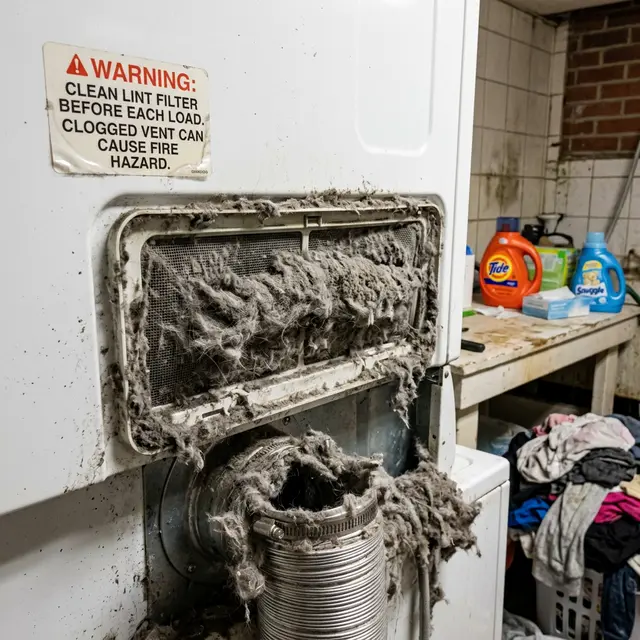
Absolutely. Clogged dryer vents cause 2,900 house fires annually in the US. Even without a fire, a clogged vent makes your dryer run 2-3 times longer per load, wasting $100-$200/year in electricity. A family running 5 loads per week with a partially clogged vent spends an extra $130-$195 per year on energy alone. The cleaning pays for itself in energy savings within 12-18 months.
Beyond energy costs, a clogged vent shortens your dryer's lifespan. The heating element, thermal fuse, and drum bearings all wear faster when the dryer runs hotter and longer due to restricted airflow. A new dryer costs $600-$1,200 - so before you start shopping for a replacement, call (512) 601-4451 and let us check the vent first. Nine times out of ten, the dryer is fine and the vent is the problem. One cleaning and your dryer works like new again.

What Does a Typical Dryer Vent Cleaning Cost?
A typical dryer vent cleaning costs $89 to $1,500, with most Austin homeowners paying $89-$250 for a standard residential job. The U.S. Fire Administration recommends annual cleaning because failure to clean dryer vents is the leading cause of dryer fires, accounting for 34% of the estimated 2,900 residential dryer fires each year. The cost depends entirely on your vent configuration - length, number of turns, exit location, and whether there is a blockage that complicates the job.
<table style="width:100%;border-collapse:collapse;margin:1em 0"><thead><tr style="background:#f5f5f5"><th style="border:1px solid #ddd;padding:10px;text-align:left">Vent Type</th><th style="border:1px solid #ddd;padding:10px;text-align:left">Price Range</th><th style="border:1px solid #ddd;padding:10px;text-align:left">Typical Setup</th></tr></thead><tbody><tr><td style="border:1px solid #ddd;padding:10px">Standard Wall Exit</td><td style="border:1px solid #ddd;padding:10px">$89-$400</td><td style="border:1px solid #ddd;padding:10px">5-15 ft run, 0-1 turns, ground-level access, light to moderate lint</td></tr><tr><td style="border:1px solid #ddd;padding:10px">Extended or Multi-Turn</td><td style="border:1px solid #ddd;padding:10px">$150-$600</td><td style="border:1px solid #ddd;padding:10px">15-35 ft run, 2-3 turns, may require roof access, moderate buildup</td></tr><tr><td style="border:1px solid #ddd;padding:10px">Complex (Heavy Blockage or Repair)</td><td style="border:1px solid #ddd;padding:10px">$250-$1,500</td><td style="border:1px solid #ddd;padding:10px">Long vertical run, roof exit, bird nest removal, damaged sections needing replacement, or multi-dryer setups</td></tr></tbody></table>
Two-story homes in Austin neighborhoods like Mueller, Circle C, and Avery Ranch commonly have second-floor laundry rooms with vertical vent runs exiting through the roof. These configurations fall in the extended or complex category because the technician needs roof access and the vertical run accumulates lint faster due to gravity pulling loose debris back down between dryer cycles. The added cost is justified by the additional time, safety equipment, and specialized tools required.
Related Services
Learn more about our professional services related to this topic:
- Dryer Vent Cleaning - Clear lint buildup to prevent fires and cut drying time in half.
Want the full picture?
Read our complete guide: Dryer Vent Cleaning Austin: Complete Safety Guide (2026) →Have questions about dryer vent safety? Our team is available 7 days a week. Call us at (512) 601-4451 or visit our contact page.