Dryer vent cleaning in Austin takes 30-60 minutes, clears lint from the dryer connection through the full vent path to the exterior cap, and restores proper exhaust airflow. Austin's high humidity causes lint to stick harder inside vents, and bird nesting in roof-exit caps is common in two-story homes. Professional cleaning uses commercial rotary brush systems and high-CFM vacuums to clear the entire run. Call (512) 601-4451 to book your appointment.
What Dryer Vent Cleaning Service Includes
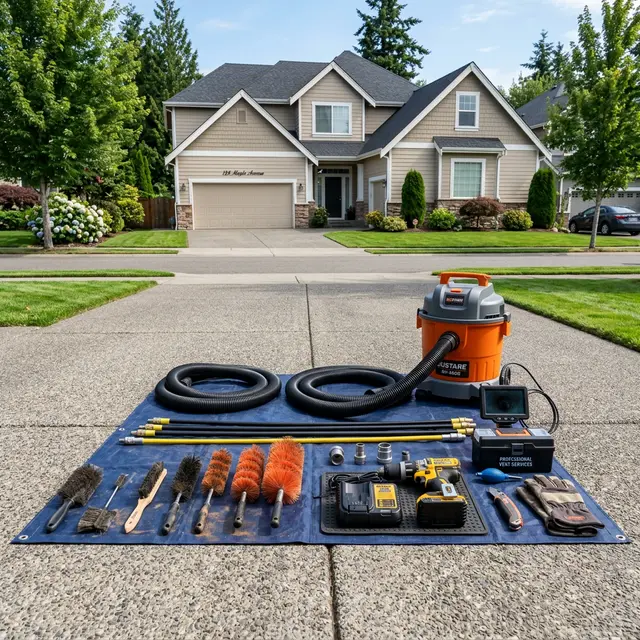
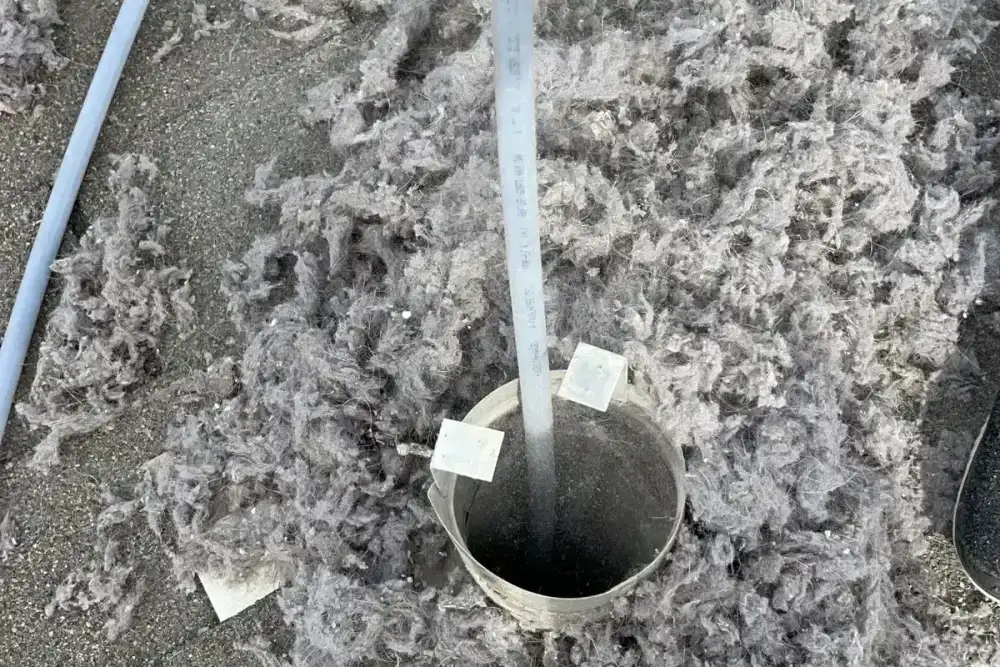
A professional dryer vent cleaning covers every inch of the vent path from the dryer connection to the exterior exhaust cap. The technician disconnects the dryer from the vent, inspects the transition hose (the flexible section between the dryer and the wall), and then cleans the full rigid or semi-rigid vent run using a commercial rotary brush system paired with a high-CFM vacuum.
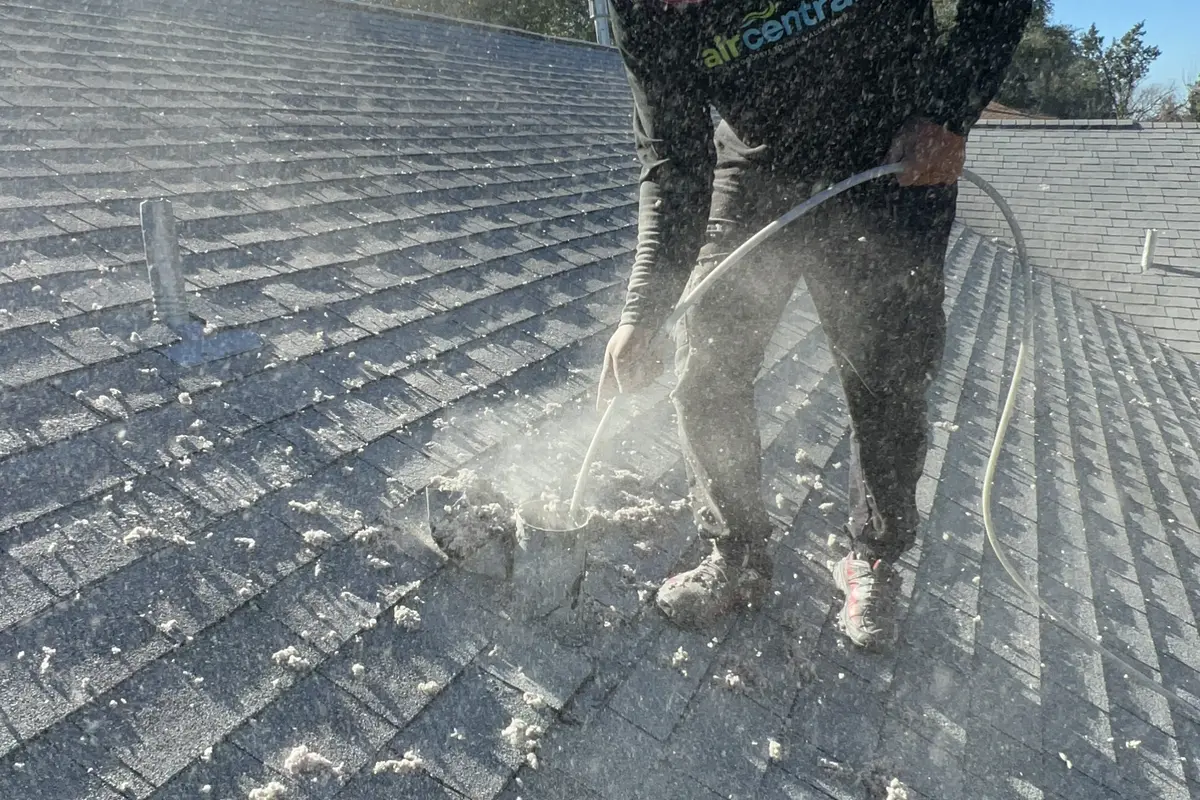
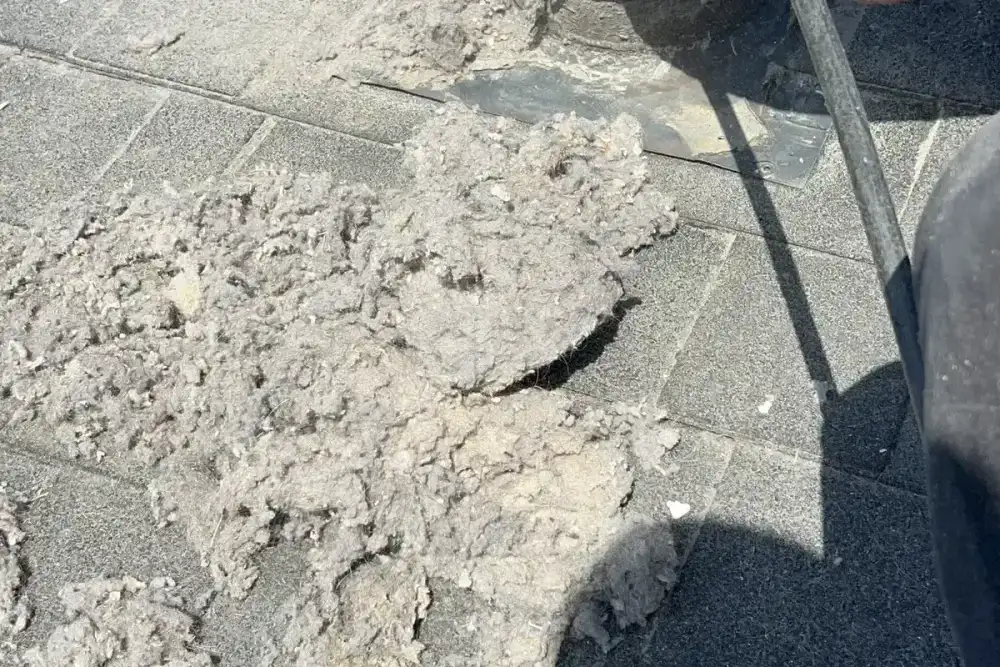
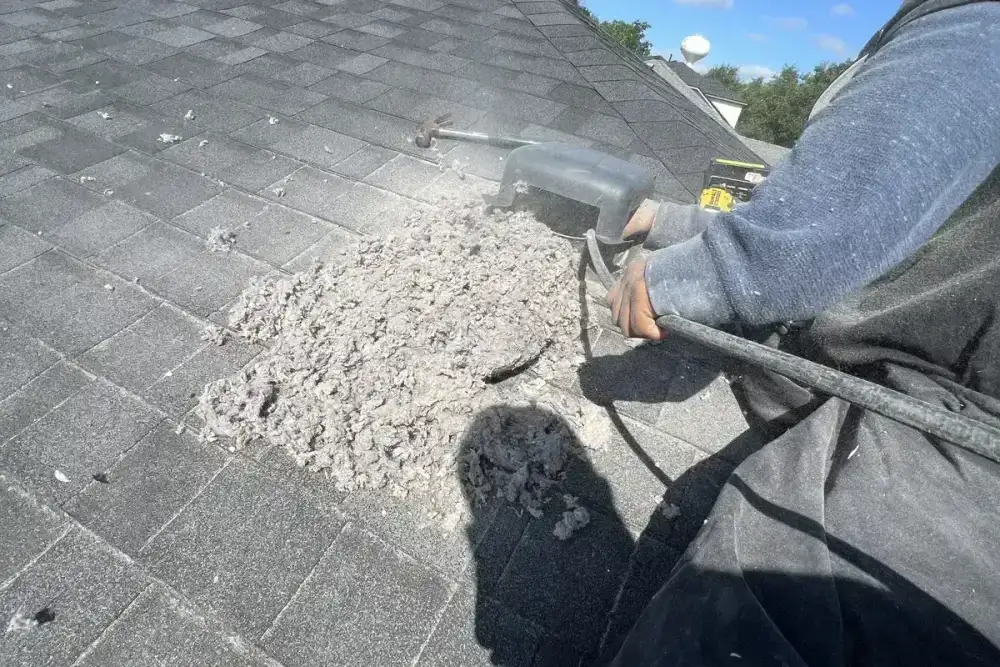
The rotary brush feeds into the vent and spins as it advances, scrubbing the interior walls and breaking loose compacted lint. The vacuum, connected at the opposite end, creates strong suction that pulls dislodged lint out of the system. This two-direction approach - brush pushing forward, vacuum pulling backward - clears even heavily clogged vents that a simple brush pass would not fully clean.
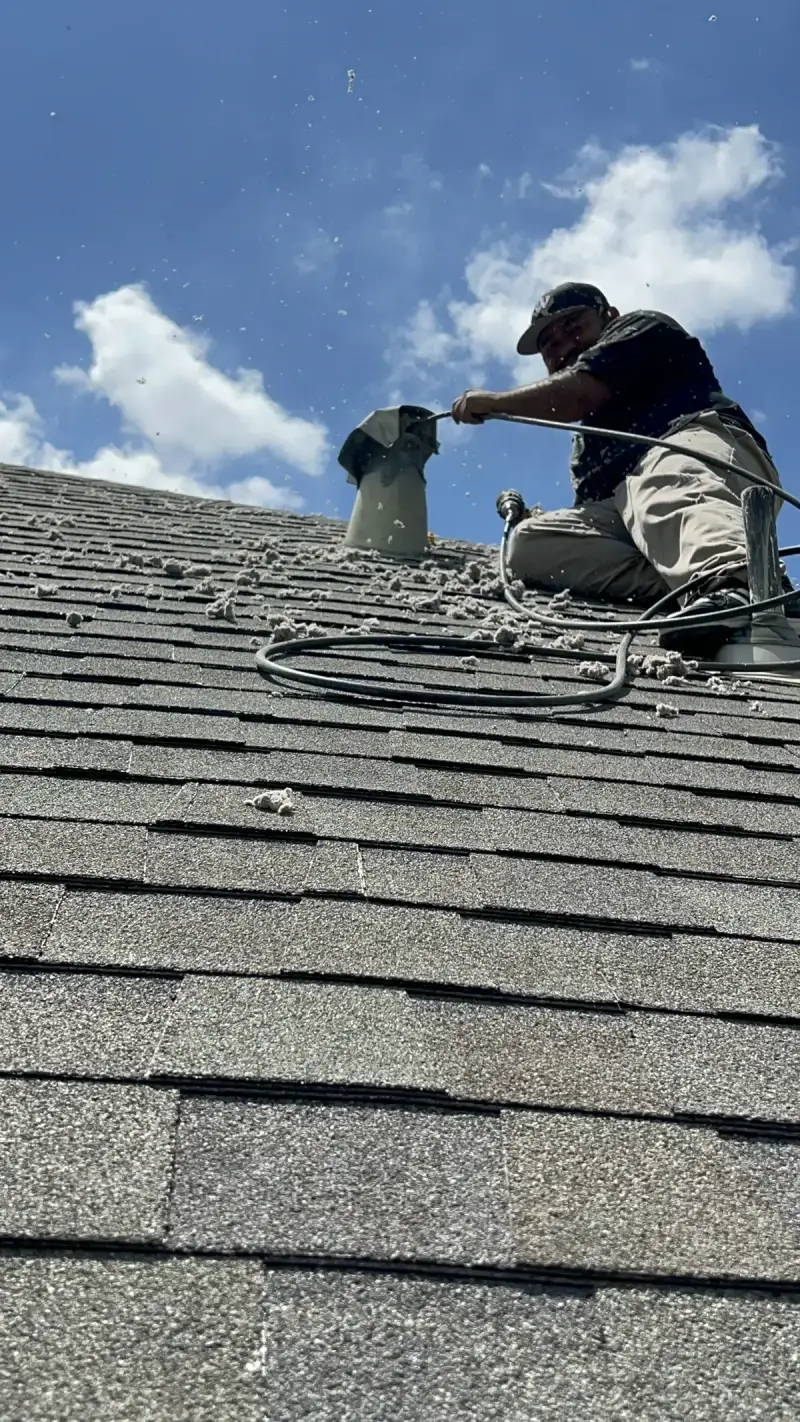
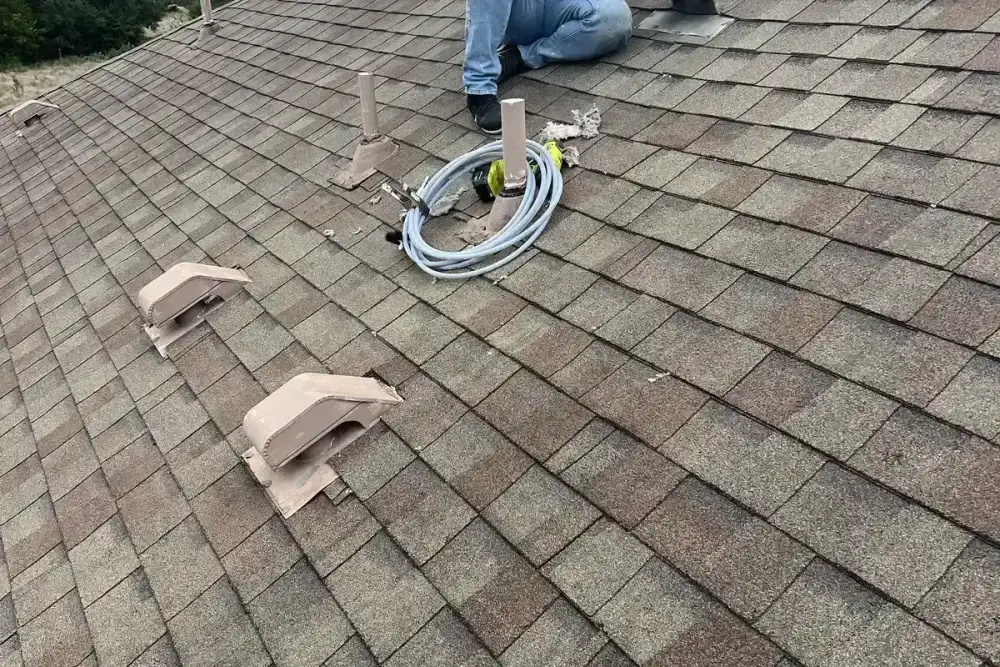
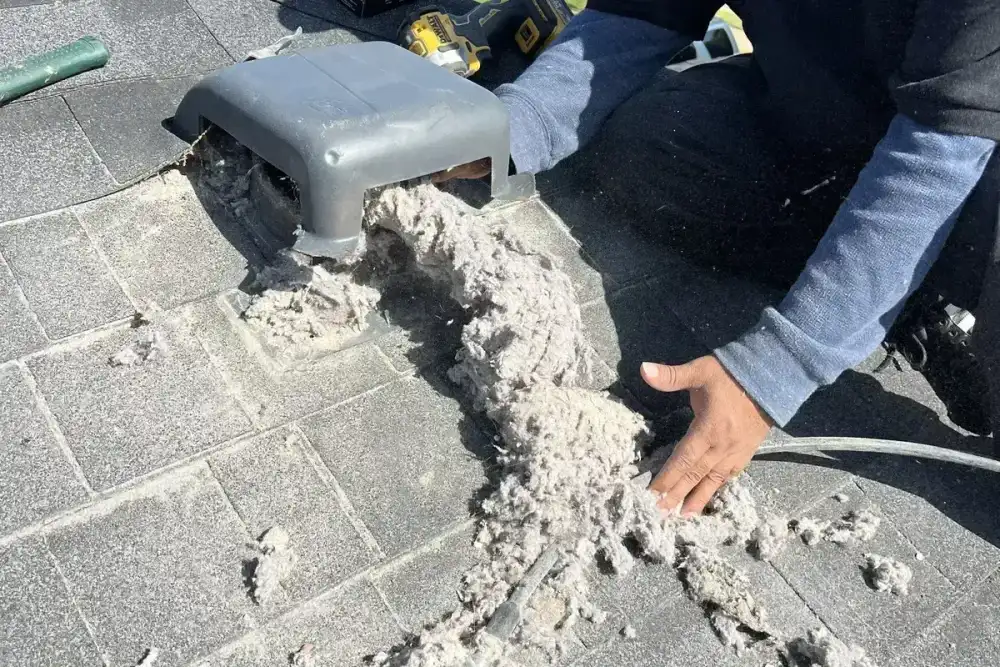
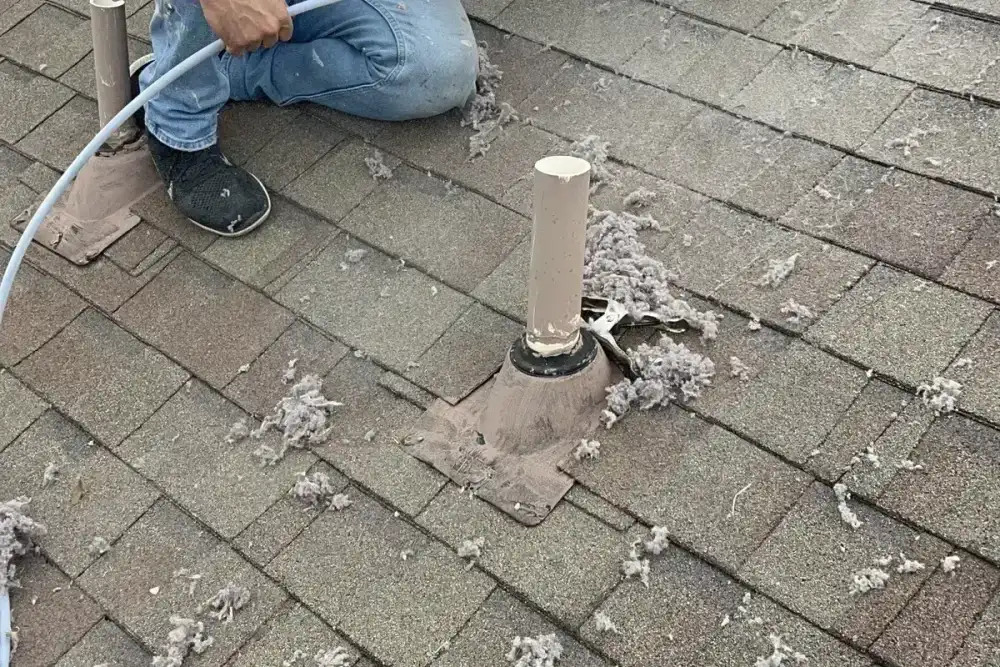
The exterior exhaust cap is inspected and cleaned as part of every service. Caps with screens or louvers trap lint and restrict airflow over time. In Austin, roof-exit caps are particularly prone to bird nesting - birds build nests directly inside the cap opening, blocking exhaust completely. The technician clears any blockage and verifies the cap opens and closes properly.
After cleaning, the technician reconnects the dryer, checks the transition hose condition (recommending replacement if it is crushed, kinked, or made of vinyl), and runs a test cycle to confirm strong airflow at the exterior cap. The entire service takes 30-60 minutes depending on vent length, number of turns, and level of buildup.
Why Austin Dryer Vents Get Dirty Faster
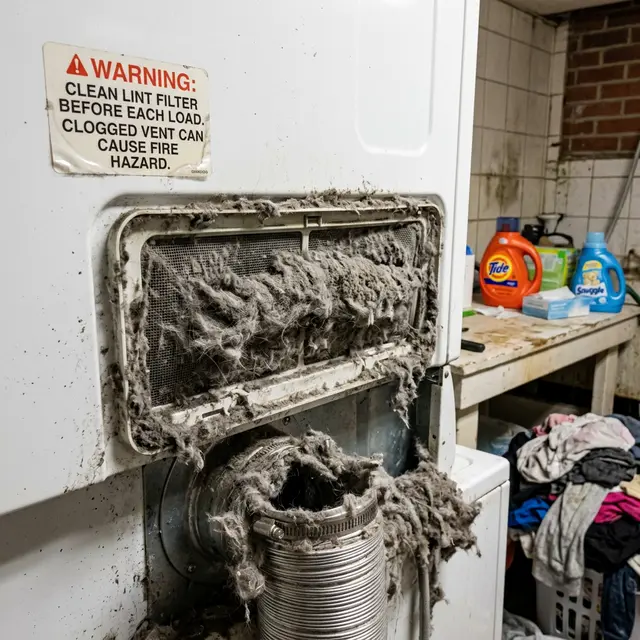
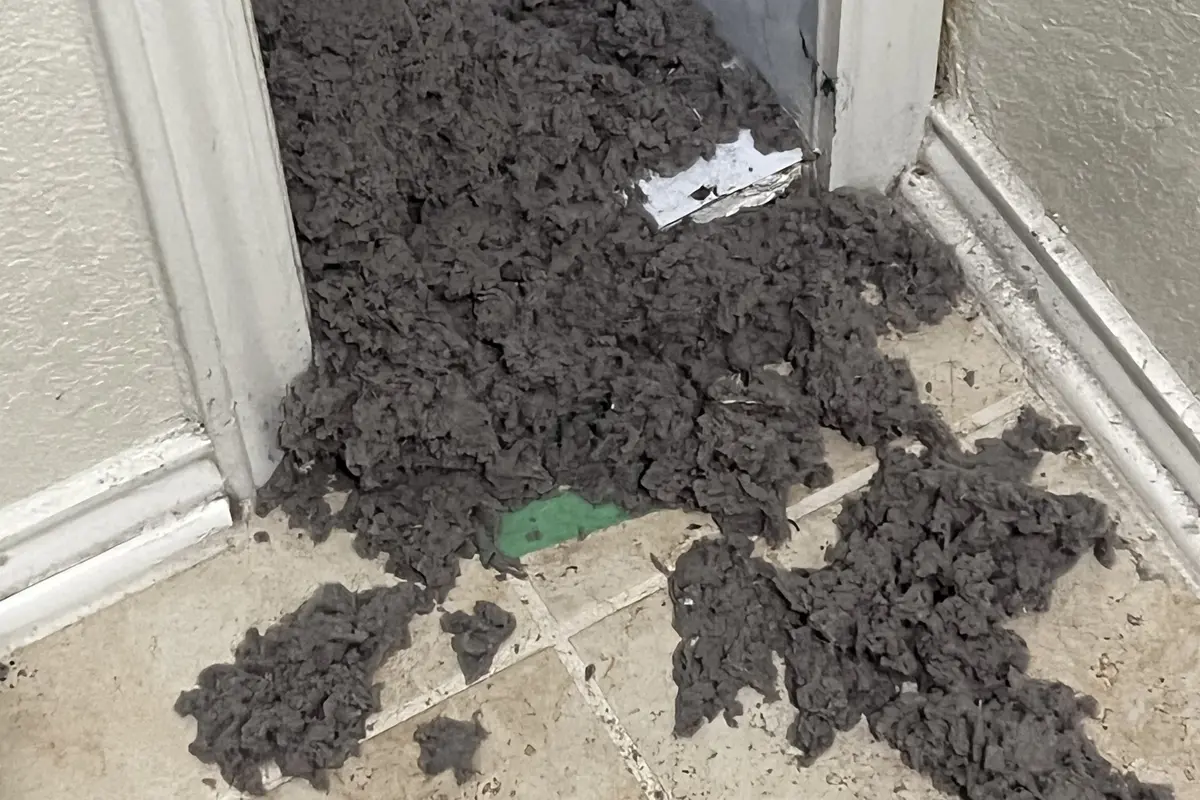
Austin's average humidity of 67% makes lint stick to vent walls more aggressively than in drier climates. When moist exhaust air hits lint that is already clinging to the vent interior, the moisture acts like glue, bonding the lint into a dense mat that standard airflow cannot clear. Over time, layers build up and progressively choke the vent opening. This is why Austin dryer vents tend to reach critical restriction faster than those in arid cities like Phoenix or Denver.
Two-story homes in Austin present a specific challenge. When the laundry is on the first floor or in an interior room, the vent run may travel upward through the wall and exit through the roof. These vertical runs work against gravity - lint settles back down when the dryer stops, accumulating in low spots and elbows. Roof-exit caps also attract birds looking for sheltered nesting sites. We routinely find full bird nests packed inside roof caps on Austin two-story homes, completely blocking exhaust flow.
Austin's year-round warm climate means laundry loads stay consistent rather than dropping off in summer the way they might in seasonal vacation destinations. Families run dryers 4-8 loads per week year-round, which means lint production never slows down. The lint trap catches about 75% of lint generated per load - the remaining 25% enters the vent system. At 6 loads per week, that is roughly 1.5 loads worth of lint entering your vent every week, adding up to significant accumulation over a year.
New construction homes in rapidly developing Austin areas (Pflugerville, Leander, Hutto, Kyle) sometimes have dryer vents installed with excessive turns or unnecessarily long runs due to floor plan constraints. Every 90-degree elbow in a dryer vent is equivalent to adding 5 feet of straight run in terms of airflow resistance. A vent with three elbows and a 15-foot run is functionally a 30-foot run, and lint accumulates faster in longer, more convoluted paths.
How Often Austin Homes Need Dryer Vent Cleaning
The standard recommendation is annually for most Austin households. The U.S. Fire Administration and the Consumer Product Safety Commission both recommend annual dryer vent cleaning to reduce fire risk. For Austin homes, the combination of humidity, year-round usage, and common two-story vent configurations makes annual cleaning especially important.
Households running 8+ loads per week (large families, cloth diapers, pet blankets) should consider cleaning every 6-9 months. The lint volume generated at high-load frequencies exceeds what annual cleaning can safely manage, particularly in vents with multiple turns or runs exceeding 15 feet.
If your dryer takes more than one cycle to fully dry a standard load, the vent is already significantly restricted. Other warning signs include the dryer feeling unusually hot to the touch during operation, a burning smell while running, clothes coming out hotter than normal, or the laundry room feeling excessively warm and humid during drying cycles. Any of these symptoms means cleaning should happen now, not at the next scheduled interval.
After a professional cleaning, the technician can advise on the right frequency for your specific setup based on vent length, configuration, and usage patterns. A short, straight vent in a single-story home can safely go 12-18 months between cleanings, while a long vertical run with multiple turns in a two-story home may need attention every 8-12 months.
Dryer Vent Fire Risk: What the Data Shows
The U.S. Fire Administration reports approximately 2,900 residential dryer fires per year nationwide, causing an estimated $35 million in property loss. Failure to clean the dryer vent is the leading cause, accounting for 34% of all dryer fires. Lint is highly combustible - it ignites at approximately 480 degrees Fahrenheit, and a restricted vent can push exhaust temperatures close to that threshold.
The pattern in Austin dryer fires is consistent with national data: a homeowner notices clothes are not drying properly, continues running the dryer through multiple cycles to compensate, and the trapped heat eventually ignites the lint accumulation in the vent. The fire often starts inside the wall cavity where the vent runs, making it difficult to detect until it has spread.
The risk is not limited to old dryers. Even new, high-efficiency dryers produce lint, and a new dryer connected to a vent that has not been cleaned simply pushes hot air against an existing clog. In fact, newer dryers with higher heat output can actually accelerate lint ignition in a restricted vent because they generate more thermal energy with less airflow to dissipate it.
Gas dryers carry an additional hazard. A clogged vent on a gas dryer traps carbon monoxide and other combustion byproducts inside the home. While modern gas dryers have safety shutoffs, a partially restricted vent may not trigger the shutoff while still allowing dangerous gas levels to accumulate in the laundry area. Proper vent cleaning is both a fire safety and a gas safety measure for gas dryer owners.
Professional Cleaning vs DIY: What You Can and Cannot Do
Homeowners can and should clean the lint trap before every load and vacuum the lint trap housing every few months using a narrow vacuum attachment. You can also disconnect the flexible transition hose from the wall and clean it out - a job that takes five minutes and removes a common restriction point. These basic maintenance steps are meaningful and we encourage them between professional cleanings.
What homeowners cannot effectively do is clean the full rigid vent run from the wall connection to the exterior cap. Consumer-grade dryer vent cleaning kits (the flexible rods with a brush head sold at hardware stores) work for short, straight runs of 5-8 feet with no elbows. For the typical Austin two-story vent run with 2-3 elbows and 15-25 feet of vent, these kits cannot navigate the turns or generate enough brush pressure to clear compacted lint.
Roof-exit vents present a safety issue that homeowners should not attempt. Climbing onto the roof to access the exterior cap requires proper fall protection and roof safety experience. Professional technicians carry the right equipment and training for safe roof access. The liability of a fall far outweighs the cost of professional cleaning.
Professional dryer vent cleaning is one of the most straightforward home services - it takes under an hour, it is affordable, and it directly reduces fire risk. Air Central uses commercial rotary brush systems and high-CFM vacuums to clean the full vent run including roof-exit caps. Call (512) 601-4451 to schedule your dryer vent cleaning.
When Was Your Dryer Vent Last Cleaned?
Most Austin homeowners go too long between cleanings. A quick inspection takes minutes and could prevent a fire.
Call (512) 601-4451Rate your home's indoor air quality in 2 minutes
What to Look for in a Dryer Vent Cleaning Provider
The company should use commercial-grade rotary brush equipment, not a consumer brush kit. Ask about their equipment - a legitimate provider can describe their brush system and vacuum setup. Hand-brushing a long vent run is insufficient for anything beyond a light dusting.
Verify they clean the full vent path including the exterior cap. Some operators disconnect at the wall, run a quick brush through the accessible section, and skip the roof cap entirely. The cap is often where the worst blockage occurs, especially in Austin where bird nesting is common. If the company does not mention roof access or exterior cap cleaning, ask.
Look for companies that inspect the transition hose and vent path for damage, not just lint. A kinked transition hose, a crushed vent section inside the wall, or a disconnected joint behind the dryer can cause the same symptoms as lint buildup. A thorough provider checks for these mechanical issues and reports them.
Check reviews and look for specifics about the dryer vent service, not just general HVAC reviews. Air Central has 500+ Google reviews at 5.0 stars, and many specifically mention our dryer vent cleaning service. We clean the full path from dryer to cap, inspect for damage, and confirm strong airflow after every job. Call (512) 601-4451 to book your appointment.
Fire Prevention Checklist for Austin Dryer Owners
Clean the lint trap before every single load - this is the most effective daily prevention step. A clean trap maximizes airflow and captures the majority of lint before it enters the vent system. It takes five seconds and should be automatic.
Schedule professional vent cleaning once per year. Mark it on your calendar for the same month every year so it does not get forgotten. If your household does heavy laundry (5+ loads per week) or you have pets, schedule every 6 months.
Use rigid metal vent pipe instead of flexible plastic or foil for the main vent run. Rigid pipe has a smooth interior that accumulates lint far more slowly than corrugated flex duct. Replace any plastic or vinyl flex duct immediately - it is a fire hazard and not code-compliant.
Keep vent runs as short and straight as possible. Every turn and every extra foot of length creates more surface area for lint to collect and more resistance to airflow. If you are building or renovating, position the laundry room on an exterior wall to minimize vent length.
Never run the dryer when leaving the house or going to sleep. If a dryer fire starts while you are home and awake, you can respond immediately. If it starts while you are asleep or away, the fire can spread significantly before being detected. The NFPA reports that dryer fires occurring between 11 PM and 7 AM cause disproportionately more damage and injuries because of delayed detection.
If your dryer takes longer than usual to dry clothes, stop using it and schedule a vent cleaning immediately. Increased drying time is the earliest warning sign of a clogged vent, and continuing to run the dryer with restricted airflow accelerates the buildup and increases fire risk with every load.
What to Do If You Suspect a Dryer Fire
If you smell burning while the dryer is running, stop the dryer immediately and unplug it (or turn off the circuit breaker). Do not open the dryer door - opening the door introduces oxygen that can feed a fire. Feel the dryer exterior and the wall behind it for heat. If the wall is hot or you see smoke, call 911 and evacuate the house.
If there is no smoke or excessive heat, leave the dryer unplugged and do not use it again until a professional has cleaned and inspected the vent. The burning smell was likely overheated lint, which means the vent is dangerously clogged. Even if no fire occurred this time, the conditions for ignition are present and will only worsen with continued use.
Related Services
Learn more about our professional services related to this topic:
- Dryer Vent Cleaning - Clear lint buildup to prevent fires and cut drying time in half.
Want the full picture?
Read our complete guide: Dryer Vent Cleaning Austin: Complete Safety Guide (2026) →Have questions about dryer vent safety? Our team is available 7 days a week. Call us at (512) 601-4451 or visit our contact page.