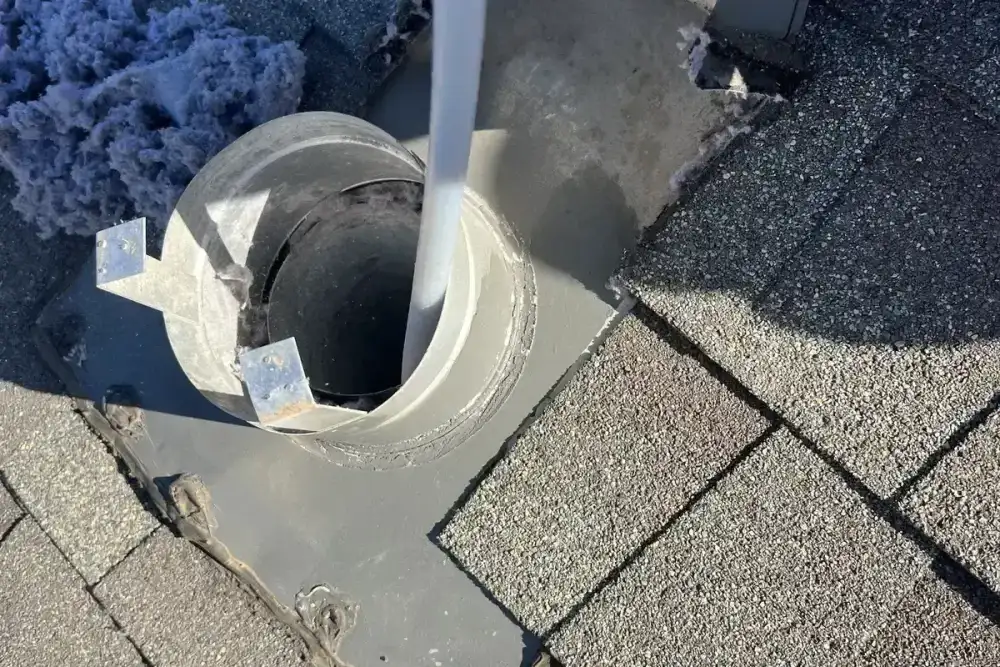
A dryer vent booster fan is an inline fan that increases exhaust airflow when your dryer vent run exceeds 25 feet or has multiple elbows. It does not replace annual dryer vent cleaning - lint still accumulates and still creates a fire hazard. Booster fans are common in two-story Austin homes where the dryer is on the second floor. Installation costs $200-$500 and must comply with IRC Section M1502.6. Call (512) 601-4451 to assess whether your dryer vent needs a booster fan or just a thorough cleaning.
What a Dryer Vent Booster Fan Does
A dryer vent booster fan is a small electric fan installed inside the vent duct between your dryer and the exterior exhaust termination. Its job is simple: it increases airflow velocity in long or complex vent runs where the dryer's built-in blower cannot push exhaust air all the way to the outside efficiently.
Standard residential dryers generate enough airflow to push hot, moist, lint-laden air through about 25 feet of straight, smooth duct. Every 90-degree elbow in the vent run reduces effective capacity by about 5 feet, and every 45-degree elbow by about 2.5 feet. When the total equivalent length exceeds what the dryer can handle, exhaust velocity drops, moisture condenses inside the duct, lint accumulates faster, and drying times increase.
A booster fan bridges that gap. It adds airflow capacity so the exhaust maintains sufficient velocity from dryer to exterior, even in long vent runs. The result is faster drying, less moisture in the duct, and reduced lint buildup - though not eliminated lint buildup, which is an important distinction.
When You Actually Need a Booster Fan
Your dryer vent run exceeds 25 feet of equivalent length. Measure the straight duct distance from dryer to exterior termination, then add 5 feet for each 90-degree turn and 2.5 feet for each 45-degree turn. If the total exceeds 25 feet, a booster fan is worth considering.
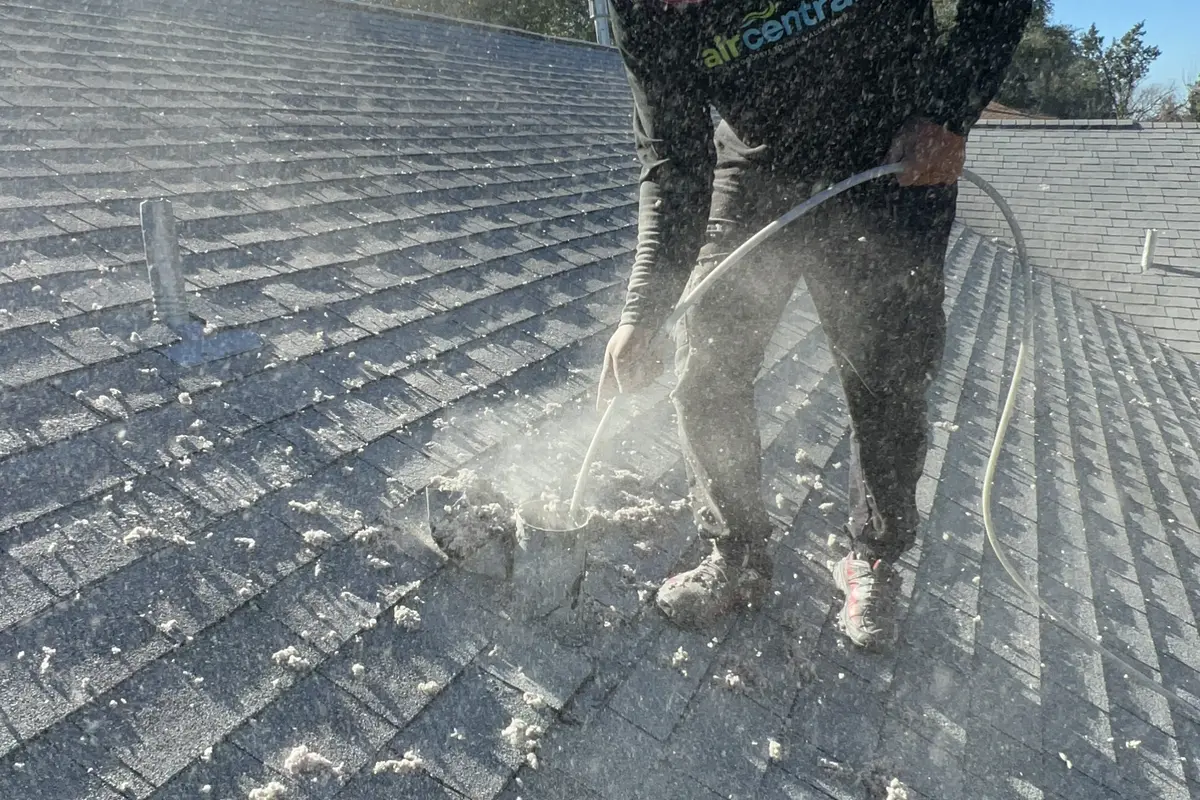
Your clothes take two or more cycles to dry. This is the most common symptom of insufficient vent airflow. Before assuming you need a booster fan, have the vent cleaned first - lint buildup is the more common cause. If drying times remain long after a professional cleaning, the vent run length is likely the issue.
Your dryer is on the second floor of a two-story home. This is the most common scenario in Austin where booster fans are needed. When the dryer sits upstairs and the vent runs down through the wall, across the ceiling of the first floor, and out through an exterior wall, the total run easily exceeds 25-35 feet with multiple elbows. Many two-story homes built in Austin's 2000s and 2010s building boom have exactly this configuration.
You notice excessive moisture around the dryer or in the laundry room. When exhaust velocity is too low, moisture condenses inside the vent duct and can drip back toward the dryer or cause humidity buildup in the laundry area. A booster fan restores the airflow needed to push all that moisture outside.
Types of Booster Fans
Inline centrifugal booster fans are the most common type for dryer vent applications. They install in a straight section of the vent duct, typically 6-8 feet from the dryer, and spin a centrifugal impeller to boost airflow. Most residential models add 100-200 CFM of airflow. They activate automatically when the dryer runs, either sensing airflow or connected to a pressure switch.
End-of-run exhaust fans mount at the exterior termination point instead of inside the duct run. They pull air through the vent from the outside end rather than pushing it from the middle. Some homeowners prefer these because they are easier to access for maintenance. However, they are less common for dryer applications and more typically used for bathroom exhaust.
The key feature to look for in any dryer vent booster fan is UL 705 listing - this is the safety standard for power ventilators. The fan must be rated for the temperatures dryer exhaust produces (up to 165 degrees F during normal operation, higher during malfunction). Never install a standard bathroom fan or general-purpose duct fan in a dryer vent line - they are not rated for the heat and lint exposure.
Code Requirements: IRC Section M1502.6
The International Residential Code (IRC) Section M1502.6 governs dryer exhaust duct length. It sets a maximum developed length of 35 feet for a 4-inch smooth metal duct with no deductions for fittings, or 25 feet as a starting point with deductions for each elbow. When the required vent run exceeds these limits, a listed and labeled booster fan that is compatible with the dryer is permitted.
The booster fan must be listed and labeled (UL 705 or equivalent) and installed according to the manufacturer's instructions. It must activate automatically when the dryer operates and must not reduce the required exhaust airflow below the dryer manufacturer's minimum specification.
Austin follows the IRC with Texas amendments. If you are installing or modifying dryer venting that exceeds code length limits, a booster fan is the code-compliant solution. The alternative is rerouting the vent for a shorter, more direct path - but in many existing Austin homes, the building layout makes rerouting impractical or cost-prohibitive.
One important code point: flexible vinyl or foil duct is not permitted for dryer venting in any configuration, with or without a booster fan. Only rigid or semi-rigid metal duct (smooth-wall preferred) should be used. If your dryer is connected with a vinyl flex hose - still common in older Austin homes - replacing it with rigid metal duct may solve your airflow problem without needing a booster fan.
When Was Your Dryer Vent Last Cleaned?
Most Austin homeowners go too long between cleanings. A quick inspection takes minutes and could prevent a fire.
Call (512) 601-4451Rate your home's indoor air quality in 2 minutes
A Booster Fan Does Not Replace Cleaning
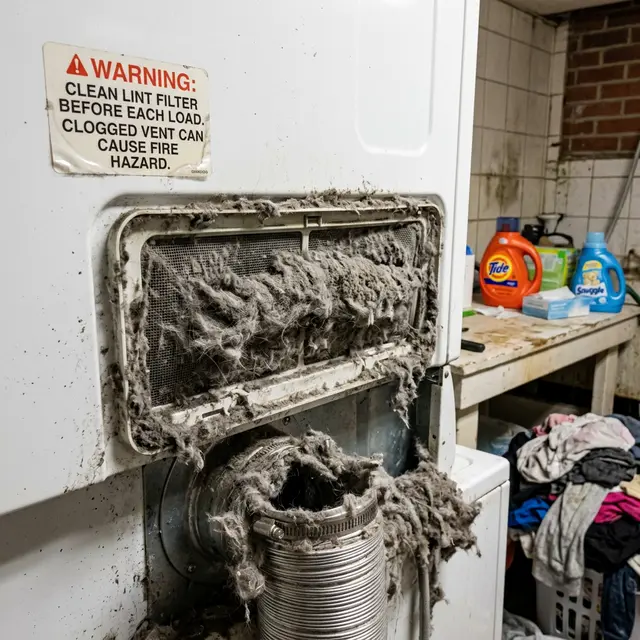
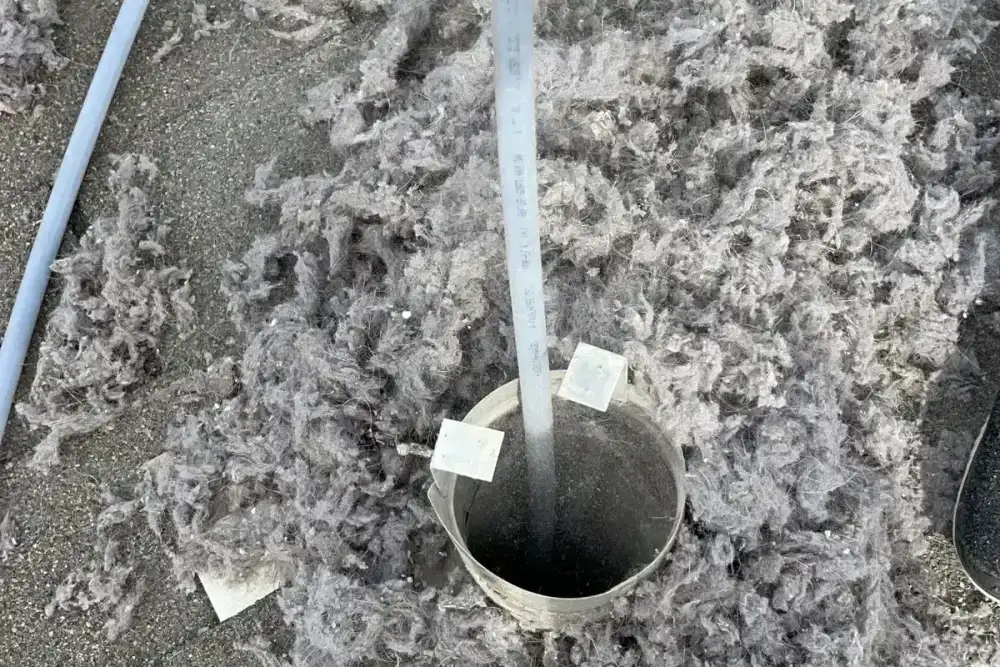
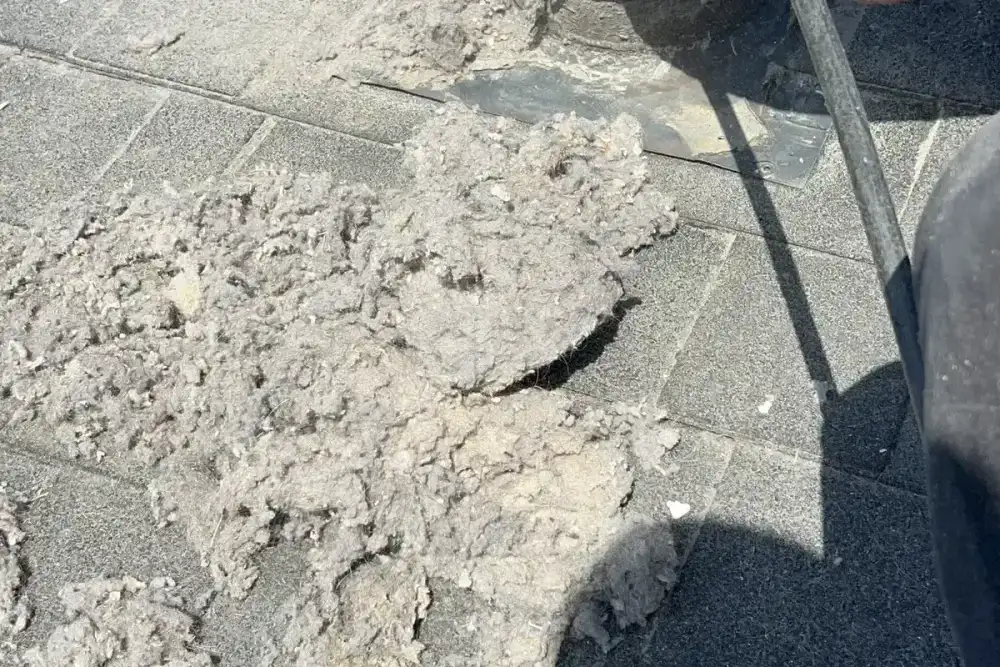
This is the most important point in this article: a dryer vent booster fan does not eliminate the need for annual dryer vent cleaning. Lint still passes through the fan, still accumulates on duct walls, and still creates a fire hazard over time. In fact, some booster fan installations create an additional lint trap at the fan impeller itself, which requires periodic cleaning.
The U.S. Fire Administration reports approximately 2,900 home dryer fires per year, and the leading cause is failure to clean the dryer vent. A booster fan improves airflow but does not prevent lint accumulation. If anything, homes with booster fans should be more diligent about annual cleaning because the fan adds a component that can collect lint and because longer vent runs inherently accumulate more debris.
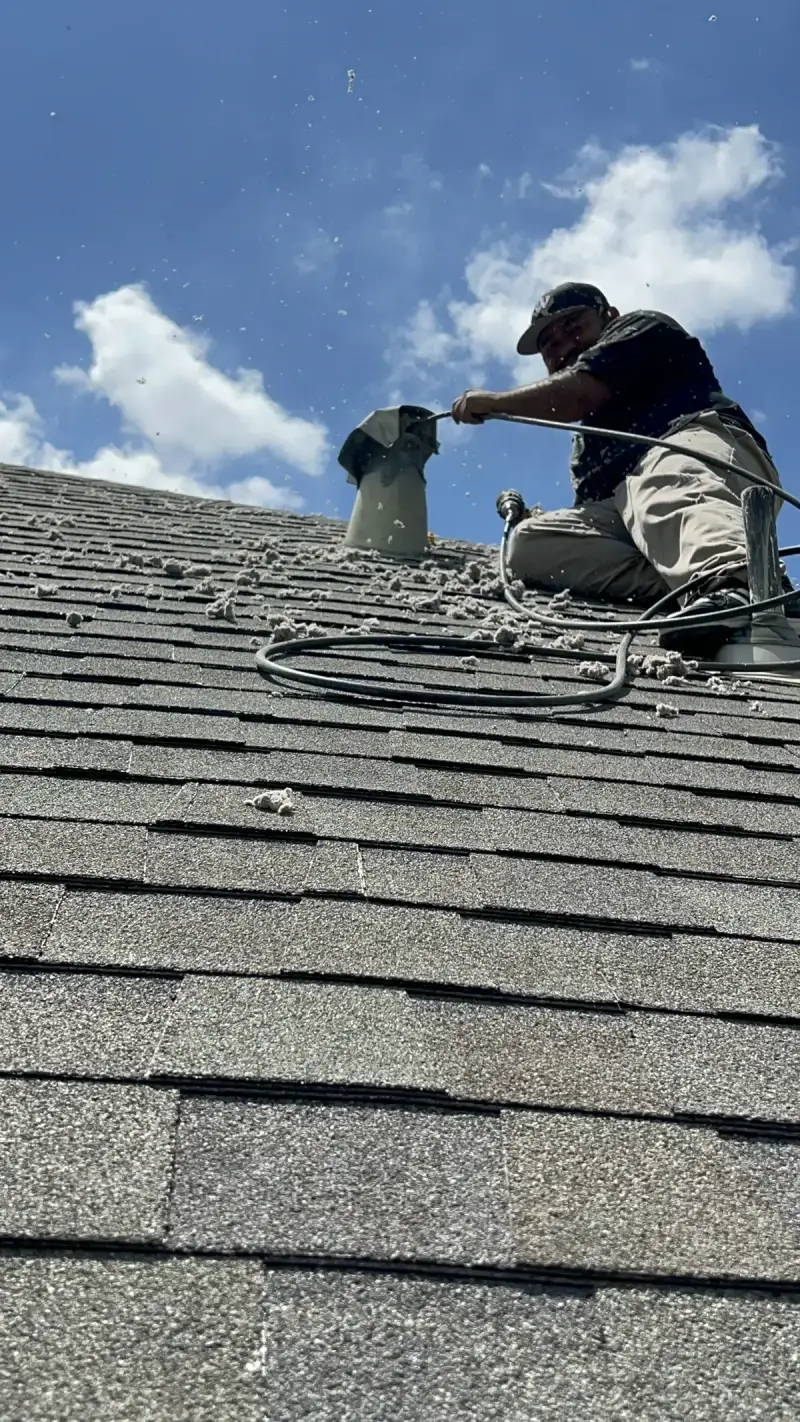
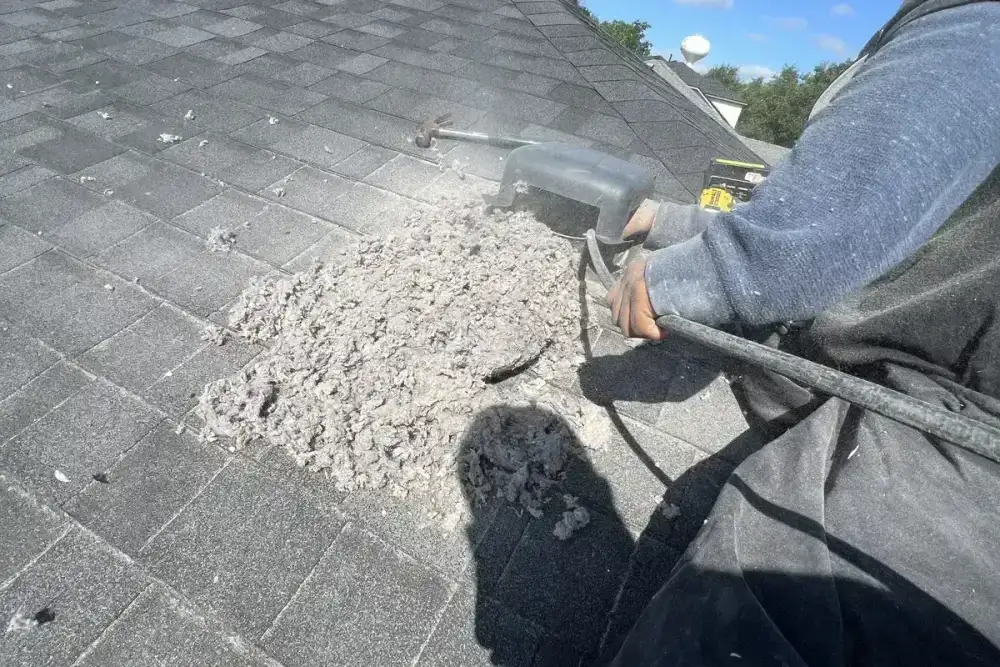
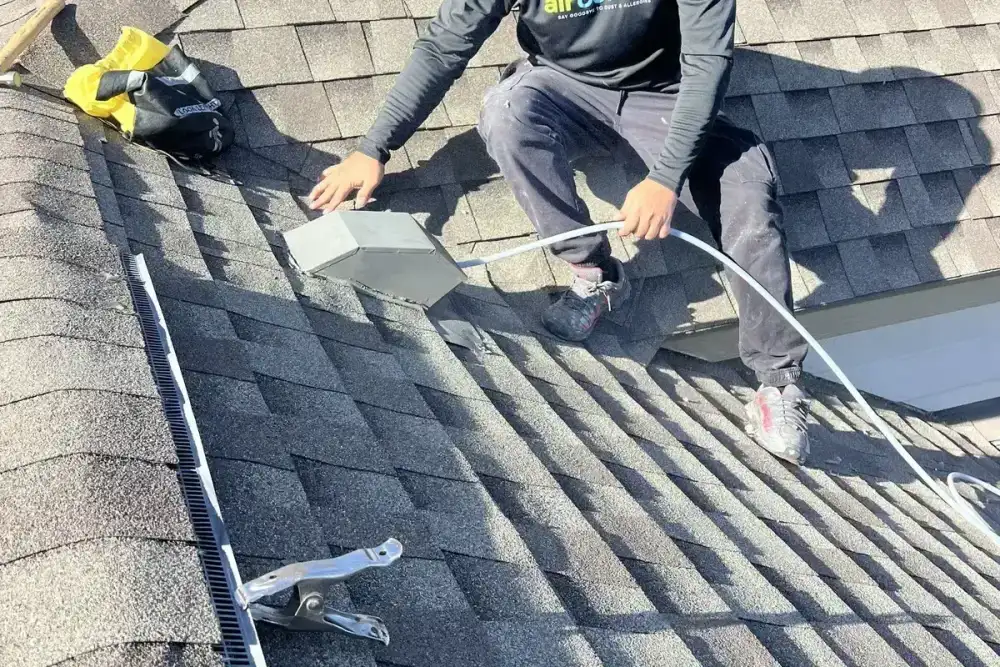
When we clean dryer vents in Austin homes that have booster fans, we clean the entire run from dryer to exterior, including the fan housing and impeller. Lint buildup on the fan blades reduces its effectiveness over time and can cause the motor to overheat. Annual professional cleaning keeps the entire system - duct, booster fan, and exterior termination - clear and safe.
Call (512) 601-4451 to schedule dryer vent cleaning or to have your vent run evaluated for a booster fan. We measure the total equivalent length, inspect the current duct material and routing, and recommend the most practical solution for your setup.
Dryer Vent Booster Fan Installation: What's Involved
Installing a dryer vent booster fan involves mounting an inline fan unit inside the existing vent duct, typically in the attic, between floors, or in a wall cavity where the vent run is accessible. The fan sits in a straight section of duct, 6 to 8 feet downstream from the dryer, and connects to the existing rigid metal duct on both ends with clamps and foil tape or mastic sealant. Proper placement matters - too close to the dryer and lint accumulates on the fan before it has a chance to travel, too far and the fan cannot compensate for the airflow loss in the initial section.
Electrical requirements are straightforward but non-negotiable. Most residential booster fans need a standard 120-volt outlet within cord reach of the installation location. In attic installations, this often means running a new circuit or extending an existing one - work that requires a licensed electrician in Austin. The fan activates automatically via a built-in pressure switch or current sensor that detects when the dryer starts running. When the dryer turns on, the pressure change in the duct triggers the booster fan. When the dryer stops, the fan runs for a few additional minutes to clear residual lint and moisture, then shuts off.
Professional installation is recommended over DIY for several reasons. The fan must be oriented correctly (airflow direction is marked on the housing), the duct connections must be airtight to prevent exhaust leaking into the attic or wall cavity, and the electrical hookup must meet code. A poorly sealed installation in an Austin attic pushes hot, humid dryer exhaust directly into the attic space, adding moisture that degrades insulation and roof decking. Professional installation typically takes 2 to 4 hours and costs $200 to $500 including the fan unit.
Many two-story Austin homes built in the 2000s and 2010s have second-floor laundry rooms with dryer vent runs that exceed 30 feet with multiple elbows. These homes are the most common candidates for booster fan installation in our service area. If your clothes take more than one cycle to dry and your vent has been professionally cleaned within the last year, a booster fan is likely the solution. Call (512) 601-4451 to have your vent run measured and evaluated.
Related Services
Learn more about our professional services related to this topic:
- Dryer Vent Cleaning - Clear lint buildup to prevent fires and cut drying time in half.
Want the full picture?
Read our complete guide: Dryer Vent Cleaning Austin: Complete Safety Guide (2026) →Have questions about dryer vent safety? Our team is available 7 days a week. Call us at (512) 601-4451 or visit our contact page.