Birds commonly nest in dryer vents during Austin's March-August nesting season. A bird in your dryer vent is both a fire hazard and a carbon monoxide risk - never run the dryer with birds or nesting material inside. To keep birds out of your dryer vent, install a pest-proof louvered or spring-damper cover before early March. If birds are already in the vent, have a professional remove the nest, clean the full vent run, and install a bird-resistant cover to prevent return nesting.
Why Birds Choose Dryer Vents
Dryer vents are warm, sheltered, and the right size for small birds like starlings, sparrows, and wrens. The lint provides soft nesting material. In Austin, nesting season runs March through August, with peak activity in April-May. Birds can build a nest in a dryer vent in just 1-2 days. Homes in East Riverside, Manor, and the rapidly growing Kyle-Buda corridor are particularly affected because new construction often uses builder-grade vent caps with flimsy dampers that birds push open easily.
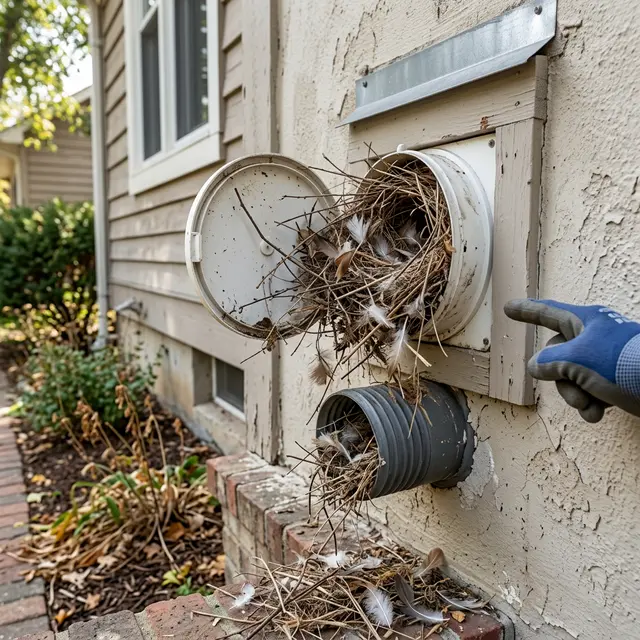
The most common culprits in the Austin area are European starlings, house sparrows, and Carolina wrens. Starlings are the biggest problem - they are aggressive cavity nesters that will fill a dryer vent with sticks, grass, feathers, and debris in 24-48 hours. House sparrows build similar nests but with more grass and paper. Carolina wrens prefer softer nesting material and are attracted to the lint already present in vent openings. All three species are active from early March through late August in Central Texas.
Birds target vents with damaged or missing backdraft dampers because the opening is unobstructed. Even functional dampers can be forced open by persistent birds. Ground-level wall exits are more accessible than roof exits, but determined starlings will nest at any height. If your vent has been nested before, there is a strong chance birds will return to the same spot the following spring unless you install a pest-proof cover.
Legal Protections to Know
Under the federal Migratory Bird Treaty Act, most native bird species are protected. It is illegal to disturb an active nest with eggs or chicks of protected species. However, European starlings and house sparrows are not native to North America and are not protected under this law - their nests can be removed at any time.
Carolina wrens, barn swallows, and other native species are protected. If a protected species has eggs or live chicks in your dryer vent, you technically need to wait until the chicks fledge (leave the nest) before removing the nesting material. This creates a difficult situation because you cannot safely run your dryer during this period. In practice, most pest control and vent cleaning professionals can advise you on the right approach and timing to stay legal while addressing the safety hazard.
The best approach is prevention. Install a pest-proof vent cover before nesting season (by early March in Austin) so birds never get the chance to build. Dealing with a nest after the fact is more expensive, more complicated, and potentially restricted by law.
Dangers of a Nested Vent
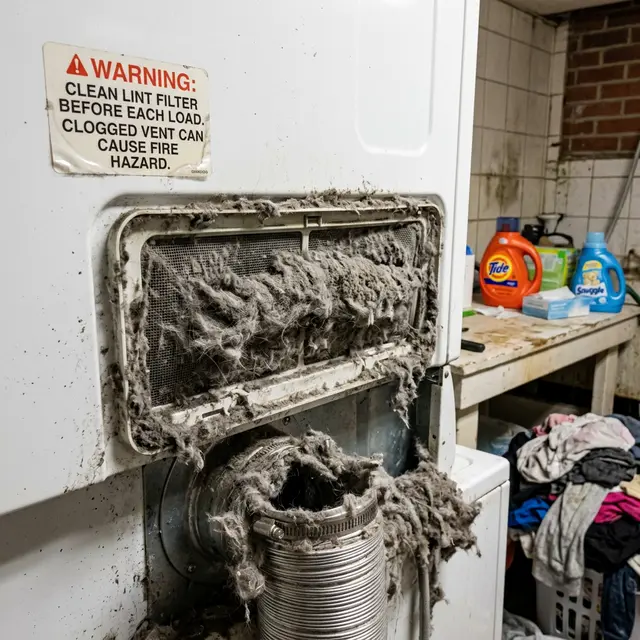
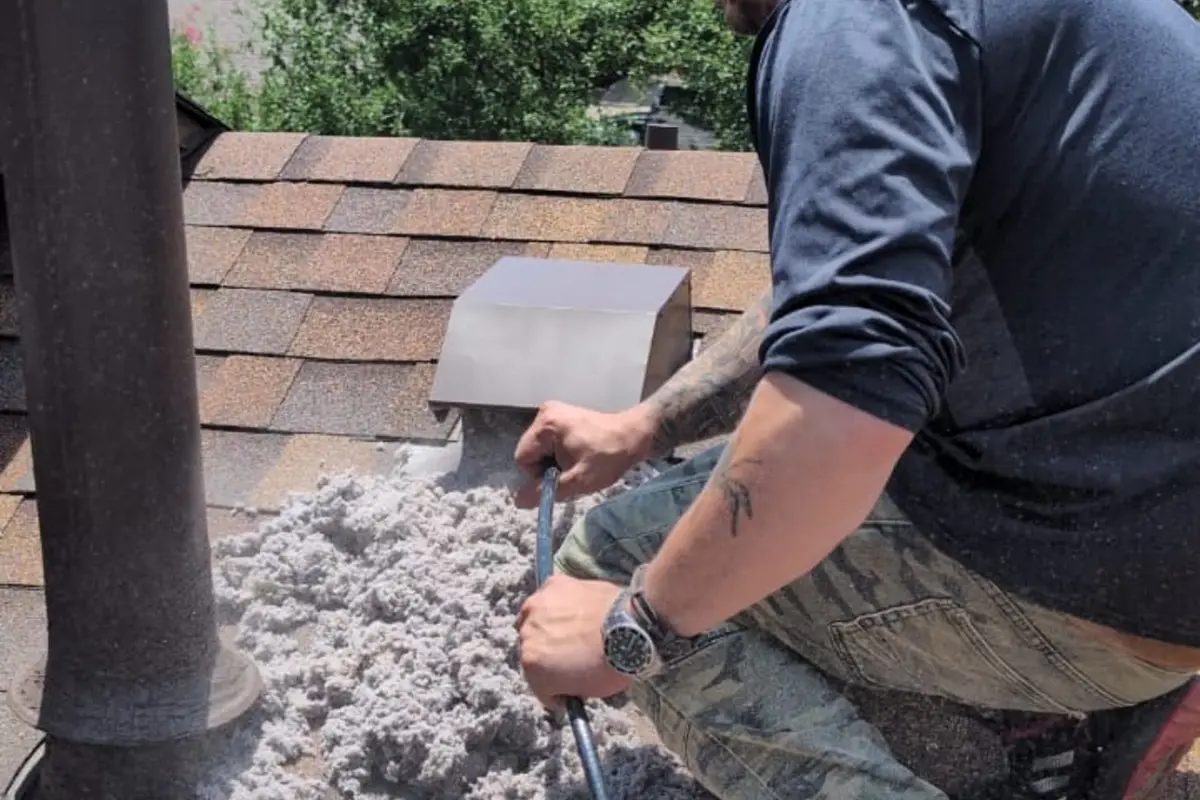
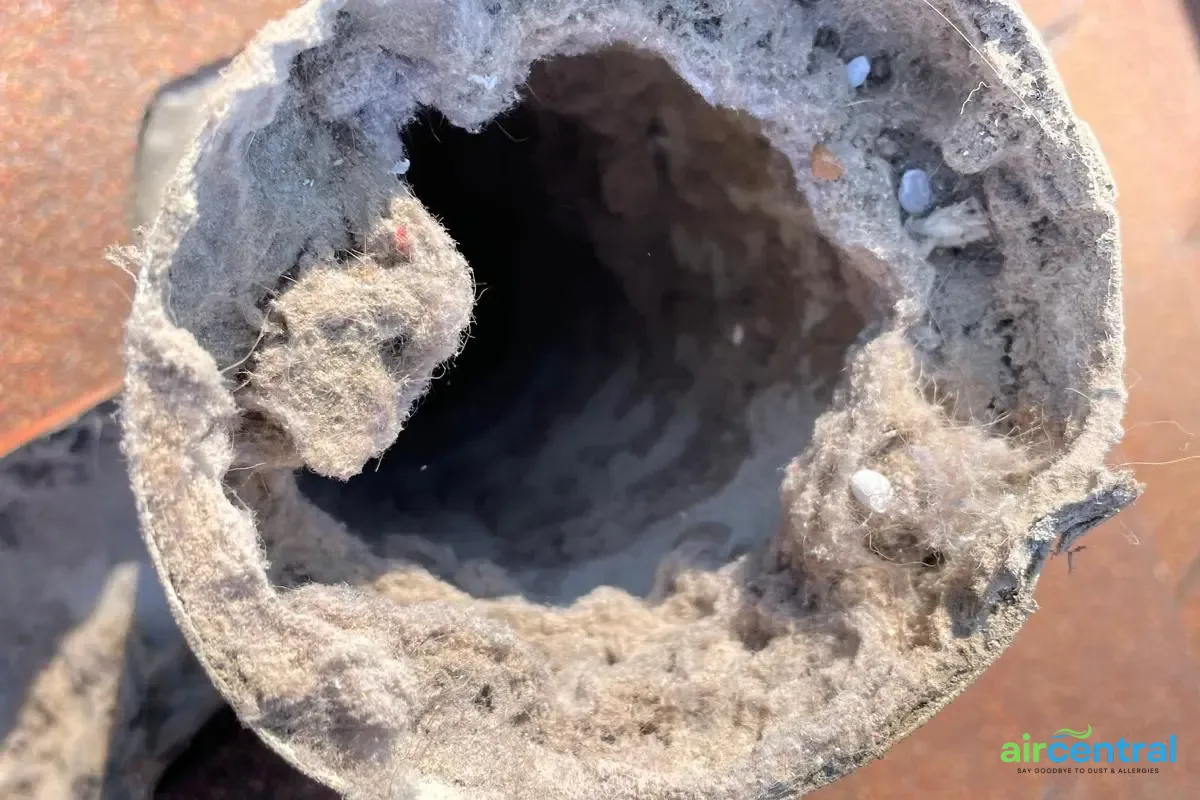
Fire hazard: nesting materials - dry grass, twigs, feathers, lint - are highly flammable, and the dryer produces temperatures of 125-135F at the heating element. A bird nest in the vent restricts airflow, causes the dryer to run hotter, and places combustible material in the path of hot exhaust air. This is one of the highest-risk fire scenarios for a residential dryer.
Carbon monoxide risk: if you have a gas dryer, a blocked exhaust vent traps CO in the laundry room and potentially the rest of the house. Gas dryers produce carbon monoxide as a normal byproduct of combustion, and the vent is the only path for that gas to exit your home. A bird nest blocking that path can cause dangerous CO accumulation within minutes of starting the dryer.
Dryer damage: restricted airflow causes overheating, which damages the heating element, thermal fuse, moisture sensors, and drum bearings. Replacing these components can be costly. Pest introduction: birds carry mites, lice, fleas, and other parasites that can migrate from the nest through the vent into your laundry room and home. Bird droppings inside the vent also create sanitation concerns.
Removal and Prevention
Do NOT attempt to push the nest through the vent - it can compact further and create a worse blockage. Do not try to pull it out with a coat hanger or similar tool, as you may damage the vent duct or push nesting material deeper into the system. Do not run the dryer with a nest present under any circumstances.
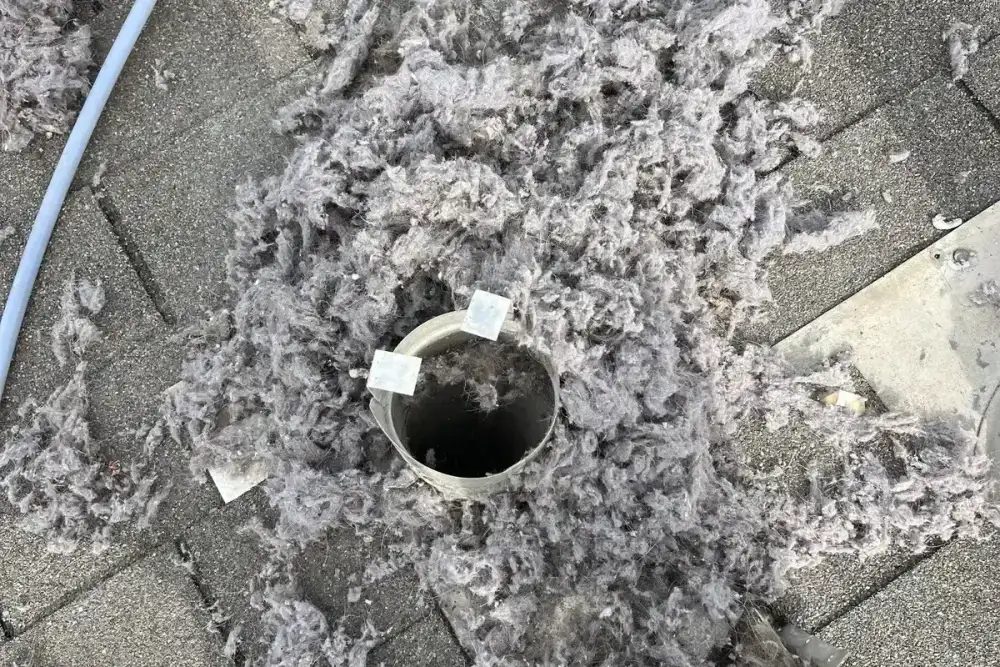
A professional removes the nest and all nesting material, cleans the full vent run with rotating brushes and compressed air to clear any remaining debris, inspects the duct for damage (birds can peck holes in flex duct), and installs a pest-proof vent cover. These covers come in several styles: spring-loaded dampers with recessed openings that birds cannot grip, cage-style guards with mesh small enough to block birds but large enough to allow lint to pass, and louvered designs with angled slats.
Nest removal, vent cleaning, and pest-proof cover installation are bundled as one service. The pest-proof cover itself is a minimal part of the overall cost, with the rest covering labor and the full vent cleaning that should always accompany nest removal. Compared to the cost of a dryer fire, a CO incident, or repeated dryer repairs, this is money well spent.
After installation, check the vent cover at least twice per year - once before nesting season in February and once in fall. Make sure the cover is secure, the damper moves freely, and no debris is blocking the opening. A well-maintained pest-proof cover will last 5-10 years before needing replacement.
When Was Your Dryer Vent Last Cleaned?
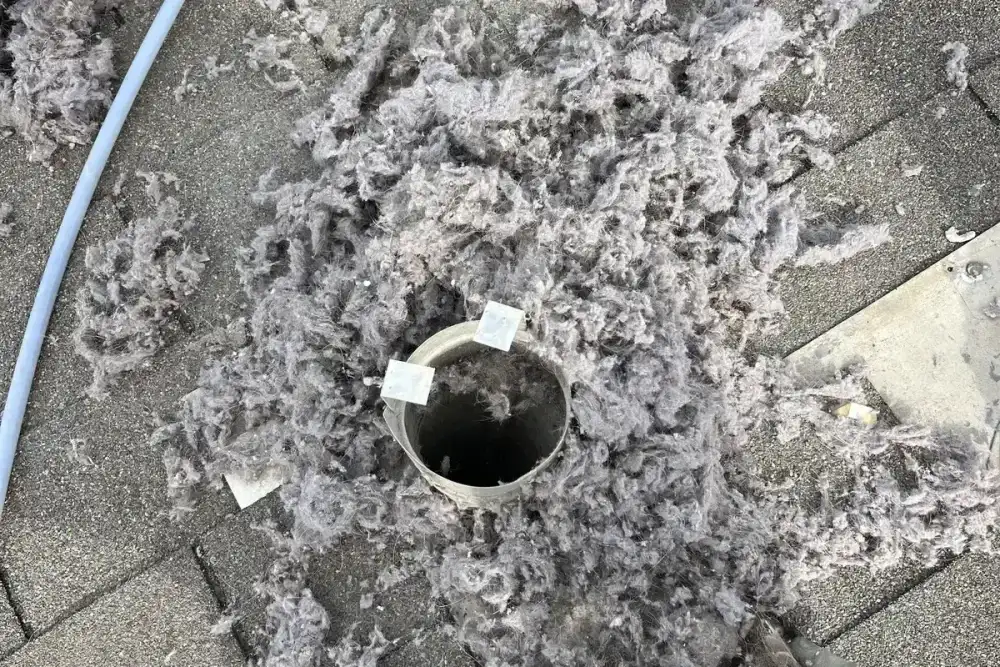
Most Austin homeowners go too long between cleanings. A quick inspection takes minutes and could prevent a fire.
Call (512) 601-4451Rate your home's indoor air quality in 2 minutes
How to Keep Birds Out of Your Dryer Vent for Good
The most reliable way to keep birds out of your dryer vent is installing the right type of vent cover before nesting season begins. Not all vent covers offer the same protection. Standard builder-installed plastic dampers have lightweight flaps that starlings and sparrows push open with minimal effort. Effective bird-exclusion covers use one of three designs: (1) a recessed spring-loaded damper with a deep housing birds cannot reach; (2) a louvered cover with angled slats that close under gravity and resist bird entry from any angle; (3) a cage-style guard with heavy-gauge wire mesh (1/4 inch openings) that blocks entry while allowing airflow and lint exhaust.
Timing matters as much as the cover type. Install bird-proof covers by late February - before Austin's nesting season begins in March. Birds scout nesting locations weeks before actively building, and once a bird has identified your dryer vent as a viable nesting spot, it becomes very persistent. Installing a cover after birds have already started investigating requires extra deterrents like reflective tape near the opening or a commercial bird repellent spray on the surrounding surface.
If birds have already nested in your dryer vent and you need the nest removed, Air Central handles the removal, cleaning, and new cover installation as a combined service. After clearing the nest and cleaning the full vent run, we install a pest-proof cover rated for bird exclusion so the situation does not repeat the following spring. Call us for same-season protection before nesting season peaks.
Dryer Vent Bird Nest Removal and Professional Cleaning Service
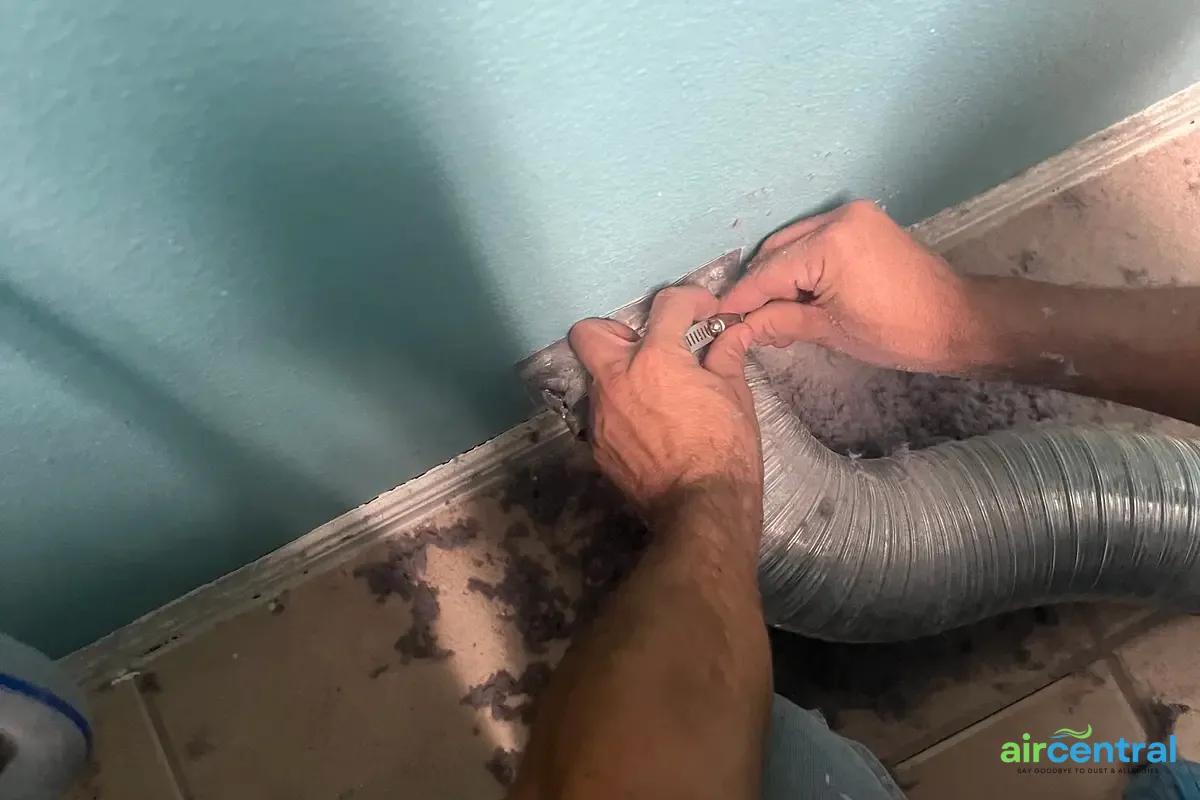
Birds in your dryer vent is not a situation for a standard lint cleaning kit from the hardware store. The nest removal requires careful extraction technique to avoid compacting the nesting material deeper into the duct, followed by a complete professional cleaning of the full vent run. Air Central provides clothes dryer vent cleaning service that covers bird nest removal, full vent brushing, airflow verification, and pest-proof cover installation in one appointment.
Searching for a dryer cleaner near me after discovering birds in your vent? Look for a company that offers dryer vent bird nest removal specifically, not just standard lint cleaning. The tools and technique differ. Our crew brings commercial rotary brushes, compressed air, and commercial vacuum equipment designed for the full vent path - not the 8-foot brush extension kits sold at home improvement stores that cannot reach Austin homes' typically long vent runs.
Professional dryer vent cleaning service after bird nest removal typically costs $89-$150 for standard runs, plus the cost of a pest-proof replacement cover ($20-$60). Combined, the service protects your home from fire risk, carbon monoxide, and repeat nesting in one visit. Air Central serves Austin and 27 surrounding communities with same-week availability. Call us before nesting season peaks in March.
Related Services
Learn more about our professional services related to this topic:
- Dryer Vent Cleaning - Clear lint buildup to prevent fires and cut drying time in half.
Want the full picture?
Read our complete guide: Dryer Vent Cleaning Austin: Complete Safety Guide (2026) →Have questions about dryer vent safety? Our team is available 7 days a week. Call us at (512) 601-4451 or visit our contact page.