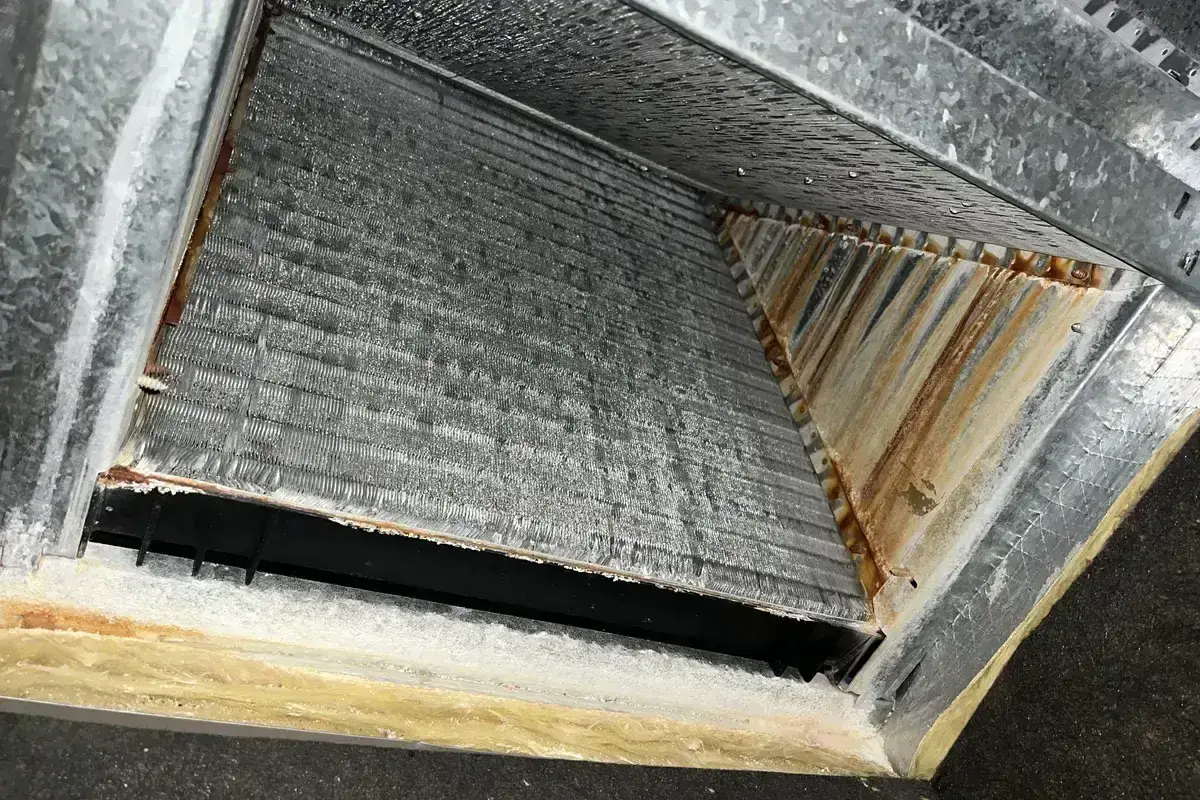
Austin averages 67% relative humidity year-round. Mold grows at 60%+. Your HVAC system is both your primary dehumidifier and, if neglected, the primary path for mold to spread through your home. Proper AC maintenance, duct cleaning, and humidity monitoring keep mold at bay.
Austin's Humidity Problem by the Numbers
Austin's average relative humidity: 67% (annual). Summer morning humidity routinely exceeds 80-90%. The dew point averages 60-70 degrees F from April through October. For context, mold begins growing at 60% relative humidity and thrives above 70%. This means Austin's natural outdoor humidity is above the mold growth threshold for roughly 8-9 months of the year.
Your home's building envelope and your AC system are the only things standing between Austin's humid outdoor air and mold growth on every indoor surface. When the HVAC system operates efficiently, it pulls moisture from indoor air during the cooling process, maintaining indoor humidity in the 45-55% range. When the system struggles - dirty coils, clogged drains, leaky ducts, or oversized equipment that short-cycles - indoor humidity rises and mold finds its opportunity.
How Your HVAC System Fights Mold
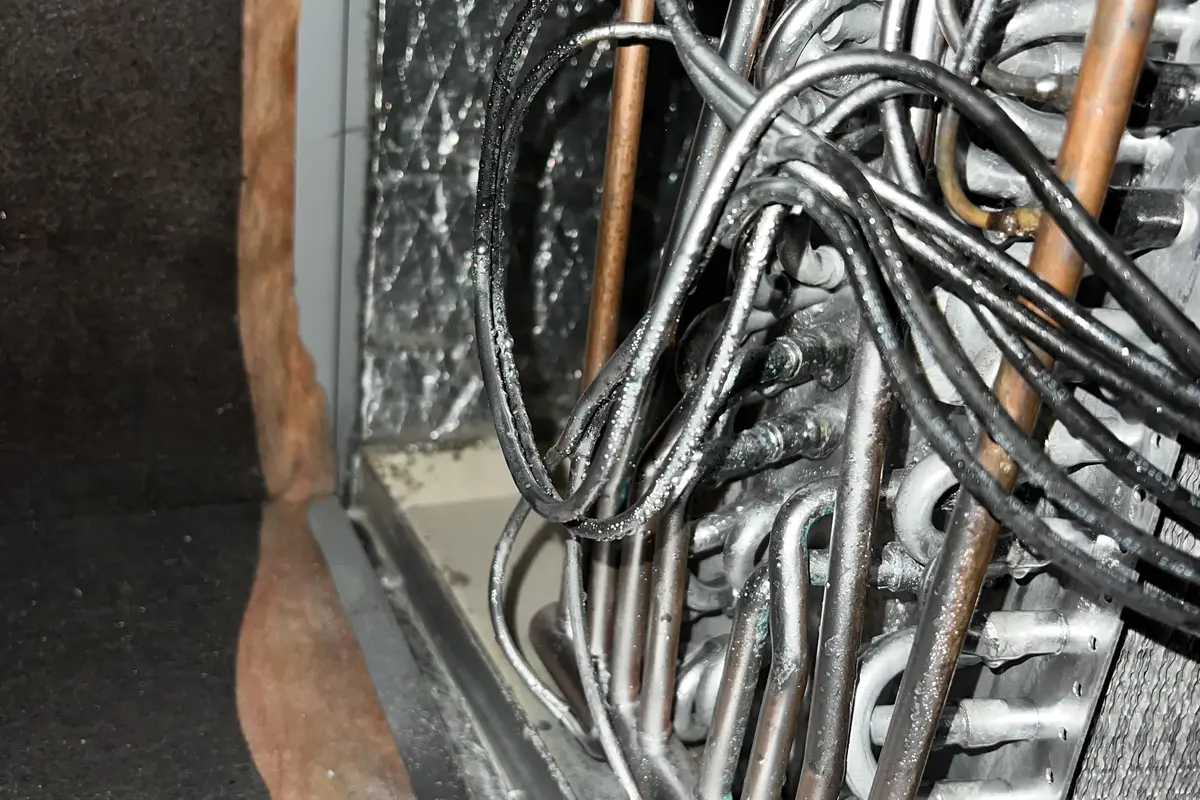
Your AC system is a dehumidifier by design. As warm, humid air passes over the cold evaporator coil, water vapor condenses out of the air and drains away through the condensate line. A properly functioning system removes 5-20 gallons of water from your indoor air per day during an Austin summer.
The cooling cycle must run long enough to dehumidify effectively. This is why oversized AC systems are a mold risk: they cool the air quickly but cycle off before removing adequate moisture. The air feels cold but remains humid. A properly sized system runs longer cycles that both cool and dehumidify. This is also why setting the fan to AUTO (not ON) matters - in ON mode, the fan runs continuously even between cooling cycles, re-evaporating moisture from the wet coil back into the air.
When Your HVAC Becomes the Problem
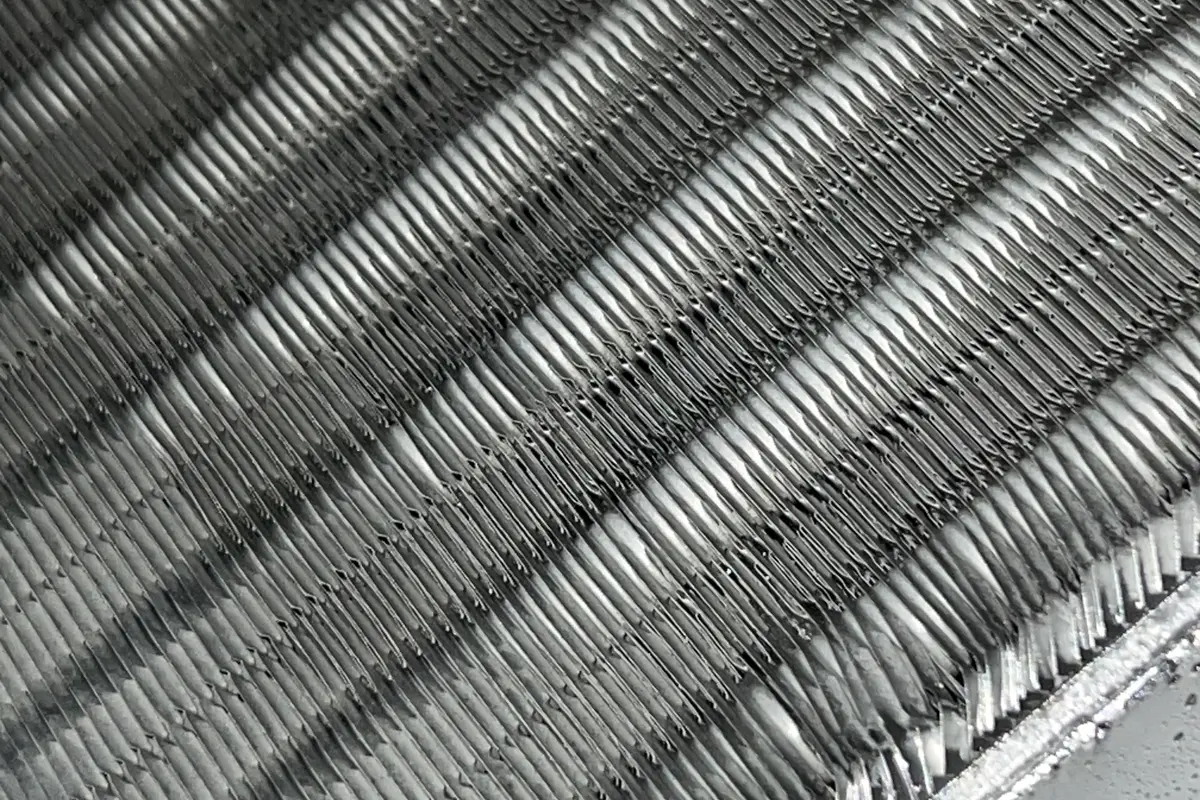
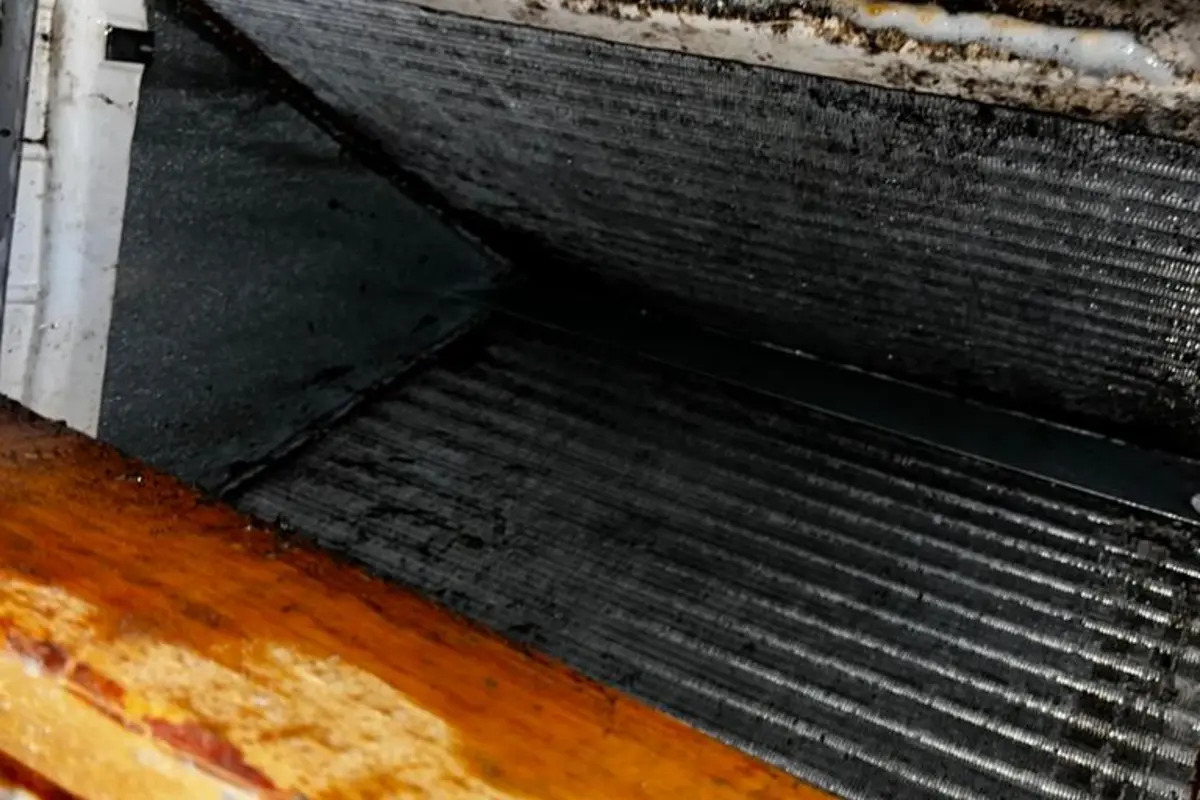
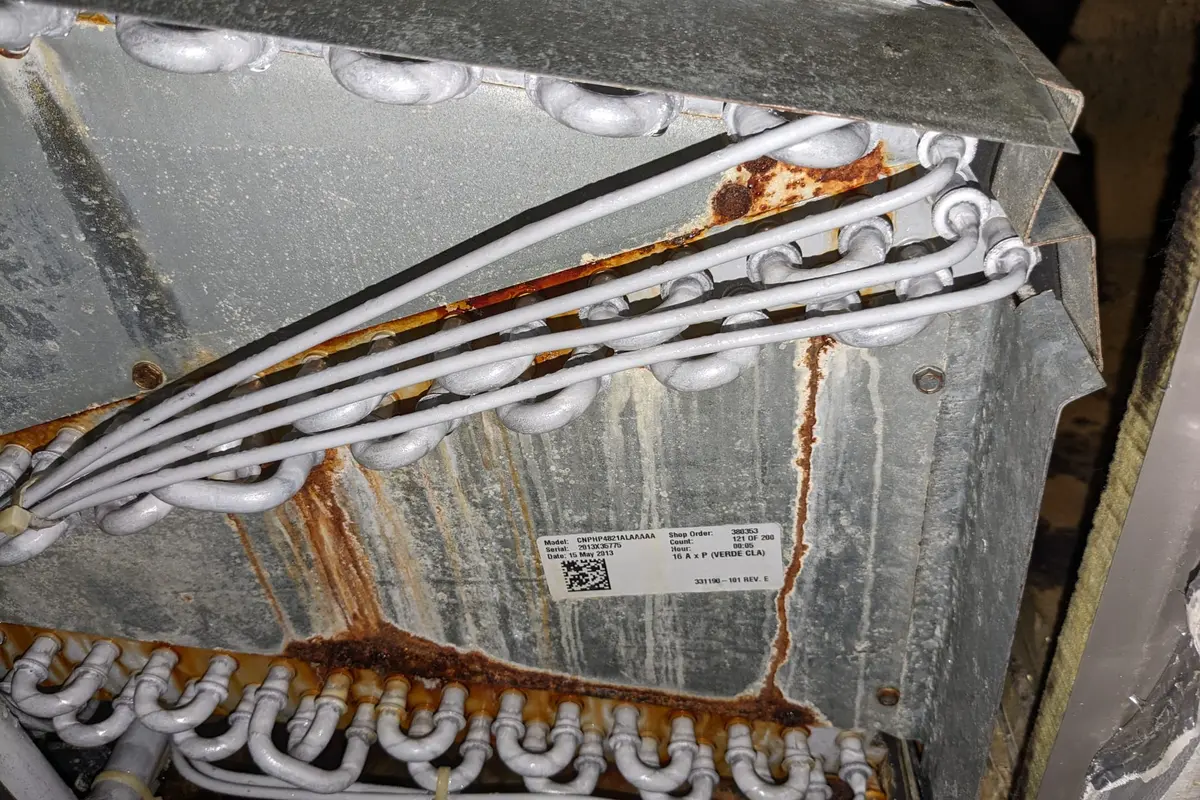
A dirty evaporator coil cannot dehumidify efficiently. Dust and biological buildup on the coil insulates it, reducing its ability to condense moisture. The coil still cools the air but does not remove as much water. Result: lower humidity reduction per cycle, higher indoor humidity, and more moisture remaining in the duct system.
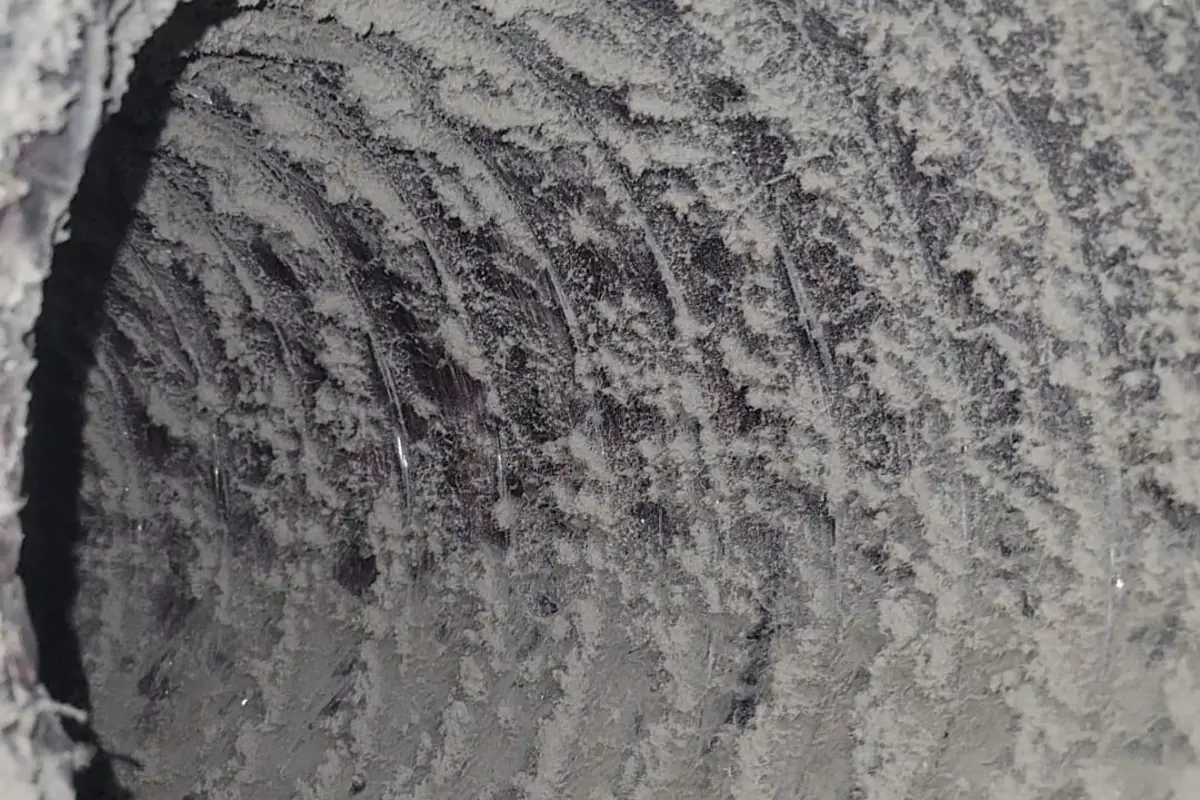
A clogged condensate drain backs up water into the drain pan and potentially into the air handler. Standing water in the drain pan is a direct mold growth site. If the backup is severe enough, water can overflow into ductwork, soaking duct insulation and creating widespread mold conditions that persist until the ducts are professionally cleaned and dried.
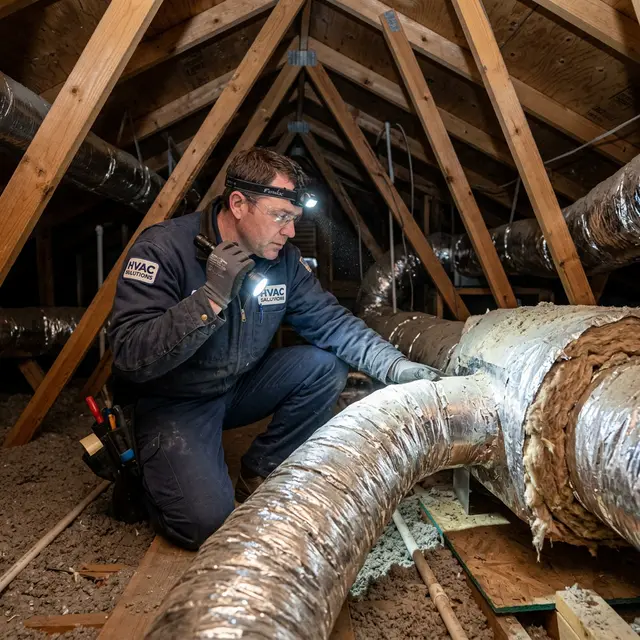
Air Central recommends annual coil cleaning, quarterly condensate drain maintenance, and duct inspection every 2-3 years for Austin homes. These maintenance steps keep your HVAC system functioning as a mold-prevention tool rather than becoming a mold distribution system. Call (512) 601-4451 to schedule preventive maintenance.
Concerned About Your Home's Air?
We provide professional air quality assessments for Austin homes. See what is in your ducts before deciding.
Call (512) 601-4451Rate your home's indoor air quality in 2 minutes
Signs Your HVAC Is Losing the Humidity Battle
Your HVAC system gives clear signals when it is failing to control indoor humidity. Recognizing these signs early prevents moisture problems from escalating into widespread contamination in your ductwork.
Condensation on windows is the most visible indicator. If you see moisture beading on the interior surface of windows - especially in the morning or when the AC is running - indoor humidity is too high. In Austin, this happens most often in summer when outdoor dew points climb into the 70s and the AC cannot remove moisture fast enough.
A musty or stale odor when the system starts up indicates biological growth somewhere in the system, usually on the evaporator coil, in the drain pan, or inside ductwork near the air handler. The smell is caused by microbial volatile organic compounds (MVOCs) released by active fungal colonies. If the smell is strongest during the first few minutes of operation and then fades, the growth is likely concentrated near the air handler where the initial burst of air dislodges spores.
Rooms that feel clammy even when the thermostat reads the right temperature point to a humidity problem rather than a temperature problem. The AC may be cooling adequately but short-cycling before it removes enough moisture. This is especially common with oversized systems - they satisfy the thermostat quickly but do not run long enough per cycle to condense sufficient water from the air.
A hygrometer reading consistently above 55% while the AC is running is the definitive signal. Place one in a central hallway, away from the kitchen and bathrooms. If humidity stays elevated, the system needs attention - the coil may be dirty, the drain may be partially clogged, or the system may be oversized for your home.
The Dehumidifier Question: When AC Is Not Enough
A properly functioning air conditioning system is an effective dehumidifier for most Austin homes, removing 5-20 gallons of water from indoor air per day during summer. But there are situations where the AC alone cannot maintain humidity below the 50% threshold that prevents dust mite reproduction and mold growth.
Homes with older or oversized AC systems frequently struggle with humidity. An oversized system cools the air too quickly, cycling off before the evaporator coil has run long enough to condense adequate moisture. Replacing an oversized system is the ideal solution, but a whole-home dehumidifier provides an immediate fix at lower cost. These units install in the ductwork or alongside the air handler and remove moisture independently of the cooling cycle.
Homes in heavily wooded areas around Austin - particularly near Lake Travis, Bee Cave, Spicewood, and the Barton Creek greenbelt - experience higher ambient humidity due to transpiration from dense tree canopy. These homes may need supplemental dehumidification even with a properly sized AC system. Similarly, pier-and-beam foundation homes (common in older Austin neighborhoods like Hyde Park, Travis Heights, and Bouldin Creek) absorb ground moisture that the AC must continuously combat.
The EPA recommends keeping indoor relative humidity between 30-50% to minimize biological contamination. A standalone dehumidifier in the most humidity-prone area (usually the room closest to the air handler or the lowest level of the home) can supplement your AC. Look for units rated to handle your square footage, with a built-in hygrometer and auto-shutoff. Empty or drain the collection tank regularly - a full dehumidifier that stops running defeats the purpose.
For whole-home solutions, a ducted dehumidifier installed by a professional integrates with your existing HVAC system and treats all the air passing through the ducts. These units run $1,500-$3,000 installed but provide precise humidity control that a standard AC system cannot match, especially during Austin's most humid months from May through September.
Related Services
Learn more about our professional services related to this topic:
- Air Duct Cleaning - Remove dust, allergens, and debris from your entire HVAC system for cleaner indoor air.
- Air Duct Inspection - Diagnose leaks, blockages, and efficiency issues with HD camera inspection.
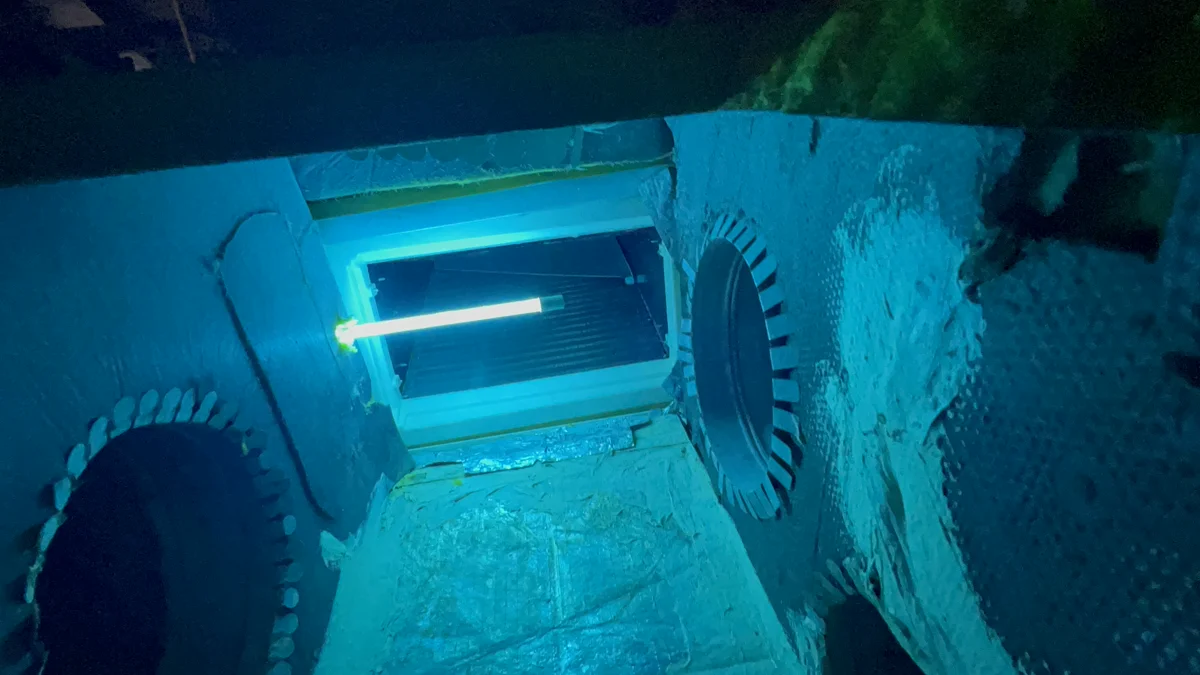
- UV Lighting System - Eliminate bacteria and allergens inside your HVAC with UV-C light technology.
Want the full picture?
Read our complete guide: Indoor Air Quality in Austin: The Complete Guide (2026) →Have questions about indoor air quality? Our team is available 7 days a week. Call us at (512) 601-4451 or visit our contact page.