Austin's average humidity sits between 60-80% for much of the year, which creates real indoor air quality problems including accelerated dust accumulation in ductwork, biological growth on evaporator coils, and increased allergen activity. Controlling indoor humidity to 30-50% through proper HVAC maintenance, duct cleaning, and targeted solutions like UV lighting dramatically improves air quality.
Austin's Humidity Problem by the Numbers
Austin is not Houston, but it is far from dry. Average relative humidity sits around 65-75% during morning hours for most of the year, dipping to 45-55% in afternoon heat. From April through October, overnight humidity regularly exceeds 80%. That moisture gets pulled into your HVAC system every time it cycles, and it affects everything from your evaporator coil to the inside of your ductwork.
The problem compounds because Austin homes run their AC systems 8-10 months per year. Every cooling cycle pulls warm, humid air across the evaporator coil, where moisture condenses and drains away. But the coil stays damp between cycles - and in a dark, enclosed air handler, that moisture creates an ideal environment for biological contaminants that get blown into every room of your house.
How Humidity Affects Your Ductwork
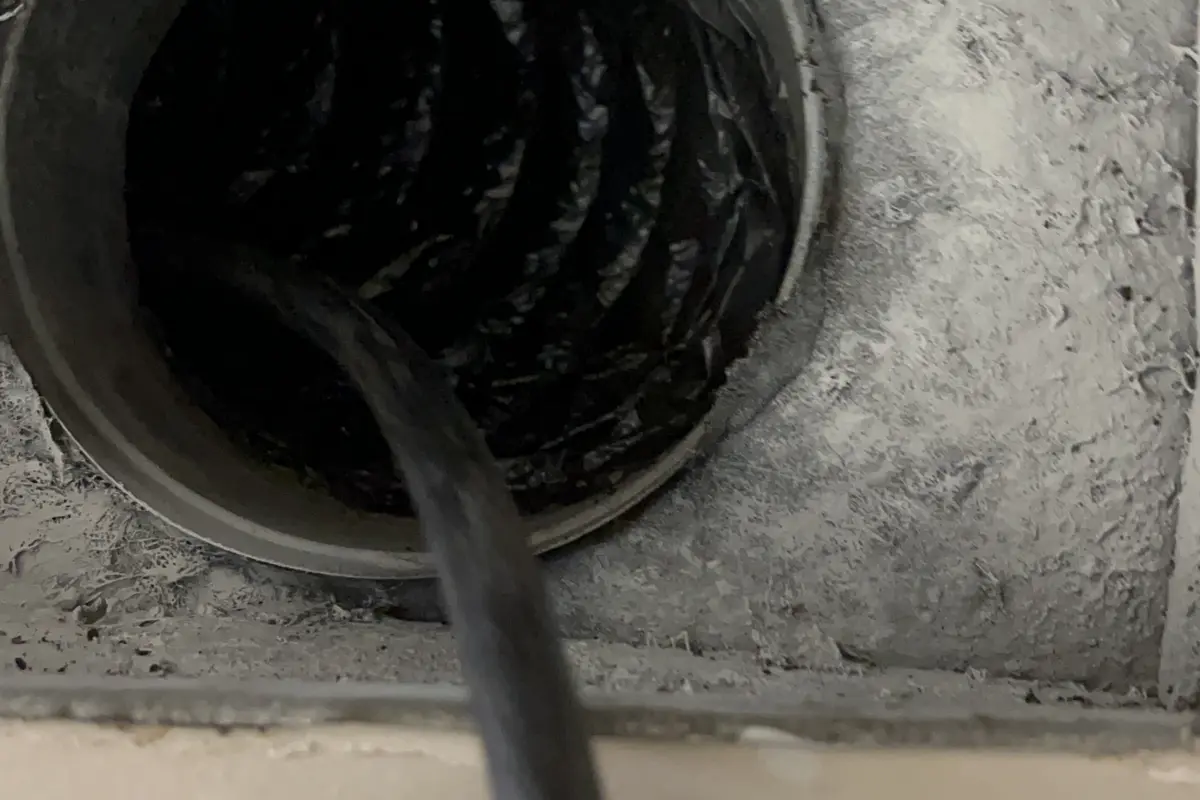
Most Austin homes have ductwork running through unconditioned attic space where temperatures swing from 150+ degrees in summer afternoons to the 60s overnight. Those temperature swings cause condensation inside the ducts, especially on cool mornings when humid air hits surfaces that cooled overnight. Over time, that moisture creates the perfect conditions for biological buildup inside the duct system.
Flex duct - the most common ductwork material in Austin homes built after 1990 - has an insulated inner liner that traps moisture more readily than sheet metal. When you combine flex duct in a hot attic with Austin's humidity levels, the interior surfaces accumulate contamination faster than most homeowners realize. A camera inspection reveals what is actually happening inside your ducts, and the results in humid climates like Austin are often surprising.
Your Evaporator Coil: The Humidity Battleground
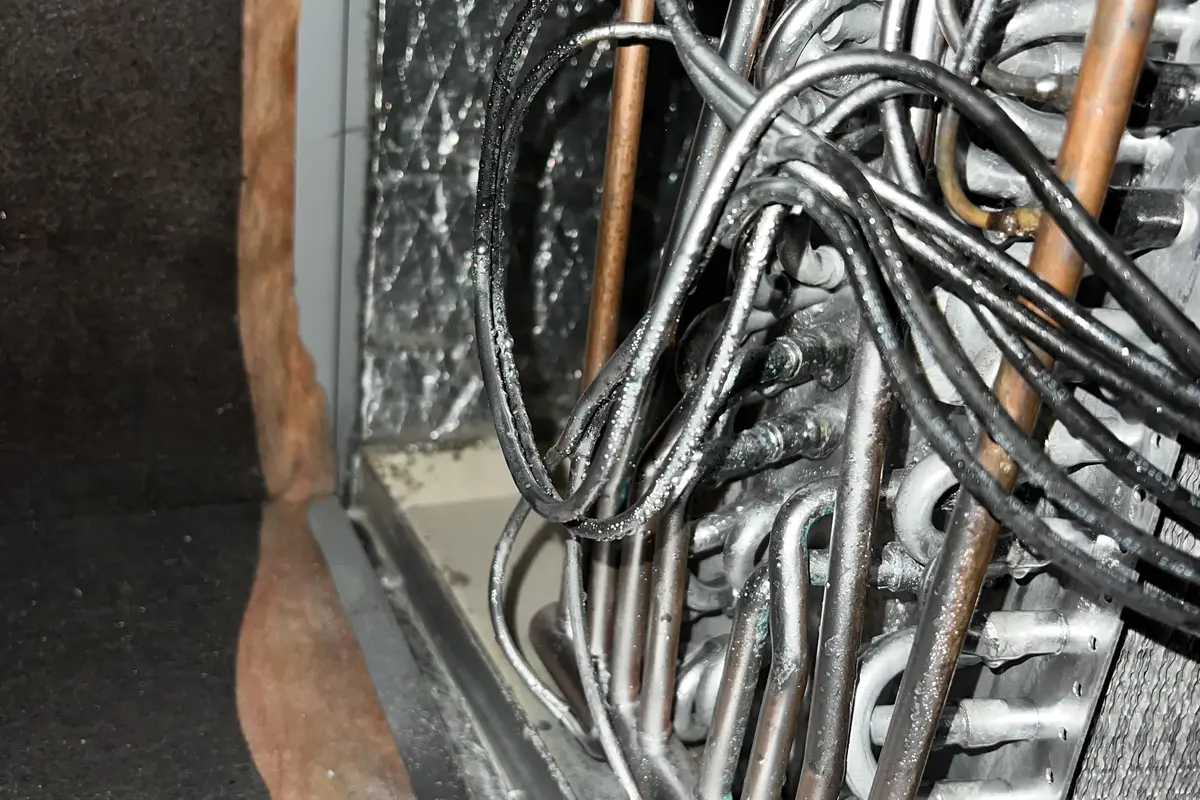
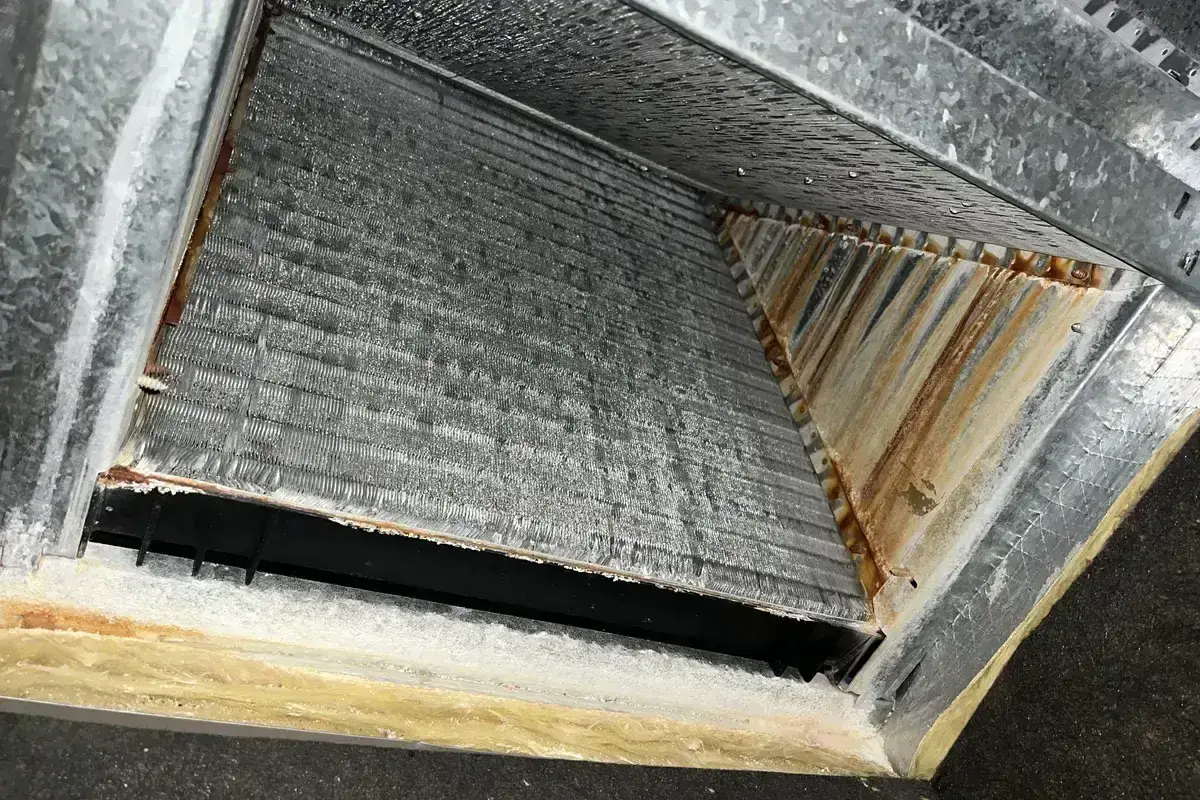
The evaporator coil is where humidity hits hardest. This component sits inside your air handler and stays wet for hours at a time as it pulls moisture from your indoor air. In Austin, where your AC runs most of the year, the coil rarely dries completely. The combination of constant moisture, darkness, and organic material from the air stream creates conditions that standard filters cannot fully prevent.
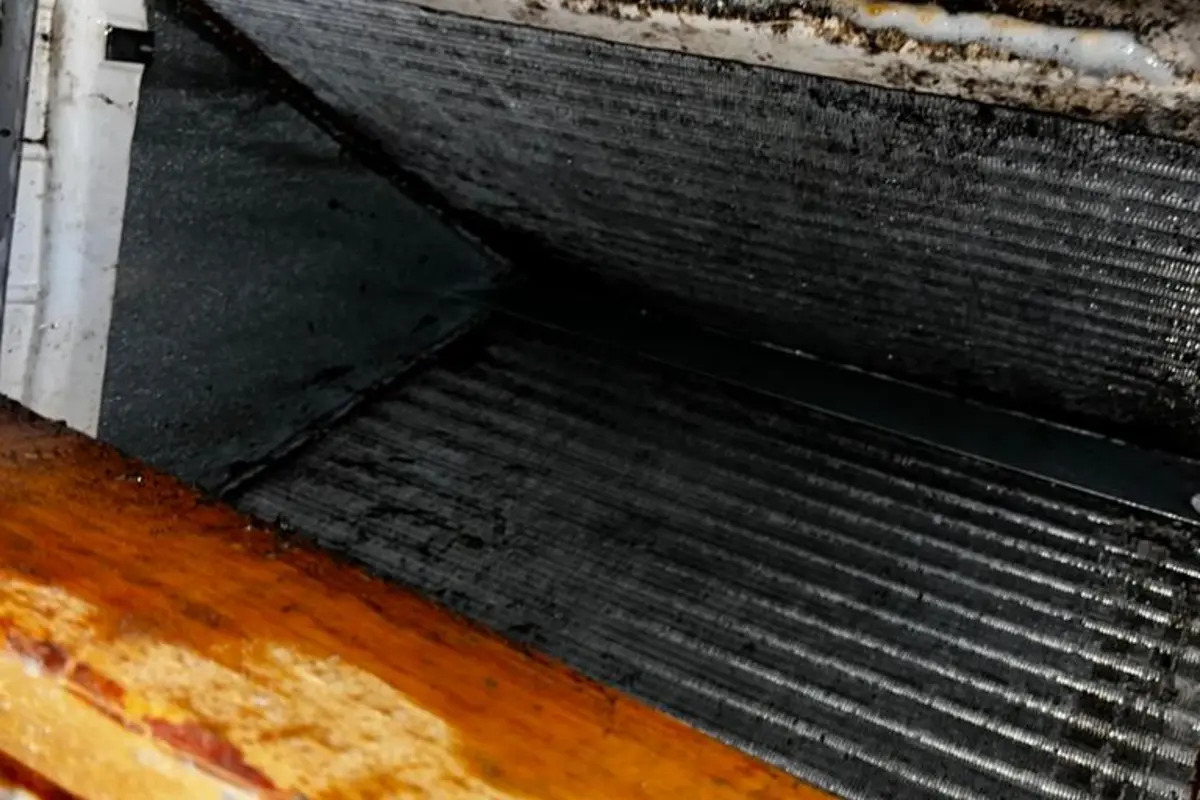
When biological contaminants coat the coil fins, two things happen. First, heat transfer drops because the buildup insulates the coil surface, forcing your system to run longer and use more energy. Second, air passing over the contaminated coil picks up particles and odors that get distributed through your ductwork to every room. That musty smell many Austin homeowners notice from their vents in summer is almost always coming from the evaporator coil.
Concerned About Your Home's Air?
We provide professional air quality assessments for Austin homes. See what is in your ducts before deciding.
Call (512) 601-4451Rate your home's indoor air quality in 2 minutes
Practical Steps to Control Indoor Humidity
Keep your AC system well-maintained. A properly functioning system removes 15-20 gallons of water from your indoor air per day during Austin summers. If your system is low on refrigerant, has a dirty coil, or is oversized for your home, it short-cycles and does not run long enough to dehumidify effectively.
Do not set your thermostat fan to 'on' during humid months unless you have a UV system or dehumidifier. The fan-on setting recirculates air continuously, but the compressor cycles off periodically - and when it does, moisture that collected on the coil evaporates back into your airstream. The 'auto' setting lets the coil drain between cycles.
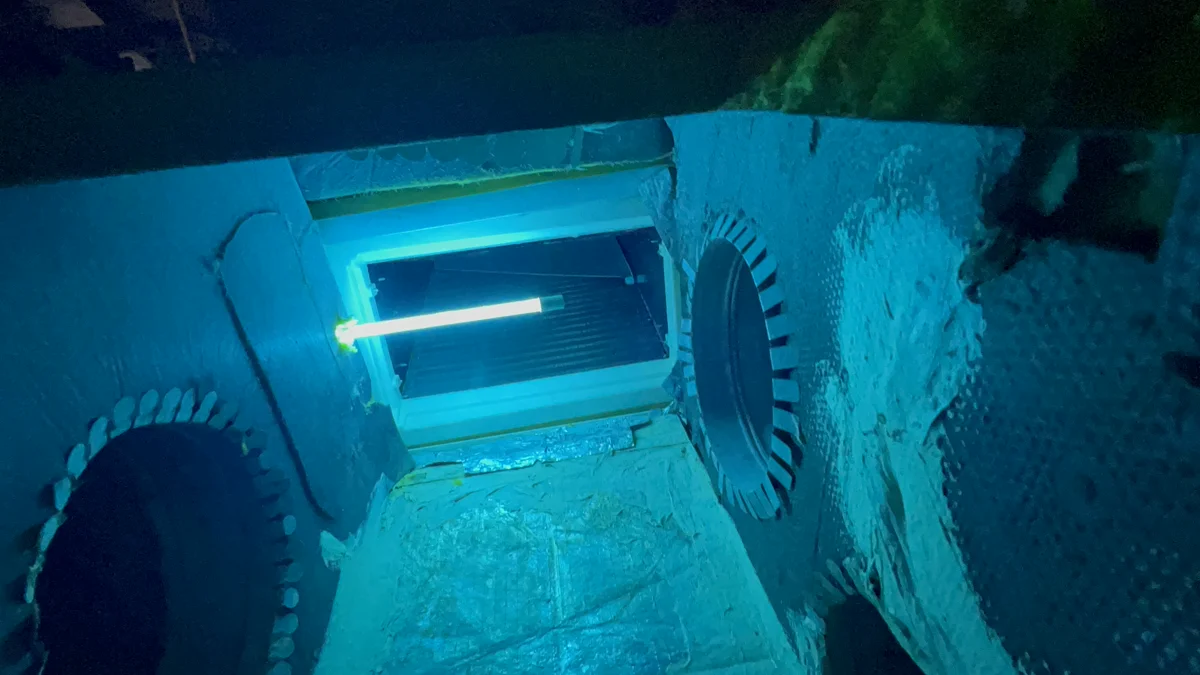
Consider a UV-C lighting system installed at the evaporator coil. UV light does not remove humidity, but it prevents biological contamination from establishing on the coil surface, eliminating the musty odors and airborne particles that humidity creates inside your HVAC system. For homes with persistent humidity problems, a whole-home dehumidifier integrated with your HVAC system keeps indoor levels in the 30-50% range regardless of what is happening outside.
When to Get Professional Help
If you notice musty smells from your vents, see moisture around your air handler, or your home feels clammy even with the AC running, it is time for a professional evaluation. Air Central provides HD camera inspections that show you exactly what is happening inside your ductwork and at the evaporator coil. If biological contamination is present, a thorough duct cleaning combined with a UV lighting system addresses both the existing problem and prevents it from returning.
Related Services
Learn more about our professional services related to this topic:
- Air Duct Cleaning - Remove dust, allergens, and debris from your entire HVAC system for cleaner indoor air.
- Air Duct Inspection - Diagnose leaks, blockages, and efficiency issues with HD camera inspection.
- UV Lighting System - Eliminate bacteria and allergens inside your HVAC with UV-C light technology.
Want the full picture?
Read our complete guide: Indoor Air Quality in Austin: The Complete Guide (2026) →Have questions about indoor air quality? Our team is available 7 days a week. Call us at (512) 601-4451 or visit our contact page.