Austin homes need R-38 to R-49 attic insulation per the Department of Energy (Climate Zone 2). Most homes built before 2010 are under-insulated. Blown-in insulation is one of the most cost-effective home improvements available. Proper attic insulation can reduce energy bills by 10-20% and typically pays for itself within 3-5 years in Austin's extreme climate.
Why Attic Insulation Is Critical in Austin's Climate
Austin sits in Department of Energy Climate Zone 2, which means extreme heat is the primary energy challenge. In summer, attic temperatures in Central Texas homes routinely reach 140-160 degrees Fahrenheit. Without adequate insulation, that heat radiates down into your living space, forcing your AC to work overtime. Your air conditioning is not just cooling your home - it is fighting a battle against a superheated attic that acts like a radiator directly above your ceiling.
The energy impact is enormous. The Department of Energy estimates that 25-30% of a home's heating and cooling energy is lost through the attic. In Austin, where summer electricity bills can exceed $300-$400 per month, that translates to $75-$120 per month in wasted energy during peak cooling season. Over a year, inadequate attic insulation can cost an Austin homeowner $500-$1,000 in unnecessary energy expense.
I have inspected hundreds of Austin attics, and the pattern is consistent: homes built before 2000 typically have R-19 to R-26 insulation - well below the current recommended R-38 to R-49. Even homes built in the 2000s often have insulation that has settled, compressed, or deteriorated below effective levels. Many homeowners do not realize their insulation is inadequate because they have never looked in their attic or had a professional evaluation.
The good news is that attic insulation is one of the most cost-effective home improvements you can make. Unlike a new HVAC system that costs $8,000-$15,000, insulation upgrades for most Austin homes cost a few thousand dollars and pay for themselves through energy savings within 3-5 years. After that payback period, the savings continue for the 15-20 year lifespan of the insulation.
"I have been in hundreds of Austin attics, and 8 out of 10 homes built before 2005 are under-insulated for our climate," says Nessi Ziv, owner of Air Central. "The worst case I saw was a Pflugerville home with R-11 in the attic - the homeowner was spending $450 a month in summer. After upgrading to R-38, their August bill dropped by $140."
Understanding R-Value: What Austin Homes Need
R-value measures insulation's resistance to heat flow. The higher the R-value, the better the insulation performs. For Austin (DOE Climate Zone 2), the recommended attic insulation level is R-38 to R-49. That translates to roughly 10-14 inches of blown-in fiberglass or 10-13 inches of blown-in cellulose.
R-38 is the minimum you should target. This provides solid thermal resistance and meets the International Energy Conservation Code (IECC) requirement for new construction in our zone. If your existing insulation measures R-30 or below, you are spending significantly more on cooling and heating than necessary.
R-49 is the ideal target for maximum efficiency. The incremental cost to go from R-38 to R-49 is relatively small compared to the additional energy savings, especially given Austin's extreme summer temperatures. For homes that plan to install solar panels or are pursuing overall energy efficiency, R-49 makes the investment math very attractive.
An important nuance: R-value is not just about thickness. Gaps, compression, and settling reduce effective R-value even if the insulation was originally installed to the correct depth. A blanket of R-38 insulation with gaps around light fixtures, HVAC boots, and attic access points may deliver only R-20 of actual thermal resistance. This is why professional installation that includes air sealing is so important.
To check your current insulation level, measure the depth of existing insulation in your attic at several points. Blown-in fiberglass provides approximately R-2.5 per inch. Blown-in cellulose provides approximately R-3.5 per inch. Fiberglass batts (the pink or yellow rolls) provide R-3.2 per inch. If your measurements show less than 10 inches of coverage, you are under-insulated for Austin's climate.
Blown-In vs Batt Insulation: Which Is Better for Austin
For attic insulation upgrades in Austin, blown-in insulation is almost always the better choice. Here is why.
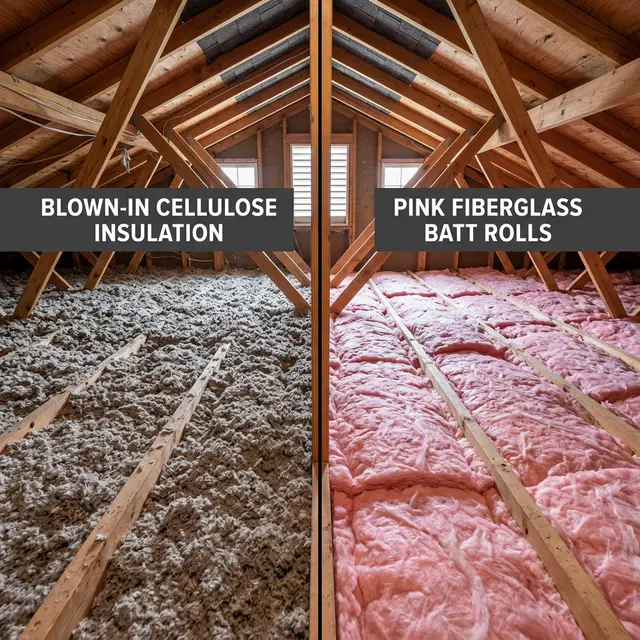
Blown-in insulation (either fiberglass or cellulose) conforms to every cavity, gap, and irregular space in your attic. It flows around wiring, plumbing, ductwork, and structural members without leaving gaps. In older Austin homes with complicated framing, multiple levels, and obstructions, blown-in provides significantly more consistent coverage than batts.
Batt insulation (the rolls of fiberglass or mineral wool) requires precise cutting and fitting around every obstacle. In practice, gaps around pipes, wiring, HVAC equipment, and irregular framing are almost inevitable. Each gap creates a thermal bridge where heat transfers freely. Studies show that even 5% gaps in batt insulation can reduce effective R-value by 25%.
For existing homes that already have some insulation, blown-in can be added directly on top without removing the old material (assuming the existing insulation is dry and undamaged). This makes attic insulation upgrades faster and more affordable - most Austin homes can be upgraded in a single day.
The one scenario where batts may be preferred is in new construction where the attic floor is completely open and accessible before drywall installation. In that case, batts can be installed quickly and precisely. But for retrofit projects in existing Austin homes, blown-in is the clear winner.
Between blown-in fiberglass and blown-in cellulose, both perform well in Austin. Fiberglass is lighter, does not absorb moisture, and does not settle as much over time. Cellulose provides slightly higher R-value per inch (R-3.5 vs R-2.5), is made from recycled materials, and provides better sound dampening. We install both and recommend based on each home's specific needs.
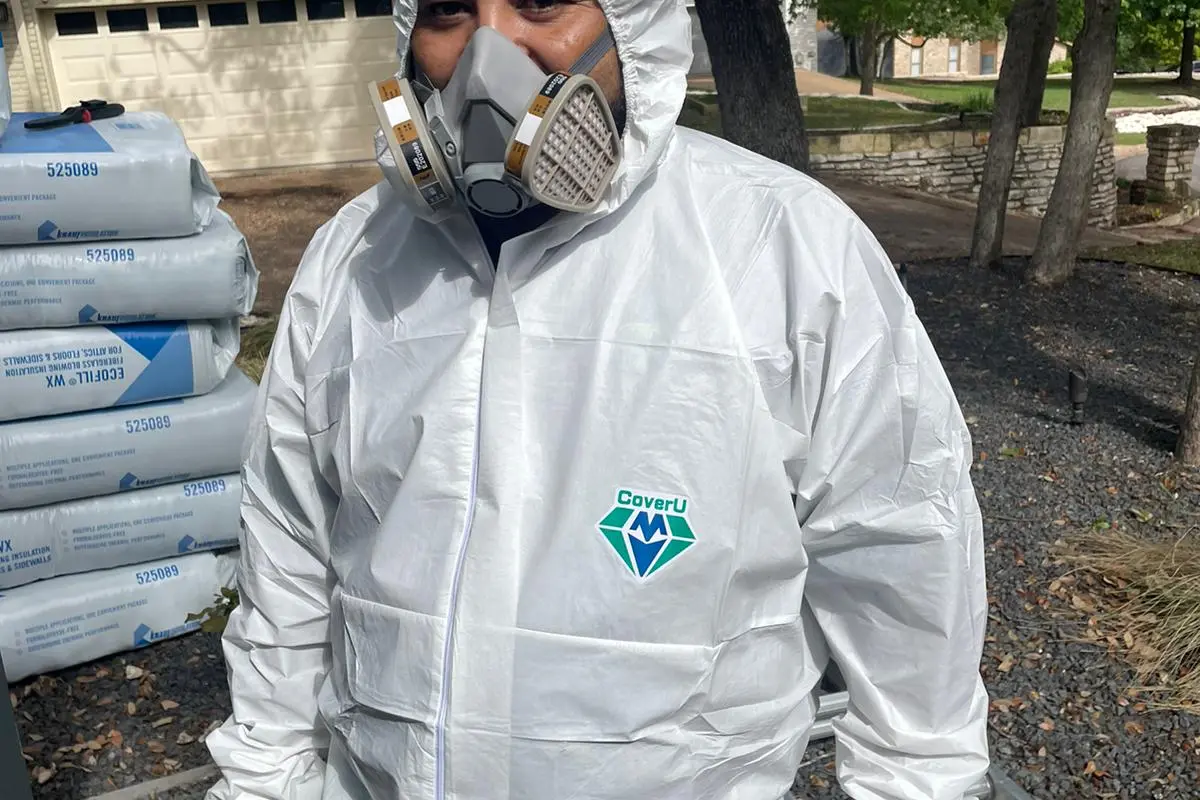
Signs Your Austin Home Needs Better Insulation
High energy bills relative to similar homes in your neighborhood are the most common indicator. If your electricity bill runs significantly higher than neighbors with similar-sized homes and similar HVAC equipment, inadequate insulation is a likely culprit. Austin Energy provides comparison data on your monthly statement that can help identify this pattern.
Uneven temperatures between rooms, particularly between upstairs and downstairs, often point to insulation deficiencies. If your second floor is significantly warmer than the first floor in summer (more than 3-4 degrees), attic insulation is probably inadequate. Heat radiating from the under-insulated attic affects upper rooms first.
Your HVAC system runs constantly during summer without maintaining the set temperature. If the system runs all day during Austin's July and August heat and still cannot keep the house at 76 or 78 degrees, inadequate insulation is forcing it to fight an unwinnable battle against attic heat.
You can feel temperature differences near the ceiling. Stand in the center of a room and hold your hand near the ceiling. If it feels noticeably warmer than air at chest height, heat is radiating through insufficient insulation. In a well-insulated home, ceiling temperature should be within 2-3 degrees of room temperature.
Visible insulation in the attic is thin, uneven, or compressed. If you can see the tops of ceiling joists above the insulation, you do not have enough. Properly installed R-38 insulation should completely cover joists with several inches to spare.
Ice dams in rare Austin freezes. During the February 2021 Winter Storm Uri and similar events, homes with poor attic insulation experienced ice dam issues because heat escaping through the attic melted rooftop snow and ice, which then refroze at the eaves. While rare in Austin, this extreme weather event highlighted insulation deficiencies across the region.
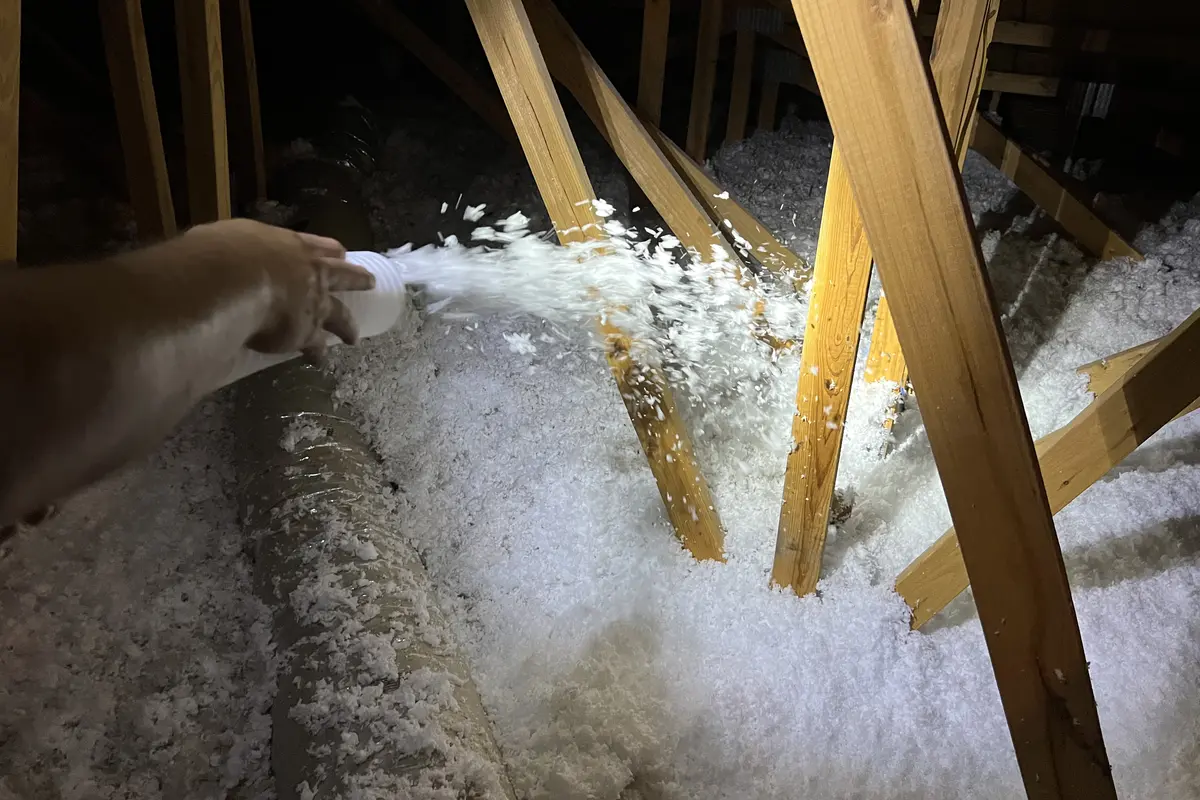
Attic Insulation Cost in Austin
For blown-in insulation installed professionally, the cost depends on the R-value target, attic size, accessibility, and whether existing insulation needs to be removed or can be supplemented.
A typical Austin home (1,500-2,500 square foot attic footprint) requires an investment of a few thousand dollars for a complete insulation upgrade to R-38. Reaching R-49 adds approximately 20-30% to the cost. Pricing includes material, labor, and cleanup.
Topping off existing insulation is the most cost-effective approach. If your home already has R-19 of settled insulation and you want to reach R-38, we add approximately 6-8 inches of blown-in material on top of the existing layer. This is faster and less expensive than full removal and replacement.
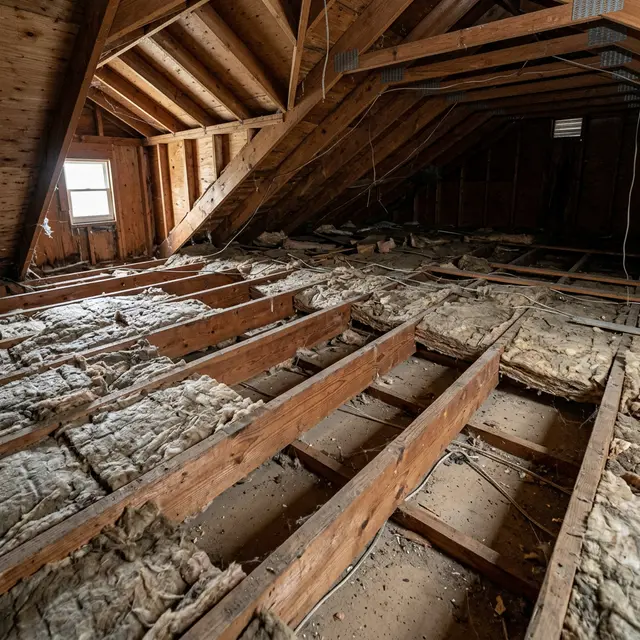
Full insulation removal before re-insulating adds to the overall cost. Removal is necessary when existing insulation is contaminated (rodent damage, water damage, significant debris), when the existing material is vermiculite (potential asbestos concern in homes built before 1990), or when air sealing work needs to be done at the attic floor before insulating.
Air sealing - closing gaps around light fixtures, plumbing penetrations, HVAC boots, and the attic access door - is typically an additional charge but dramatically improves the effective performance of the new insulation. Without air sealing, warm air bypasses the insulation through these gaps, reducing its real-world effectiveness.
Many Austin homeowners are eligible for utility rebates through Austin Energy or their local electric cooperative. These rebates can offset 10-30% of the insulation cost. Additionally, the federal Energy Efficient Home Improvement Credit (25C) provides a tax credit of up to 30% of insulation costs, with a maximum of $1,200 per year. We help homeowners identify and apply for available incentives.
The Insulation Installation Process
A professional attic insulation upgrade in an Austin home typically takes one day. Here is what to expect.
The technician begins with an attic inspection to assess current insulation levels, identify air leaks, check for moisture damage, and evaluate the overall condition of the attic space. This inspection takes 30-45 minutes and informs the specific scope of work.
If air sealing is included, the technician seals gaps around all penetrations using expanding foam, caulk, or metal flashing as appropriate for each type of opening. Top plates (where interior walls meet the attic floor), electrical boxes, plumbing vents, and HVAC connections are common sealing points. Air sealing is done before insulation is added so these areas are accessible.
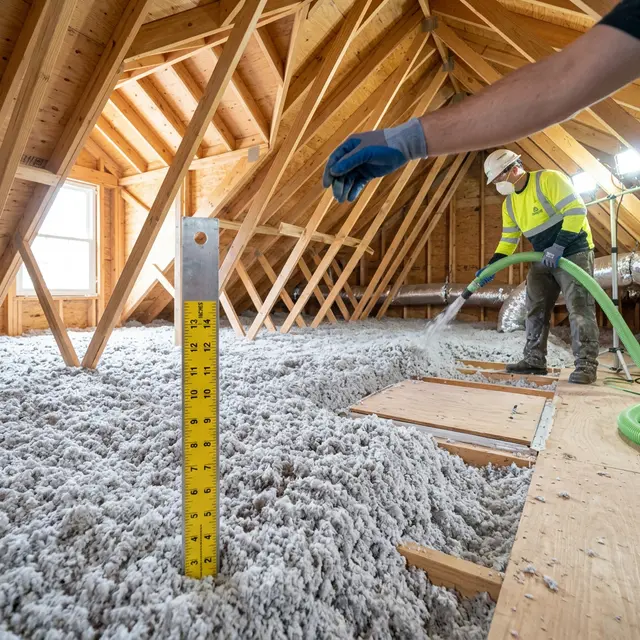
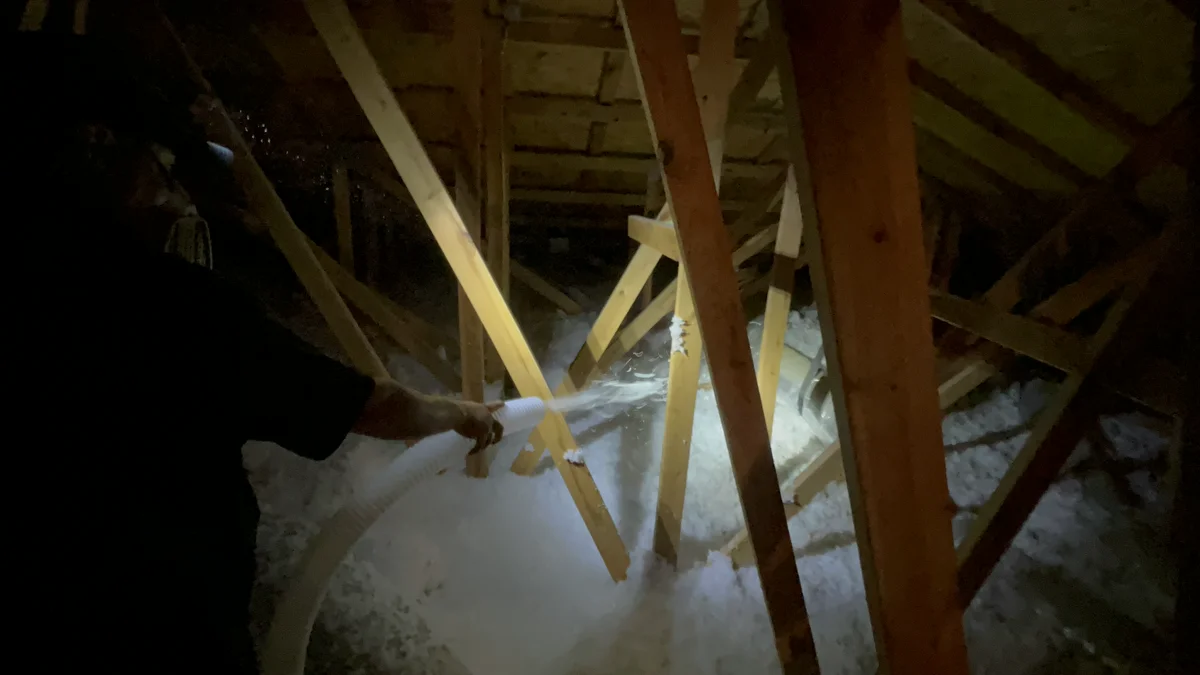
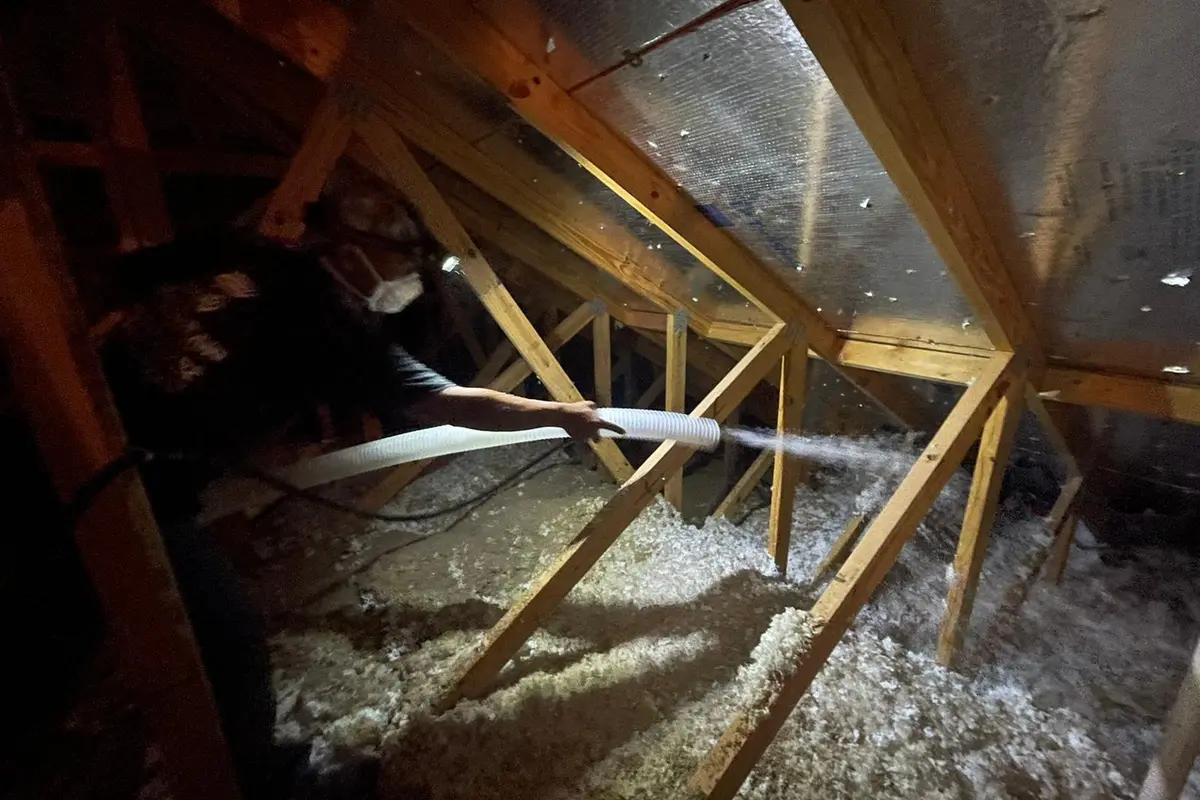
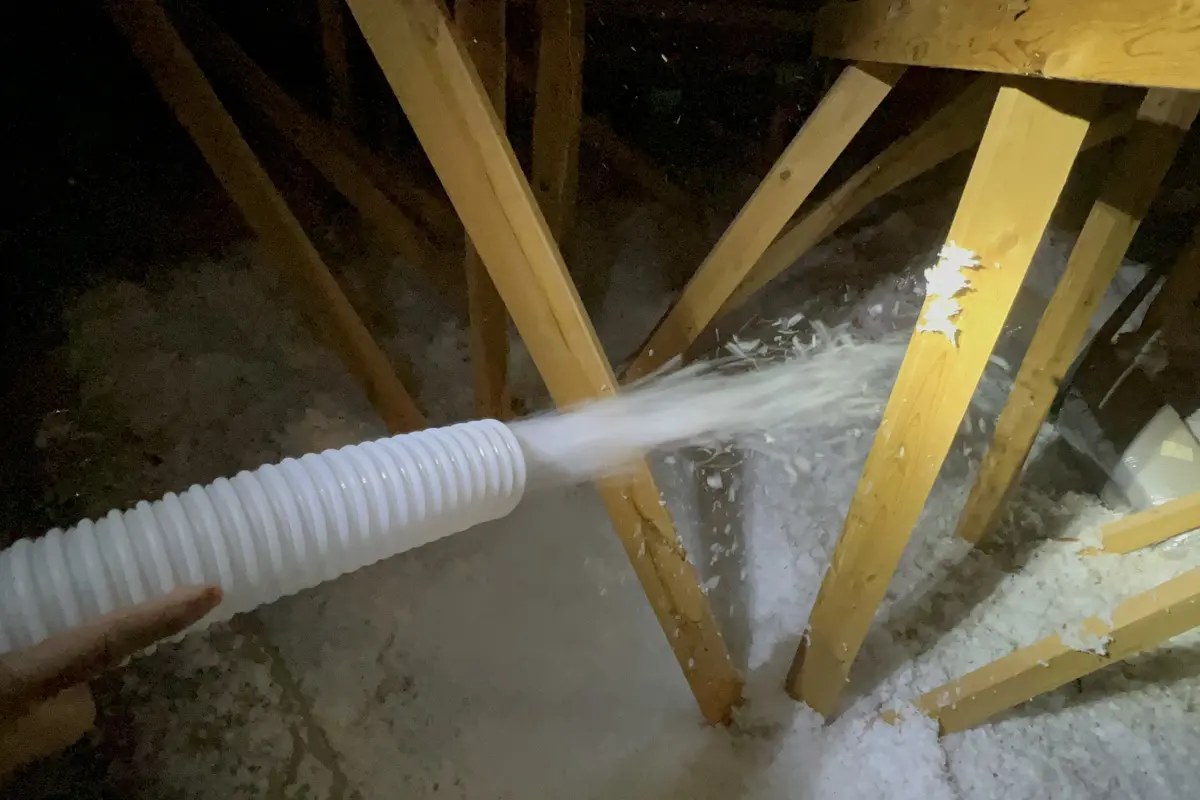
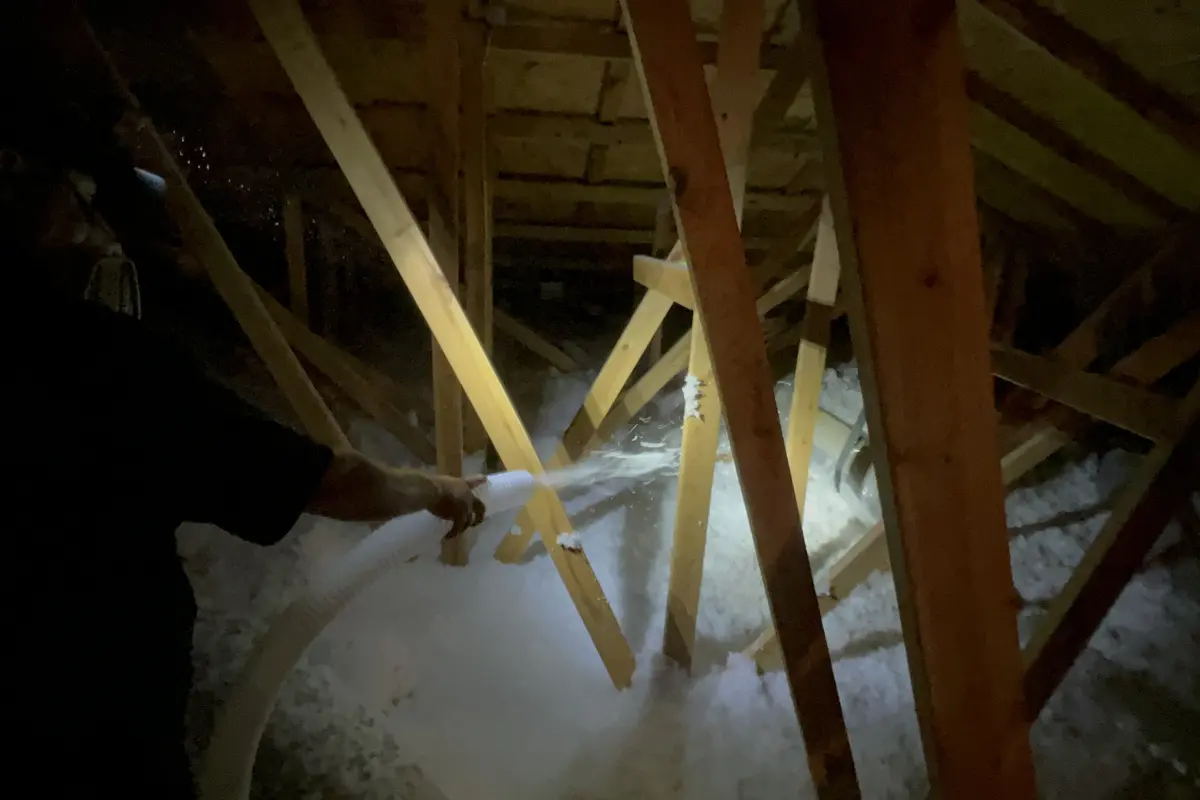
For blown-in installation, insulation material is loaded into a commercial blowing machine positioned outside the home. A long hose extends from the machine into the attic, and the technician distributes insulation evenly across the attic floor to the specified depth. Depth markers or rulers placed at intervals verify consistent coverage.
The technician ensures insulation extends fully to the eaves (using baffles to maintain soffit ventilation) and covers the entire attic floor without gaps. Areas around recessed lights require special attention - IC-rated (insulation contact) fixtures can be covered, but non-IC fixtures need clearance to prevent fire hazard.
After installation, the attic access door or hatch is insulated and weatherstripped. This often-overlooked detail prevents a major air leak pathway. The technician verifies final insulation depth at multiple points and photographs the completed work for documentation.
Cleanup is straightforward - blown-in insulation stays in the attic, and the blowing machine and hoses are removed when complete. You can typically use your HVAC system normally throughout the entire process.
Wondering About Your Insulation Level?
We measure your current R-value and show you exactly where you stand. Professional attic assessments available.
Call (512) 601-4451Estimate how much you could save on energy bills
Attic Ventilation: The Partner to Good Insulation
Insulation and ventilation work together. Insulation slows heat transfer from the attic to your living space, while ventilation removes hot air from the attic itself, reducing the temperature differential that insulation must resist.
A properly ventilated Austin attic uses the stack effect: cool air enters through soffit vents at the eaves, absorbs heat as it rises through the attic, and exits through ridge vents, gable vents, or roof vents at the peak. This continuous airflow keeps attic temperatures closer to outdoor ambient (120-130 degrees rather than 150-160 degrees), reducing the workload on both your insulation and your HVAC system.
The building code requires 1 square foot of net free ventilation area for every 150 square feet of attic floor space (or 1:300 with a proper balanced system). Many older Austin homes fall short of this standard, particularly homes where soffit vents have been painted over, blocked by insulation pushed against the eaves, or were never installed.
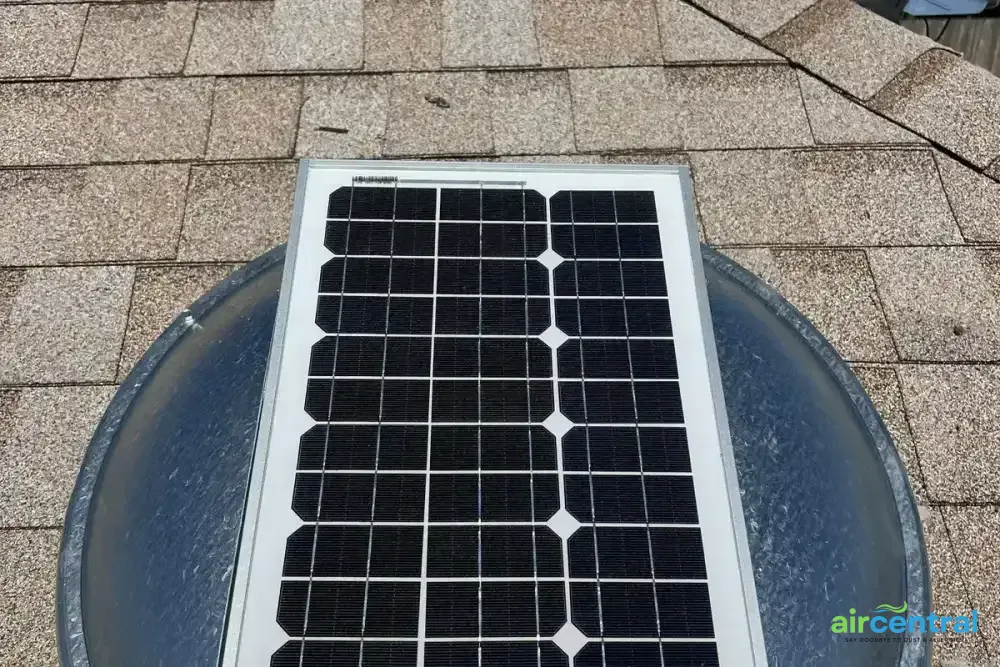
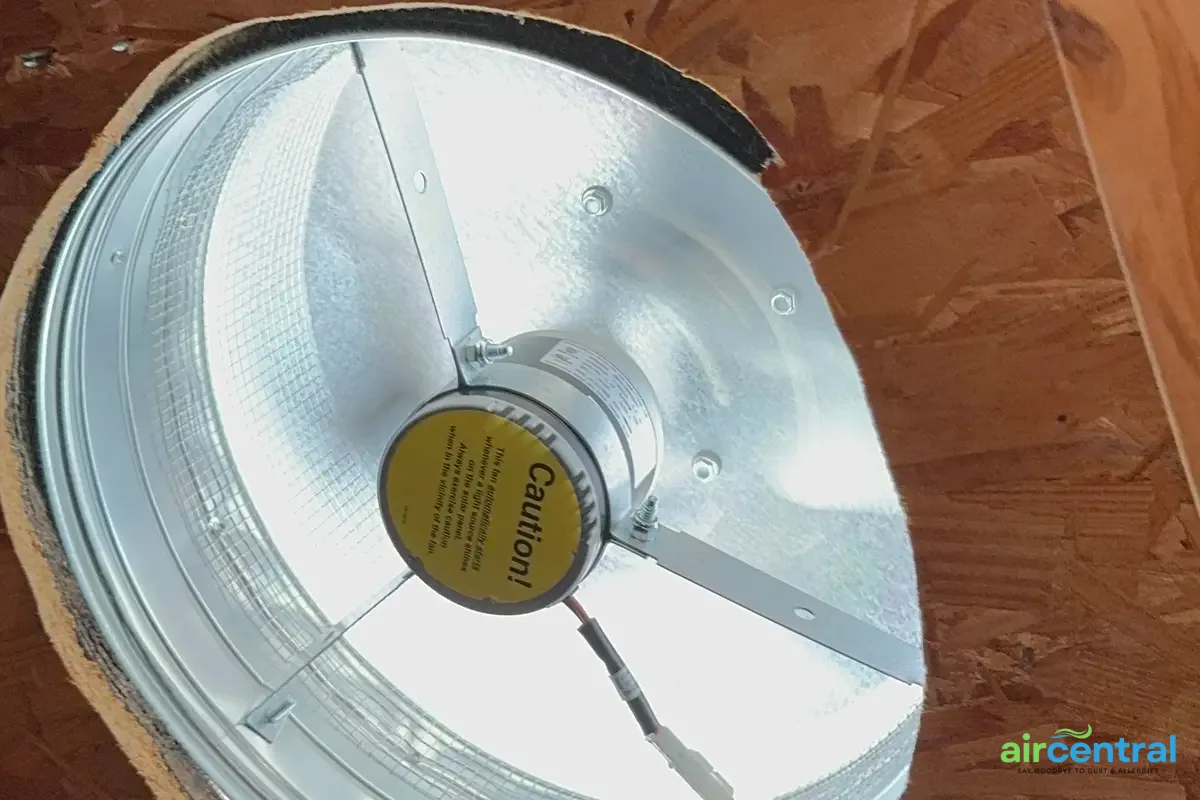
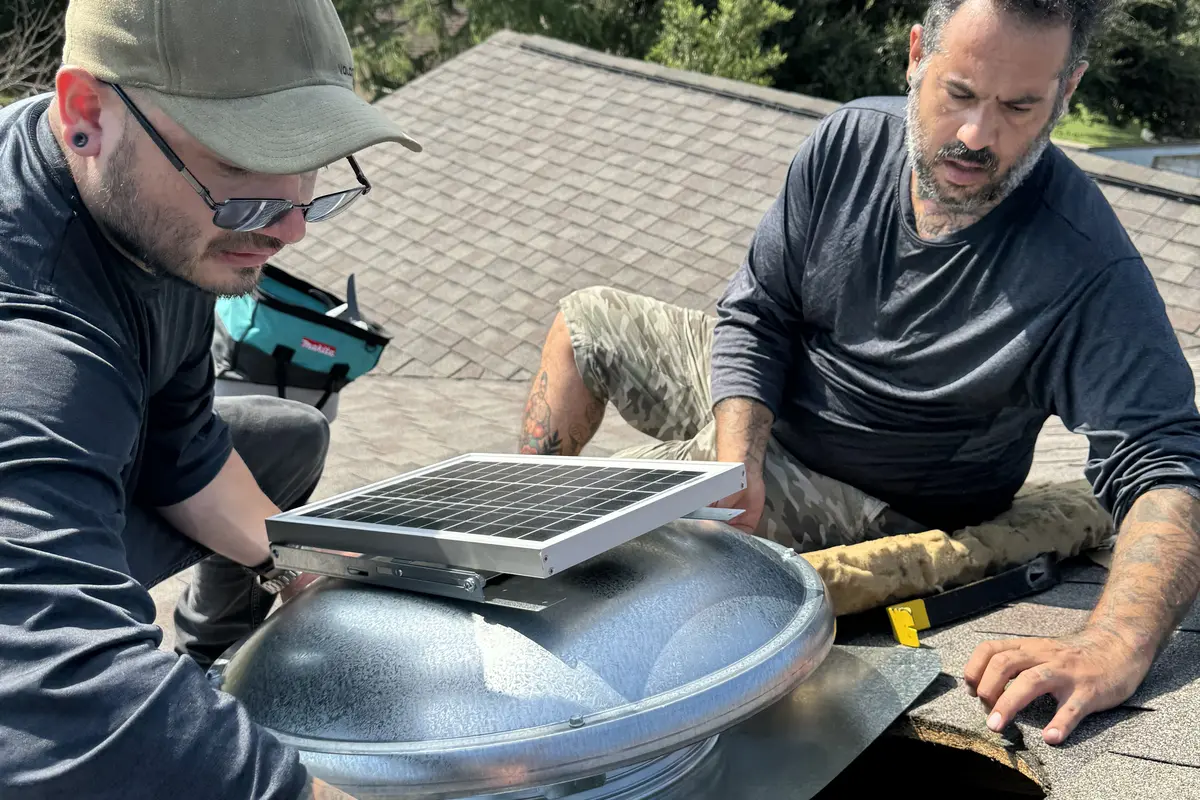
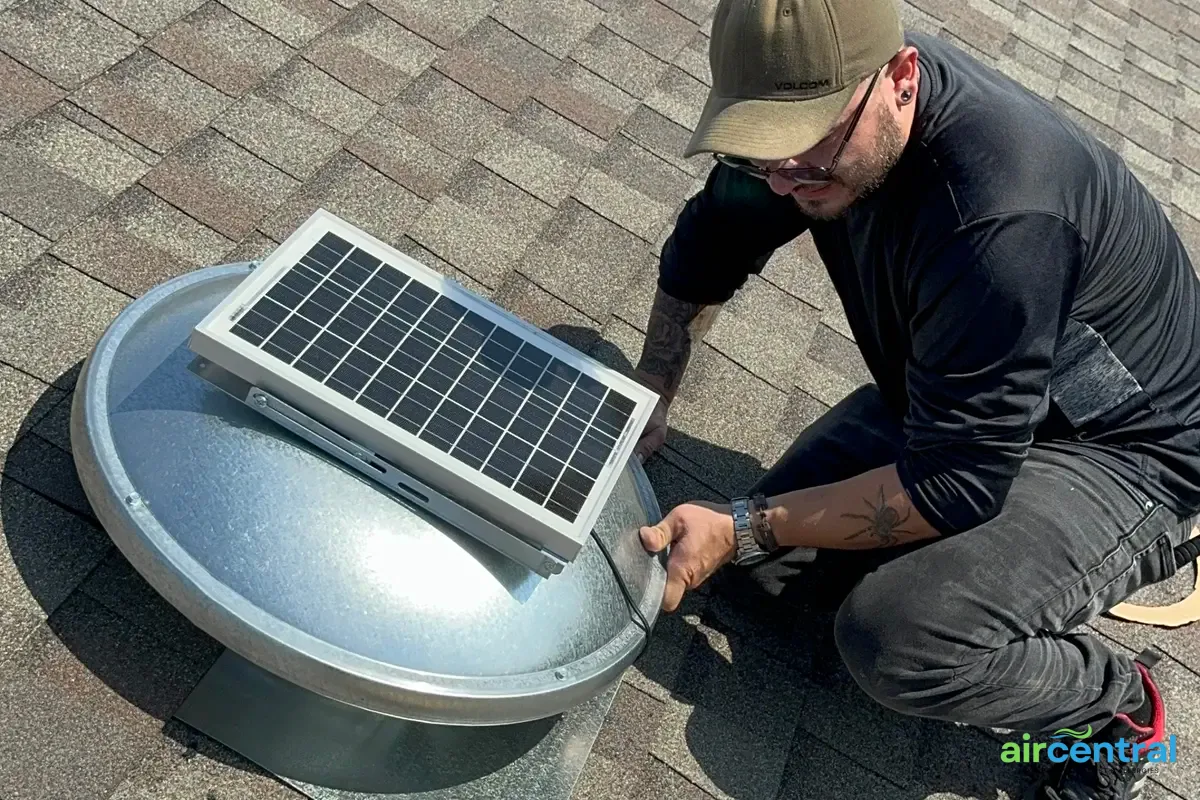
Solar-powered attic fans are an effective solution for Austin homes with inadequate passive ventilation. These fans actively pull hot air from the attic, reducing peak temperatures by 20-40 degrees. They run on solar power with zero operating cost, making them ideal for Austin's abundant sunshine. Air Central installs solar attic fans as a standalone service or combined with insulation upgrades.
When adding blown-in insulation, it is critical to install rafter baffles (also called ventilation chutes) at each soffit vent location. These plastic or foam channels create a clear airflow path from the soffit to the attic space, preventing insulation from blocking ventilation. Without baffles, adding insulation can actually worsen attic conditions by eliminating ventilation.
How Austin's Climate Affects Insulation Performance
Austin's extreme heat does not just make your attic hot - it actively degrades insulation performance over time. When attic temperatures reach 150-160 degrees day after day for five to six months straight, insulation materials undergo thermal stress that reduces their effective R-value. Fiberglass batts are particularly susceptible. The binder that holds fiberglass fibers together breaks down under sustained high heat, causing the material to lose loft and compress. Insulation that was installed at R-30 can settle to R-19 or lower over a decade in an Austin attic. Blown-in fiberglass and cellulose also settle, though cellulose is treated with stabilizing agents that slow this process. The practical takeaway is that insulation installed to code minimum fifteen years ago may be performing well below code today.
Moisture is the other performance killer in Austin attics. Our humid climate - averaging 65-75% relative humidity from April through October - means moisture vapor moves through ceilings and into the attic space constantly. When insulation absorbs moisture, its R-value drops dramatically. Wet fiberglass can lose up to 50% of its insulating capacity because water conducts heat far more efficiently than trapped air. Cellulose handles small amounts of moisture better than fiberglass due to its borate treatment, but sustained moisture exposure degrades any insulation type. Proper attic ventilation and vapor barriers are the defenses against moisture damage, which is why insulation upgrades should always include an assessment of ventilation and moisture management.
UV exposure through attic vents and gaps also contributes to insulation degradation, though it affects a smaller portion of the total coverage. Sunlight that enters through gable vents, soffit openings, and gaps around roof penetrations breaks down the facing on batt insulation and can degrade the surface layer of blown-in material over years. This is a minor factor compared to heat and moisture, but it adds up. The bottom line for Austin homeowners: do not assume your insulation is performing at its original rating. If it was installed more than ten years ago, a professional measurement of current R-value will tell you whether you are under-insulated even if the original installation met code.
Insulation and Ventilation: Why You Need Both
Insulation and attic ventilation are not competing strategies - they are partners that each handle a different part of the heat management problem. Insulation resists heat transfer from the attic to your living space. Ventilation removes heat from the attic itself, lowering the temperature that insulation has to work against. Without adequate ventilation, even R-49 insulation fights a losing battle against a 160-degree attic. Without adequate insulation, all the ventilation in the world cannot prevent heat from radiating through your ceiling. You need both working together for your home to perform efficiently in Austin's climate.
The most common mistake we see in Austin homes is insulation that blocks soffit vents. When blown-in insulation is added without installing rafter baffles at the eaves, the insulation slides against the roof deck and seals off the soffit openings. This eliminates the intake side of the ventilation system. Hot air has no way to cycle out of the attic because fresh air cannot enter at the bottom. Attic temperatures climb even higher than they would without insulation blocking the vents, and moisture gets trapped with no exit path. Over time, this leads to sheathing deterioration and reduces the lifespan of your roofing materials. Any professional insulation installation should include rafter baffles at every soffit vent location to maintain clear airflow channels.
Homeowners sometimes ask whether adding a powered attic fan eliminates the need for additional insulation, or vice versa. The answer is no. A solar attic fan can drop attic temperatures from 160 degrees to 120-130 degrees, which is a meaningful improvement, but 120 degrees is still extremely hot compared to your 76-degree living space. You still need adequate insulation to resist that temperature differential. Conversely, adding insulation to R-49 without fixing ventilation problems means the attic stays hotter than necessary, putting more thermal stress on the insulation and shortening its effective life. The most cost-effective approach is to address both in the same project - install baffles, verify soffit and ridge ventilation are clear and adequate, then add insulation to R-38 or R-49 on top of a properly ventilated attic floor.
Attic Insulation Removal: When and Why It Is Necessary
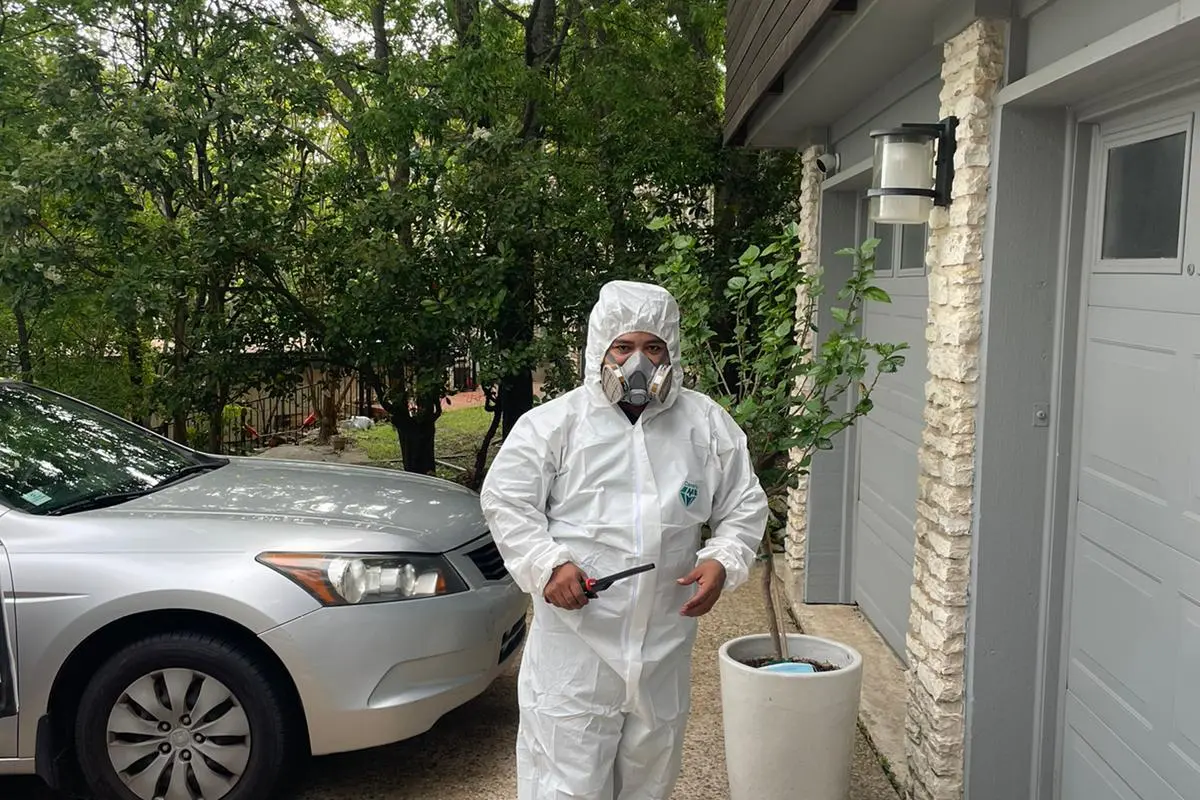
You need insulation removal before new installation when existing insulation is contaminated with rodent droppings, urine, or nesting material. Rodent contamination is not just an aesthetic issue - it is a health hazard. Rodent waste carries hantavirus and other pathogens that become airborne when disturbed, and adding new insulation on top of contaminated material traps those contaminants in your attic permanently. Water-damaged insulation that has collapsed, clumped, or smells musty also requires removal because wet insulation loses most of its R-value and promotes mold growth that spreads to surrounding materials. Vermiculite insulation in pre-1990 homes is another removal trigger due to possible asbestos contamination - this requires specialized handling and should never be disturbed without professional testing first.
In Austin, the most common removal scenario is rodent contamination in older homes. Neighborhoods like Hyde Park, Travis Heights, and Crestview have mature tree canopies and older construction that make them especially susceptible to roof rats and squirrels entering attic spaces. Removal cost runs $1.50-$3.00 per square foot depending on material type - cellulose is the easiest and least expensive to remove, while spray foam is the most difficult and costly. Contaminated insulation removal adds 25-50% to the total cost because of the additional safety precautions, protective equipment, and disposal requirements involved.
After removal, the attic deck is cleaned and sealed before new insulation goes in. This step is critical because it eliminates residual contamination and allows the installer to perform air sealing work at the attic floor - closing gaps around light fixtures, plumbing penetrations, and HVAC boots that would otherwise let conditioned air escape. Some Austin homeowners skip removal and add new insulation on top of existing material to save money. This approach works ONLY if the existing insulation is dry, clean, structurally intact, and not contaminated. If any of those conditions are not met, layering new material over old creates a hidden problem that will cost more to fix later than removal would cost today.
Energy Savings and ROI for Austin Homeowners
The return on investment for attic insulation in Austin is among the best of any home improvement, and it starts the month the work is completed.
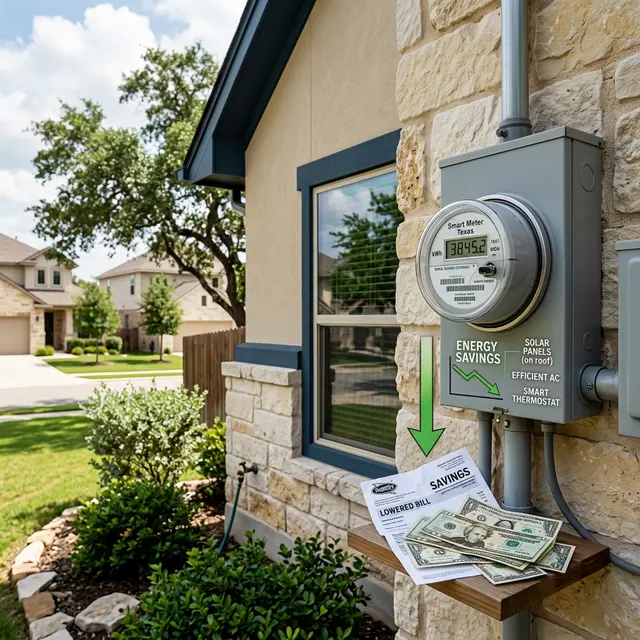
Based on the Department of Energy estimates and our experience with Austin homes, upgrading from R-19 to R-38 typically reduces total heating and cooling costs by 10-20%. For an Austin home spending $3,000-$4,000 annually on electricity (common for 2,000-2,500 square foot homes), that translates to $300-$800 per year in savings.
The payback period for most Austin insulation upgrades is 3-5 years. After that, every dollar saved goes straight to your bottom line for the remaining 15-20 year lifespan of the insulation. Over 20 years, a typical insulation investment can return several times its cost in energy savings.
Beyond direct energy savings, proper insulation reduces HVAC wear. Your system runs fewer hours, operates at lower intensity, and experiences less strain during peak demand. Given that HVAC replacement in Austin costs $5,000-$15,000, extending your system's life by even 2-3 years through reduced workload provides substantial additional value.
Insulation also increases home resale value. Energy-efficient homes sell faster and command higher prices in the Austin market. Home inspectors and appraisers note insulation levels, and buyers increasingly factor energy costs into their purchasing decisions.
Ready to stop guessing about your attic? Most Austin homeowners are surprised when they find out their insulation has settled to half its original R-value. Air Central's assessment includes a thermal evaluation, current R-value measurement, and a specific quote showing exactly how much you will save. Call (512) 601-4451 - we will tell you whether an upgrade makes financial sense for your home or whether your current insulation is still doing the job.
Federal tax credits and local utility rebates make 2026 an especially good time to upgrade. The Inflation Reduction Act's 25C credit covers up to 30% of insulation costs (maximum $1,200 per year), and Austin Energy offers additional rebates for qualifying efficiency improvements. Combined, these incentives can reduce your out-of-pocket cost by 30-40%.
Related Services
Learn more about our professional services related to this topic:
- Attic Insulation - Premium blown-in insulation to cut energy costs and improve year-round comfort.
- Solar Fan Installation - Solar-powered attic ventilation that cuts cooling costs naturally.
All Articles in This Series
- Attic Insulation Cost in Austin: 2026 Pricing Guide
- 5 Signs Your Attic Needs Better Insulation
- Blown-In vs Batt Insulation: Which Is Better in Austin?
- How Much Money Does Attic Insulation Save? Real Numbers
- What R-Value Do You Need in Texas? Insulation Guide
- Attic Ventilation Guide for Austin Homes: Vents and Fans
- Attic Insulation Removal: When, Why, and How It's Done
- Crawl Space Insulation: Types, Costs, and Options
- Blown-In Insulation Cost: Cellulose vs Fiberglass Compared
- Spray Foam vs Blown-In Insulation: Which Wins in Austin?
Have questions about attic & insulation? Our team is available 7 days a week. Call us at (512) 601-4451 or visit our contact page.