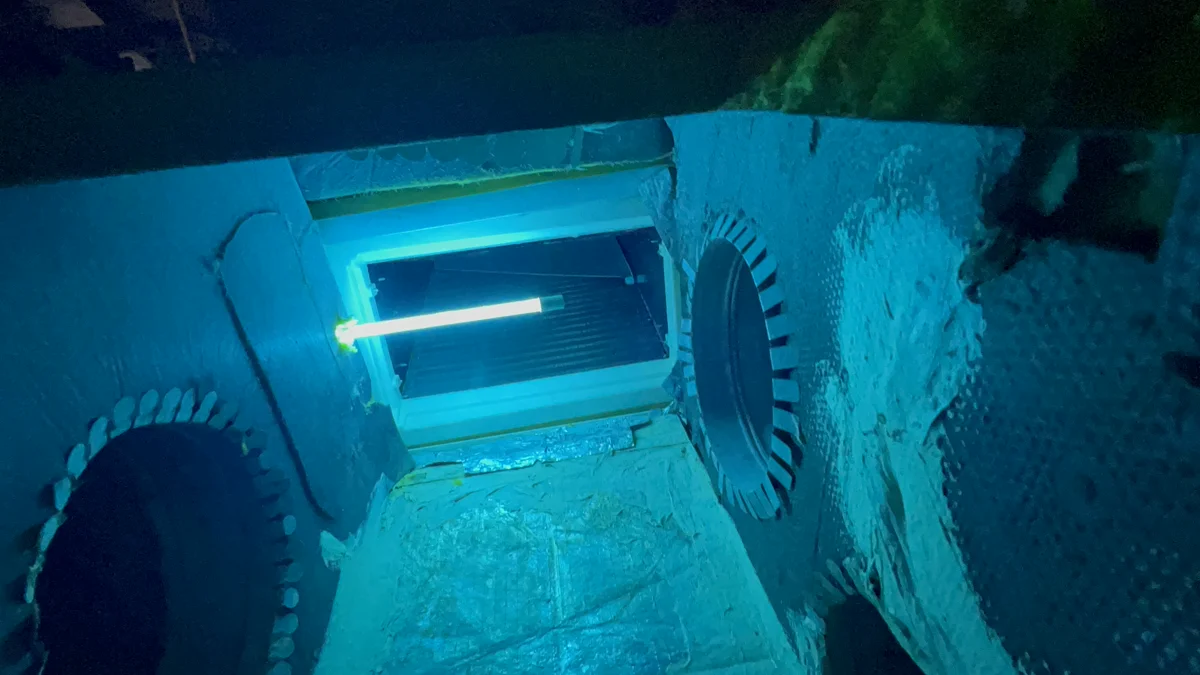
Air scrubbers actively clean your home's air by using photocatalytic oxidation technology installed inside your HVAC ductwork, treating every room the system reaches. Air purifiers passively filter air in a single room using HEPA or carbon filters. For most Austin homes, a UV-C light system installed in the HVAC combined with a MERV 13 filter provides the best balance of whole-home coverage, effectiveness, and cost. Call (512) 601-4451 to learn about UV lighting system installation for your HVAC.
What Is an Air Scrubber and How Does It Work?
An air scrubber is an active air cleaning device installed directly inside your HVAC ductwork, typically near the air handler. Unlike passive filters that wait for air to pass through them, air scrubbers use photocatalytic oxidation (PCO) to produce oxidizing molecules that travel through the duct system and into every room of your home.
The most common residential air scrubber brands (Aerus ActivePure, Air Scrubber by Aerus) use a UV light shining on a catalytic surface coated with titanium dioxide. This reaction produces hydrogen peroxide molecules and other oxidizers that neutralize bacteria, viruses, volatile organic compounds (VOCs), and odors both in the air and on surfaces.
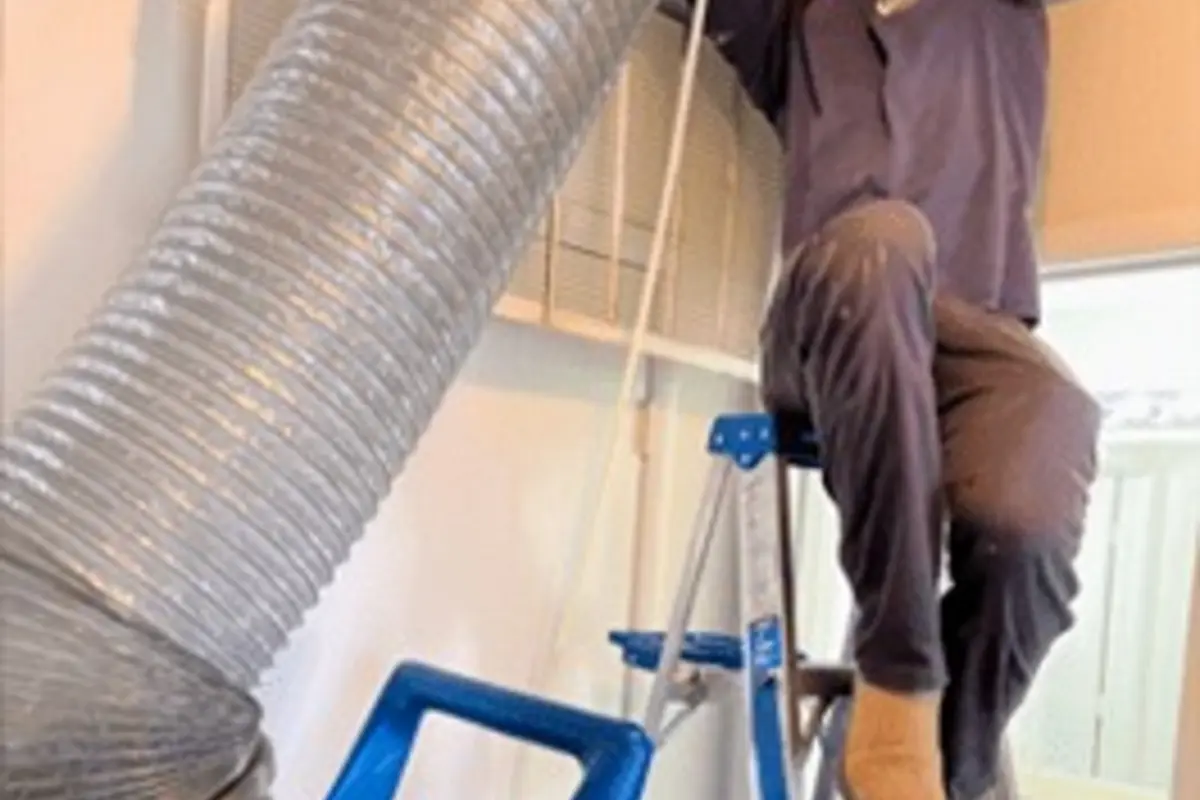
Air scrubbers are installed by an HVAC technician and wire into the existing system. They turn on automatically whenever the blower runs. Installation typically takes 1-2 hours and costs $1,000-$2,000 including the unit. The catalytic cell needs replacement every 2-3 years at a cost of $150-$300.
The key advantage of air scrubbers is whole-home coverage. Because they are installed in the ductwork, treated air reaches every room connected to the HVAC system. You do not need a separate unit for each room.
What Is an Air Purifier and How Does It Work?
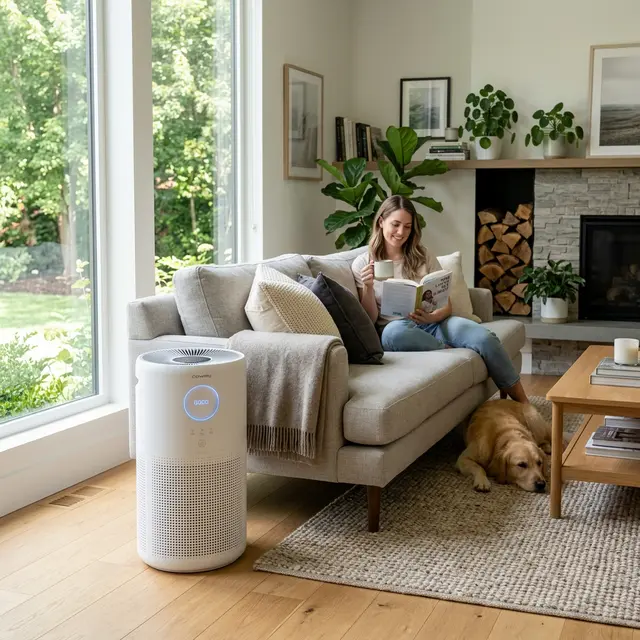
Air purifiers are standalone units that sit in a room and pull air through a series of filters. Most quality air purifiers use a combination of a HEPA filter (captures 99.97% of particles 0.3 microns and larger), an activated carbon filter (absorbs gases, VOCs, and odors), and sometimes a pre-filter for large particles like pet hair.
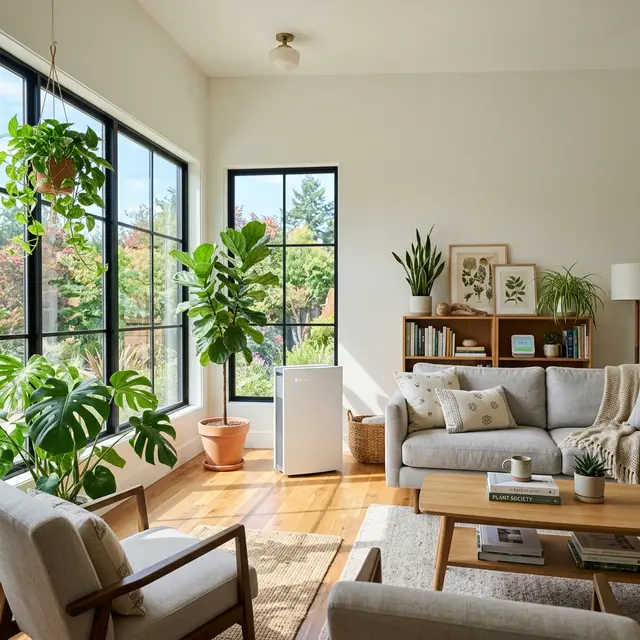
Air purifiers work by passive filtration - a fan draws room air through the filter stack, traps contaminants, and pushes clean air back out. They are effective but only in the room where they are placed. A purifier rated for 400 square feet will clean the air in that space but does nothing for the bedroom down the hall.
Quality standalone air purifiers cost $200-$800 per unit. Filter replacement runs $50-$150 per year per unit. To cover a typical 2,000 square foot Austin home, you would need 3-5 units, bringing the total investment to $600-$4,000 upfront plus $150-$750 annually in filters.
The advantage of standalone purifiers is portability and independence from the HVAC system. They work even when the heating and cooling system is off, and you can move them from room to room as needed. Some models include air quality sensors that display real-time particle counts.
Air Scrubber vs Air Purifier: Key Differences
Coverage is the biggest difference. Air scrubbers treat every room connected to your HVAC ductwork with a single unit. Air purifiers treat one room at a time. For whole-home air quality, a scrubber provides more complete coverage with less equipment.
Technology differs fundamentally. Air scrubbers use active oxidation - they produce cleaning molecules that seek out contaminants in the air and on surfaces. Air purifiers use passive filtration - they trap particles that happen to pass through the filter. Scrubbers are proactive; purifiers are reactive.
Maintenance varies. Air scrubbers need a catalytic cell replacement every 2-3 years. Air purifiers need filter changes every 6-12 months. Both have ongoing costs, but purifiers require more frequent attention, especially if you are running multiple units.
Noise is a factor. Air scrubbers are silent because they sit inside the ductwork and use the HVAC blower. Standalone air purifiers generate their own fan noise, which ranges from a quiet hum on low to noticeable white noise on high. If noise sensitivity is a concern, in-duct solutions win.
Effectiveness against specific contaminants also differs. HEPA purifiers excel at capturing particulate matter - dust, pollen, pet dander, and fine particles. Air scrubbers are better at neutralizing gases, VOCs, bacteria, and viruses because oxidation breaks down molecular contaminants that pass right through physical filters.
Concerned About Your Home's Air?
We provide professional air quality assessments for Austin homes. See what is in your ducts before deciding.
Call (512) 601-4451Rate your home's indoor air quality in 2 minutes
How UV-C Systems Compare to Both
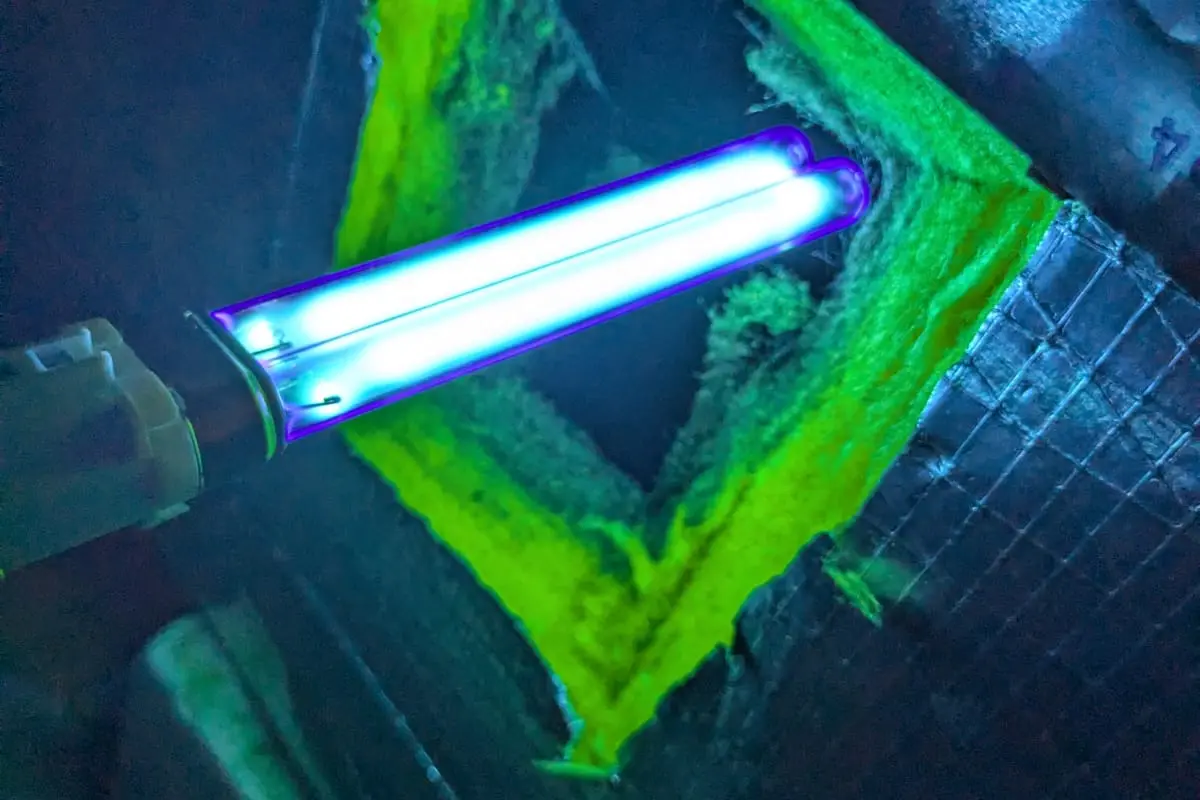
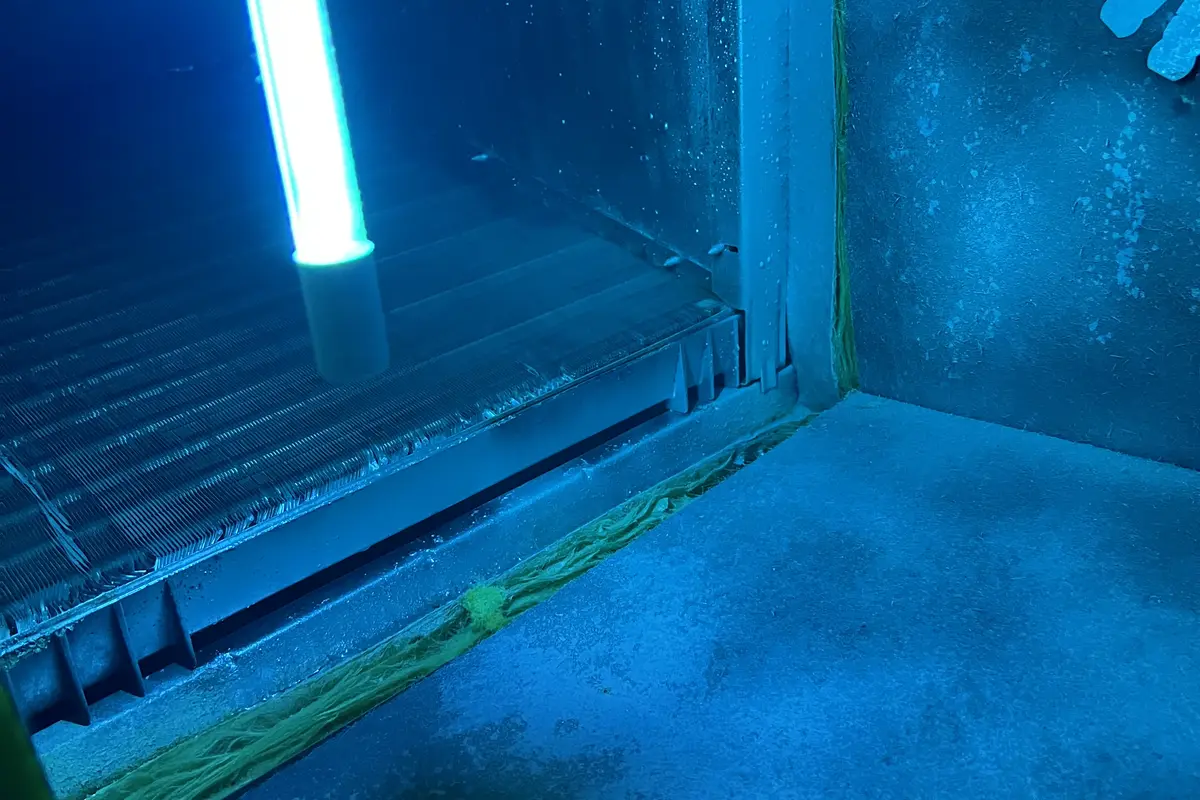
UV-C germicidal light systems installed in the HVAC represent a middle ground between air scrubbers and air purifiers. A UV-C light is mounted inside the air handler, typically near the evaporator coil, where it continuously irradiates air passing through the system.
UV-C systems kill bacteria, viruses, and prevent biological growth on the evaporator coil and drain pan - two areas in Austin HVAC systems that are constantly wet and prone to microbial contamination. The coil stays cleaner, which improves airflow and system efficiency while reducing the biofilm that causes musty HVAC odors.
UV-C systems cost $300-$800 installed, making them significantly less expensive than air scrubbers. Bulb replacement runs $50-$100 every 12-18 months. They do not produce oxidizing molecules like air scrubbers, so they do not actively treat surfaces in distant rooms, but they effectively sterilize all air passing through the air handler.
When paired with a MERV 13 filter, a UV-C system provides comprehensive air treatment: the filter captures particles and the UV-C light neutralizes biological contaminants. This combination covers both particle filtration and germicidal treatment at a fraction of the cost of an air scrubber or multiple standalone purifiers.
Which Option Is Best for Austin Homes?
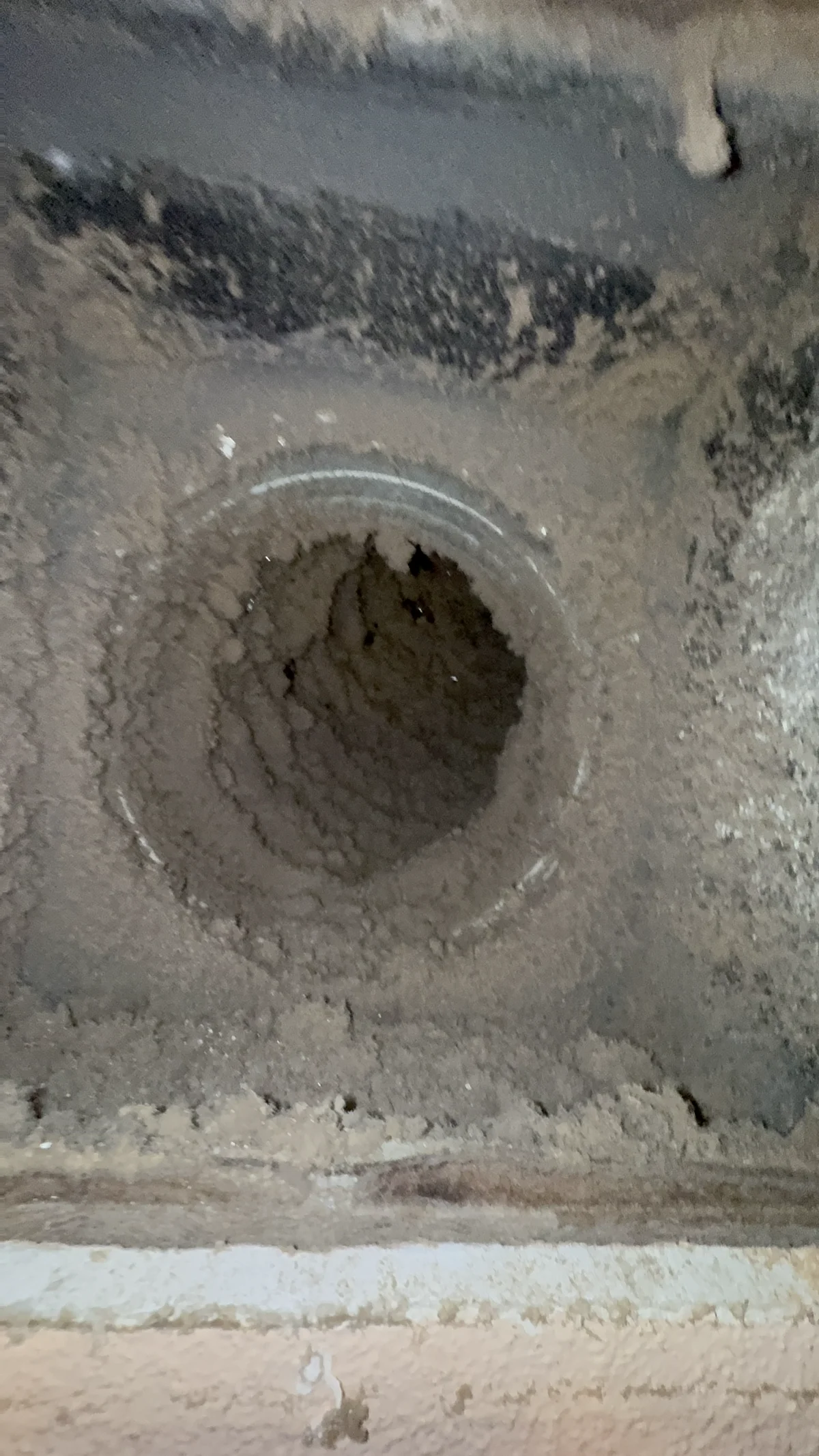
Austin's air quality challenges are specific: extreme cedar and oak pollen, year-round humidity that feeds microbial growth in ductwork, and long cooling seasons that mean your HVAC runs 10-11 months per year. The best solution addresses both particulate matter (pollen, dust) and biological contaminants (bacteria, biofilm on coils).
For most Austin homeowners, the most cost-effective approach is a UV-C light system installed in the HVAC paired with a MERV 13 pleated filter. Total installed cost: $300-$800 for the UV-C system plus $15-$25 per filter change every 60-90 days. This combination treats the entire home through the existing ductwork, kills biological contaminants at the source (the coil and drain pan), and captures 90%+ of airborne particles.
Air scrubbers make sense for households with severe allergy or asthma sufferers, immunocompromised family members, or anyone who wants the highest level of active air treatment. The $1,000-$2,000 investment provides both oxidation-based cleaning and whole-home coverage that standalone purifiers cannot match.
Standalone air purifiers are the right choice for renters (no ductwork modification), for targeted treatment in a specific room (home office, nursery, bedroom), or as a supplement to an existing HVAC-based system. They are not the most efficient way to treat an entire home, but they work well for focused applications.
Air Central installs UV-C germicidal lighting systems in Austin homes. Our technicians assess your HVAC system, recommend the right UV-C configuration for your air handler, and handle the complete installation. Call (512) 601-4451 to schedule an assessment.
Related Services
Learn more about our professional services related to this topic:
- Air Duct Cleaning - Remove dust, allergens, and debris from your entire HVAC system for cleaner indoor air.
- Air Duct Inspection - Diagnose leaks, blockages, and efficiency issues with HD camera inspection.
- UV Lighting System - Eliminate bacteria and allergens inside your HVAC with UV-C light technology.
Want the full picture?
Read our complete guide: Indoor Air Quality in Austin: The Complete Guide (2026) →Have questions about indoor air quality? Our team is available 7 days a week. Call us at (512) 601-4451 or visit our contact page.