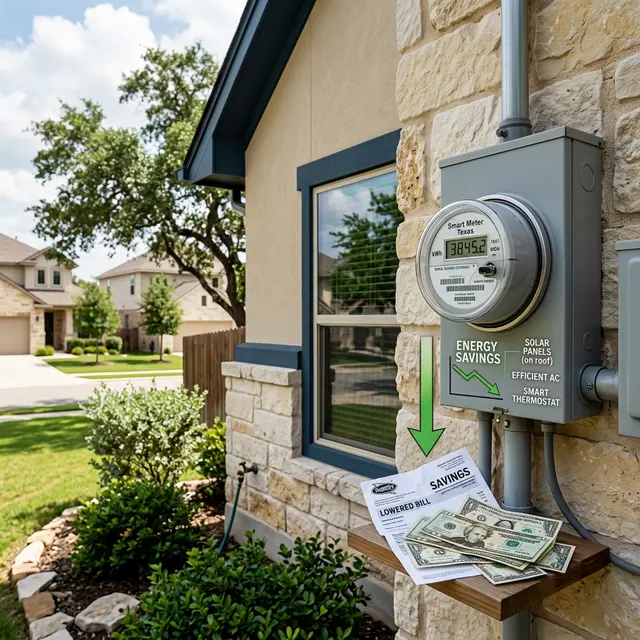
A professional home energy audit identifies exactly where your home is losing energy through blower door testing, thermal imaging, and duct leakage testing - most homeowners save significantly on annual energy bills by acting on the findings.
What Happens During an Energy Audit
Most Austin homeowners suspect they are wasting energy but have no idea where the biggest leaks are. A professional energy audit answers that question in 2-4 hours using blower door testing, thermal imaging, and duct leakage measurement - and the report tells you exactly which fixes will save the most money.
The blower door test is the centerpiece of the audit. The auditor installs a calibrated fan in your front door that pulls air out of the house, creating a slight negative pressure. This makes every air leak in your home's envelope detectable - you can literally feel air rushing in through gaps around windows, outlets, recessed lights, and plumbing penetrations. The test measures your home's total air changes per hour (ACH), which tells the auditor how leaky or tight your home is compared to building science standards.
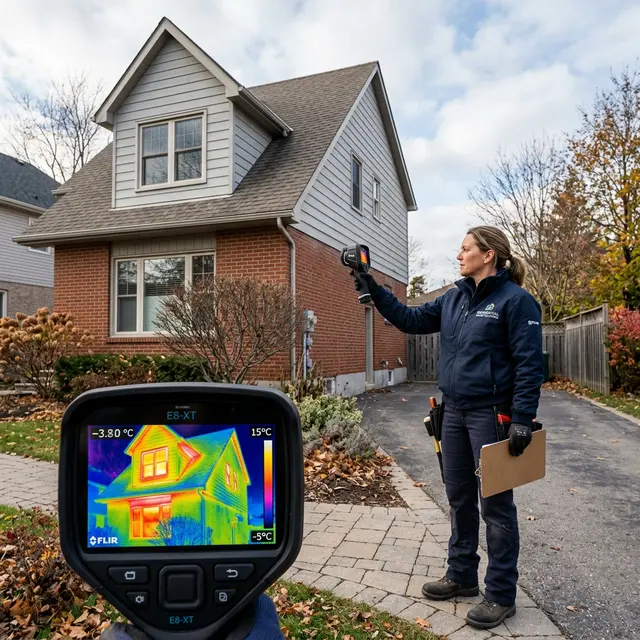
Thermal imaging adds a visual layer. The infrared camera shows temperature differences on every surface - cold spots in winter reveal where insulation is missing or compressed, and hot spots in summer show where attic heat is penetrating through the ceiling. The auditor walks every room, scans walls, ceilings, windows, and doors, and photographs problem areas. You get these images in your report so you can see exactly where the problems are.
Common Findings in Austin Homes
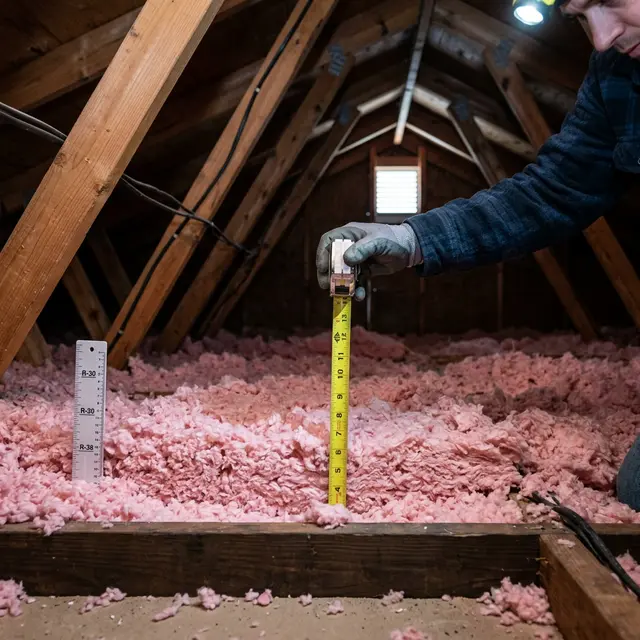
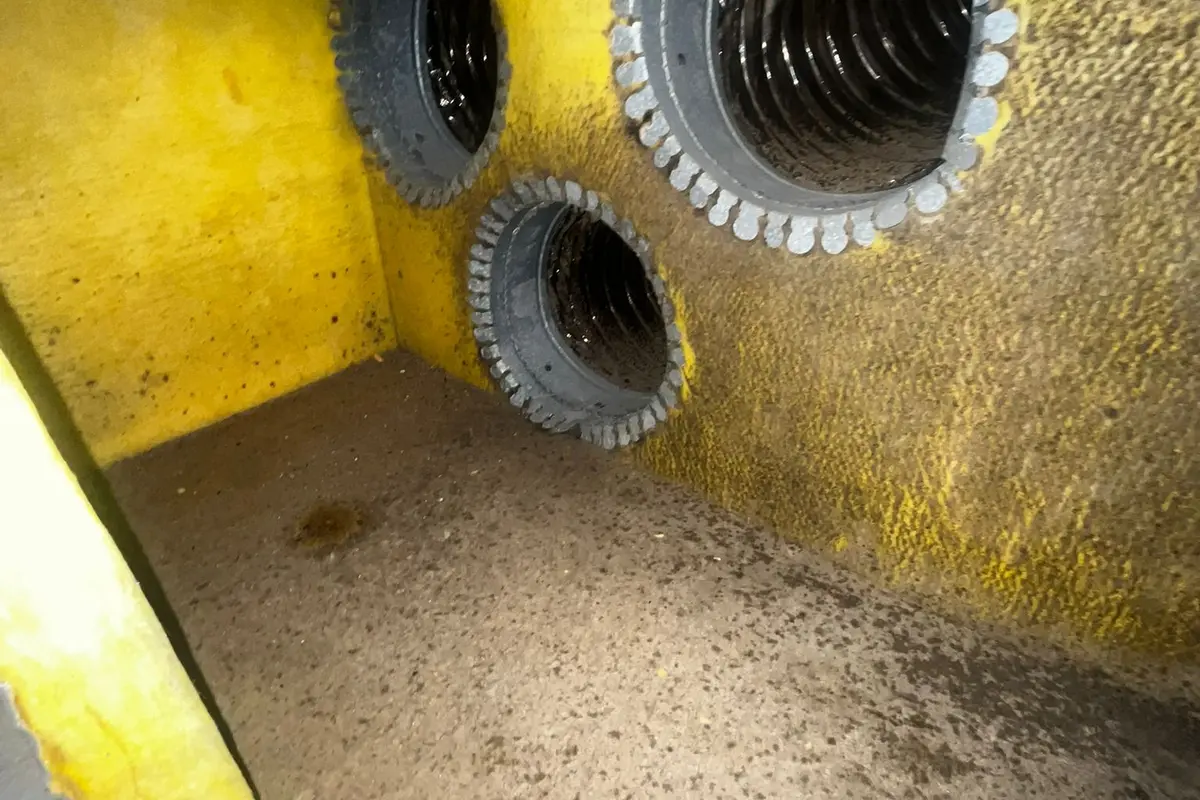
Insufficient attic insulation (80%+ of pre-2000 homes are under-insulated). Leaky ductwork in the attic (average home loses 20-30% of conditioned air). Air leaks around recessed lights, plumbing penetrations, and the attic hatch. Poor window sealing (especially in homes with original single-pane windows). Inadequate attic ventilation causing superheated attic air to radiate into living spaces.
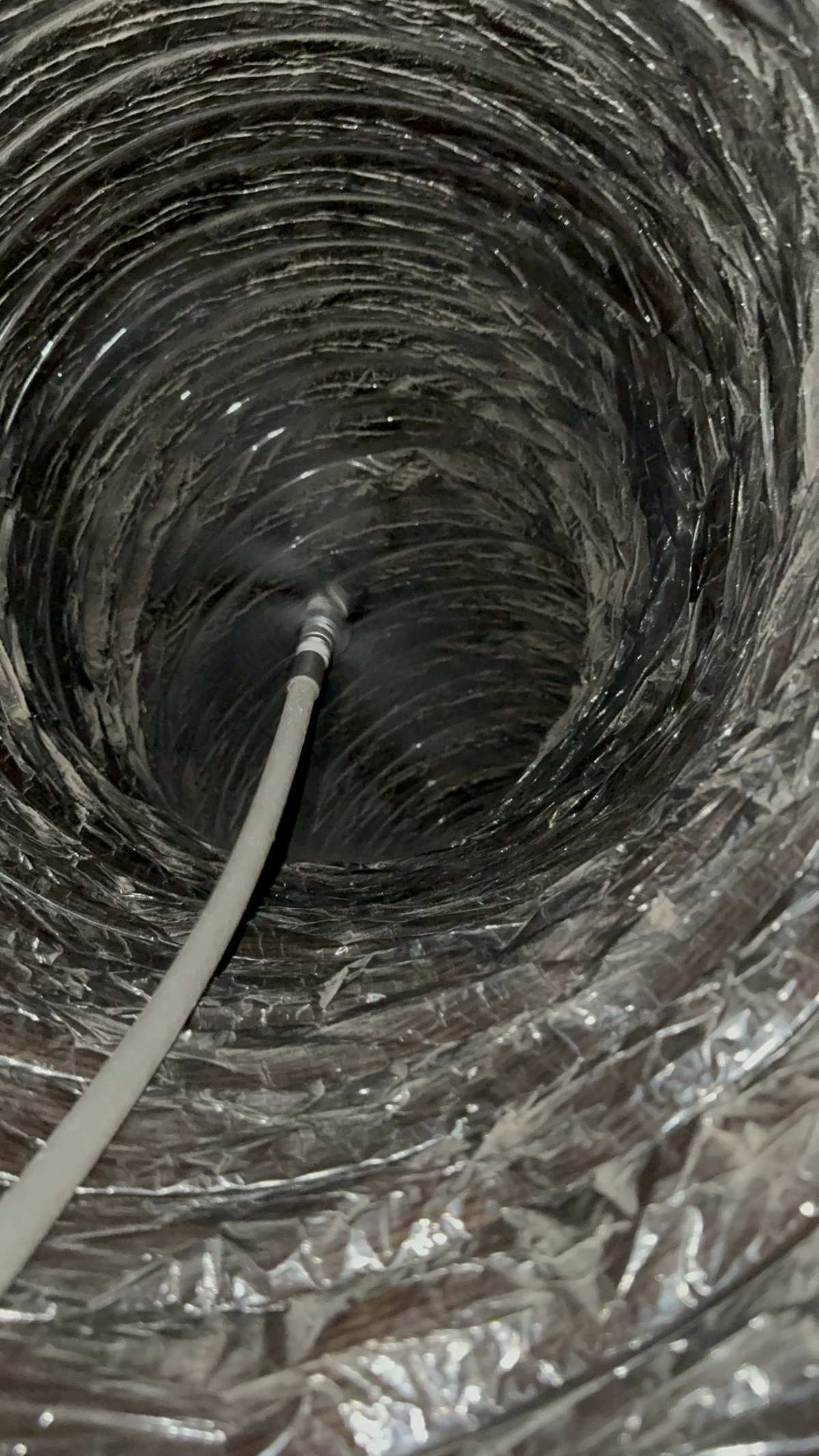
In Austin specifically, the most wasteful finding is usually ductwork problems in the attic. Your attic runs 140-160F in summer, and any duct leak in that environment dumps conditioned 55F air directly into 150F space. We have seen homes in Pflugerville, Cedar Park, and Kyle where 30-40% of the AC output never made it to the living space. The second most common issue is the attic hatch - most homes have an unsealed, uninsulated hatch that acts like an open window to the attic. A $20 insulation kit and weatherstripping fixes this in 30 minutes.
How to Act on Audit Findings
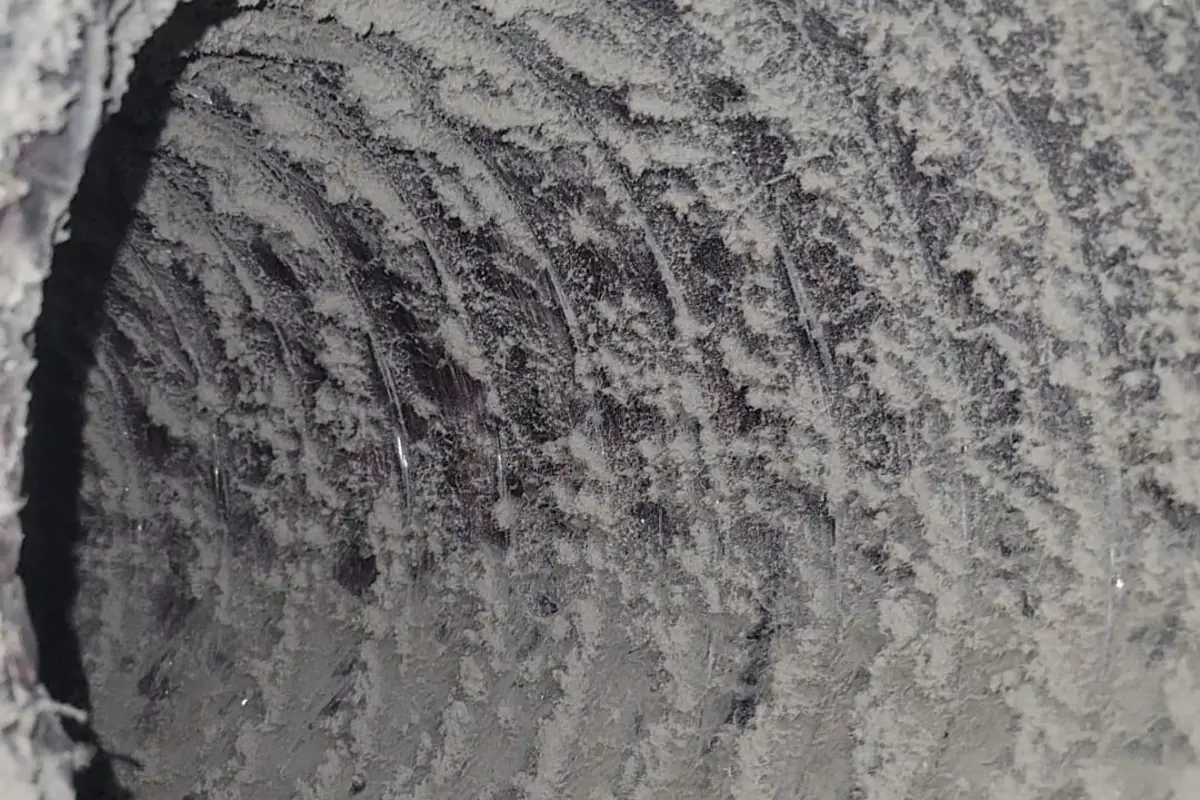
A good audit report ranks recommendations by cost-effectiveness. Start with the cheapest, highest-impact items and work down the list. Typically the priority order is: 1. Air sealing (caulking, weatherstripping, foam around penetrations) - the most affordable option, saves 10-20% on energy bills immediately. 2. Attic insulation upgrade to R-38 - a moderate investment with excellent payback. 3. Duct sealing and repair - another high-value improvement with strong energy savings. 4. Window upgrades - the largest investment with the longest payback period.
Do not try to do everything at once. Spread improvements over 1-2 years based on budget. Air sealing and insulation are always the best first investments because they reduce the load on your HVAC system, which makes everything else work better. Some Austin homeowners use the savings from initial improvements to fund the next round of upgrades, creating a snowball effect that compounds over time.
Want to Know Where Your Energy Goes?
We identify the biggest efficiency gaps in your home and give you a clear plan to fix them.
Call (512) 601-4451Estimate how much you could save on energy bills
Austin Rebates and Incentives
Austin Energy offers rebates for energy efficiency upgrades including insulation, air sealing, and HVAC improvements. Federal tax credits may apply to certain upgrades. Check austinenergy.com/go/rebates for current programs. Some utility rebates can offset 30-50% of improvement costs, making the ROI even more attractive.
Austin Energy's Home Performance with ENERGY STAR program is particularly valuable. It provides a subsidized energy audit (sometimes free or heavily discounted) and rebates for improvements recommended by the auditor. Insulation rebates can reach $600, and air sealing rebates can reach $400. Combined with federal tax credits for energy efficiency improvements (currently 25C and 25D credits), you can recover 30-50% of the total cost of improvements. A typical insulation and air sealing project can recover a significant portion of its cost through rebates and tax credits, substantially shortening the payback period.
Related Services
Learn more about our professional services related to this topic:
- Air Duct Cleaning - Remove dust, allergens, and debris from your entire HVAC system for cleaner indoor air.
- Solar Fan Installation - Solar-powered attic ventilation that cuts cooling costs naturally.
- Attic Insulation - Premium blown-in insulation to cut energy costs and improve year-round comfort.
- UV Lighting System - Eliminate bacteria and allergens inside your HVAC with UV-C light technology.
Want the full picture?
Read our complete guide: Home Energy Efficiency: The Cost-Saving Guide for Austin →Have questions about energy efficiency? Our team is available 7 days a week. Call us at (512) 601-4451 or visit our contact page.