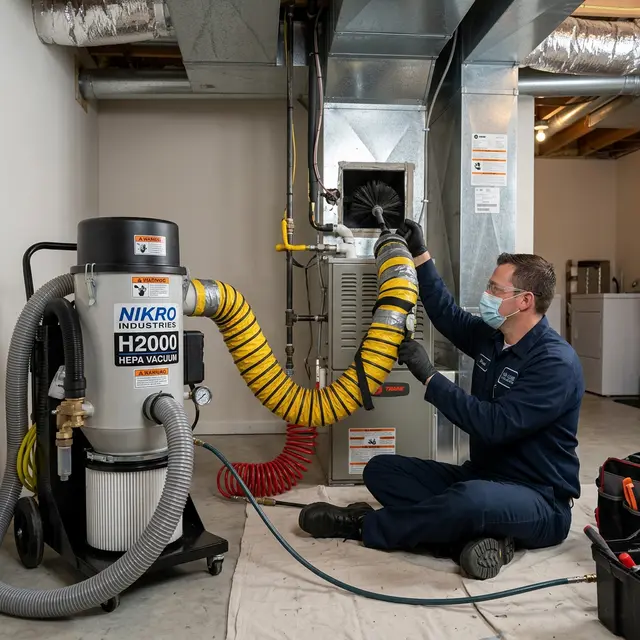
Commercial buildings in Austin need professional duct cleaning every 1-3 years depending on building type, with restaurants and medical facilities on the shorter end. The process requires after-hours scheduling, zone-by-zone phasing, and NADCA commercial standards that go beyond residential cleaning in scope, equipment, and documentation.
Why Commercial Duct Cleaning Is Different From Residential
Commercial HVAC systems are a different animal from residential units. A typical Austin office building or restaurant runs ductwork that is two to five times the size of a home system, often with multiple air handling units, rooftop units, VAV boxes, and complex zoning. The ductwork layout is more intricate, the contaminant loads are heavier, and the stakes are higher because dozens or hundreds of people breathe that air every day. The <a href="/air-duct-cleaning/">residential duct cleaning process</a> provides the foundation, but commercial work scales up in every dimension.
Residential duct cleaning focuses on a single family's comfort and health. Commercial cleaning has to account for occupant density, regulatory compliance, liability exposure, and business continuity. An office with 50 employees has 50 people breathing the same recirculated air for 8-10 hours a day. A restaurant kitchen generates grease-laden particulate that coats duct interiors far more aggressively than household cooking. A medical office must maintain air quality standards that residential buildings never encounter.
The equipment differs too. Commercial jobs require larger negative-pressure vacuum systems, longer reach tools for extended duct runs, and access equipment like lifts and ladders for ceiling-mounted ductwork in high-bay commercial spaces. Documentation requirements are stricter - property managers and building owners need detailed reports for insurance records, health department compliance, and tenant communications.
Austin's commercial real estate market has grown rapidly over the past decade, with major developments at The Domain, the downtown corridor, the east side restaurant district, and mixed-use projects like Mueller. Many of these buildings have HVAC systems that have been running for years without professional duct cleaning because the property manager assumed the HVAC maintenance contract covered it. In most cases, it does not. Standard HVAC maintenance changes filters and checks mechanical components, but it does not clean the ductwork itself.
How Often Do Commercial Buildings Need Duct Cleaning
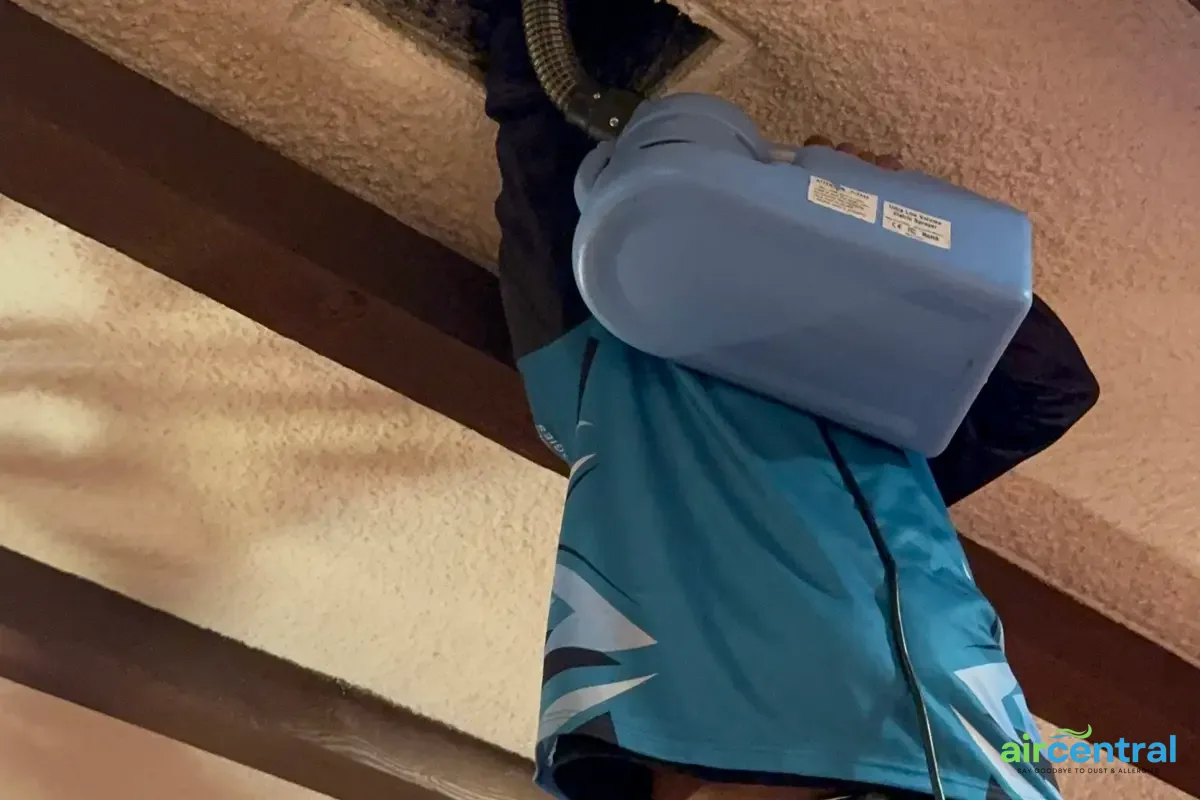
NADCA recommends commercial duct cleaning every 1-3 years, depending on building type, occupancy, and use. ASHRAE Standard 62.1 governs ventilation for acceptable indoor air quality in commercial buildings and ties air quality to duct system cleanliness. OSHA does not set a specific duct cleaning schedule, but its General Duty Clause requires employers to maintain a workplace without recognized hazards - and documented poor indoor air quality from dirty ductwork qualifies.
Restaurants and commercial kitchens: every 6-12 months. Grease buildup in kitchen exhaust ducts is both a fire hazard and a health code issue. Supply-side ducts in restaurant dining areas should be cleaned every 1-2 years because of the higher particulate load from cooking, foot traffic, and frequent door openings.
Medical and dental offices: every 1-2 years. These facilities have stricter indoor air quality requirements and serve vulnerable populations. The CDC and OSHA both reference clean HVAC systems as part of infection control for healthcare settings.
Office buildings: every 2-3 years for standard offices. Buildings near construction zones - and in Austin, that describes half the city right now - should clean more frequently. The I-35 expansion project, ongoing development along Burnet Road, and construction throughout the Domain North area send fine particulate into nearby building HVAC intakes.
Multi-family and apartment buildings: every 2-3 years for common area and shared ductwork. Individual unit ductwork follows a schedule similar to residential (every 3-5 years), though turnover between tenants is an ideal time to clean.
Retail spaces: every 2-3 years. High foot traffic brings in more dust, pollen, and outdoor contaminants. Spaces with exterior doors that open frequently - like restaurants and shops along South Congress or East 6th Street - accumulate duct contamination faster than enclosed mall spaces.
Restaurant Duct Cleaning: Austin Health Code Requirements
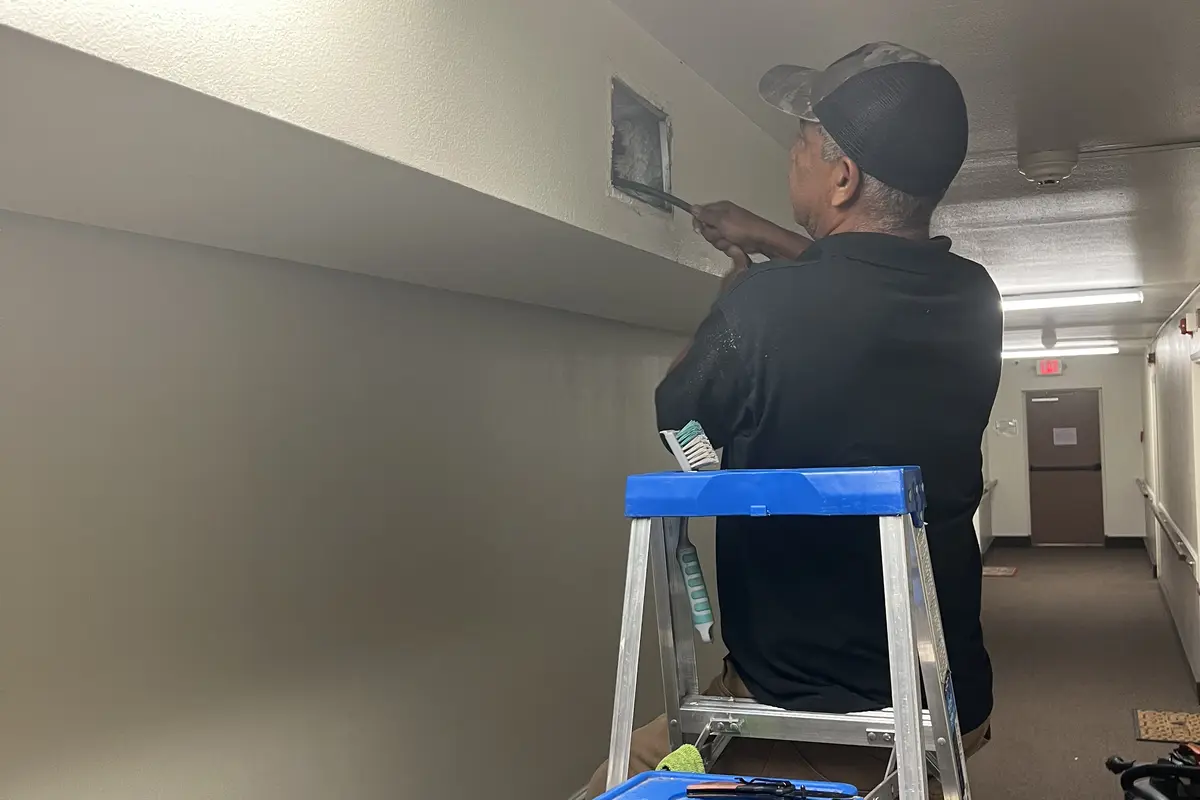
Restaurant owners in Austin operate under Austin Public Health and the Texas Department of State Health Services food establishment rules. While the health code focuses primarily on kitchen exhaust hood and grease duct cleaning - which falls under fire prevention and NFPA 96 - the supply-side HVAC system that conditions the dining area, prep areas, and storage is equally important for maintaining clean air and passing inspection.
NFPA 96 requires kitchen exhaust systems to be cleaned at intervals based on cooking volume. High-volume cooking operations (24-hour restaurants, charbroiling) need quarterly cleaning. Moderate-volume operations need semi-annual cleaning. Low-volume operations (churches, seasonal businesses) need annual cleaning at minimum. Austin Fire Department inspectors can and do ask for cleaning records during routine inspections.
The supply-side ductwork - the system that brings conditioned air into the restaurant - is separate from the kitchen exhaust but equally prone to contamination. Grease vapor migrates beyond the kitchen hood capture zone, especially in open-concept restaurant layouts common along East Austin's restaurant row, Rainey Street, and South Lamar. This grease coats supply duct interiors, mixes with dust and pollen from the outdoor air intake, and creates a sticky layer that standard filter changes do not address.
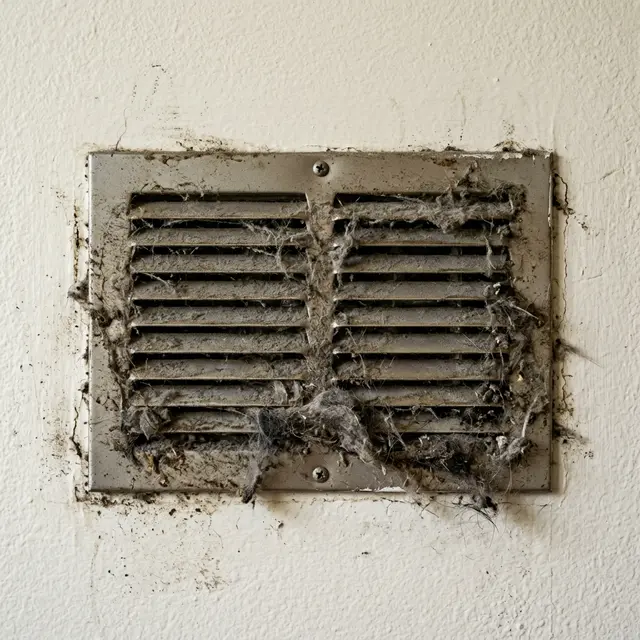
Austin Health Department inspectors assess general cleanliness and ventilation during food establishment inspections. While they may not specifically cite dirty supply ducts, visible contamination in vent registers, musty odors from the HVAC system, or complaints from customers or employees about air quality can trigger a deeper look. Several Austin restaurant owners have told us they scheduled duct cleaning after receiving inspector comments about dusty vent covers or stuffy dining room air.
Beyond compliance, restaurant indoor air quality directly affects the dining experience. Nobody wants to eat under a vent that blows dusty, stale air. Austin's restaurant scene is competitive - clean air is part of the ambiance, and a musty HVAC system can drive negative reviews just as quickly as bad food.
Office Buildings and Tenant Air Quality Responsibilities
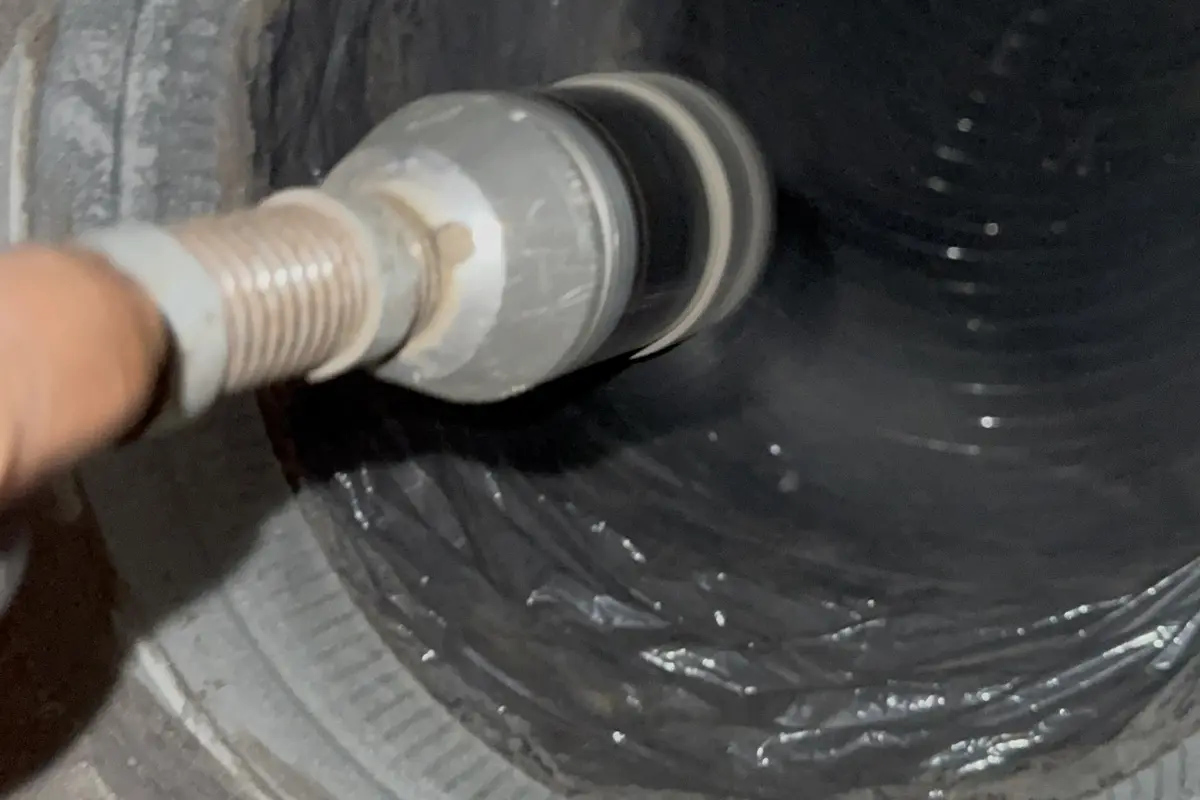
Office building air quality in Austin falls into a gray area between building owner responsibility and tenant expectations. Under most commercial leases, the landlord is responsible for maintaining the base building HVAC system, which includes ductwork in common areas and main distribution lines. Tenants are often responsible for their own supplemental systems and in-suite air quality.
ASHRAE Standard 62.1 sets the ventilation benchmark that most commercial leases reference. It specifies minimum outdoor air ventilation rates per person and per square foot of floor area. When ducts are heavily contaminated, the effective ventilation rate drops because the system is partially recirculating contaminants rather than delivering clean conditioned air. A building can meet ASHRAE mechanical requirements on paper while delivering poor air quality in practice if the ductwork is dirty.
<a href="/blog/sick-building-syndrome/">Sick building syndrome</a> is a real concern in Austin offices, particularly in older buildings downtown and along the Mopac corridor that may have deferred duct cleaning for years. Symptoms include headaches, fatigue, difficulty concentrating, and respiratory irritation that improve when employees leave the building. If multiple tenants or employees report similar symptoms, the HVAC system - and specifically the ductwork - should be investigated.
Property managers at Class A office buildings in The Domain, downtown high-rises, and newer developments along the East Riverside corridor increasingly include duct cleaning in their preventive maintenance programs. It is a selling point for tenant retention: documented air quality maintenance shows tenants that the building owner takes their health seriously. In a competitive office leasing market where Austin vacancy rates fluctuate with the tech economy, air quality is a legitimate differentiator.
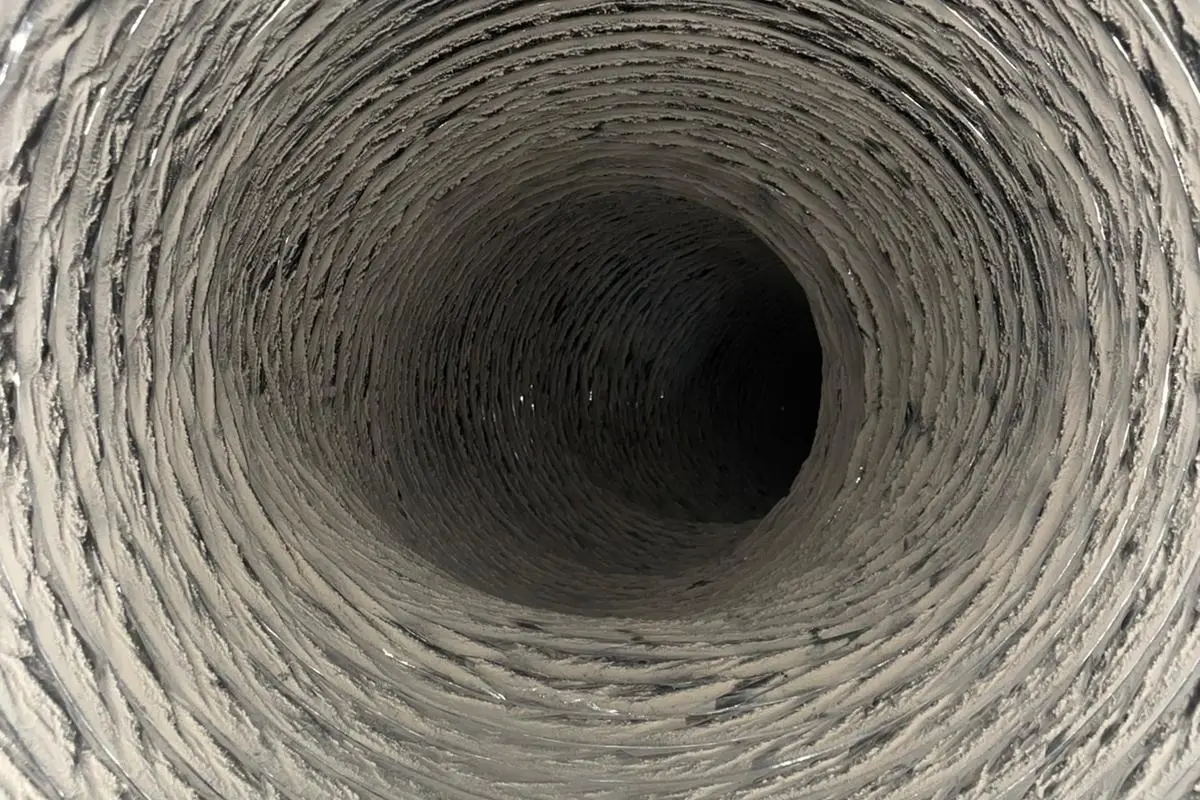
For property managers who have not scheduled duct cleaning, the starting point is a professional <a href="/air-duct-inspection/">duct inspection</a> with HD camera documentation. This gives you a factual assessment of conditions rather than guessing. The inspection report becomes a planning tool for budgeting the cleaning work and communicating the timeline to tenants.
Multi-Family and Apartment Building Duct Cleaning
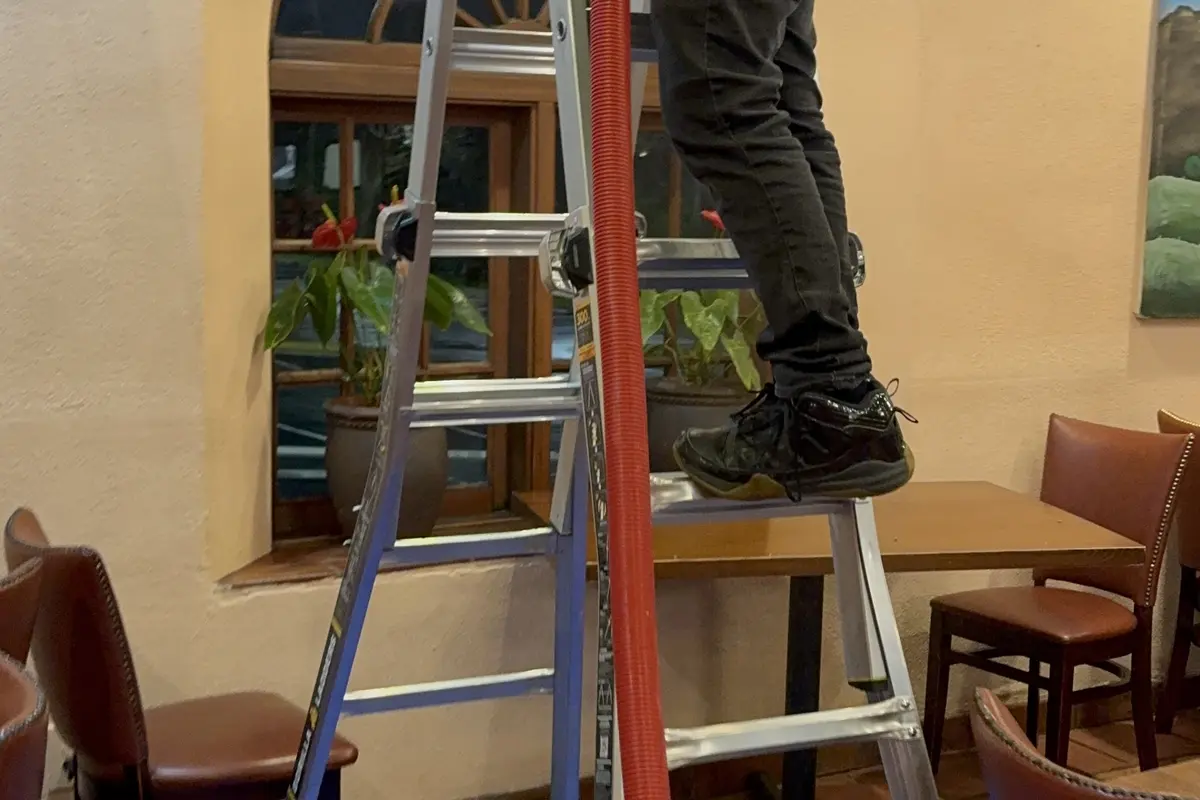
Austin's apartment market has expanded significantly over the past decade, with thousands of new units in complexes from Mueller to South Lamar to Domain North. Multi-family buildings present unique duct cleaning challenges because the systems serve multiple units, common areas may share ductwork with individual residences, and scheduling requires coordination with dozens of tenants.
Centralized HVAC systems - where a single rooftop or mechanical room unit serves multiple units through shared trunk lines - require cleaning the entire system as one project. You cannot effectively clean one apartment's ducts while leaving the shared trunk line dirty because contamination migrates from the uncleaned sections back into the clean ones. This means the cleaning needs to happen building-wide, which requires advance tenant notification and coordinated access.
Individual unit systems (common in newer Austin apartment builds where each unit has its own air handler and condenser) simplify the logistics because each unit can be cleaned independently. The best time to clean is during tenant turnover - after moveout and before the new tenant moves in. This avoids scheduling conflicts and allows thorough cleaning without working around someone's belongings.
Common areas - lobbies, hallways, fitness centers, clubhouses, and leasing offices - have their own ductwork that serves high-traffic spaces. These areas see more foot traffic, more door openings bringing in outdoor air and pollen, and more diverse contaminant sources than individual apartments. Common area ducts should be cleaned every 1-2 years in Austin, regardless of the schedule for individual units.
Property managers at larger complexes like those along East Riverside, in the Mueller development, or in the Domain area should build duct cleaning into their annual capital improvement budget. A phased approach - cleaning one building or one floor per quarter - spreads the cost and minimizes disruption. Documenting the cleaning schedule and results also strengthens the property's position in any tenant air quality complaints or disputes.
Time for a Duct Cleaning?
Find out what is inside your ducts with an HD camera inspection. Same-day appointments available.
Call (512) 601-4451Rate your home's indoor air quality in 2 minutes
Medical and Dental Office Air Quality Standards
Medical and dental offices in Austin face stricter air quality expectations than standard commercial spaces. The CDC's Guidelines for Environmental Infection Control in Health-Care Facilities specifically address HVAC system maintenance as part of infection prevention. While these guidelines are advisory for outpatient clinics (as opposed to hospitals where they are enforced), they establish the standard of care that patients and regulators expect.
OSHA's respiratory protection and general duty standards apply to all workplaces, including medical offices. If staff are exposed to airborne contaminants from a poorly maintained HVAC system, the practice owner can face citations. Dental offices are particularly susceptible because dental procedures generate aerosols that enter the HVAC system and settle in ductwork. Regular duct cleaning reduces the recirculation of these aerosols to other treatment rooms and the waiting area.
ASHRAE Standard 170 governs ventilation in healthcare facilities and specifies higher air change rates, filtration requirements (MERV 14 minimum for many healthcare applications), and pressure relationships between clean and less-clean spaces. While this standard applies primarily to hospitals and surgical centers, many Austin dental and medical practices voluntarily follow its guidance - especially since the heightened awareness around airborne transmission of illness in recent years.
From a practical standpoint, medical and dental offices should clean ductwork every 12-18 months. The combination of higher filtration requirements, aerosol generation, vulnerable patient populations, and regulatory scrutiny justifies more frequent cleaning than a standard office. The cost is modest relative to the liability exposure of a documented air quality problem in a healthcare setting.
Austin has a high concentration of medical and dental practices along corridors like Far West Boulevard, the Medical District near Seton Medical Center, and the growing healthcare hub in Cedar Park and Round Rock. Many of these practices occupy suites in multi-tenant medical buildings where the landlord controls the base building HVAC but individual practices are responsible for their suite conditions. If you lease medical office space, verify whether your lease assigns duct cleaning responsibility to the landlord or to you.
What to Expect During a Commercial Duct Cleaning Job
Commercial duct cleaning follows the same fundamental principles as residential - negative-pressure HEPA vacuum, mechanical agitation, and camera inspection - but at a larger scale with additional planning and documentation.
Pre-job assessment: Before any work begins, the crew walks the building, maps the HVAC system layout, identifies access points, and reviews the scope with the property manager. For larger buildings, this walkthrough may happen days or weeks before the actual cleaning to allow proper scheduling and tenant notification. The assessment identifies how many air handling units are in the building, the total linear footage of ductwork, access limitations, and any areas that require special attention.
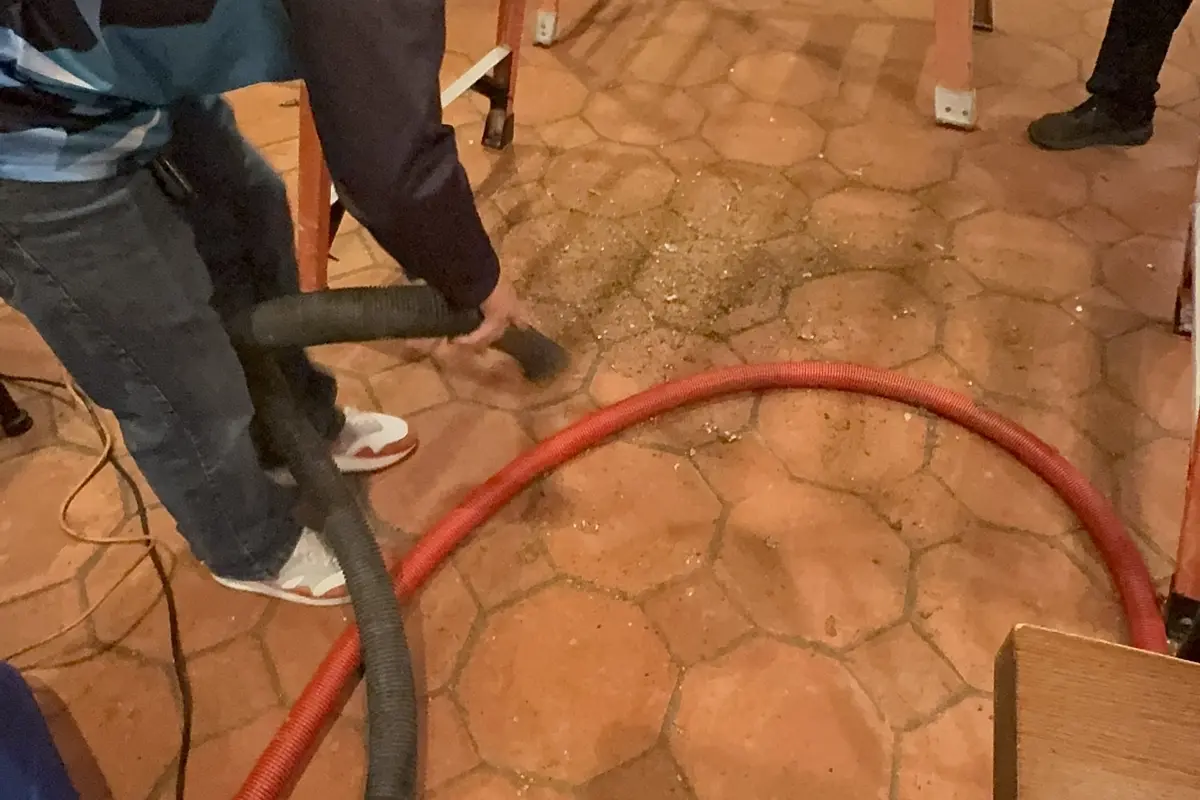
System isolation and zone cleaning: Commercial buildings are cleaned in zones rather than all at once. The technician isolates one zone by closing dampers or sealing branch connections, connects the vacuum to that section, and cleans all duct runs in that zone before moving to the next. This approach is essential for occupied buildings because it allows sections of the building to remain operational while others are being serviced. In a multi-story office building downtown, for example, one floor can be cleaned overnight while the other floors operate normally the next business day.
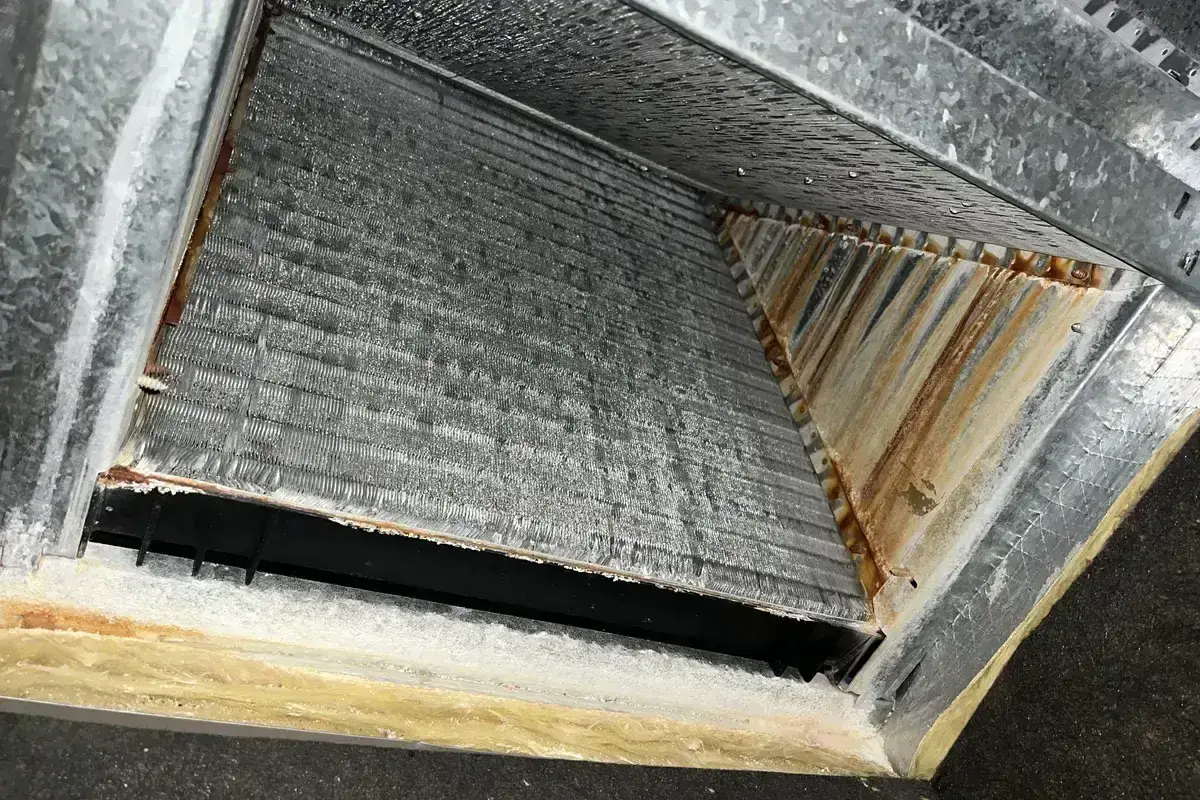
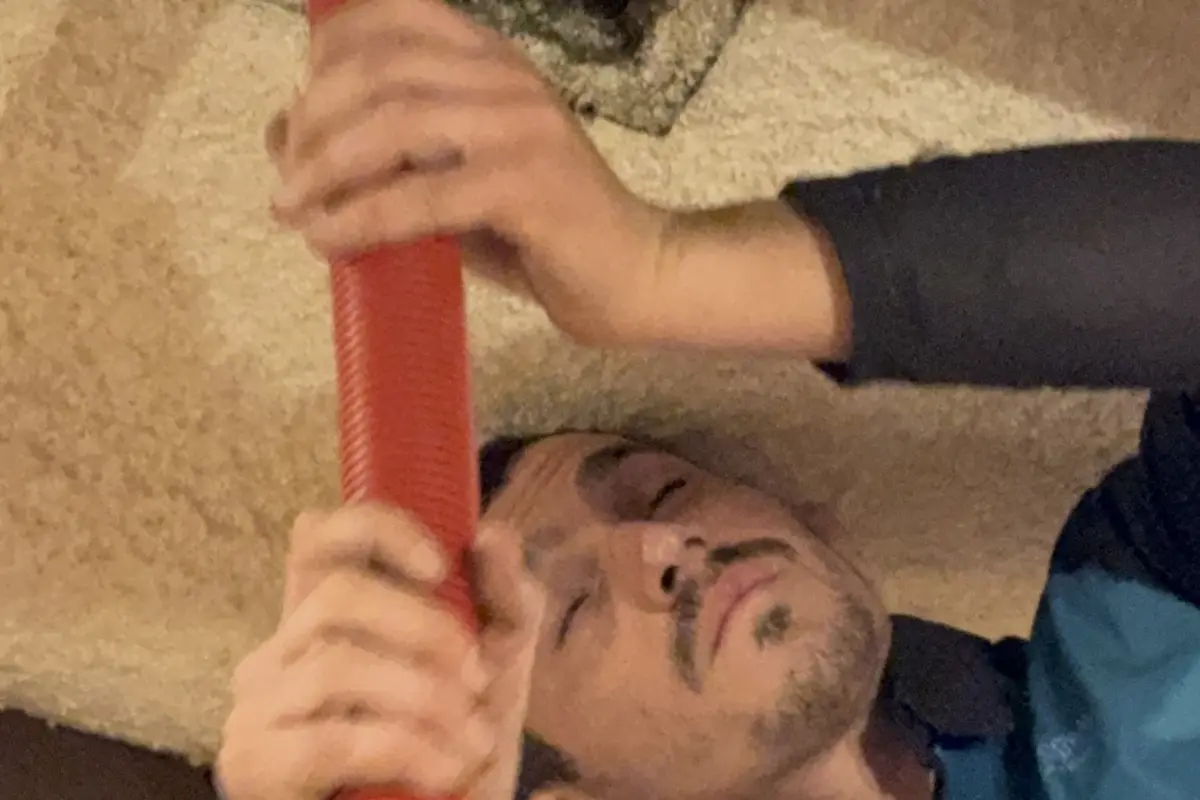
Equipment and access: Commercial jobs use the same HEPA-filtered negative-pressure vacuum technology as residential, but often with longer reach tools, higher-capacity collection systems, and access equipment for reaching ductwork in commercial ceiling plenums. Ceiling tiles are removed and replaced, access panels are opened and resealed, and rooftop units may need to be partially disassembled for thorough cleaning of air handling components.
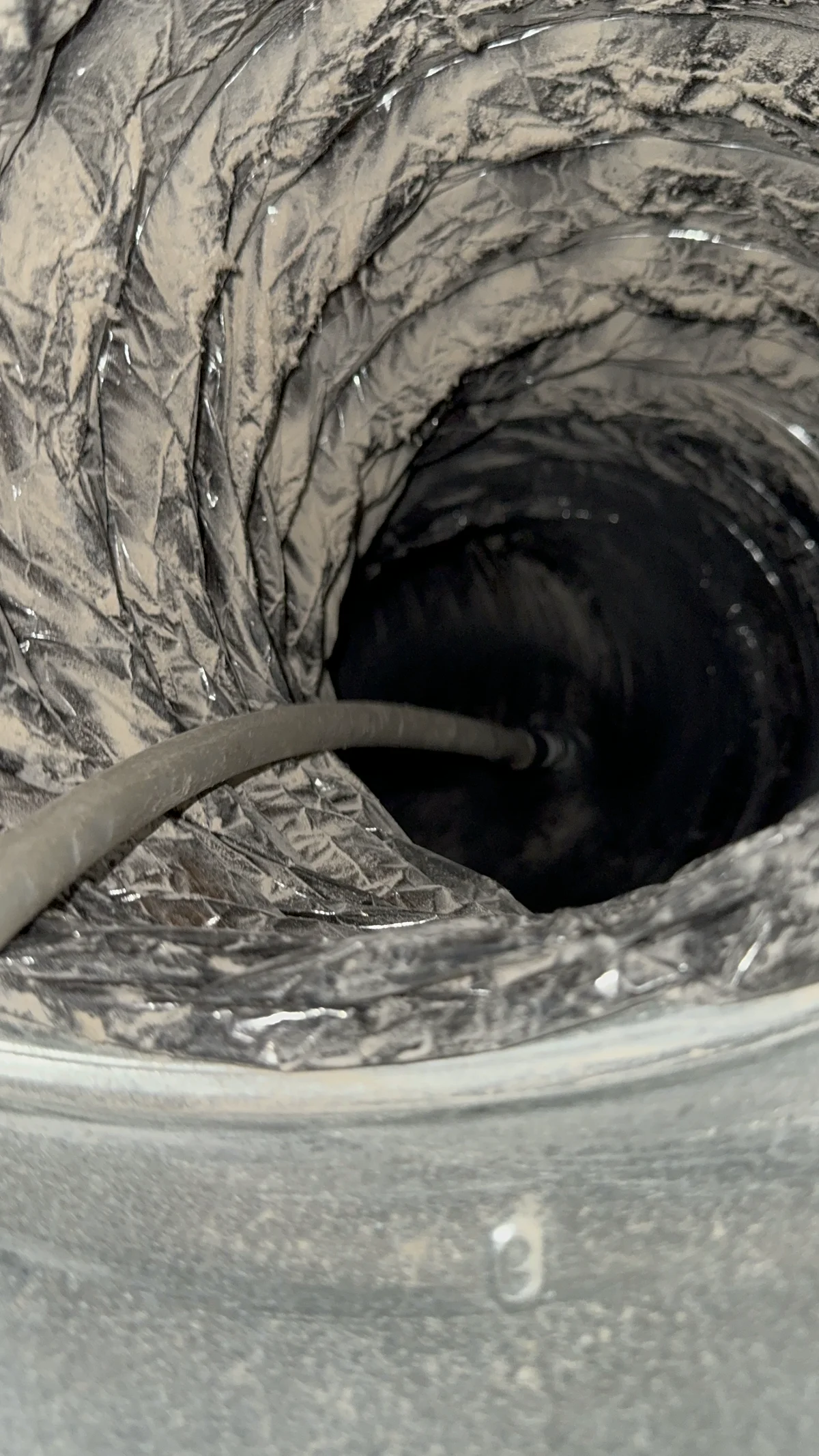
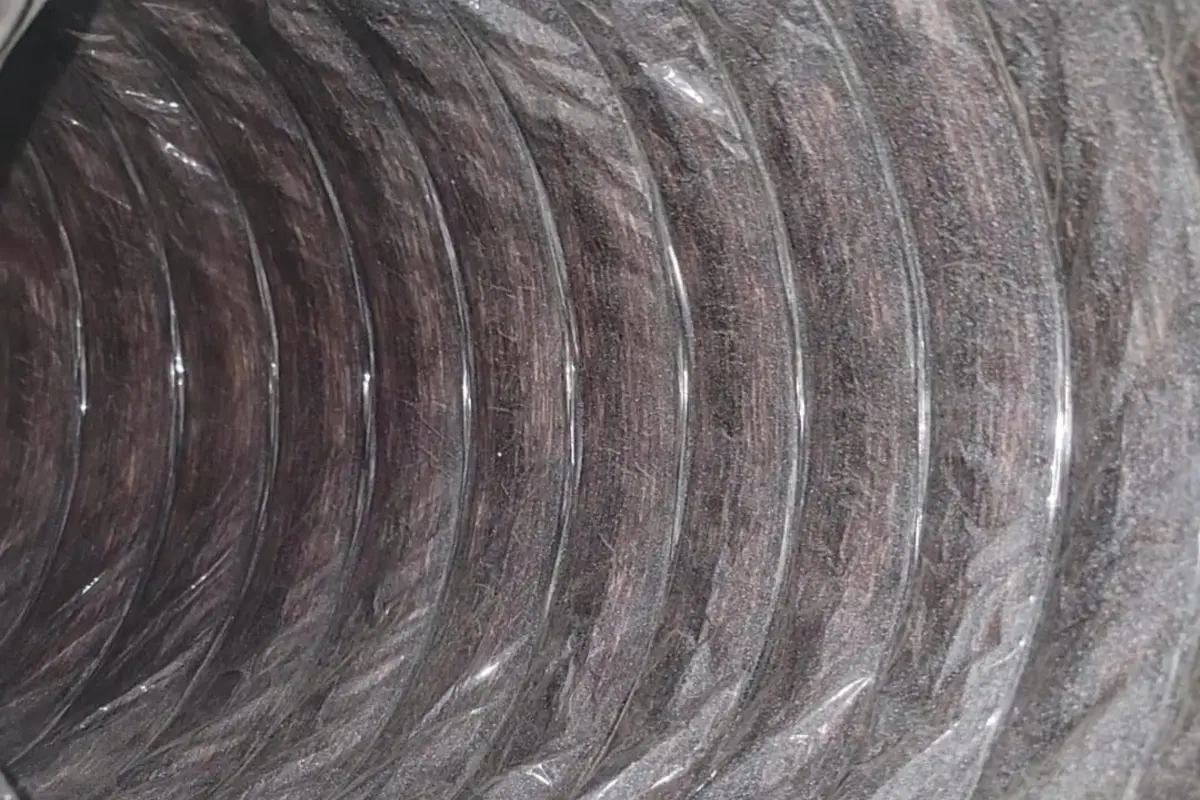
Documentation: After the job, the cleaning company provides a detailed report including before and after HD camera images, a summary of conditions found, any recommendations for repair or improvement, and certification that the work was completed to NADCA standards. This documentation goes into the building's maintenance file and is available for health department inquiries, tenant requests, or insurance records. Air Central provides comprehensive photographic documentation for every commercial job.
Choosing a Commercial Duct Cleaning Company in Austin
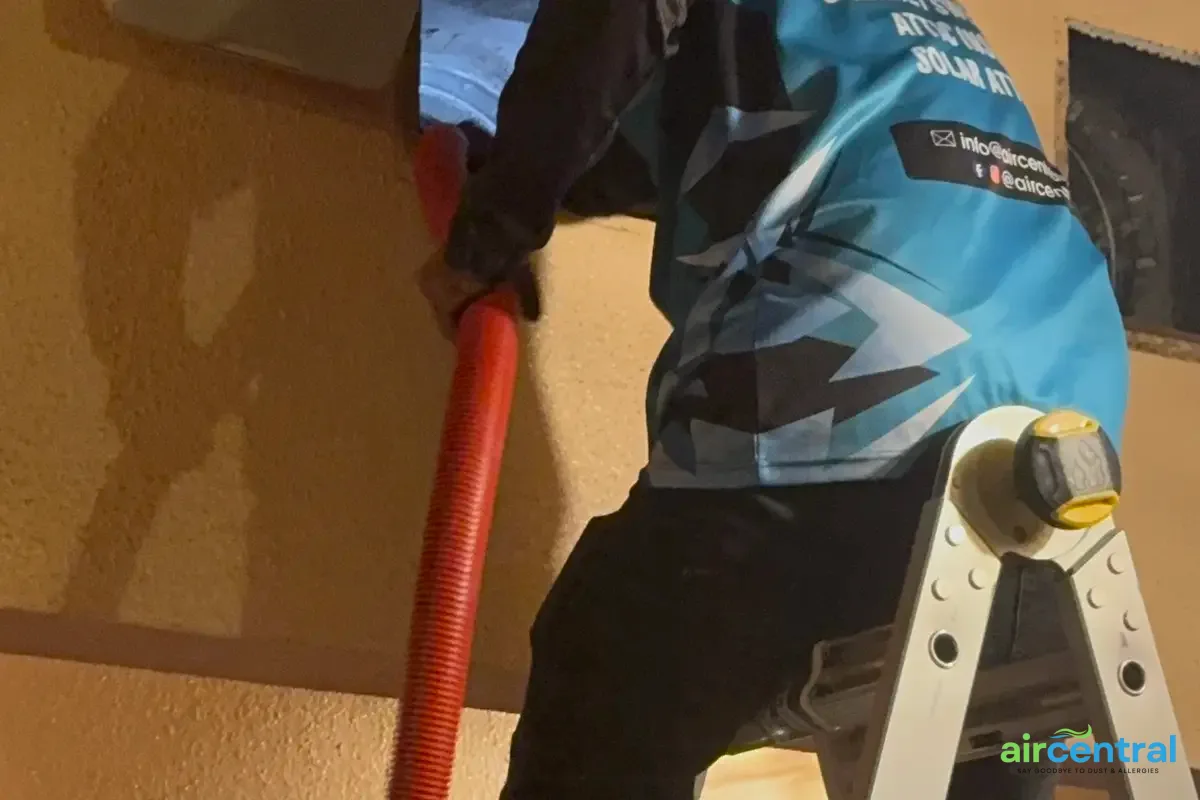
Not every duct cleaning company that handles residential work is equipped for commercial projects. Commercial buildings require larger equipment, more crew members, experience with complex HVAC configurations, and the ability to work in occupied buildings with minimal disruption. Before hiring, review these <a href="/blog/questions-duct-cleaners/">essential questions to ask any duct cleaning company</a>. Here is what to evaluate.
Experience with your building type matters. A company that cleans single-family homes all day may not have the equipment or experience to handle a large office building's ductwork or a restaurant's grease-contaminated supply system. Ask for references from similar commercial projects - office buildings, restaurants, medical facilities, or apartment complexes - in the Austin area.
<a href="/blog/nadca-certification-matters/">NADCA standards</a> compliance is the industry benchmark. NADCA's Assessment, Cleaning, and Restoration (ACR) standard defines the process for commercial duct cleaning, including pre-cleaning assessment, cleaning methodology, and post-cleaning verification. Ask whether the company follows NADCA ACR standards and can document compliance.
Insurance coverage for commercial work should include general liability, workers' compensation, and professional liability. Commercial jobs involve more risk than residential - heavier equipment on commercial rooftops, work at height in mechanical rooms, and potential business interruption if something goes wrong. Verify coverage limits are appropriate for your property value.
Scheduling flexibility is critical for commercial clients. Most commercial cleaning happens after business hours, on weekends, or during holiday closures to avoid disrupting operations. A company that only works Monday through Friday 8-to-5 cannot serve most commercial clients effectively. Air Central schedules commercial work around your business operations, including evenings, weekends, and phased multi-day projects.
Air Central has served Austin commercial and residential clients since 2014. Our 500+ Google reviews at 5.0 stars reflect the quality and professionalism we bring to every job, whether it is a single-family home or a multi-unit commercial property. We provide detailed estimates and comprehensive documentation for every commercial project.
Scheduling and Minimizing Business Disruption
The biggest concern commercial clients raise is disruption. Nobody wants duct cleaning to shut down their business, disturb tenants, or interfere with customer experience. Smart scheduling and phased execution solve this problem.
After-hours cleaning is the standard approach for most commercial projects. Offices are cleaned evenings and weekends when employees are gone. Restaurants are cleaned during daytime hours before the kitchen opens - typically 7 AM to 11 AM for dinner-service restaurants, or on their closed day. Medical offices schedule cleaning on days they are closed or during holiday weekends. The key is matching the cleaning schedule to the business's quiet periods.
Phased cleaning breaks a large project into manageable sections. A 10-story office building does not need to shut down entirely. Clean two floors per night over five nights, and no tenant is disrupted for more than a few overnight hours. A large apartment complex can be cleaned one building at a time over several weeks. A restaurant can have the dining area supply ducts cleaned one day and the kitchen-adjacent supply system another.
Advance communication with tenants, employees, and customers prevents confusion. Property managers should notify tenants at least one week before scheduled duct cleaning, explaining what will happen, when, and what (if anything) they need to do - such as clearing items from under ceiling vents. For medical offices, patient scheduling should account for the cleaning day to avoid appointments during or immediately after the work.
Noise management matters, especially for buildings with shared walls or floors. Commercial HEPA vacuums generate significant noise, and compressed air tools create sharp bursts during active cleaning. After-hours scheduling handles most noise concerns, but for buildings adjacent to residential units or hotels, discuss noise expectations with the cleaning crew in advance.
A well-planned commercial duct cleaning project is invisible to your customers and minimally disruptive to your operations. The planning phase - walkthrough, scheduling, tenant communication - takes more time than the residential equivalent, but it pays off in a smooth execution. Air Central handles the logistics planning as part of every commercial project so you can focus on running your business.
Related Services
Learn more about our professional services related to this topic:
- Air Duct Cleaning - Remove dust, allergens, and debris from your entire HVAC system for cleaner indoor air.
- Air Duct Inspection - Diagnose leaks, blockages, and efficiency issues with HD camera inspection.
Want the full picture?
Read our complete guide: The Ultimate Guide to Air Duct Cleaning in Austin, TX (2026) →Have questions about air duct cleaning? Our team is available 7 days a week. Call us at (512) 601-4451 or visit our contact page.