Blown-in cellulose insulation costs $0.80-$1.50 per square foot installed, while blown-in fiberglass costs $1.00-$2.00 per square foot. Austin attics need R-38 to R-49 to meet current energy code and manage summer attic temperatures that exceed 150 degrees. Cellulose offers slightly better R-value per inch (R-3.5 vs R-2.5) and is cheaper, but fiberglass resists moisture better and does not settle as much over time. Call (512) 601-4451 to schedule an attic insulation assessment.
Blown-In Cellulose vs Blown-In Fiberglass: Material Comparison
Blown-in cellulose is made from recycled paper products (mostly newsprint) treated with borate fire retardant. It has an R-value of approximately R-3.5 per inch when freshly installed. Cellulose is dense, fills cavities and gaps well, and provides some air-sealing benefit because the fibers pack tightly together. It is the more affordable option and is produced from roughly 85% recycled content.
Blown-in fiberglass (also called loose-fill fiberglass) is made from spun glass fibers. It has an R-value of approximately R-2.5 per inch. Fiberglass is lighter than cellulose, does not absorb moisture, and does not settle as much over time. It will not support combustion even without chemical treatment, and it does not attract pests.
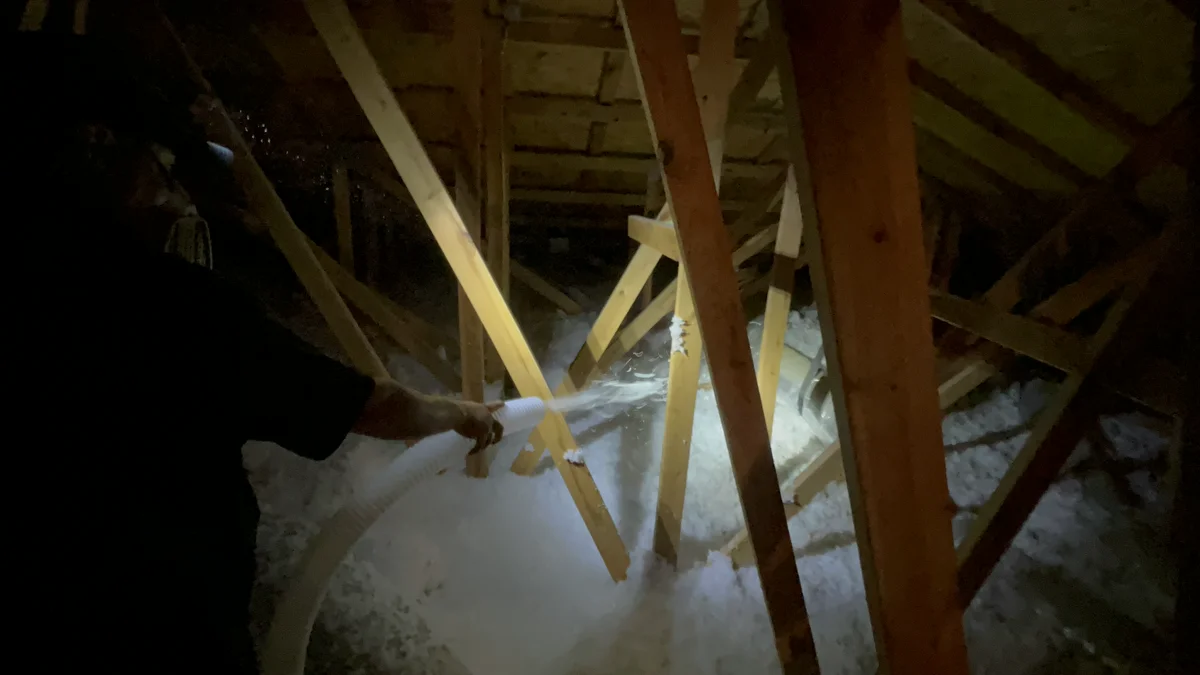
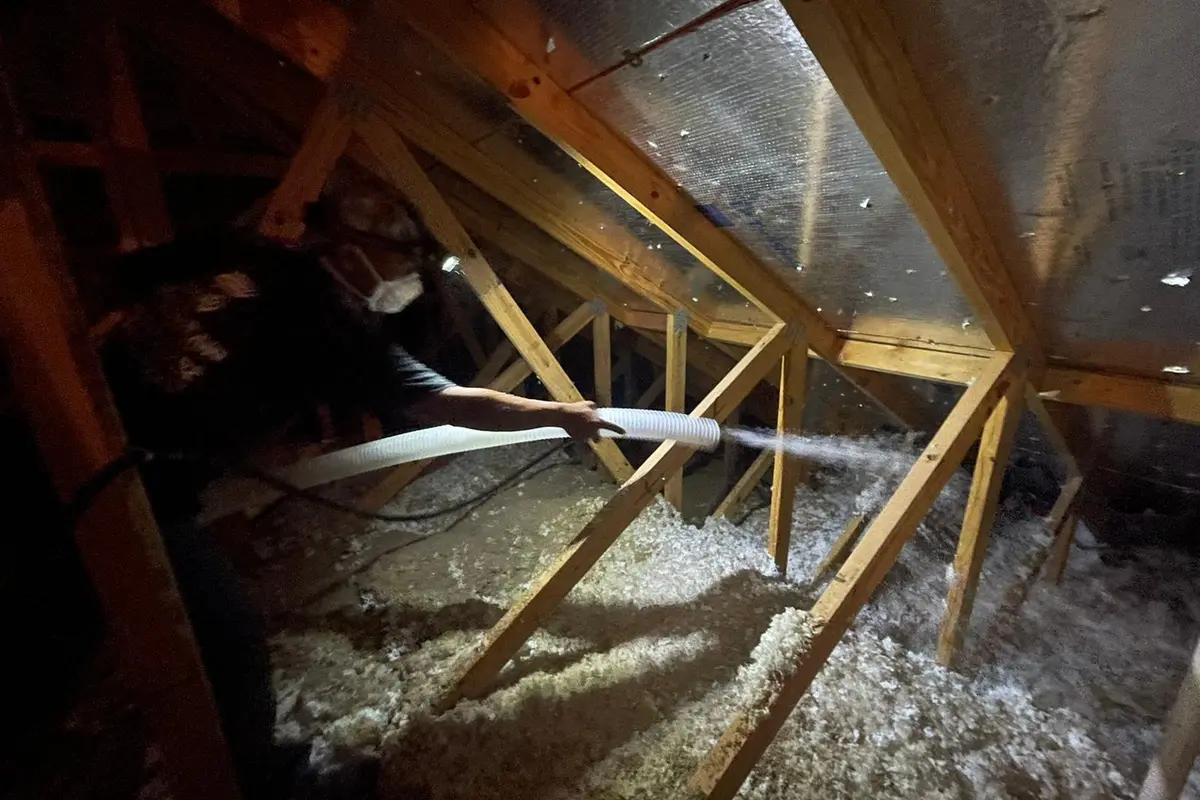
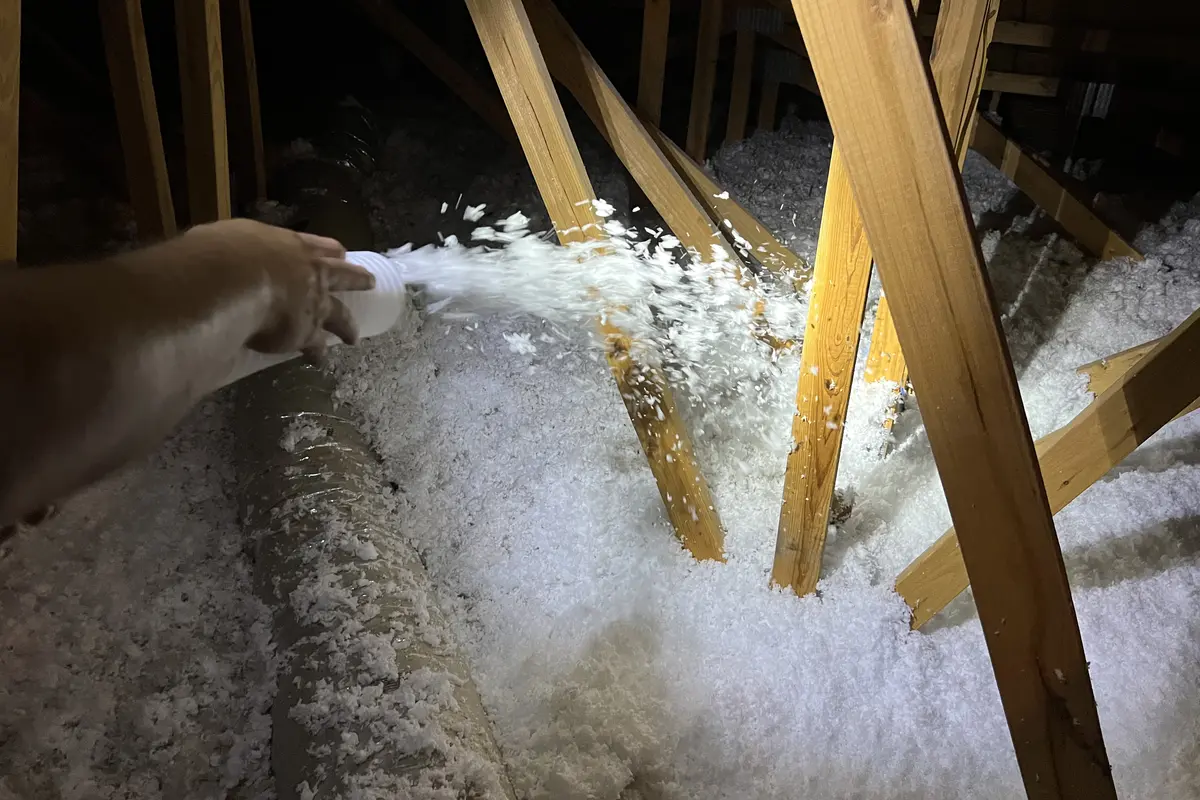
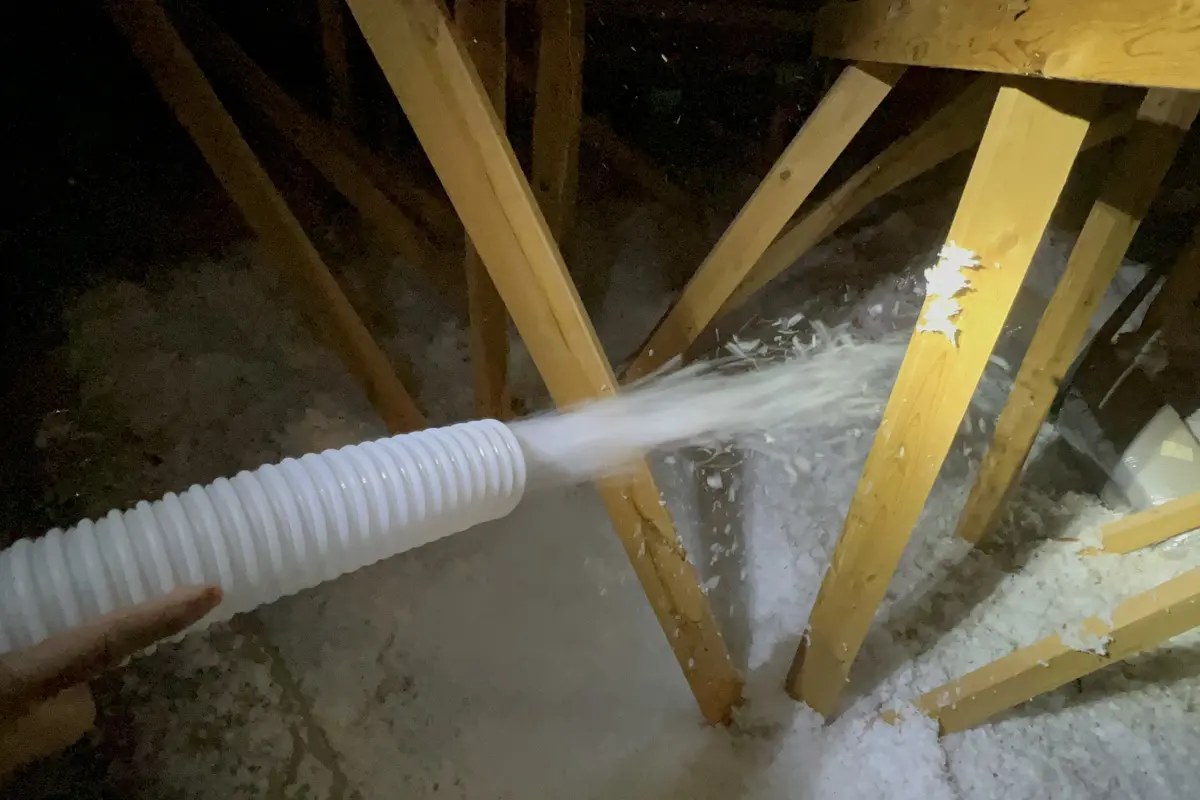
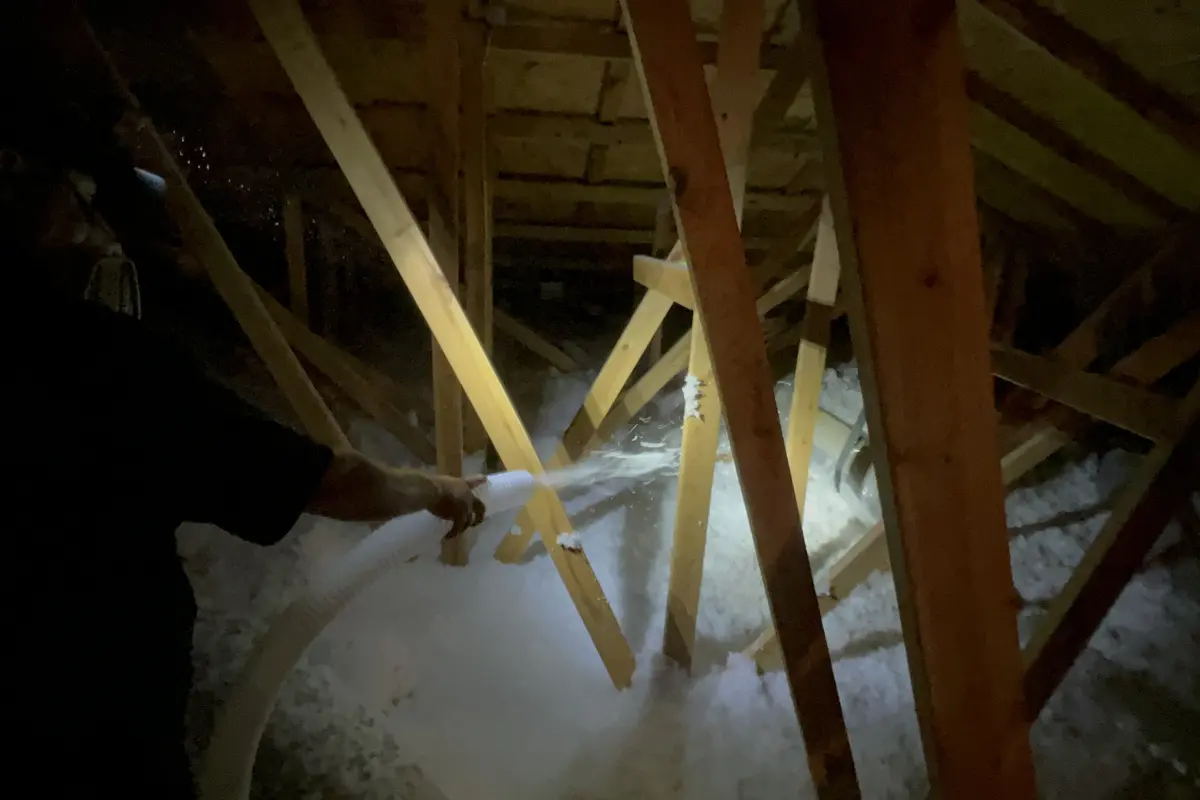
Both materials are installed using a blowing machine that feeds material through a long hose into the attic space. The installation process is similar for both - a technician feeds bags of material into the machine, which breaks up and distributes the insulation evenly across the attic floor. Professional installation takes 2-4 hours for a typical Austin home.
One important distinction: cellulose settles approximately 15-20% over the first few years after installation, which reduces its effective R-value. A quality installer accounts for this by initially blowing cellulose to a higher depth than the target. Fiberglass settles less, typically 2-4%, so the installed depth stays closer to the original.
Cost Breakdown for Austin Homes
For a typical 1,500 square foot Austin home attic, here is what to expect for professionally installed blown-in insulation to reach R-38.
Blown-in cellulose to R-38 requires approximately 10-11 inches of settled depth (installed at 12-13 inches to account for settling). Material cost runs $0.30-$0.50 per square foot. Installed cost including labor, equipment, and cleanup ranges from $0.80-$1.50 per square foot. Total project cost: $1,200-$2,250 for a 1,500 square foot attic.
Blown-in fiberglass to R-38 requires approximately 14-16 inches of depth. Material cost runs $0.40-$0.60 per square foot. Installed cost including labor and equipment ranges from $1.00-$2.00 per square foot. Total project cost: $1,500-$3,000 for a 1,500 square foot attic.
To reach R-49 (the recommended level for maximum energy savings in Austin), add approximately 25-30% more material and cost to the R-38 numbers. Going from R-38 to R-49 is an incremental investment that pays for itself faster in Austin than in milder climates because of the extreme cooling load.
Price factors that move the cost up or down: attic accessibility (walk-up stairs vs scuttle hole), existing insulation that needs removal, obstacles like HVAC equipment, low clearance areas, and whether air sealing is included in the scope. Air sealing (caulking and foaming gaps around wires, pipes, recessed lights, and top plates) should always be done before adding insulation - it typically adds $300-$800 but dramatically improves the insulation's performance.
How Much Insulation Do Austin Attics Need?
Austin falls in IECC Climate Zone 2, which requires a minimum of R-38 attic insulation in new construction. For existing homes, the Department of Energy recommends R-38 to R-49 for optimal energy performance.
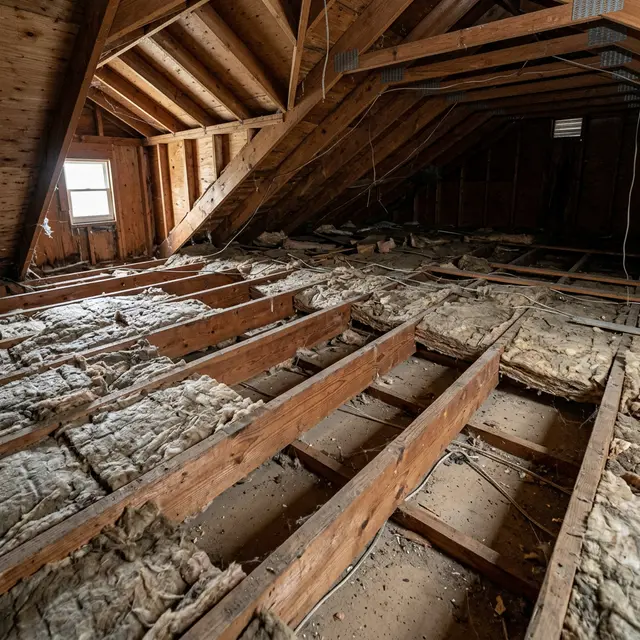
Most Austin homes built before 2000 have R-19 to R-30 in the attic - well below current recommendations. Homes built in the 1970s and 1980s often have only R-11 to R-19, and some older homes have as little as R-5 of compressed, deteriorated insulation.
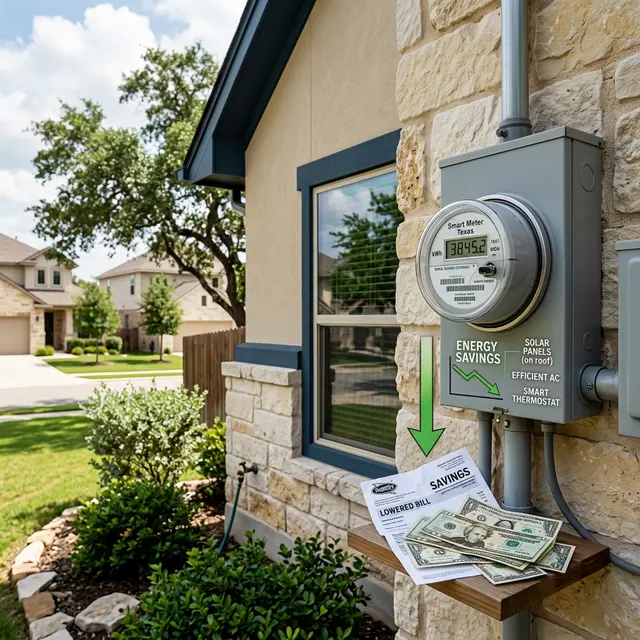
Austin's extreme summer heat makes adequate attic insulation critical. Attic temperatures routinely exceed 150 degrees from June through September. Without sufficient insulation, that heat radiates through the ceiling and forces your AC to work overtime. The difference between R-19 and R-38 can reduce cooling costs by 15-25% in Austin homes.
You can check your current insulation level with a tape measure. Measure the depth of the existing insulation at several points across the attic (it is often uneven). Multiply the depth by the R-value per inch for the material type: fiberglass batts are roughly R-3.2 per inch, blown fiberglass is R-2.5 per inch, and blown cellulose is R-3.5 per inch. If the result is below R-30, you are losing energy and money.
Fire Resistance, Moisture, and Settling
Fire resistance is a common concern. Blown-in cellulose is treated with borate compounds that make it Class 1 fire rated. It chars rather than burns and can actually slow fire spread. Fiberglass is naturally non-combustible - glass does not burn. Both materials meet building code fire requirements.
Moisture behavior differs significantly between the two materials. Cellulose absorbs moisture and can retain up to 130% of its weight in water. In Austin's humid climate, a roof leak or condensation issue can saturate cellulose insulation, reducing its R-value to near zero and potentially causing ceiling drywall damage. Wet cellulose is heavy and slow to dry. Fiberglass does not absorb water - moisture passes through it and drains. It dries quickly and returns to its original R-value after getting wet.
Settling is the long-term performance concern. Cellulose settles 15-20% over the first 1-3 years, then stabilizes. A reputable installer blows cellulose to a higher initial depth to compensate, and a warranty should cover settling beyond the expected range. Fiberglass settles minimally (2-4%) and maintains its installed depth for decades.
Both materials can coexist with existing insulation. If your attic already has fiberglass batts, blown-in cellulose or fiberglass can be added on top. There is no compatibility issue with layering different insulation types - the R-values simply add together.
Wondering About Your Insulation Level?
We measure your current R-value and show you exactly where you stand. Professional attic assessments available.
Call (512) 601-4451Estimate how much you could save on energy bills
The Installation Process
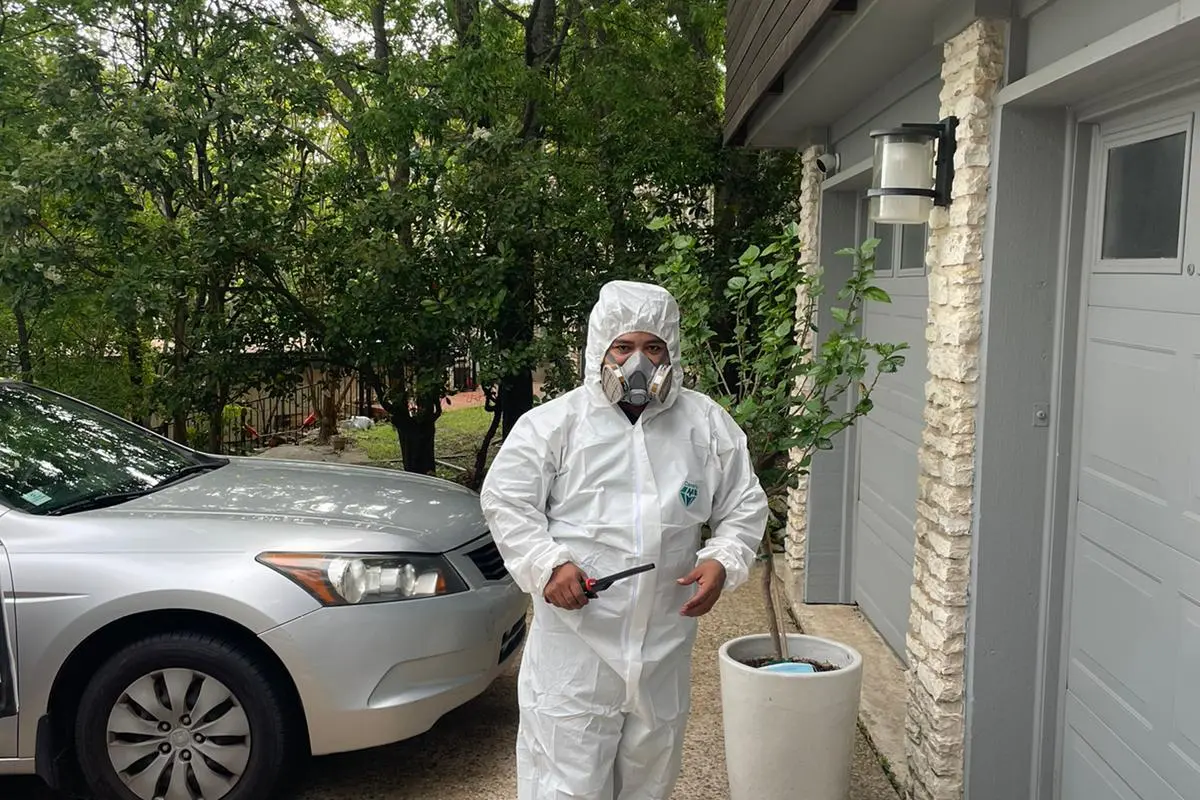
Professional blown-in insulation installation follows a standard sequence regardless of material type. Understanding the process helps you evaluate whether an installer is doing the job properly.
Step one is an attic assessment. The installer inspects the attic for existing insulation condition, air leaks, ductwork issues, proper ventilation (soffit and ridge vents), and any moisture problems. Issues found during the assessment should be addressed before insulation is added.
Step two is air sealing. Gaps around plumbing penetrations, electrical wires, recessed light housings, HVAC boots, and the top plates of interior walls are sealed with caulk or expanding foam. This is the single most important step - insulation without air sealing performs 30-50% worse because warm air bypasses the insulation through these gaps.
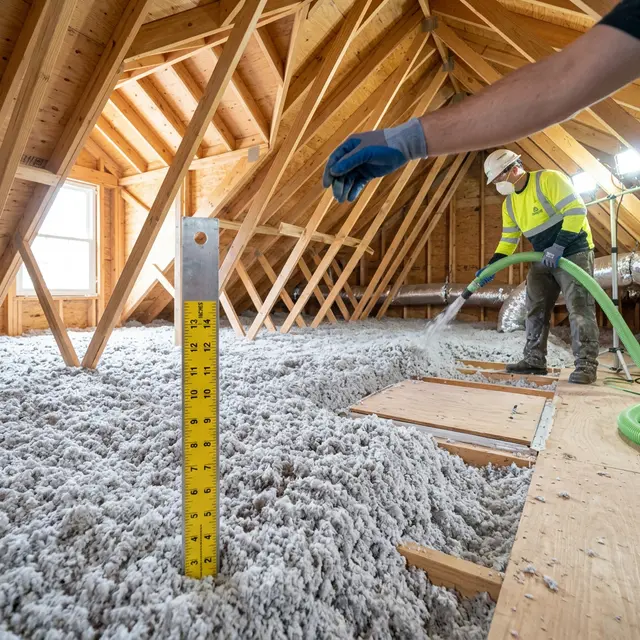
Step three is installing depth markers. Small rulers or markers are placed at intervals across the attic so the installer can verify consistent depth during and after blowing.
Step four is blowing the insulation. The machine operator feeds material into the blower while the technician in the attic directs the hose, starting at the farthest point from the access and working backward. The material is distributed evenly across the attic floor, filling around trusses and joists to the target depth.
Step five is verification and cleanup. The installer checks depth at multiple points using the markers, verifies that no areas were missed or under-filled, and cleans up any material that escaped the attic. A professional installer will provide a certificate showing the material used, R-value achieved, and square footage covered.
Which Material Should Austin Homeowners Choose?
For most Austin homes, the choice between cellulose and fiberglass comes down to budget, moisture risk, and long-term maintenance preference.
Choose cellulose if budget is the priority, your roof is in good condition with no leak history, and you want the highest R-value per inch. Cellulose is 15-25% cheaper than fiberglass for the same R-value and provides slightly better air-sealing due to its density. It is the most common choice for Austin attic insulation projects.
Choose fiberglass if your attic has any history of moisture issues, if your roof is older and may develop leaks before replacement, or if you want a material that maintains its performance without settling. Fiberglass costs more upfront but eliminates the moisture absorption risk that can be a concern in Austin's humid climate.
Both materials, when properly installed to R-38 or higher with air sealing, will significantly reduce your cooling and heating costs. The difference in energy performance between cellulose and fiberglass at the same R-value is minimal - proper installation and adequate depth matter far more than material choice.
Air Central installs blown-in insulation in Austin-area attics. Our team assesses your current insulation, performs air sealing, and installs to the target R-value with verified depth measurements. Call (512) 601-4451 to schedule your attic insulation assessment.
Related Services
Learn more about our professional services related to this topic:
- Attic Insulation - Premium blown-in insulation to cut energy costs and improve year-round comfort.
- Solar Fan Installation - Solar-powered attic ventilation that cuts cooling costs naturally.
Want the full picture?
Read our complete guide: Attic Insulation for Austin Homes: The Complete Guide (2026) →Have questions about attic & insulation? Our team is available 7 days a week. Call us at (512) 601-4451 or visit our contact page.