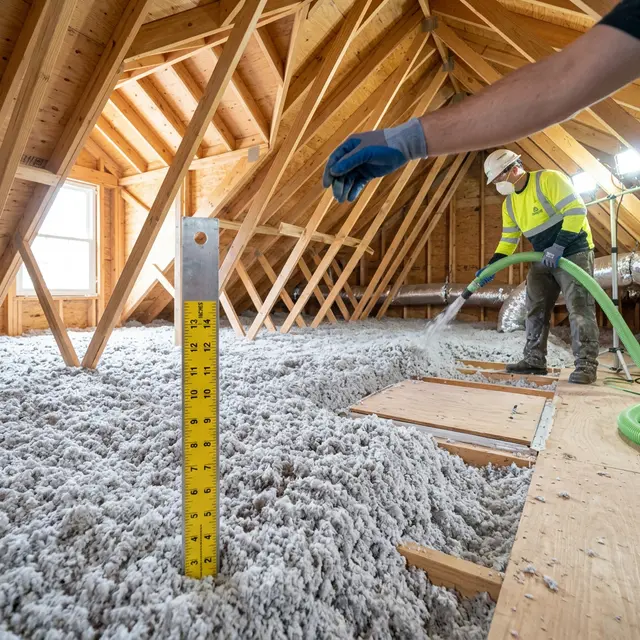
Proper attic ventilation reduces attic temperatures from 150+ degrees to 100-110 degrees in Austin summers, lowering cooling costs by 10-30% and extending roof life by 5-10 years. The most effective approach combines passive intake vents (soffit) with active exhaust (solar attic fans) to create continuous airflow.
Why Attic Ventilation Matters in Austin
Austin attics are extreme environments. On a 100-degree summer day, attic temperatures routinely hit 140-160 degrees. That superheated air sits directly above your ceiling, radiating heat downward into your living spaces and forcing your AC to run longer to compensate. The Department of Energy estimates that proper attic ventilation can reduce cooling costs by 10-30% - and in Austin, where cooling accounts for 50-60% of summer electricity bills, that translates to real savings.
Heat is not the only problem. Poor ventilation traps moisture that rises from showers, cooking, and daily activities. In Austin's humid climate, that trapped moisture accelerates roof deck deterioration, degrades insulation effectiveness, and can shorten your roof's lifespan by years. Proper ventilation creates airflow that carries both heat and moisture out of the attic space.
Types of Attic Ventilation
Attic ventilation works on a simple principle: cool air enters low (intake) and hot air exits high (exhaust). The most common intake vents are soffit vents - perforated panels installed along the eaves where the roof meets the exterior walls. Soffit vents allow outside air to enter the attic at the lowest point. For exhaust, you have several options: ridge vents along the peak of the roof, static roof vents (box vents), turbine vents, and powered attic fans.
Ridge vents run along the entire roof peak and provide passive exhaust across the full length of the attic. They work well in moderate climates but often cannot move enough air in Austin's extreme heat. Static box vents are inexpensive but have limited capacity. Turbine vents spin with wind to create suction but are inconsistent since they depend on wind speed.
Solar Attic Fans: The Austin Solution
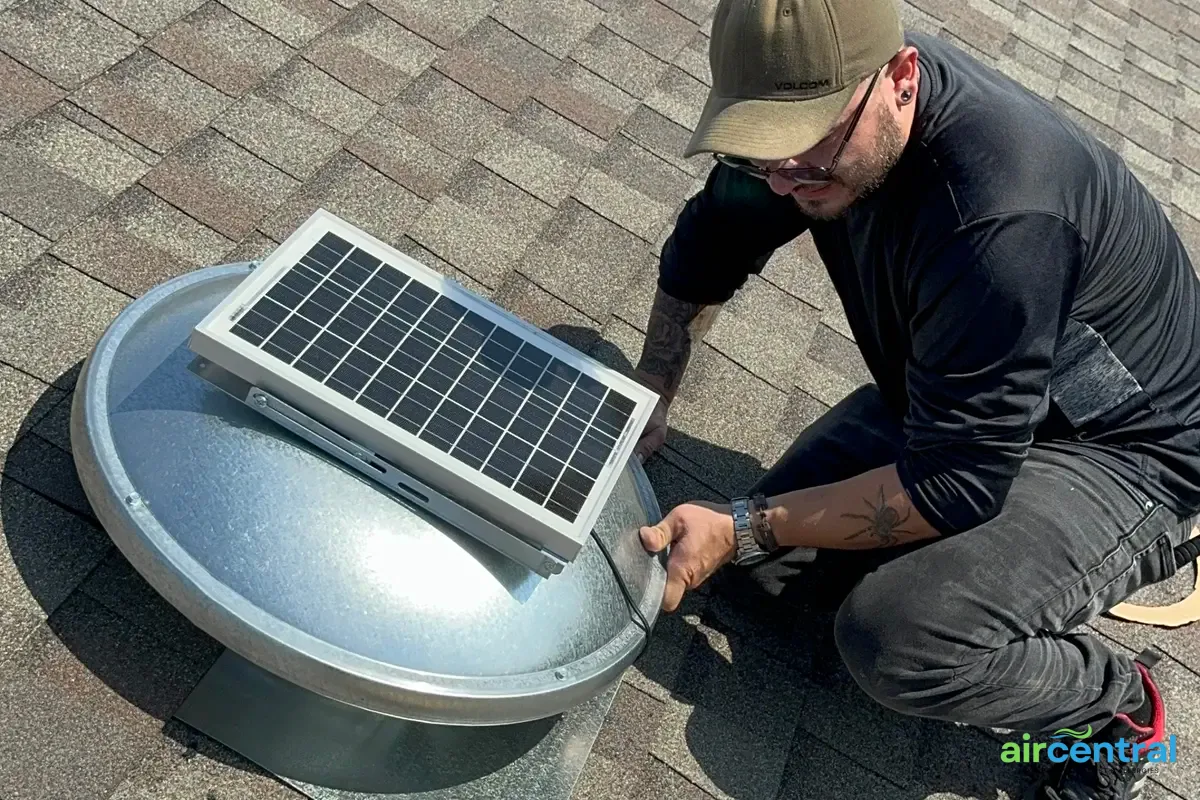
Solar attic fans are the most effective exhaust solution for Austin homes because they run hardest when you need them most - during peak sun hours when attic temperatures are highest. A single solar fan rated at 1,200-1,600 CFM can reduce attic temperatures by 30-40 degrees, bringing a 160-degree attic down to 120-130 degrees.
"I measure attic temperatures in every home we service, and the difference between a vented and unvented Austin attic is dramatic," says Nessi Ziv, owner of Air Central. "Unvented attics regularly hit 165-170 degrees in July. After installing a solar fan, we typically measure 110-120 degrees. That 50-degree drop means your ceiling is no longer radiating heat into your living space."
The solar panel powers the fan directly with no wiring to your electrical system, so there is zero impact on your electric bill. Most Austin homes benefit from one or two fans depending on attic square footage. Air Central installs commercial-grade solar fans rated for Texas heat - not the consumer-grade units from hardware stores that burn out after a couple of seasons.
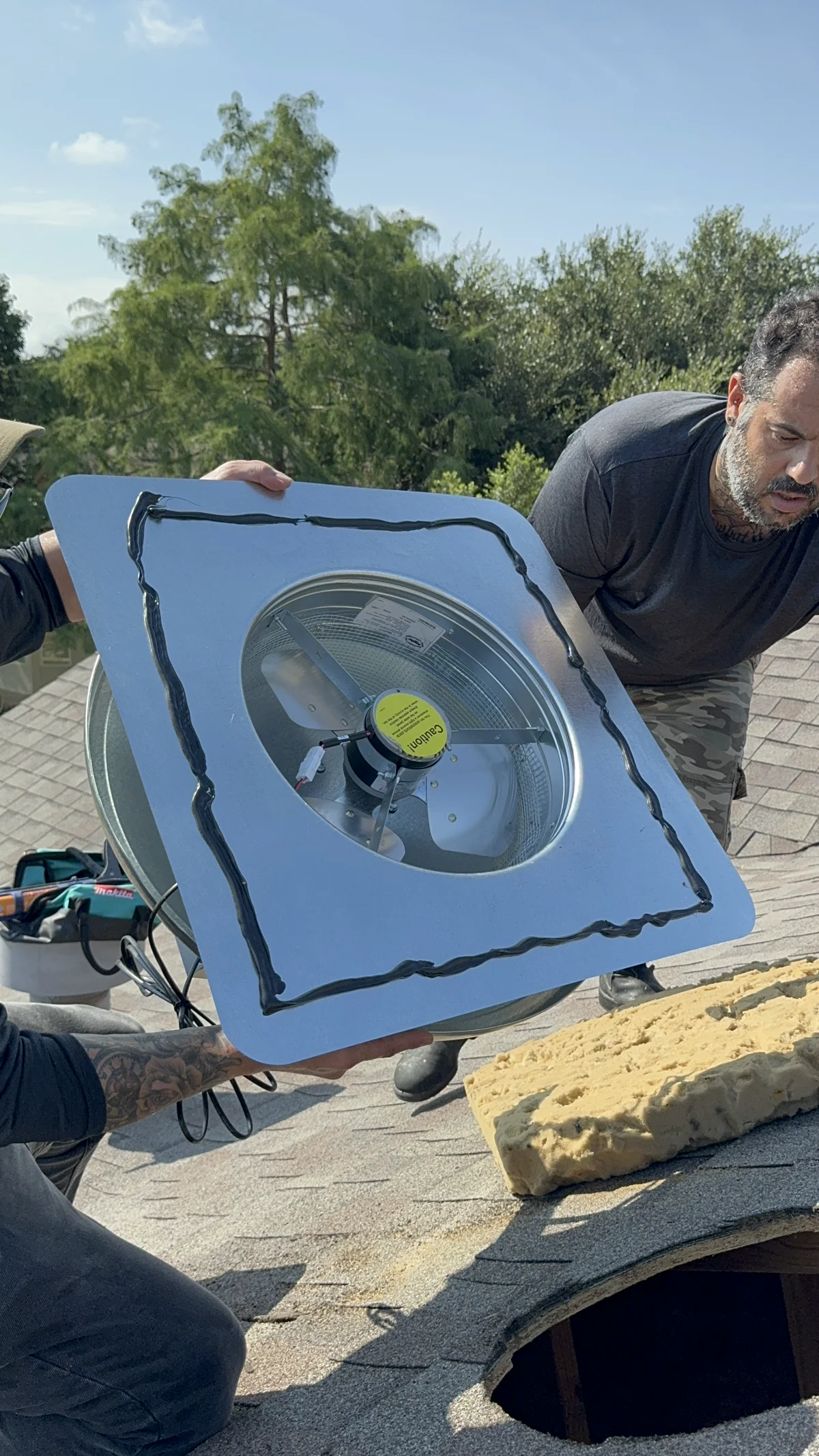
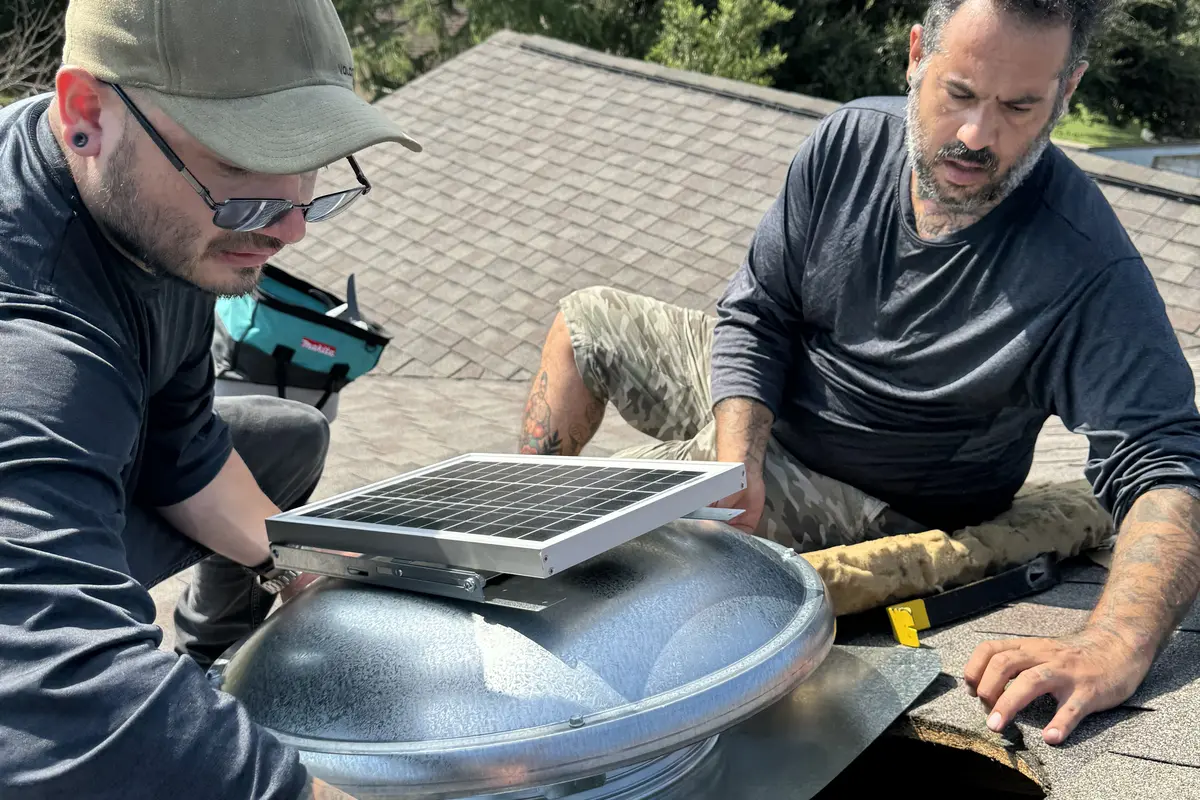
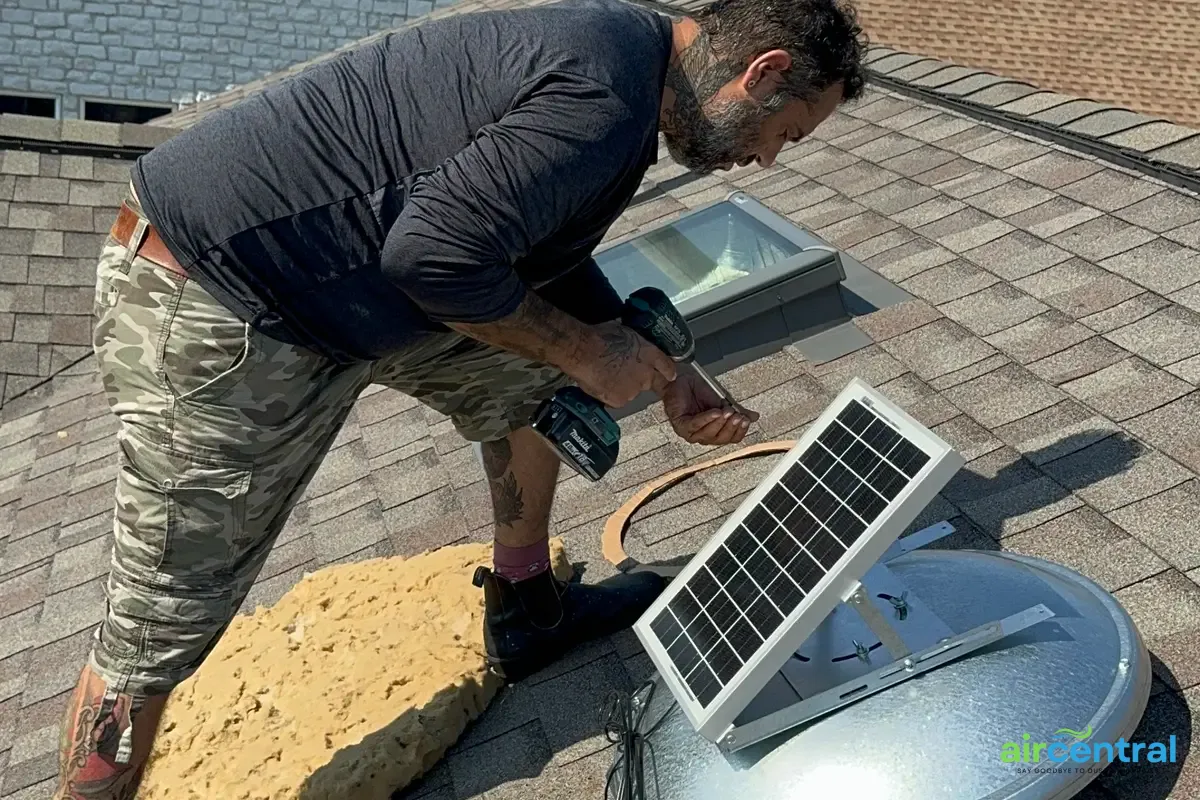
Installation involves cutting a precise opening in the roof, mounting the fan and solar panel, and sealing everything to prevent leaks. A professional installation typically takes 2-3 hours per fan and includes a warranty on both the unit and the roof penetration seal.
Wondering About Your Insulation Level?
We measure your current R-value and show you exactly where you stand. Professional attic assessments available.
Call (512) 601-4451Estimate how much you could save on energy bills
The Ventilation and Insulation Connection
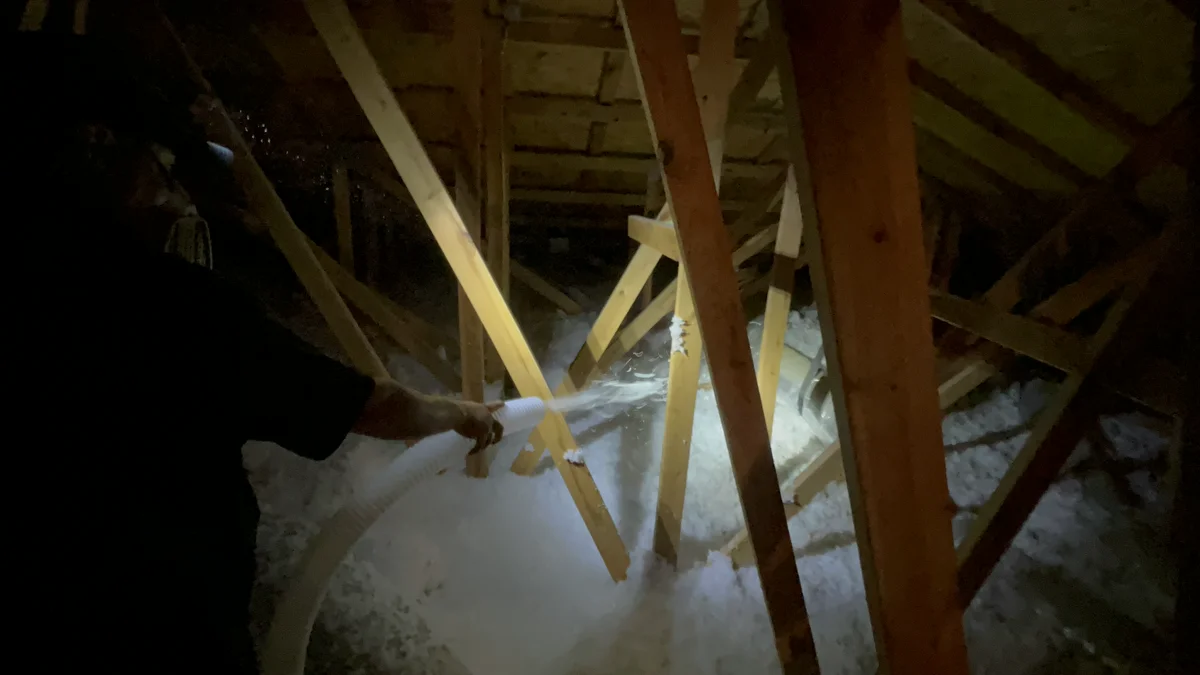
Ventilation and insulation work together but serve different purposes. Insulation slows heat transfer from the attic into your living space. Ventilation removes the heat from the attic itself. You need both. Adding insulation without fixing ventilation traps more heat in the attic, which degrades the insulation over time. Adding ventilation without adequate insulation lets the remaining heat transfer through faster.
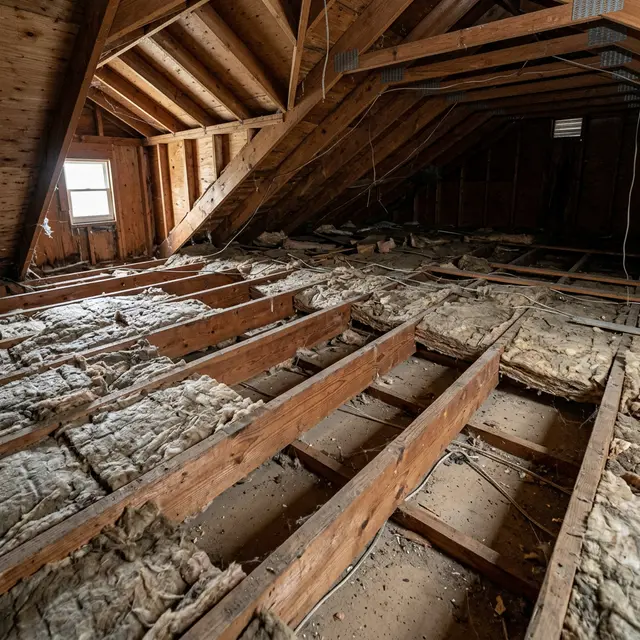
The ideal setup for an Austin home is R-38 to R-60 insulation on the attic floor (check your current R-value by measuring insulation depth) combined with balanced intake and exhaust ventilation. The general rule is 1 square foot of net free vent area for every 150 square feet of attic floor space, split evenly between intake and exhaust.
Signs Your Attic Ventilation Is Inadequate
If your upstairs rooms are noticeably hotter than downstairs, that heat is likely radiating from a poorly ventilated attic. Other signs include ice dam formation during rare Austin freezes (trapped heat melts rooftop snow that refreezes at the eaves), curling or premature aging of roof shingles, and a musty smell in the attic space.
You can do a simple check yourself. On a hot afternoon, touch the ceiling in an upstairs room. If it feels warm to the touch, heat is radiating from the attic. Then check your attic - if it feels significantly hotter than the outdoor temperature, ventilation is not keeping up. Air Central can assess your current ventilation, measure attic temperatures, and recommend the right combination of passive vents and solar fans for your specific roof configuration.
Related Services
Learn more about our professional services related to this topic:
- Attic Insulation - Premium blown-in insulation to cut energy costs and improve year-round comfort.
- Solar Fan Installation - Solar-powered attic ventilation that cuts cooling costs naturally.
Want the full picture?
Read our complete guide: Attic Insulation for Austin Homes: The Complete Guide (2026) →Have questions about attic & insulation? Our team is available 7 days a week. Call us at (512) 601-4451 or visit our contact page.